Who founded the Warehouse Theatre, when, and why?
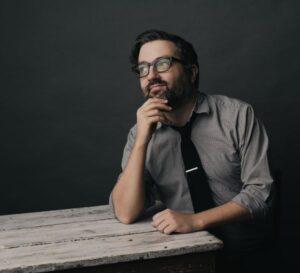
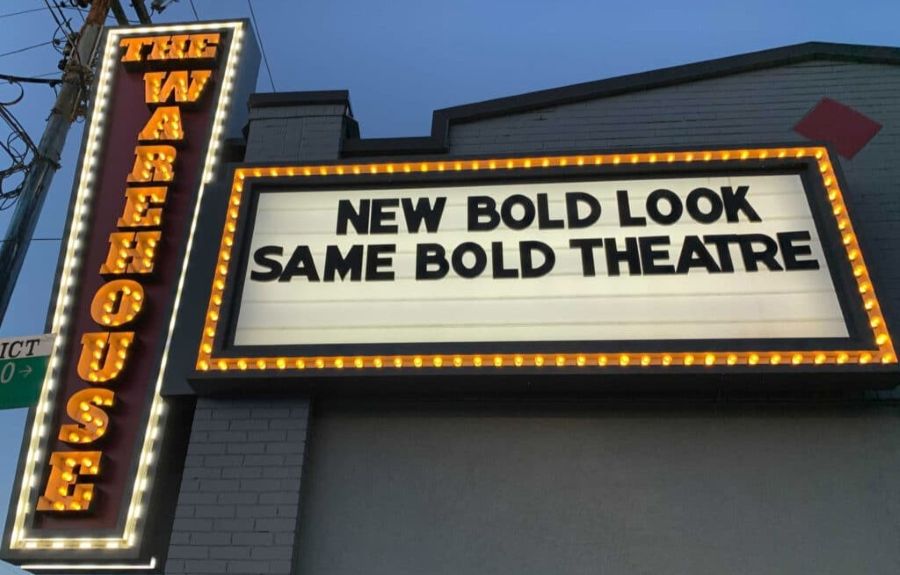
Dr. Peter Smith and a handful of local artists founded the Warehouse in 1973 as an alternative to the more mainstream theatre offerings in Greenville.
Tell us a little more about yourself and your background.
I grew up in New England, had a formative two-year literary and dramaturgy internship at Trinity Rep when Oskar Eustis was the artistic director there, freelanced as a dramaturg in NYC, worked as a dramaturg at Center Theatre Group in Los Angeles, gave film and television a try, teaming up with John Krasinski’s production company Sunday Night—and then, because I missed theatre too much, returned to my not-for-profit roots when I came to the Warehouse eight years ago as the producing artistic director.
What sets your theatre apart from others in your region?
When I arrived I was surprised to see there was a considerable amount of theatre not only in Greenville but in the wider area of the Upstate of South Carolina. The majority of shows produced close by are bigger Broadway musicals, of which we also produce one every year or so, but usually more of the offbeat type. Keeping true to our mission from 52 years ago, under my tenure we have focused on contemporary classics, classics that feel contemporary, and world premieres. When I’m planning a season I’m first asking: Is this relevant to our community? The second question is: How does this show lead a conversation for our community in this moment in an entertaining way?
We’re also one of only two theatres in South Carolina that have a full time agreement with Actors’ Equity Association, and in a “Right to Work” state that definitely sets us apart.
Tell us about your favorite theatre institution other than your own, and why you admire it.
My favorite theatre is one producing plays that I can’t see anywhere else. World premieres, exciting new voices, or just a great take on a contemporary classic. The theatres that produce work that is specifically for the audience they hope to have. The one that says, “You can get theatre on par with what you think the best theatre is on Broadway right here in your hometown at a fraction of the price and just as much artistry.”
How do you pick the plays you put on your stage?
Usually there are no-brainers that I know I want to produce. I combine that with a world premiere or a bigger-budget musical that I’ve been dying to do that I think our audience would love. Then I look at work to balance the season out that I’m excited about spending time with, both as a producer and an audience member. As a dramaturg and literary manager for most of my career, I have a backlog of about 300 plays I would love to see produced. I balance that with still reading as much work as I can by emerging playwrights and keeping tabs on my favorite playwrights and what they’ve been writing (or nudging them to write more). I really love comedies. More people should write comedies.
What’s your annual budget, and how many artists do you employ each season?
We’re right under a million dollars a year. We employ about 200 each season.
How is your theatre rising to meet the challenges of the moment, including but not limited to the continuing aftermath of Covid lockdowns, widespread demands for a fairer industry, and the current funding climate?
Since Covid we really have doubled down on what theatre does that other art forms do not. We are proud to be a theatre, and of not trying to be what our patrons can get unlimited versions of on screens at home. Give people a reason to get out of the house, fight for parking, and sit in a dark room for a few hours with their neighbors.
What’s helpful is that we provide an outlet for a lot of people in our region who are both sympathetic to the plight of arts institutions and also appreciate that we’re fighting the good fight in an area that most incorrectly assume is inhospitable to more progressive productions. I’m very glad to report that our audience is younger than pretty much any theatre I’ve worked at, and, as a bonus, they’re hungry for work that reflects the world around them.
Having a strong and consistent mission that isn’t just “please come see this show we think you’ll like it because it’s just like something you’ve seen before” has really helped us survive for the last 52 years. Above and beyond that, we’re always trying to get better, both in what we’re producing and how we’re doing it. I know that progress takes time and I’m hopeful we’ll continue to grow.
What show are you working on now? Anything else in your season that you’re especially looking forward to?
We’re gearing up for Gutenberg! The Musical!, a show I’ve loved since the Off-Broadway version that Alex Timbers directed years ago. I love shows that are unicorns, shows that are funny to two sides of diametrically opposed audiences. To produce a musical that is both for people who love musicals and people who think musicals are absurd is fantastic. We’re also casting our final show of the season, a world premiere by Kristoffer Diaz called Football Football Football Football, another unicorn in that it’s a show that is both for people who love football and people who think it’s absurd. In it, six women take on dozens of roles with tons of fake moustaches and wigs.
Bookending the season with those two shows and still having Bekah Brunstetter’s The Game, Katori Hall’s The Mountaintop, and Will Arbery’s Heroes of the Fourth Turning feels like a good microcosm of what we try do, year in year out.
Strangest or funniest thing you’ve ever seen (or put) on your stage?
We just did a production of Enemy of the People that had 100 water jugs on stage (I understand this is a…complicated comment on environmental disasters), and a patron asked, before seeing the show, if they were urine samples. They were not.
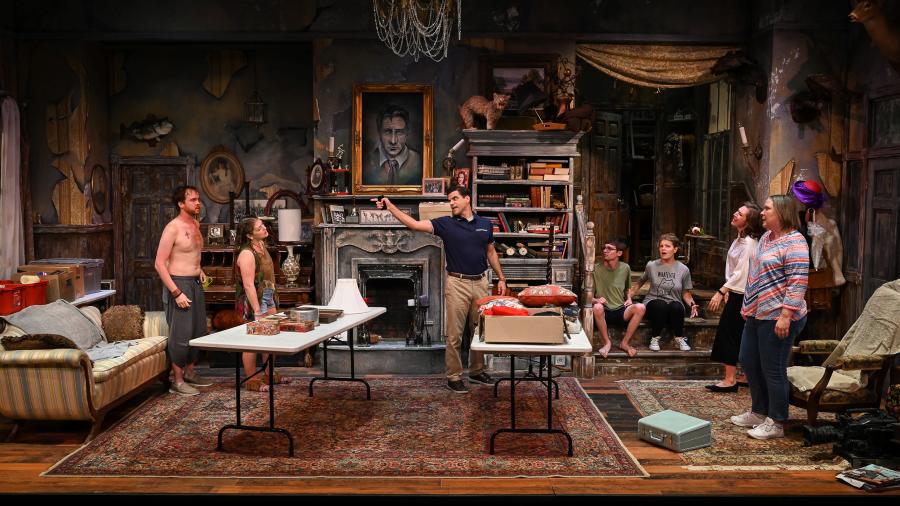
We had a lot of terrifying taxidermy for Appropriate; our phenomenal lighting designer, Kevin Frazier, said in a production meeting, “My family has a lot of weird taxidermy, do you want to borrow it for set dressing?” and everyone yelled “YES!” at the same time.
And we had lots of, um, detailed conversations about William Shakespeare’s anatomy during last season’s Jane Anger. That, coupled with the feet I was buying for Misery, really messed up my algorithm. For the better?
What are you doing when you’re not doing theatre?
Mostly reading, watching TV shows created by playwright friends (go Molly Smith Metzler, Marco Ramirez, Bekah Brunstetter, and Paul Grellong!), listening to an absurd amount of new music (how else will i continue my streak of 30 straight years of making a best of list that started with 12 songs and now is up to usually 150?), and trying to convince my 2-year-old daughter Ruby that I’m funny (she’s too smart for that).
What does theatre—not just your theatre, but the American or world theatre—look like in, say, 20 years?
More theatres that don’t just mimic the commercial aspects of our industry. More productions from regional theatres creating original work that then moves to New York, not just theatres regurgitating what was successful from previous NYC seasons. More theatres that invest in local artists so the local artists stay in town to have great lives where they can have a career and have an artistic outlet (and maybe even one and the same?). More theatres that are committed to a brand new canon that continues to be rewritten year in year out.
Also more theatres run by dramaturgs (with no “e” at the end).