Artistic directors shouldn’t be gatekeepers. We should be gardeners. Our role isn’t to shape the art itself, but to cultivate the conditions where bold, surprising, artist-led theatre can flourish.
I first learned this lesson years ago—in my high school history class. That’s where my fascination with theatre unexpectedly began, while studying the birth of the Soviet Union. Our teacher, Ms. Pine, tasked us to make our final presentations in any format we fancied. Her genius lay in a gentle refusal to tell us what to do. She must have been tempted to intervene and give solutions, but instead, she subtly coached and assisted our process, asking questions and letting us find our own voices. I opted to write a two-person play, imagining a conversation between Lenin and Stalin. It was melodramatic and historically dubious, but I’ll never forget the electricity in the room that day. It’s what drew me to build the career I have today.
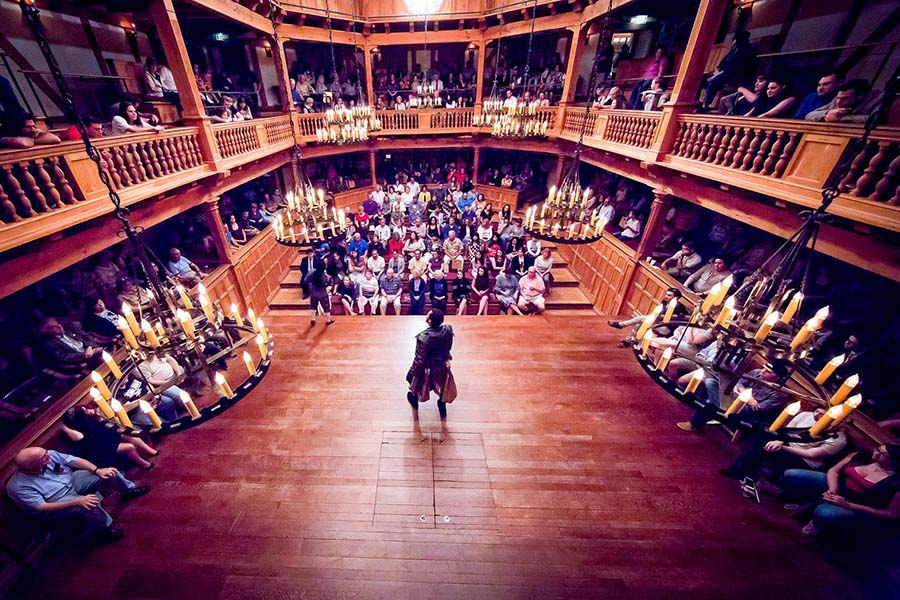
Most theatregoers would agree that few entertainment experiences rival a brilliant stage production. There’s nothing like the communal charge of a live performance: the silence, the held breath, the sharp intake when something truly unexpected happens. That thrill is why I wanted to work in this field. Now, as the artistic director of 59E59 Theaters in New York City, which programs more than 30 productions a year, I find myself wondering every day how to protect that feeling—not just for me, but for the theatre companies we host and the audiences we serve.
How do we sustain our organizations? How do we secure our future and remain relevant in a rapidly shifting cultural landscape? These are urgent questions we’re all grappling with. Amid the debates about the right answers, we must not lose sight of what truly matters: the craft itself. The work is our central mission; it is what brings audiences in the first place and brings them back. It is also the very thing we, as artistic leaders, are entrusted to protect.
It sounds obvious, and it is what we all seek to do at our core. These days, however, there are countless distractions, needs, and shifts in dynamics that make it harder than ever to actually embody that approach. But for theatre to remain ambitious, kinetic, and meaningful, we can’t let institutional constraints like funding models or planning cycles become barriers to fresh perspectives, and I can’t allow my personal preferences to overrule or narrow the choices of the many artistic directors who produce in our venue. Our field is already in danger of becoming safe, homogeneous, too easy to scroll past.
I’ve come to see my role not as shaping the work itself, but as shaping the space where it can happen. My job isn’t to make art. Instead, I’m here to safeguard the conditions in which bold, surprising, artist-led theatre can flourish. As Ms. Pine did, that means relinquishing control. It means offering resources, a platform, and believing that the best ideas won’t always come from inside the institution.
At 59E59 Theaters, our programming model is built on this principle. With dozens of productions a year on three different stages and no formal “off” season, we are constantly presenting new works. Our most transformative work consistently emerges when we let the producers lead and we follow. We partner with companies from across the U.S. and around the globe, offering the freedom to bring their visions to life. When companies are given sufficient room to pursue their own curiosity, the results tend to resonate with and expand audiences.
Of course, this isn’t easy. Programming with openness takes effort. It’s a long game, rooted not in knowing but in wondering what is resonating with artists globally. Our model isn’t easy to replicate or scale because of our unique setup. 59E59 Theaters was established by the Elysabeth Kleinhans Theatrical Foundation with the mission to support other nonprofit theatre companies. The key is to place our support where I believe it belongs: with a diverse range of companies, each with its own unique mission, that are all united in their commitment to creating new work.
Some of our biggest audience favorites weren’t the ones that looked obvious on paper, but the ones that felt electric in the theatre. That conductivity can’t be planned or forced. But it can be cultivated if we’re willing to hand over the reins and resist the urge to make every decision about curatorial alignment or institutional branding.
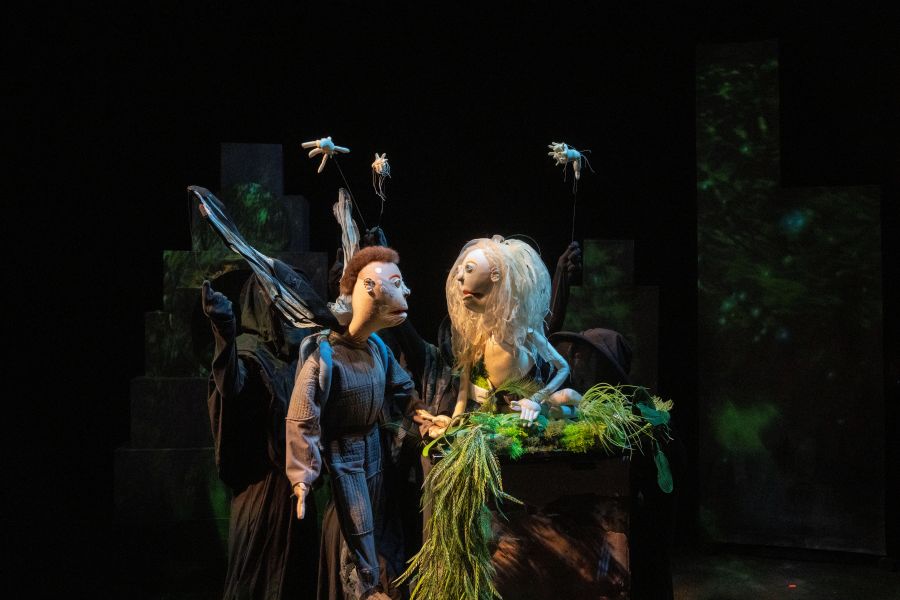
This approach isn’t theoretical. In 2022, I programmed Wakka Wakka’s The Immortal Jellyfish Girl for early 2023, based on my admiration for their past work. That said, I was nervous about the fact that they mostly presented me with drawings and were in the early stages of development. What they ultimately produced was brilliant and like nothing I’d seen before: a visually stunning post-apocalyptic story with dazzling puppetry culminating with hope for the future. The show appealed to and drew an untapped demographic that filled the seats of our largest theatre for more than five weeks; it later earned a Drama Desk Nomination.
In recent years, we rolled out a resident company initiative, which has grown to include eight companies whose work comprises nearly a third of our yearly programming. Recent productions include Polishing Shakespeare (Twilight Theater Company), This Is Government (New Light Theater Project), Sugarcraft (No.11 Productions), ADRIFT (Happenstance Theater Company), and Amerikin (Primary Stages). Each one is invited to share their distinctive vision and mission to make something daring, timely, and deeply personal. In addition, festivals like Brits Off Broadway, East to Edinburgh, and the AMPLIFY series are more than pipelines; they are invitations to deepen our relationships with creative folks and to expand what’s possible on our stages.
Many leaders across our industry are under pressure to hit financial targets and meet board expectations. The industry is also at a moment of earth-shattering change: Audience patterns are shifting, overhead is going up, and the race for attention and relevance is only getting more competitive. When these forces overdetermine the creative process, they narrow our possibilities. We end up chasing proven successes instead of allowing for the unexpected.
Our best way forward, though, is to return to a time of creative incubation: when our institutions were the canvas, not the centerpiece. When the artists and their work were the stars. What if we saw ourselves not as the main characters, but as stewards—champions of space, process, and possibility? I think Ms. Pine would approve.
I am excited to see the changes my fellow artistic directors might bring to their own theatres through an expansion of instincts, taste, and experience. This shift in perspective could be the key to reinvigorating our field. When creatives feel free to take big swings, the work gets bolder, audiences take more risks, and the American theatre becomes more vital.
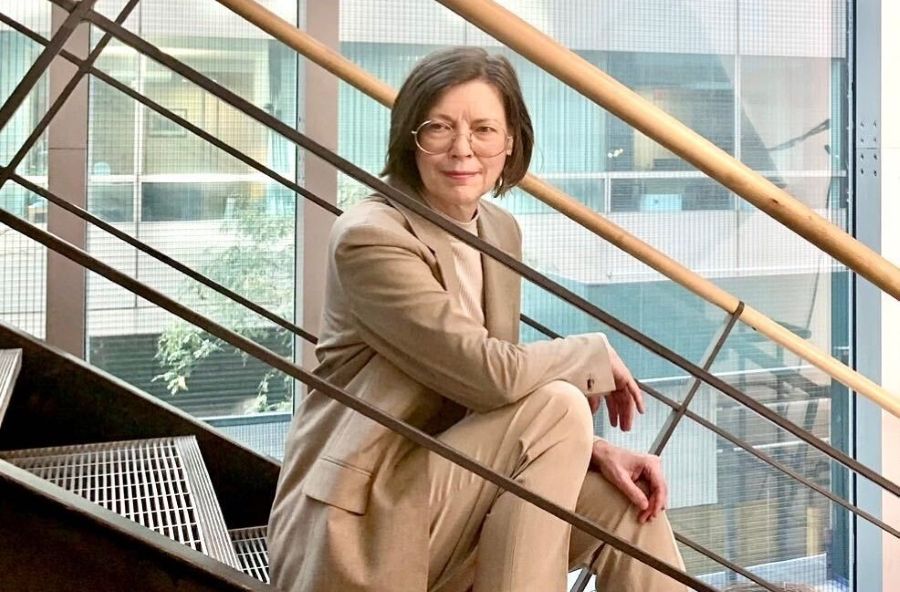
Val Day (she/her) has been artistic director of 59E59 Theaters since 2017. She previously worked as the co-owner of a bookstore and coffee shop, as the co-founder of a site-specific theatre company in Tampa, Florida, and as a talent agent for WMA and ICM.