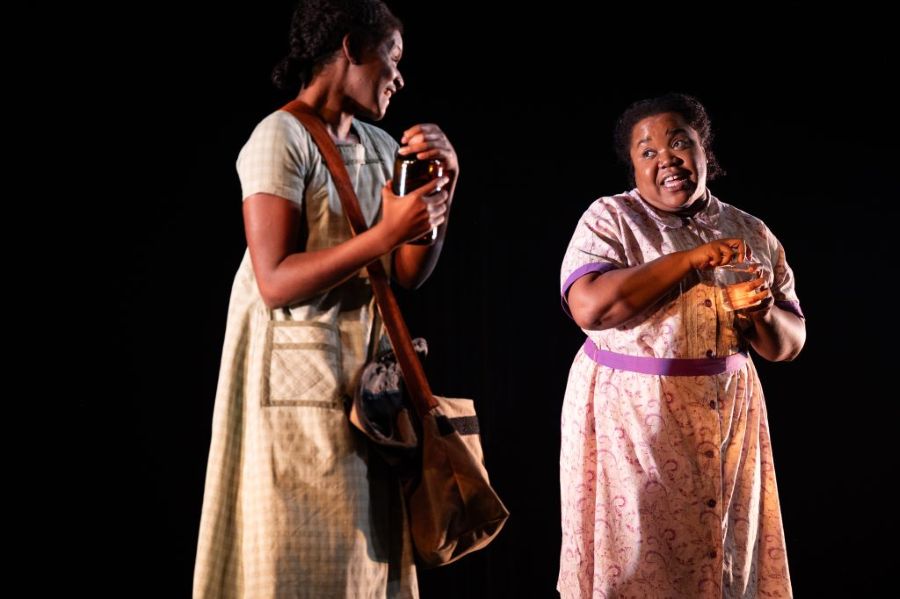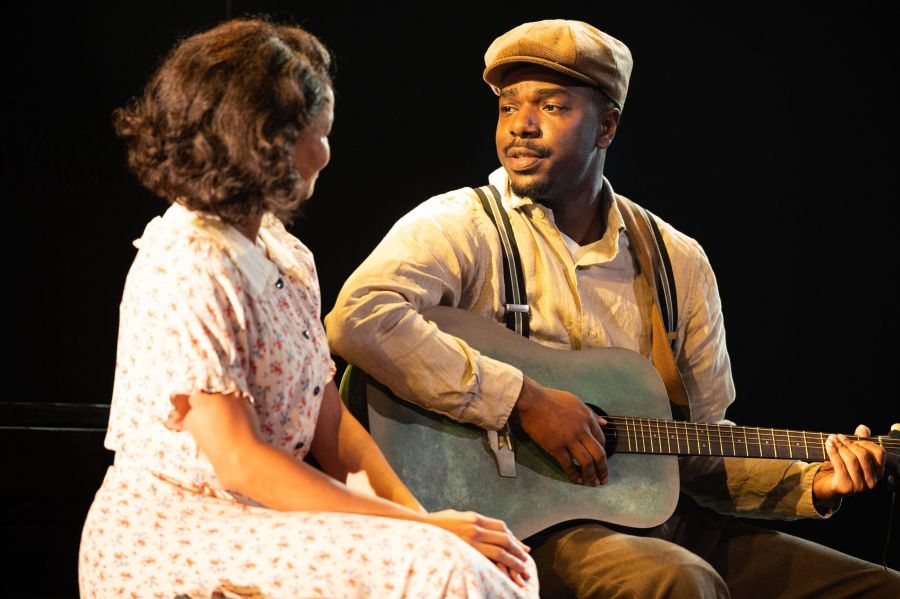
York Walker’s Covenant, a play set in a Georgia town in the 1930s, is at last making its way home to the South after premiering at NYC’s Roundabout in 2023 and D.C.’s Theater Alliance in 2024, with nearly concurrent productions at Charleston’s PURE Theatre in its Southeast premiere (which ran Oct. 2-25) and Atlanta’s Alliance Theatre (through Nov. 9). “It was always important to me that the rhythms, relationships, and the world of the play felt authentic,” said the Chicago-born playwright. “To have two Southern productions around the same time is incredibly exciting.”
Inspired by the Robert Johnson myth, Covenant depicts the reappearance of a suddenly talented blues guitarist two years after he went missing, sparking rumors of a deal with the Devil. Like the hit film Sinners, Covenant centers Black voices in its Southern Gothic depiction of the Black church, music, psychological terror, and generational trauma.
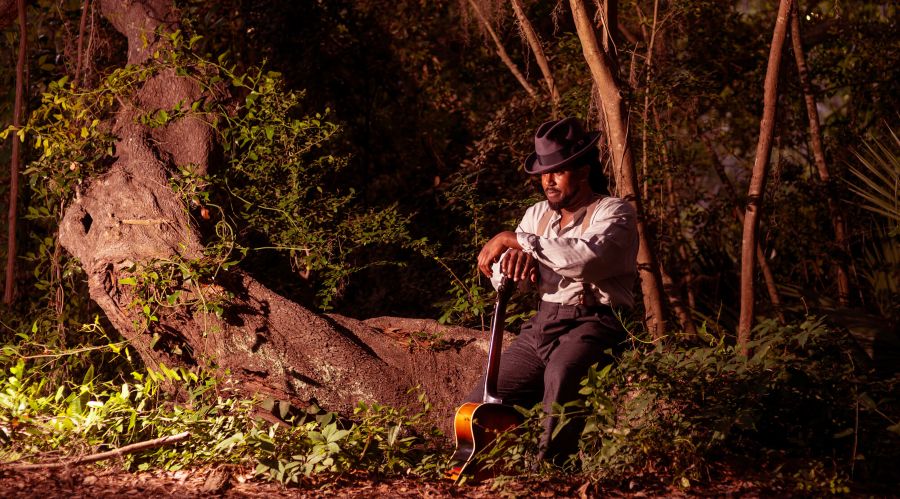
At the Alliance, director Tinashe Kajese-Bolden’s production will have an intimate and expansive design, with light seeping through a canopy of trees. PURE’s production, meanwhile, sets the play in a South Carolina Lowcountry grove of oak trees and Spanish moss, where the ocean meets the land—a site director Sharon Graci described as a place of “dichotomy, beauty, and brutality.” She also said she plans to explore intersections between Gullah spirituals and the blues.
For her part, Kajese-Bolden said she is drawn to the play’s attempt to “explore a rural town’s hunger for meaning, for miracles, for escape.” She added that Covenant asks a timeless question: “What happens when the chosen one doesn’t want to be chosen? What happens when the divine feels more like a curse than a blessing?”
Sounds like a true crossroads dilemma.
Daniella Ignacio, a writer, theatre artist, and musician based in Washington, D.C., is a contributing editor of this magazine.