The present is never alone. Take comfort: There is future, and there is past. We walk, hand in hand, with ghosts of world stages: all the players who have exited, shadows of violence, sets in ruins. Memory and evidence.
If you press your ear to the plays of the 20th century, they’ll tell you secrets of human acts gone by and strategies to keep on. Among bloody slings and arrows of inhumane humanity are extraordinary scenes, real and imagined, of survival. At a concentration camp, a woman hides within a crate for 10 days to write a comic operetta, encouraging fellow prisoners to keep going. An everyday South Korean town square transforms from fear to ecstasy with the banging of drums, and grieving friends see their dead materialize. An iconic Brazilian theatremaker hatches an entire pedagogy from within the confines of dictatorship, going on to inspire oppressed peoples around the world.
Stories of surviving oppressive regimes feel heavy at first, tinged with the harrowing specters of fear and death. But these are the instructive, somehow hopeful histories I find myself gravitating toward again and again, in our time of enforced fear, violence, and starvation around the world. Humanity feels fragile, often. After hearing from international artists and reading first-person autobiographical accounts, I’d like to share moments that transcend fear. That feed feathery hope. Imagine yourself there: with Germaine Tillion in a concentration camp, with Augusto Boal in a prison cell, and with grieving friends and audiences who see theatre reanimate Gwangju and sustain souls even in death.
There is a reason why A Thousand and One Nights has endured as a centuries-old classic, categorically a fairy tale in spite of its deathly stakes. The protagonist must speak story after story to survive. With every story told, we too remind and convince ourselves to hold onto life for another night. Another story. Another play. Another night alive and ready to resist.
in the camp, germaine tillion writes, ravensbrück 1944
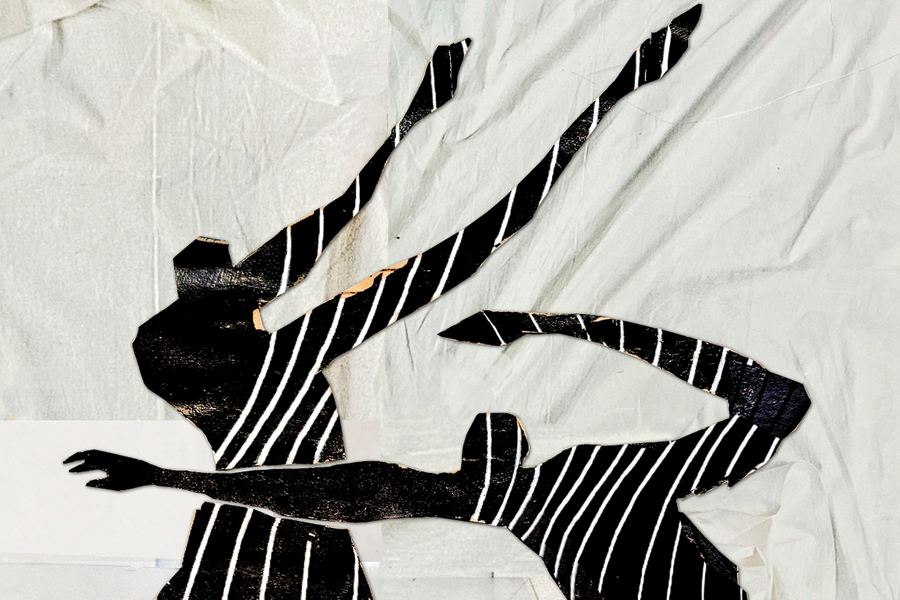
Another counting. You line up with the rest of the women with blue-and-white-striped dresses and numbers and bloodstains and sunken eyes. Hope—that feathery, fragile thing—is what you need to survive. You search for it.
Levity has become your weapon and shield. You led the Musée de l’Homme resistance network and refuse to be tamed. Your inspiration remains your mother, an art critic who supported you through college and in defying Nazism. When she first saw you in the camp, she exclaimed, “Fabulous journey!” She’d glimpsed German cities in ruins; the European theatre of war was teetering. The war’s end seemed near.
Your training in anthropology helps. You shared with your mom all you knew of the camp; you gather fellow prisoners for storytelling. You often say: “Nothing is more terrifying than a complete mystery. If you can understand a mechanism that crushes you…that can become a powerful source.”
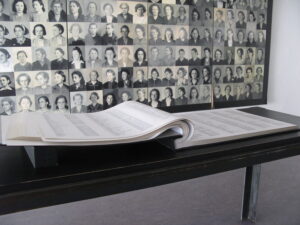
A woman falls in line with a loud thud. You don’t dare check if she’s alive.
You belong to Block 32, known for miraculous camaraderie. But there’s no new news of Allied liberation. Friends look frailer. “We must find a way to laugh at our lamentable state. It is our only lifeline,” you’ve insisted to your dear friend Anise Girard.
The guards herd you to forced labor. Your task today: sorting pillaged possessions from across Europe. Your hands run through fabrics, pearls, delicate engravings, the costumes and artifacts of lifetimes; your thoughts fly—
Theatre! That’ll be your survival strategy. You approach Anise: “Let’s not pity ourselves! Let’s write! Let’s sing!”
10 days. You need 10 risky days of support. A friendly prisoner oversees your work group, and the women eagerly embrace your project: a dark comic operetta illuminating this hellscape. They pick up your work, hide you, smuggle in paper and pen.
Squeezing into a wooden packing crate for entire work days, you write without water or food. Le Verfügbar aux Enfers, as the piece will be called, feeds you instead. Takes wing in quiet, cold darkness. Each evening you stow away to 32 and read what you have.
You center the writing around the verfügbar—the precarious class of prisoners not assigned specific work. New arrivals. Those awaiting reassignment. The unfit. Their fates: medical experiments, dangerous assignments synonymous with death, or one-way trips to Auschwitz gas chambers.
You distance yourself from the realities with humor. You know not everyone will appreciate making light of horror—but laughter is water, necessary for survival.
Your show begins with a Naturalist. He observes people in the Underworld…
No, that’s not right. In your anthropology, you believe in engagement, exchange, letting people lead! This play will let the women speak. They interrupt, explain, tell it themselves. The Naturalist questions, tries to regain control, but quickly the play belongs to a Greek chorus of prisoners. The “old rats” share camp secrets with the new.
You decorate your imaginary stage with irony, deadpan humor, jokes about your skeletal frames and the camp’s “excellent utilities”—especially gas. You imagine food into existence, even write a whole song about gastronomic adventures through France!
Each night at Block 32, a close circle makes suggestions and requests. Theatre liberates in community. This sharing alleviates, for moments, the ravenous weight of this Underworld. They memorize texts and laugh and laugh until their souls traverse beyond this place.
You can’t stage Le Verfügbar aux Enfers in full, but you share pieces and copies in confidence. It becomes a clandestine hit. You and your friends sing softly on the way to and from grueling work and beatings. The melodies derive from popular German songs, pleasing the guards, but you’ve changed some lyrics to French. Name their inhumanity. They don’t understand: You’re laughing at them.
You don’t know this now, but you will survive to show how, in your own words, “Indignation can move mountains.” You don’t know this now, but friends will smuggle out your operetta pages while you smuggle out film evidence of torture and experiments. You don’t know this now, but your mother, Émilie Tillion, won’t survive. Of 130,000 women passing through Ravensbrück, 40,000 will be murdered here.
They—your mother, your friends—will live in the empty spaces of your pages, in that sound of inevitable laughter, evidence of how they fought to keep on.
Your work will be staged and translated in the 21st century. When time comes to take your bow and depart, your sense of duty—to act while there’s still time to prevent the worst—will live on. Stage and page give flight to memory, and your warnings and daybreak laughter ring from beyond the grave.
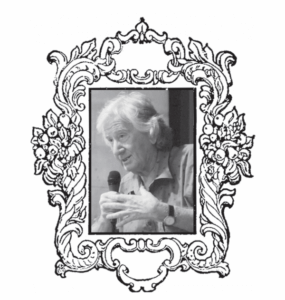
augusto boal dreams of the oppressed and the free, são paulo 1971

Another night of rehearsal!
Each project draws you closer to the heart of the povo, the common people. Each play has a rawness. New nudity. You never know whether audiences will come armed, whether you’ll be arrested. The police tried once. A grenade has landed onstage. Neither finished the job. Graças a Deus!
You’re forming groups to create participatory Teatro-Jornal—“newspaper theatre.” This gives means of production back to audiences. News clippings, writings, anything can inspire them. Theatre becomes forum. You perform where police won’t suspect: behind churches, in unused classrooms, within homes.
Tonight at Teatro de Arena in São Paulo, after working on Brecht’s The Resistible Rise of Arturu Ui, you’re rehearsing the musical Arena conta Bolívar for France’s Festival de Nancy. You’re grateful for this kind of international opportunity: It offers protection, possibility. The Brazilian government’s censors disappear whole pages from your works, but in rehearsal, words reappear.
The dead come back to life.
You direct direction in a directionless country. Actors rehearse resistance, combatting dictatorship head-on. Day and night, you work, tire, worry.
Your wife calls. Milanese for dinner! The world is wet and weary, but you’re coming home.
Then: Three men approach. Your arm: twisted. Your body: in their Beetle.
Then: solitary confinement. You’ve heard silence before, but this silence screams.
But… is that your friend’s song? A hallucination, already? No, it’s real: Dori Caymmi’s “É doce morrer no mar” has broken in to keep you company. A disembodied voice from another cell tells you that every night, these kidnapped prisoners sing. Tonight you don’t feel like joining them. You think of artists, the oppressed, the vulnerable, every individual who may have disappeared here. Your wife and child. Communities across Brazil.
One, wronged, makes a very big crowd.
The guards question and question. You pretend torture doesn’t hurt. Confess nothing.
Time stretches. You stretch. They use pau de arara torture—the same that desecrated enslaved bodies forced from Africa onto this land. The land remembers. The oppressor too.
But you’re of privilege. After seven nights, your military brother demands to see you, dead or alive. Word gets out. Theatres worldwide learn of your imprisonment. Arthur Miller, Richard Schechner, Peter Brook, Jean-Louis Barrault, and more pressure the government. Theatre wants to free you.
Guards move you from isolation. You speak with other prisoners—povo of all walks. You’ve rarely seen left-leaning folks get along so well. You teach one another, imagine new world orders. Why wait to do all this? You learn, meditate, stretch muscles, muster strength to heal from torture. You wonder how long it will take. Maybe you’ll never be the same.
You’ve experimented with theatre for so long, but here you observe a distinct form of exchange: real, raw rehearsals for revolution. You are never the same.
You’re out within four months—could’ve been four years, or worse, much fewer, with “an invitation to the undiscovered country.” You reappear from disappearance. A blessing. You’re angry.
Then: exile. You are banned from your patria.
You do not know this now, but your mind has been pregnant with pathways to unanswerable questions. Over 14 cold, lonely years of exile between Latin America and Europe, you grow more resolved. Survivors of torture and imprisonment emerge with newfound capacities. Confinement makes you infinite. Within prison’s limits, you’ve pondered the limits of theatre and learned that containers cannot contain spirit. They embolden it. Theatre of the Oppressed stretches its feathery wings.
You don’t create it alone—it has been gestated and cared for by every audience and maker you’ve encountered. This theatre helps you escape to your freest self, continue Brecht’s work, embody Paulo Freire’s vision in your framework and in the book Theatre of the Oppressed, an answer to a question you’ve held to light and tucked into bed and prayed over: How is agency possible under oppression?
You write: “I, Augusto Boal, want the spectator to take on the role of actor and invade the Character and the Stage…This invasion is a symbolic trespass. It symbolizes all the acts of trespass we have to commit in order to free ourselves from what oppresses us…If we do not trespass we can never be free.”
You don’t know this now, but from Brazil to South Korea to Chile to Nigeria to the Philippines to Ghana to Thailand to the United States and beyond, Theatre of the Oppressed will free generations of souls you’ll never meet.
Leonardo Silva)
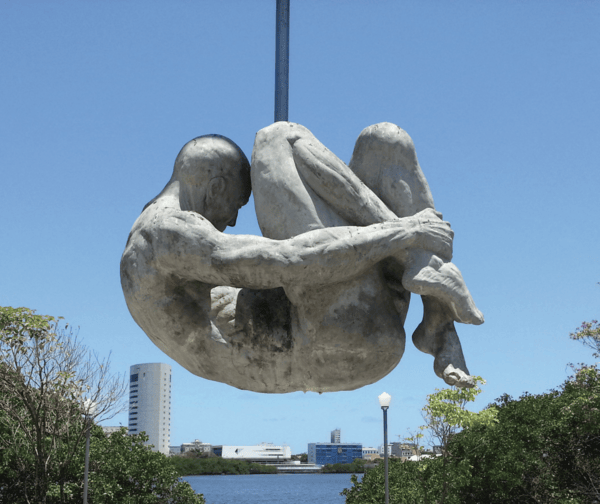
a survivor sees the dead marry, 대한민국 1982
The sun rises on another day. Two years since you lost your friends to the peaceful protests-turned-massacre. Gwangju, once a “city of light,” has become the memory of violence, a site where thousands of students and families “vanished” overnight.
Instead of reaching for glasses this morning, you reach for sheet music scrawled on torn notebook pages. You don’t know how much art can do, but you’ll try. Yoon Sang-won didn’t get to do so much: marry, have children, sing, live. The least you can do is sing for him. Yoon and his girlfriend Park Gi-sun would have wanted theatre of the people or minjung kayo, song. They’ll get both today in this musical memorial. You hope they will hear from their graves.
Trudging through Gwangju toward the cemetery, the miracle of music rises, raises the city to its feet. You peer into an alleyway, where drummers help onlookers feel their heartbeats. The cemetery performance will be just one of many theatre protests today. Madangguk (마당극), informal yard theatre, has become commonplace. Drums kick off the spectacle, until the storytelling erupts in audience participation. You’ve seen these clandestine performances in the shadows and margins of the city, behind churches, in unused classrooms, homes. But they’re edging toward the light. When the government leaves no room for justice, the underground theatres must rehearse it.
“You need to be history’s eyewitnesses,” Yoon told younger students before urging us to leave the Jeonnam Provincial Office. You went to warmth; he went to the undiscovered country, as martial law overpowered the remaining protestors, massacring innumerable civilians. When those friends couldn’t speak, publish, protest, they sang. You wonder if Yoon went down singing.
You haven’t sung since then. Avoided protest theatre, though your friends rave about Theatre of the Oppressed and about our Korean traditions of theatre for the minjung, the ruled masses, “the people.” Where have the songs gotten Yoon? How could you sing without your friends? Theatre’s feathery hope feels more like crime now. You didn’t stay with Yoon for Jeonnam, a pivotal moment in this fight against authoritarianism, and now you’re here. Why are you here? You don’t want to sing. But you must. With a few university friends, being wary of the military, you will bear witness to Park and Yoon’s souls joining in a “spirit wedding” through this heaven of a musical.
Through theatre, the dead come back to live.
Dispelling-Wedding of Light will be short, by the looks of the sheet music. You’ll only be among the dead for minutes. Hopefully it will feel longer. You recognize Baek Ki-wan’s lyrics from his prison poem written at Seodaemun Detention. The young Kim Jong-ryul set it to music. You wonder how, in their grief, they managed to create.
Park wouldn’t recognize everyone here. She’d been forced from university for supporting opposition to the Yushin regime. After a short yet full, fiery life in labor movements and establishing the Wildfire Night School for workers, she died of coal gas poisoning; she didn’t get to protest alongside Yoon at Jeonnam. Some wouldn’t know her at all. No one will know her anymore.
You reach the manicured plot where stones stick up their heads to watch the living. The grass isn’t green here in February. Finding the stones and living bodies you came to see, you realize you’re last to arrive. They begin.
Then it’s blurry. You raise sheet music closer, blurrier still. Your throat is pregnant with protest and possibility. You suddenly need to sing. Your voice soars beyond. You hear. You hear Yoon hearing.
You can share breath with your friend again.
Before you can process the piece or make out who bears this wedding witness, the final song comes. “March for the Beloved.” Minor key, almost militant march.
We will leave no honors, no love, no fame. We promised to keep working on…
The river and the mountain remember, despite the passing of years…
We are marching on; those who are alive, come follow us…
You don’t know this now, but South Korea will transition to democracy within five years. You don’t know this now, but this musical and song will play a role. Millions will sing it worldwide for histories to come, a national memorial and international protest prayer. When cold lips clasp halfway through the word freedom, other voices will join the chorus. When you can no longer sing, friends will do it for you.
For many years to come, people will celebrate this wedding-within-a-play. The future will attend a wedding of the past that never was but could have been. And somehow is. Is.
marching on, present, past, future
Countless more still rally the people, not just in spirit but on Earth. Cecile Guidote-Alvarez, creator of the Philippine Educational Theater Association, is still creating and empowering artists. Wole Soyinka still teaches; his words and presence alike spread a legacy of liberation and peace in Nigeria and beyond.
And we are with them, the survivors, while still among the dead—at the spirit wedding, within the gray cell, among women passing pages, fluttering between now and then and could be. We are here and we are disembodied, existing in the consciousness between words, where breath breathes breath to thaw theatre, and theatre thaws a collective memory. And strength. You are not the first; there is no first time when your creative ancestors surround you with a centuries-old chorus of answerless questions.
Grim, promiseless as the world stage seems, there have been artists who’ve emerged from crates, prison cells, even death. Shoulders adjust to liberated air, wait for the script’s punchline and your daybreak laughter.
You may not feel this now, but many march on. Ghosts stroke and clasp our hands. Scripts and songs speak their words. Break our silence. You may not believe this now, but we can follow them—they beckon toward life. You may not know it yet, but as you free freedom, these theatres of resistance will reach you. Free you, too.
Gabriela Furtado Coutinho (she/ela/ella) is the digital editor of American Theatre, as well as a Chicago-based actor, playwright, and poet.
Special Thanks and Bibliography
A special thanks to Hayana Kim, Jisun Kim, Kelsey R. Mesa, L’Association Germaine Tillion, Daphnie Sicre, Sierra Rosetta, and Emilya Cachapero for their guidance and hope.
Adamo, Elizabeth, “Germaine Tillion’s Colonial Writing: Complicity and Resistance” (2015). Africana Studies Student Research Conference.
Boal, Augusto, Hamlet e o filho do padeiro. E-book ed., Record, 2000.
Dae-ha, Jung, “Gwangju remembers special student-labor activist.” Hankyoreh, Hankyoreh Media Group, 19 Dec. 2013.
De Andrade, Clara, editor, “Remembering Boal through images.” Critical Stages/Scènes critiques, 2010.
Kim, Hayana, Embodying Democracies: The Gwangju Uprising, Women, and the Politics of Mourning in South Korea. 2023. Northwestern U, PhD dissertation.
Lee, Namhee, “Between Indeterminacy and Radical Critique: Madangguk, Ritual, and Protest,” from The Making of Minjung: Democracy and the Politics of Representation in South Korea, Cornell University Press, 2011, pp. 187-212.
Olson, Lynne, The Sisterhood of Ravensbrück: How an Intrepid Band of Frenchwomen Resisted the Nazis in Hitler’s All-Female Concentration Camp. E-book ed., Random House, 2025.
Ribas, Cristina, “The Aesthetics of the Oppressed: Political Memory and the Pedagogy of a Poetical Laboratory.” La Escuela, 9 Apr. 2022.
University of Southern Maine Department of Theatre, “In the Underworld: A Darkly Comic Operetta Program” (2014). Programs 2013-2014 Season.
Van Erven, Eugene, “Resistance Theatre in South Korea: Above and Underground.” TDR/The Drama Review, vol. 32, no. 3, 1988, pp. 156-73.
Yi, Kang-baek, Allegory of Survival: The Theater of Kang-baek Lee. Translated by Alyssa Kim and Hyung-Jin Lee, e-book ed., Cambria Press, 2007.
Further Reading
Support American Theatre: a just and thriving theatre ecology begins with information for all. Please join us in this mission by joining TCG, which entitles you to copies of our quarterly print magazine and helps support a long legacy of quality nonprofit arts journalism.