It’s no secret that arts workers are facing unique difficulties right now. In April, the Writers Guild of America reported that over 1,300 TV writing jobs were lost in the 2023-24 season, with 37 percent fewer episodic series in production compared to 2022-23. TV and film productions are increasingly moving abroad to bring down costs. The theatre industry has also seen a marked contraction, if the annual season listings produced by Theatre Communications Group are any guide: In the 2019-20 season, there were 2,229 productions at nonprofit theatres in the U.S., a number that plunged last season to 1,281; this coming season will see 1,590, an improvement that’s still short of full recovery.
When we talk about this turbulent period in the field, we tend to focus on two groups of workers: freelance artists, like performers and designers, who are losing opportunities, and institutional workers, like theatre staff and administrators, who are either facing layoffs or have been forced to scramble for emergency funding as the NEA and private foundations shift their priorities.
But there is another crucial group of workers affected by these challenges, who often work on the institutional side of the business but not usually as salaried employees: casting directors. Indeed, while a small number of casting directors hold resident positions at major theatres, most are contract workers. In an audition room, they work both behind and in front of the table, holding a unique third position that gives them access to a wide range of information. They hear sensitive, revealing conversations both from leadership—artistic directors, producers, network and studio execs—and from artists, agents, and managers. They can quite literally see into the future, as they work on projects months or years in advance. So what can casting directors tell us about where we are right now, how we got here, and where we are going? I spoke with eight casting directors based in New York, Los Angeles, and Washington, D.C., to hear their perspectives.
Striking a Balance
All the casting directors I spoke with were feeling the effects of “The Great Contraction”—a concept that various publications, including Reuters and the Los Angeles Times, have been using to describe the hemorrhaging of American film and television jobs since at least early 2024. Like actors and playwrights, many casting directors are used to supplementing their smaller theatre earnings with better paying TV or film gigs. But striking this sensitive financial balance becomes ever harder as more and more TV and film shoots move abroad or shut down.
The theatre community is also undergoing its own Great Contraction, with even veteran casting directors at the largest New York offices feeling the effects. Karyn Casl, a renowned casting director and teacher at the Telsey Office who began her career as an actor, draws a connection to larger forces that are reducing the overall number of jobs in the industry.
“If you’re talking specifically about New York, we all know the cost of real estate is so insane,” Casl said. “Look at how many theatres are losing or choosing to leave their existing space because of financial concerns.” She also points out the proliferation of co-productions and “triple productions” as plays are shared among theatres. Co-productions may be financially helpful to theatres and employ one group of actors for longer, but they also often shrink the number of jobs available overall.
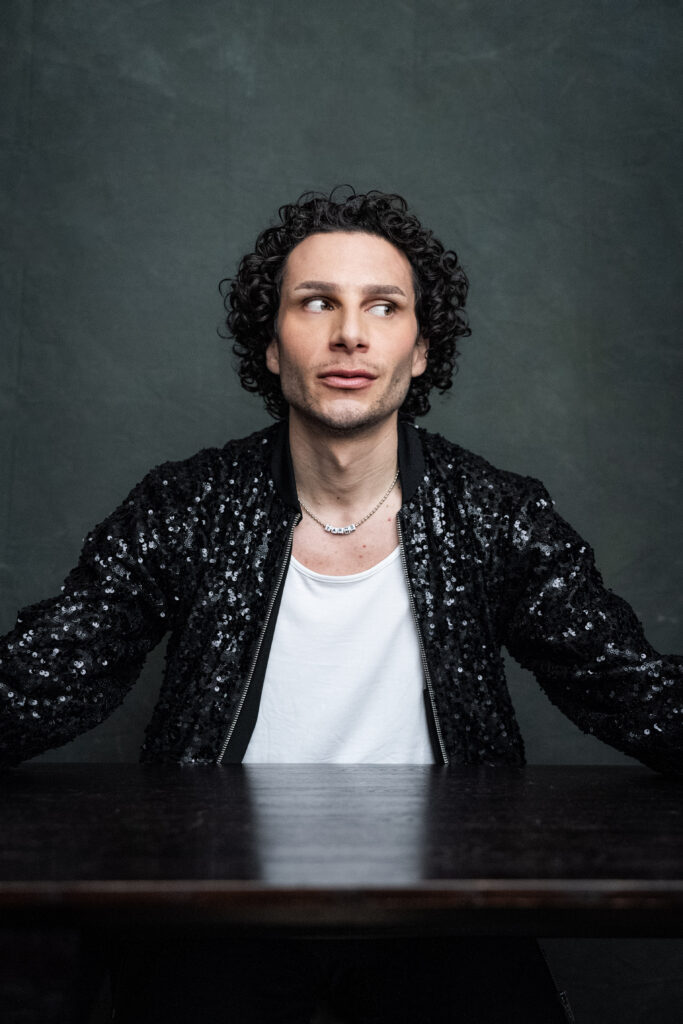
According to Andrew Fem—a transgender, non-binary, multilingual casting director, community care organizer, artist, and college showcase consultant based in New York City—this is especially true for casting directors who work in small, independent offices and lack the support of a large office or resident position at a major theatre. Fem has a strong social media following and often makes reels “demystifying the casting process” to make casting a more accessible process for performers. But they see no such advocacy for equitable hiring of casting directors themselves. As Fem pointed out, “Three of the most represented casting offices on Broadway in 2025 are the same three most represented casting offices on Broadway as they were in 2008.” Of course, it’s likely these few offices remain favorites with Broadway producers for good reasons, including having a proven track record of assembling award-winning casts, years of experience that help them identify the skills needed to sustain a Broadway run, and larger staffs that can cover a large Broadway cast more easily.
Still, according to Fem, if we want a wide variety of actors to be working, we also need a wide variety of casting teams to be working. “There is a homogeneity that you see in casts that come out of a particular office,” observed Fem. “I’m sure it’s lovely for those actors who have developed relationships with those offices and so are very known.” But Fem believes that for certain projects, producers and directors would benefit from working with independent casting directors who have more time to dedicate to the work—and more access to and knowledge of under-represented communities.
Fem saw the benefits of this approach firsthand when they were casting the series High Maintenance for HBO. Fem drew from what were, especially at the time, unusual sources to find the right performers for the show: cabaret artists, spoken word poets, drag performers, social media influencers, and guests at small comedy venues. Fem had gotten to know the work of Becca Blackwell, a trans playwright and performer who later originated the role of Diane in Hurricane Diane at New York Theatre Workshop. For a particular High Maintenance episode, Fem immediately knew “we wanted Becca Blackwell, and we got Becca, and that was great. We knew we wanted to make sure the relationships that their character had were very queer in ways that we don’t see on television and have not since seen on television.”
Fem also stressed the importance of who an actor sees behind the camera when they audition. “Just time after time, getting to see trans and genderqueer people walk into a room, maybe for their first audition ever, and to get to see someone who looks like them and feels like them when they are about to do this incredibly emotional scene that’s going to take so much vulnerability from them—they get to have someone who reflects back to them a little bit of their experiences. Invaluable.”
Fem believes that this kind of representation can contribute to the creative success of many shows. They cite Victor Vázquez Santos’s casting for Real Women Have Curves, the Tony-nominated Broadway musical that got strong reviews earlier this year (though it closed in late June). Vázquez Santos, Fem pointed out, is “a first-generation son of Mexican immigrants. That had to put some actors at ease, getting to walk into an audition room and see him. I think we get to put people at ease just by reflecting back to them parts of themselves that they’re never seeing.”
Karlee Fomalont, an associate casting director at Rori Bergman Casting, an independent office which notably cast the Oscar-nominated Bob Dylan biopic A Complete Unknown in 2024, agreed with Fem that smaller offices are often overlooked and underestimated, particularly amid the Great Contraction. She too emphasized the hands-on care that a project receives from a smaller office.
“We can focus all of our attention on you,” she said, when describing their relationship to producers and directors. “We can give you everything. We can talk to you whenever you need it. If you can’t get Rori, you can get me.”
Fomalont emphasized the importance of mentorship from veteran CDs like Emmy Award winners Jessica Daniels and Julie Schubert in her career, believing it’s healthy for the whole industry when those at the top pass on jobs to younger casting directors if they don’t connect with a project, or don’t have the time for it. She said she worries about what the Great Contraction will mean for the future of the casting industry. “If we don’t support the next generation of casting, what will casting be?” she wondered.
And without an inclusive next generation of casting, can there be an inclusive next generation of working actors?
Erica Hart, head of Hart Casting, worked and trained with larger offices like Meredith Tucker Casting and with Marci Phillips at ABC Primetime Casting for several years before starting her own office. She said she has been recommended for important projects by veteran casting directors who felt she was a better fit—examples of the kind of generosity and mentorship that Fomalont considers crucial and Fem would like to see more of. In turn, Hart has recommended others for jobs that didn’t feel like the right fit for her.
But an increase in generosity and mentorship may not be enough to mitigate the effects of the contraction. As Casl put it, everyone is feeling the crunch. “I don’t think there’s anybody in the industry who’s not feeling less work in a variety of ways,” she said.

Inclusion or Regression?
Hart, like Fem, believes that who an actor sees in the audition room has a tremendous impact.
“We can’t talk about diversity if we don’t talk about diversity behind the camera, right?” Hart said. “When I was at ABC, mind you, I was in my 20s. I remember this actress who was very much a working actress that you have seen on many shows, and the first time she walked in and saw me she was like, ‘I have never seen a Black woman sitting behind the table,’ and she teared up.”
For many casting directors, the biggest change they’ve witnessed in their careers has unquestionably been the institutional choice to prioritize more inclusive hiring and programming. Danica Rodriguez, the D.C.-based resident casting director at Shakespeare Theatre Company (STC), traces this trend to the 2020 Black Lives Matter protests, online movements like #OscarsSoWhite, and particularly We See You White American Theater, the viral statement published in 2020 by a group of accomplished BIPOC theatremakers, with signatories including Saheem Ali, Larissa FastHorse, Uzo Aduba, and Ruben Santiago-Hudson. The statement and demands are still online and, according to Rodriguez, remain a point of reference for many major theatres. Some, she said, “are still holding themselves accountable to those original tenets of ensuring there is representation on all levels of the organization, ensuring that we are not feeding into stereotypes in the way that we cast.”
There have undoubtedly been breakthroughs in onstage and onscreen representation in the last five years, likely in direct response to this activism. For example, the 2021-22 season brought near-parity between BIPOC actors (49.8 percent) and white actors (50.2 percent) on Broadway for the first time in the history of the American theatre, according to the Asian American Performers Action Coalition’s latest visibility report. There were strides on-screen as well, according to the Hollywood Diversity Report: In 2024, out of the 10 highest-grossing films globally, five featured casts that were over 30 percent people of color, and seven featured casts that were over 40 percent female. The report also tracked that two out of the top 10 highest-grossing films in 2024 featured a cast in which 20 percent of the actors had a known disability. It also documented that increasingly diverse audiences have been driving more ticket sales and higher ratings for films that featured diverse casts.
More anecdotally, this year’s Tony Awards featured various milestones, including the first Iranian playwright to be nominated for Best New Play (Sanaz Toossi), Francis Jue winning a Tony Award for Best Featured Actor in a Play (the first Asian actor to do so in 37 years), Darren Criss winning a Tony Award for Best Leading Actor in a Musical (the first Asian male actor to do so), and Branden Jacob-Jenkins winning the Tony Award for Best New Play (the first Black writer to do so since August Wilson in 1987).
But Rodriguez worries that changes in federal policy—and perhaps American culture—have begun to compromise this progress behind the scenes.
“I don’t want us to regress,” she said. “That is my greatest fear for theatre, and I unfortunately sometimes see it happening. Transphobic, homophobic, and racist ideologies are being embedded into policies that are deeply affecting us and our funding.” Rodriguez, who works with a wide variety of theatres and directors, mentioned a shift in the language around casting. “I think it can be as small as those in leadership not wanting to hire folks of color in certain roles, right? It can be the coded language of, ‘I’m just looking for someone who is a blank slate,’ or ‘I’m looking for someone who just gives me the All-American sensibility.’”
She also cited common administrative decisions at major theatres—DEI directors stepping down and not being replaced, smaller budgets for workshops or productions helmed by people of color, and programming that doesn’t reflect or represent local audiences—as signs of regression.
As one of the youngest resident casting directors in the country, and self-described as “one of very few Latino casting directors in the industry,” Rodriguez said she’s hoping she can help change that. “My greatest wish is that we continue to have emerging casting directors and bring them into our spaces and ensure that they are really trained up in this profession. I want people to continue to have in-house positions like mine so that they can make their art while also having a life.”
David Caparelliotis, founder of Caparelliotis Casting who has been an active member of the Casting Society of America’s Diversity and Inclusion committee, expressed a similar commitment to the ongoing fight for casts that are truly inclusive. As with Rodriguez at STC, Caparelliotis mentioned the importance of his long-standing relationship with Manhattan Theatre Club.
Caparelliotis acknowledged, “I’m in a position of privilege, because I have jobs that are not going to go away,” but he also emphasized that he “will fight and champion and do everything I can” for the continuation of fair and inclusive casting practices, including introducing new weekly office hours dedicated specifically to meeting trans, nonbinary, and gender nonconforming performers. When he discussed selecting freelance projects outside of MTC, Caparelliotis also voiced reluctance to work with what Rodriguez would describe as “regressive” leadership. “If I know out of the gate that I’m going to be working for people whose value system does not seem to align with mine,” Caparelliotis said, “I don’t want any part of it.”
Chasing the Stars
Conrad Woolfe and Leigh Ann Smith, the L.A.-based founders of Indigo Casting, both started out in large, powerful offices like the Telsey Office and Warner Brothers before making the decision to join forces and branch out on their own in 2020. According to Smith, “There was sort of a reckoning or awakening happening in the industry at that time—the way we were seeing things done in Hollywood didn’t necessarily feel aligned with our own moral, ethical values.” So, she and Woolfe wondered, “How could we perpetuate something that looked a little bit different or nurtured new and up-and-coming casting talent?”

Smith and Woolfe have worked on a dizzying variety of projects in animation, streaming, film, and theatre; Smith’s credits range from the film adaptation of In the Heights to leading West Coast casting and assisting casting for the Broadway and national tour of Dear Evan Hansen. Across mediums, they’ve noticed a major shift that they trace back to the 2023 WGA and SAG strikes.
Explained Woolfe, “There has always been a hope that you can get a bigger name attached—talent that attracts money and festivals for indie movies or audiences for theatre.” But lately the demand for bigger names has become “undeniably” heightened, he said. “It’s hard, without a very specific level of cast, to get funding for any kind of project, whether it’s TV, film, or theatre. There’s a lot of effort in the initial stages of casting and development where you’re trying to attach people.” Woolfe believes that this increased demand for star names is one reason for the smaller number of projects being made right now. “There’s only so many people on those lists, and they can only work so much. And they’re often rightfully reluctant to sign on to things that aren’t real yet.”
Across the country, New York casting directors are noticing a similar pattern in theatre casting. “I do think the level of star or name that you now need, and the number of them who you may need to get a show greenlit, has been raised, right?” said David Caparelliotis. “There’s only a certain number of Denzels and Hugh Jackmans and George Clooneys.”
Of course, in the case of Denzel Washington, his starring role in Othello alongside Jake Gyllenhaal last season on Broadway resulted in Broadway contracts for at least 16 other actors and many crew members, the vast majority of whom are not household names, and the run created record profits for the producers involved (not least because of astronomical ticket prices). So while the need for more and bigger stars may result in fewer productions, might their increased presence in theatre ultimately be a net good?
“I think that anything that keeps the theatre alive at this point in time is ultimately a good thing,” said Karyn Casl.