1830 (195 years ago)
On Dec. 19, George L. Aiken was born in Boston to a family of actors. Aiken followed in the footsteps of his father and cousin, pursuing a professional acting career throughout the northeastern United States before turning to writing in 1851, when he adapted Harriet Beecher Stowe’s Uncle Tom’s Cabin for the stage. While the stage adaptation became one of many unauthorized attempts to dramatize the novel, Aiken’s six-act version stood out as the most popular play in the United States and England for 75 years, bolstering public exposure to both the abolitionist politics and harmful stereotypes of enslaved Black people in Stowe’s novel.
1900 (125 years ago)
Boston’s Colonial Theatre opened on Dec. 20 with an ambitious Ben-Hur, adapted from the 1880 novel by Lew Wallace. The spectacle featured live horses and over 300 performers. Theatre architect Clarence Blackall designed the Colonial on property formerly occupied by the Boston Public Library. The ornate venue has gone on to host such major pre-Broadway tryouts as Porgy and Bess and La Cage aux Folles, and today stands as the city’s oldest continuously operating theatre. The Colonial is now owned and operated by Emerson College.
1900 (125 years ago)
In San Francisco on Dec. 22, a building which had operated as a cyclorama since the 1880s reopened as the Central Theater. The grand opening featured a play titled Heart of Maryland. Only six years later, a fire prompted by the great San Francisco earthquake destroyed the theatre. The earthquake devastated a majority of the city with an estimated 7.9 on the Richter scale. A new theatre building by the same name opened in 1907.
1965 (60 years ago)
On Dec. 7, actor Jeffrey Wright was born in Washington, D.C. He became known for his decades-long career in blockbuster films and television, but his most awarded roles came from stage work. In its original 1993 Broadway run, Wright played Belize and Mr. Lies in Tony Kushner’s acclaimed Angels in America, earning him the Tony for Best Supporting Actor. In 2003, Wright stepped back into the roles for HBO’s mini-series adaptation of Angels in America and took home an Emmy and Golden Globe for his performance. Other notable stage credits include originating the roles of Lincoln in Suzan-Lori Parks’ Topdog/Underdog (2002) and Jacques Cornet in John Guare’s A Free Man of Color (2010).
1970 (55 years ago)
The National Center for Afro-American Artists in Boston launched the longstanding interpretation of Black Nativity by Langston Hughes, now believed to be its longest-running production. Originally written in 1961, Black Nativity has become a holiday tradition at many U.S. theatres. The inaugural production featured an intergenerational all-Black ensemble of 160 performers, many of them children. The show includes dance, poetic dialogue, and gospel-inspired music to retell the biblical story through the lens of Black American perspectives and culture. In 2025, Black Nativity will be presented at the Paramount Center in Boston’s Theatre District.
1980 (45 years ago)
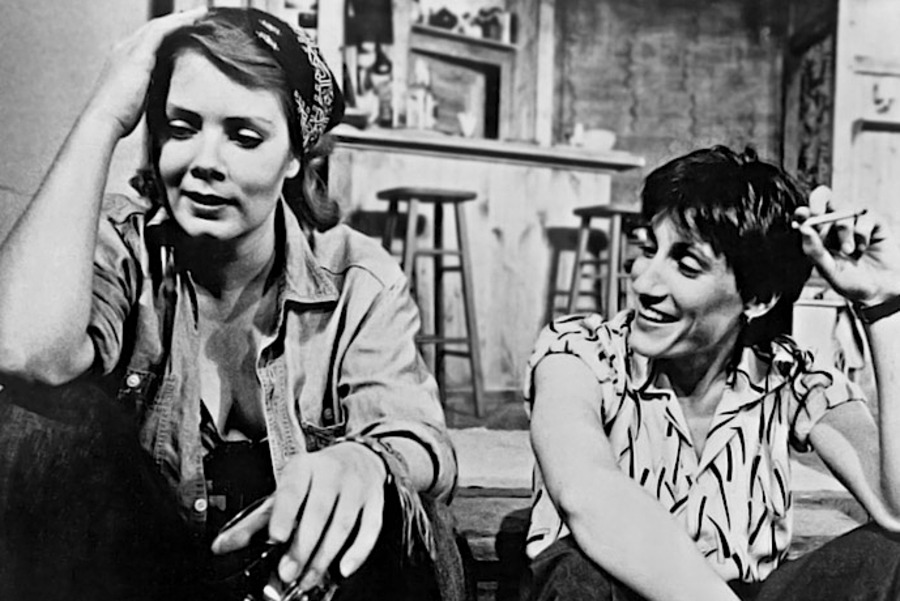
On Dec. 22, Last Summer at Bluefish Cove premiered Off-Broadway at Actors’ Playhouse. The Jane Chambers play follows a group of queer women vacationing at the remote waterside destination Bluefish Cove, when a straight woman arrives and disrupts the group’s routine. The play has been lauded for its representation of lesbian characters as three-dimensional, healthy (aside from one character facing a terminal illness), and happy, subverting pathologized representations of lesbian characters. Following Last Summer at Bluefish Cove, the Chambers play Kudzu was optioned for Broadway, which would have made it the first play about lesbians written by a lesbian to be produced on Broadway. But the producer dropped the play following the playwright’s brain cancer diagnosis, which would eventually lead to her passing in 1983.
Further Reading

Support American Theatre: a just and thriving theatre ecology begins with information for all. Please join us in this mission by joining TCG, which entitles you to copies of our quarterly print magazine and helps support a long legacy of quality nonprofit arts journalism.