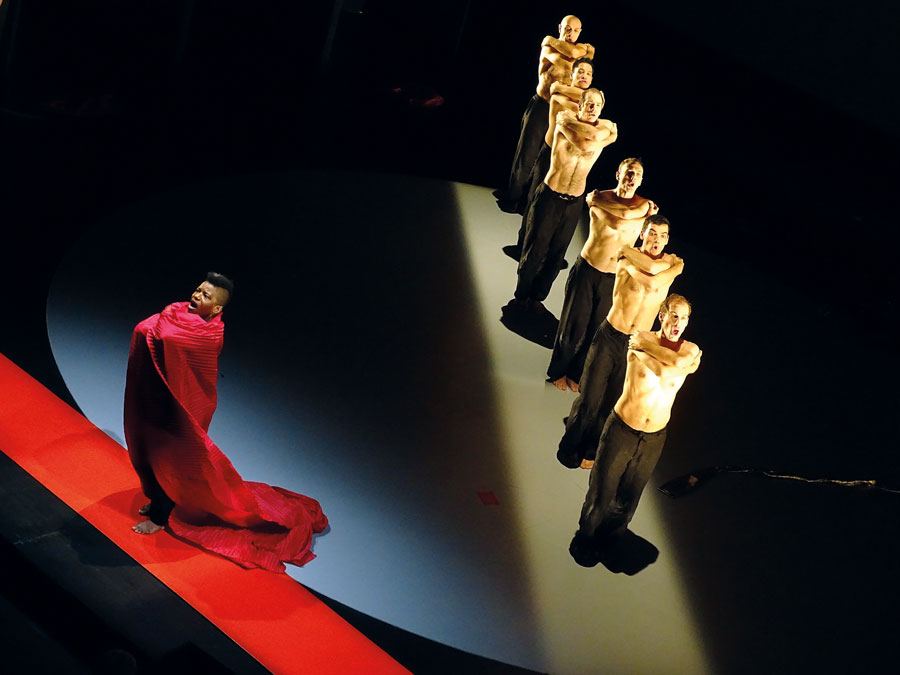
“I’m losing my health and making enemies all over the shop,” exclaims the struggling literary critic Belinsky in part one of The Coast of Utopia, “because I believe literature alone can, even now, redeem our honor, even now, in words alone, that have ducked and dodged their way past the censor, literature can be…become…can.” At which point he runs out of breath and self-confidence for a moment before resuming: “Art has the right to be useless, an end in itself, for its own sake…It only has to be true.” Invoking the image of wooden matryoshkas, he clarifies: “Not true to the facts, not true to appearances, but true to the innermost doll, where genius and nature are the same stuff. That’s what makes an artist moral.”
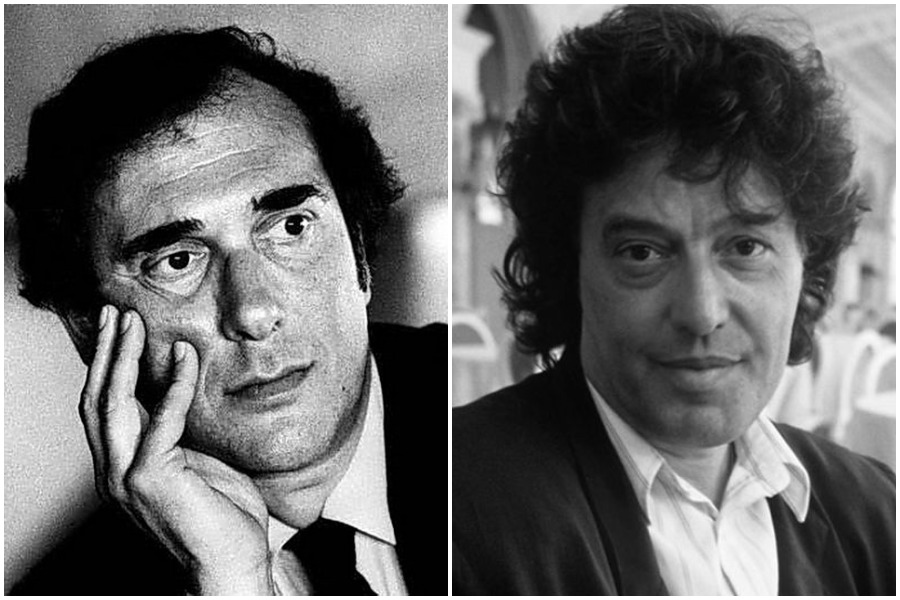
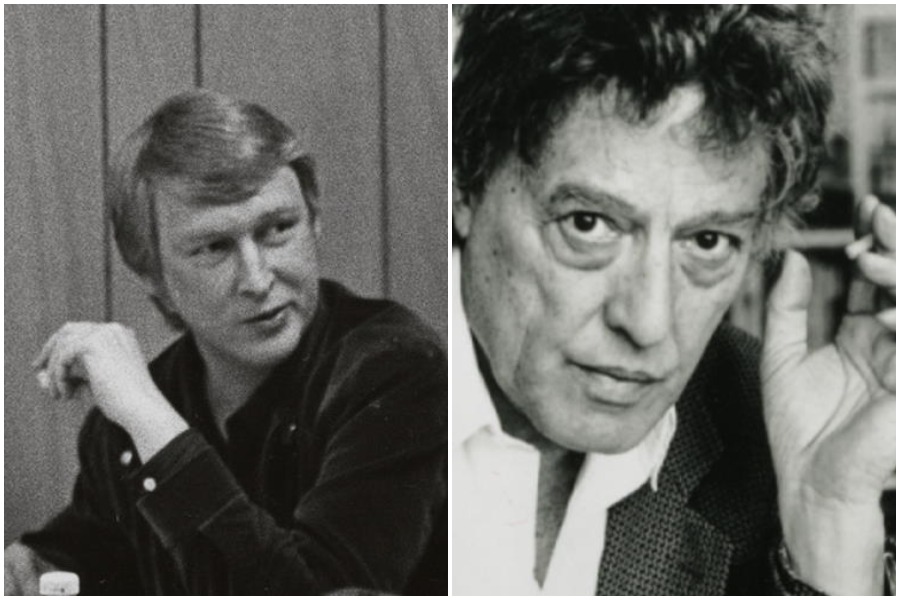
I find that such an extraordinary statement. In a culture in which art is increasingly instrumental and theatre is expected to make a point or stake a claim, Tom Stoppard’s work has always been the wild and irreverent outlier, always true to its “innermost doll.” With each new play, he conjured a world we’d never been to, colliding people together who would never actually have met, detonating ideas that bounced off each other with the delightful music of his vast imagination.
Being in the rehearsal room with Tom was like a mashup of a sports event and a colloquium: You got smarter and you got faster as time went along. The reason we who had the privilege of working with him loved it so much is that his plays demand the highest level of collaboration from everyone involved. Although, like Henry in The Real Thing, Stoppard believed that “words are sacred. They demand respect,” he also understood that a playscript is the springboard by which other artists can dive into the pool. That’s why he was never prescriptive, either ideologically or theatrically. On the contrary, he was most delighted when you arrived at a solution he hadn’t considered himself. Which meant that I always had to up my game when I worked on one of his plays.
I first met Tom in a bar at the National Theatre in 1993 when I was trying to get the rights to Arcadia for American Conservatory Theater. Hoping he’d take me seriously, I had dressed up in a suit to meet him (that made him laugh—he later told me I looked like a banker). I needn’t have worried. It wasn’t just the slight hint of an Eastern European accent I immediately sensed; he also had a warmth, a sexuality, an eccentricity, a shyness (that “outsider” status), a verbal panache, and an intellectual curiosity that felt familiar to me. Under the British veneer, he was at heart a Central European Jewish refugee, like my beloved mother, whom he came to know and admire later in life. I could tell that somewhere underneath, there was sorrow—a sorrow that reminded me of my beautiful Viennese grandmother, on whose face there was always the trace of a memory of what she had lost. As soon as I met Tom, I began to understand Arcadia in a different way: Thomasina’s anguished exclamations about the lost plays of Euripides, while hilarious, were also Tom’s way of reckoning with the grief of losing art destroyed by war, ideology, and indifference.
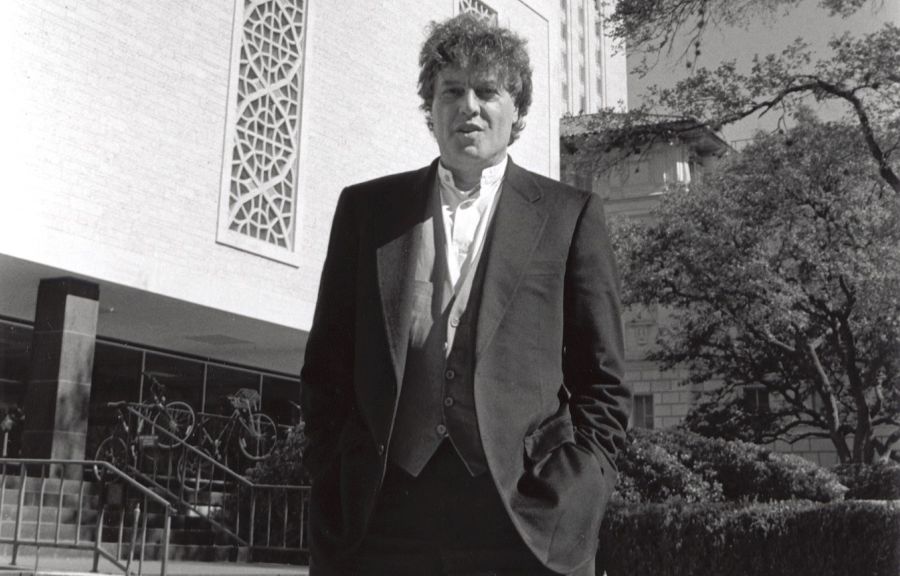
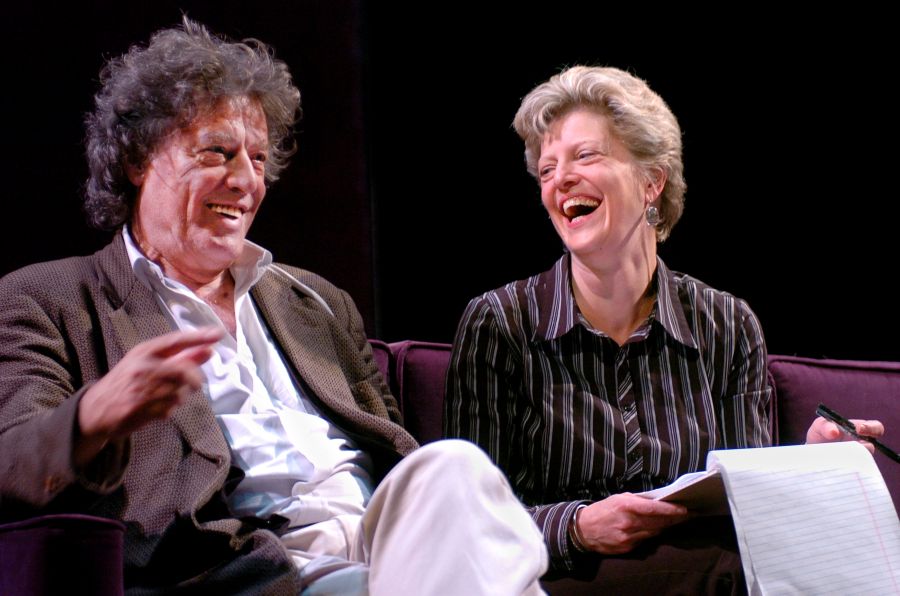
I proceeded to spend much of my career as artistic director of ACT directing Stoppard plays, and almost every time I did, he was with us in rehearsal. Stoppard loved every moment of the process of making theatre: the writing, the rewriting, the first table read, the staging process, the technical rehearsals—all of it. He used to smoke in the back of the Geary Theater while light cues were being written. When the ushers told him it was forbidden, he’d smile charmingly. “Yes, I know.” And keep right on smoking.
Astonishingly for one so famous, he was willing to make bespoke versions of his plays to suit the exigencies of a particular moment. “I’ve been happily immersed in the text, and as a consequence we will need to spend some time on the phone to go through my offers of excision, clarification, and correction,” he wrote me before we started our second pass at Indian Ink in 2014. Can you think of another playwright, even one not half as famous, who would make “offers of excision, clarification, and correction” a decade after the play has already premiered? That was standard Stoppard.
When I wrote my book about collaborating with Stoppard and Pinter, I unearthed pages of faxes Stoppard had sent me in response to queries about Max’s behavior in a difficult scene of his 2008 play Rock ’n’ Roll, and I was struck again at his astonishing generosity, his willingness to walk a director or an actor through a thorny bit of text until there was either clarity, or, if necessary, a rewrite. He longed for a literate audience that would instantly recognize his copious references, but he was never above looking for the laugh and landing the pun. When a nervous student at ACT once asked what he valued most in an actor, he instantly replied, “clarity of utterance.” The rest could take care of itself.
Tom Stoppard was shy. I think that’s what people often got wrong about him; he seemed so urbane, so on top of everything. But his pyrotechnics masked a kind of diffidence that arose in part from his refugee status (he once said he always felt as if he were in England on a “press pass” and was keenly aware that English wasn’t his first language), and in part from his unorthodox rise to the top. His work is full of divided characters with multiple names because he himself lived that reality. Even before he had really excavated his Jewish past, he was a man with two names, two histories, two selves. The perfect recipe for dialectical drama. And because he never went to university (yet wrote the most glorious play about Oxford in The Invention of Love), he spent the rest of his life obsessed with learning. “It’s wanting to know that makes us matter,” Hannah insists to Valentine in Arcadia.
Over the course of many years, Stoppard became deeply woven into the lives of my own family: My son Nick created the score for The Hard Problem, my mother Marjorie’s memoir helped inspire Leopoldstadt, and Stoppard and I both had physician fathers who specialized in the heart. I was sitting with Tom in rehearsals for Indian Ink in New York just after I’d learned that my own father had died. “There are nine rasa, each one a different color. I should say mood. But each mood has its color,” the painter Das was explaining onstage. “White for laughter and fun, red for anger, pale yellow for tranquility.”
“Oh…is there one for grey?” Flora asked Das.
At that moment, Stoppard reached out and took my hand. “Grey is for sorrow,” Das replied.
The sorrow I feel at losing Tom Stoppard is immeasurable. He cracked open my world. When we opened Indian Ink again in 2014, he gave me a set of Indian prints with handwritten captions. One was of a woman holding a scimitar over her head with a determined glint in her eyes; the caption read: “Carey—how I see you! With love from Tom.”
In truth, it never took a scimitar with Tom. You’d put your hands out and manna would fall from heaven. I hope I will have the joy of directing his work forever. And when I walk into rehearsal for Leopoldstadt in Chicago this spring, I know he’ll be alive again somehow.
“When I’m writing a play, that’s not a job,” he once said. “Writing a play is life.”
Carey Perloff is an American theatre director, playwright, author, and educator. She was the artistic director of American Conservatory Theater in San Francisco from 1992 to June 2018.