1916 (110 years ago)
Playwright and screenwriter Horton Foote was born on March 14 in Wharton, Texas. Best known for his screenplay adaptation of Harper Lee’s To Kill A MockingBird, his stage plays depict rural American life, with notable works including The Trip to Bountiful, The Travelling Lady, and Baby, the Rain Must Fall. In 1995, The Young Man from Atlanta won the Pulitzer. In a letter recommending his play for the prize, chairman Richard Christianson wrote, “Mr. Foote’s sure, almost invisible ability to deeply touch the viewer with the seemingly everyday conversations and actions of his ordinary people is amazing.” Regarding his own practice, Foote said, “My plays come out of a lot of meditation. I do not know where they come from, but they’re very persuasive when they start going in me.”
1961 (65 years ago)
On March 1, Pulitzer juror and critic John M. Brown sent a letter on behalf of the advisory board recommending four plays for consideration: Becket by Jean Anouilh, Rhinoceros by Eugène Ionesco, A Taste of Honey by Shelagh Delaney, and All the Way Home by Tad Mosel. Brown wrote that these were the only plays in the season “worthy of the attention of the Pulitzer committee,” but that all except Mosel’s play should be “rigidly excluded from consideration” because the other authors were not American. All the Way Home was also considered by some a problematic choice for the prize because it was an adaptation of James Agee’s novel, A Death in the Family, which had won the Pulitzer for Fiction in 1958. A portrait of a Tennessee family after the sudden death of the father in a car accident, All the Way Home won the Pulitzer for Drama that year. Brown wrote that he “found it a deeply moving, all-including experience.”
1971 (55 years ago)
Edward Albee’s All Over, directed by John Gielgud and starring Jessica Tandy and Colleen Dewhurst (who won a Tony and Drama Desk for her performance), previewed at Broadway’s Martin Beck Theatre on March 15 and opened on March 28. In the play, a wife and mistress wait for the man to whom they are both tethered to die. When interviewer Bruce J. Mann later remarked that he could detect echoes of All Over in Albee’s more famous 1991 play Three Tall Women, Albee replied that they were written by the same guy.
1986 (40 years ago)
The one and only production of The Trial of Joan of Arc in a Matter of Faith, written and directed by María Irene Fornés, ran at the Theatre for The New City in New York. Fornés’s unpublished play used transcripts from the trial of Joan of Arc in Rouen in 1431 on charges of heresy against the Roman Catholic Church.
1996 (30 years ago)
On the advice of legal counsel John Wertz, San Diego Repertory cancelled the American premiere of Lennon, which portrayed John Lennon’s life with 40 songs from his repertoire, many of which were owned by his widow Yoko Ono. Though the theatre sought permission from Ono to include the songs, they received no definitive response and determined that the legal risk was too great. Just nine years later, Orpheum Theatre in San Francisco premiered a different version of Lennon, using found text and with full script approval from Ono.
2016 (10 years ago)
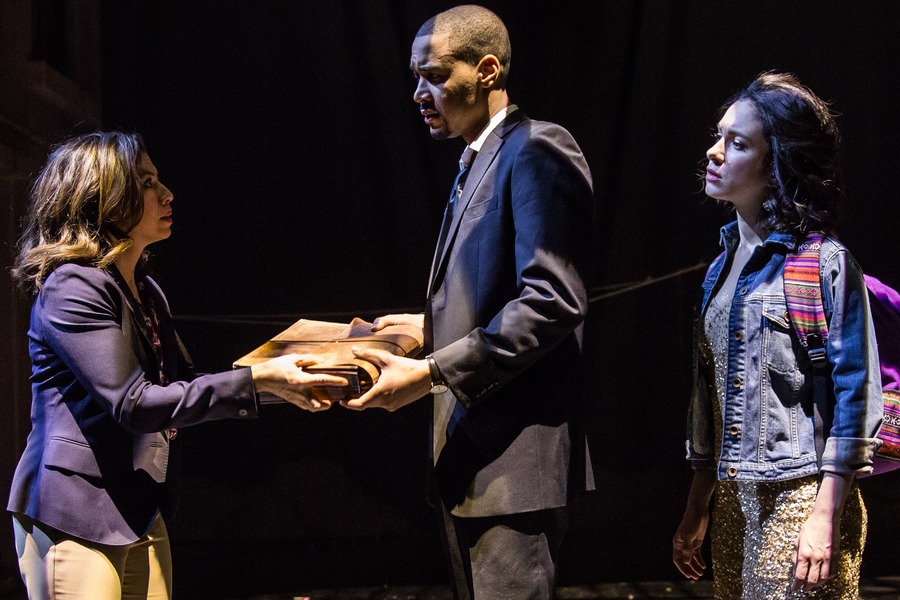
With a whopping five-and-a-half-hour run time, Roberto Bolaño’s 2666, adapted and directed by Robert Falls and Seth Bockley, closed at the Goodman Theatre in Chicago (it had opened in February). The original novel by the Chilean author and poet was published posthumously in 2004. In a promotional video for the production, Bockley said that the production tried to preserve the “sense of scope, ambition, and audacity” of the original. With two directors, two dramaturgs, and an ensemble of 15 actors playing 80 characters, the multimedia production unveiled a sprawling narrative in which academics’ search for an author leads them to a Mexican border city and the unsolved murders of hundreds of women. (The play can be streamed for free here.)
Support American Theatre: a just and thriving theatre ecology begins with information for all. Please join us in this mission by joining TCG, which entitles you to copies of our quarterly print magazine and helps support a long legacy of quality nonprofit arts journalism.