New Mexico’s most populous city, the ancestral home of the Tiwa Pueblo nation, is now home to a rich cultural life that includes ABQ Bio Park and Albuquerque Museum. Bisected by the Rio Grande and lined by the Sandia Mountains to the east and the West Mesa, it’s also home to Duke City Repertory Theatre, a little but fierce theatre company that stages “Bard Crawls” of Shakespeare plays as well as developing new plays. We spoke to the company’s founding artistic director, Amelia Ampuero, recently over email about staging work in new ways, charging people only what they can pay, and putting process before product.
AMERICAN THEATRE: Who founded Duke City Rep, when, and why?

AMELIA AMPUERO: I started Duke City Rep in 2010 with a handful of local and regional theatre artists. I had spent most of 2007 auditioning around the country, and every time I walked into an audition, I never saw someone who looked like me on the other side of the table, which made it clear I was going to have to build that space for myself. I wanted a theatre for Albuquerque that would be the artistic equivalent of a teaching hospital: a place where we could cultivate the skills of the city’s culturally diverse creatives while giving them the opportunity to work and learn alongside experienced regional artists. The focus was to be on artistic growth and excellence. And I, somewhat naïvely, thought we’d also finally provide Albuquerque with a professional theatre. (That last point was naïve on my part: Albuquerque has a robust, if somewhat unknown/underestimated theatre scene, whose companies range from community based to experimental to professional Equity houses.)
Tell us a little more about yourself and your background.
I am the youngest daughter of Bolivian immigrants who, much to my parents’ chagrin, fell in love with theatre in high school. Although I was born in Brooklyn, I was raised on the green chile and sunsets of Albuquerque. After receiving my BFA from Texas State University, I went on a bit of a Shakespeare bender, doing a study abroad program with the Royal Shakespeare Company and one of the month-long intensives at Shakespeare & Co. From there, I did a contract with the historic Barter Theatre in Virginia as a Barter Player (doing theatre for young audiences) before becoming a resident company member in 2006. The bulk of my education came from the incredible artists I worked with at Barter, and it was instrumental in shaping not just the artist I am today, but the ideology that became the foundation for Duke City Rep, which is to serve the audience.
What sets your theatre apart from others in your region?
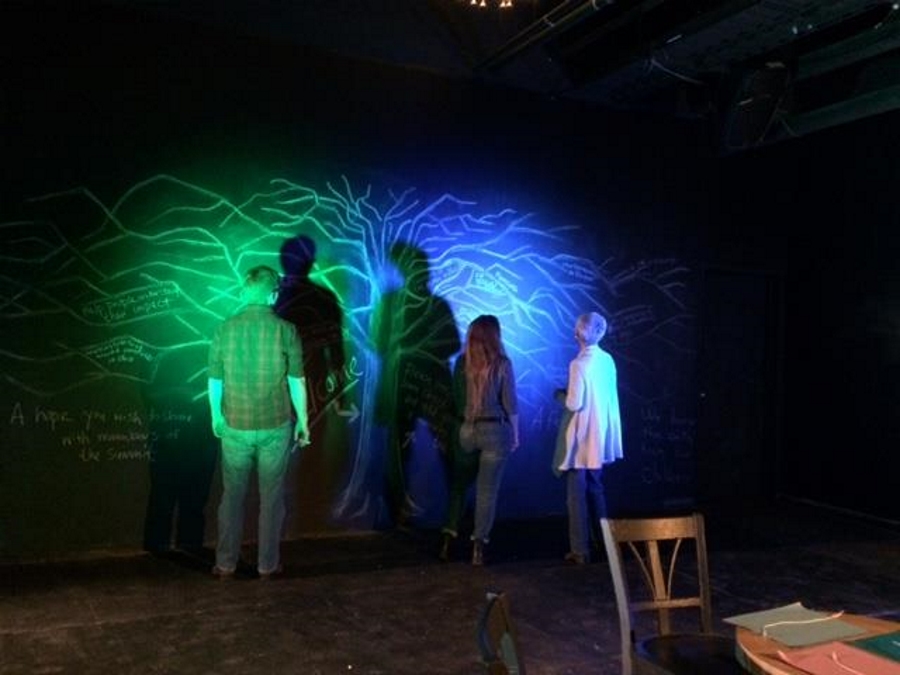
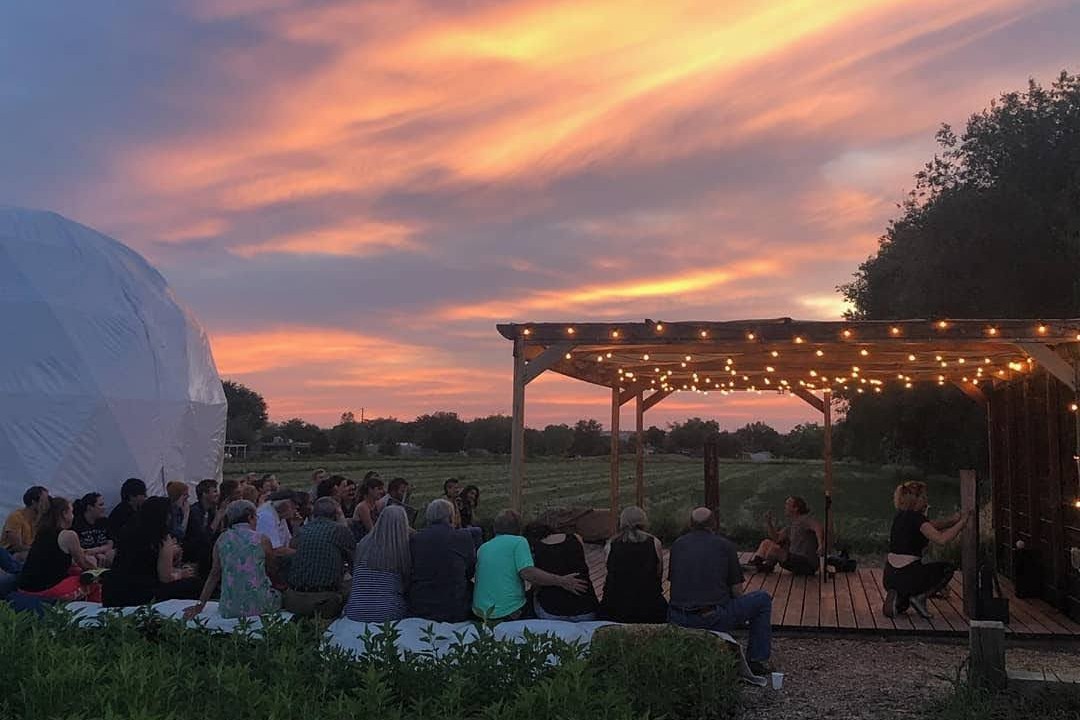
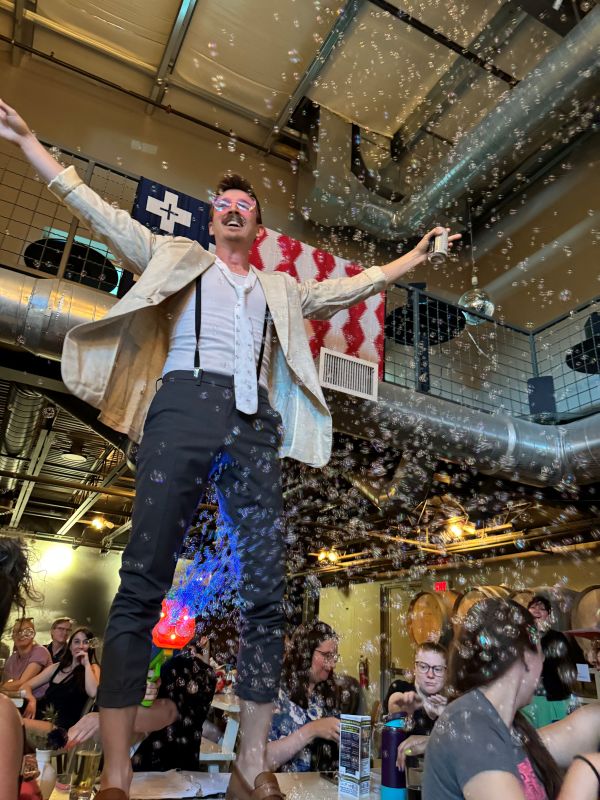
First, we don’t have a brick-and-mortar space. We perform in breweries, museums, homes, bed & breakfasts, farms—basically anywhere that will have us. It wasn’t always like that, but especially after Covid, we could either spend money on a space or on the artists creating the work. That was an easy decision to make. And once we dropped the limitations of traditional performance spaces, Duke City Rep really started to reimagine what theatre is and who it’s for.
Second, we are process-over-product-oriented. The goal is for every artist to leave their tenure with DCRT (whether that’s one show or several seasons) not only a better artist but also a better human being. One of the best things about performing in Albuquerque is how incredibly open-minded and diverse our audiences are, which gives us the freedom to play fast and loose with casting, thereby presenting work that reflects our community. We don’t do “types” at Duke City Rep; we cast and hire based on which role will give an actor the greatest opportunity for growth.
Lastly, we moved to a Pay What It’s Worth ticket structure back in 2019. Every single Duke City Rep show is Pay What It’s Worth, and attendees decide the value of their ticket after the show. There is no minimum or maximum for a “ticket.” Moving to this structure greatly diversified our audiences and increased our ticket revenue, which is very cool.
Tell us about your favorite theatre institution other than your own, and why you admire it.
It’s hard to narrow it down to one! Barter Theatre will always have a piece of my heart because it was so instrumental in my artistic development. I also have mad respect for Back Room Shakespeare Project in Chicago for having the guts to posit that maybe there’s a different way to do Shakespeare’s plays in this country. Lastly, France’s Théâtre du Roi de Coeur and the community-driven music festival Porchfest. Roi de Coeur and Porchfest were really influential to Duke City Rep when we decided to move away from traditional performance spaces. Their work gave us a roadmap for how to do it—not just how to present theatre in non-traditional spaces but how to connect to our community through those spaces as well.
How do you pick the plays you put on your stage?
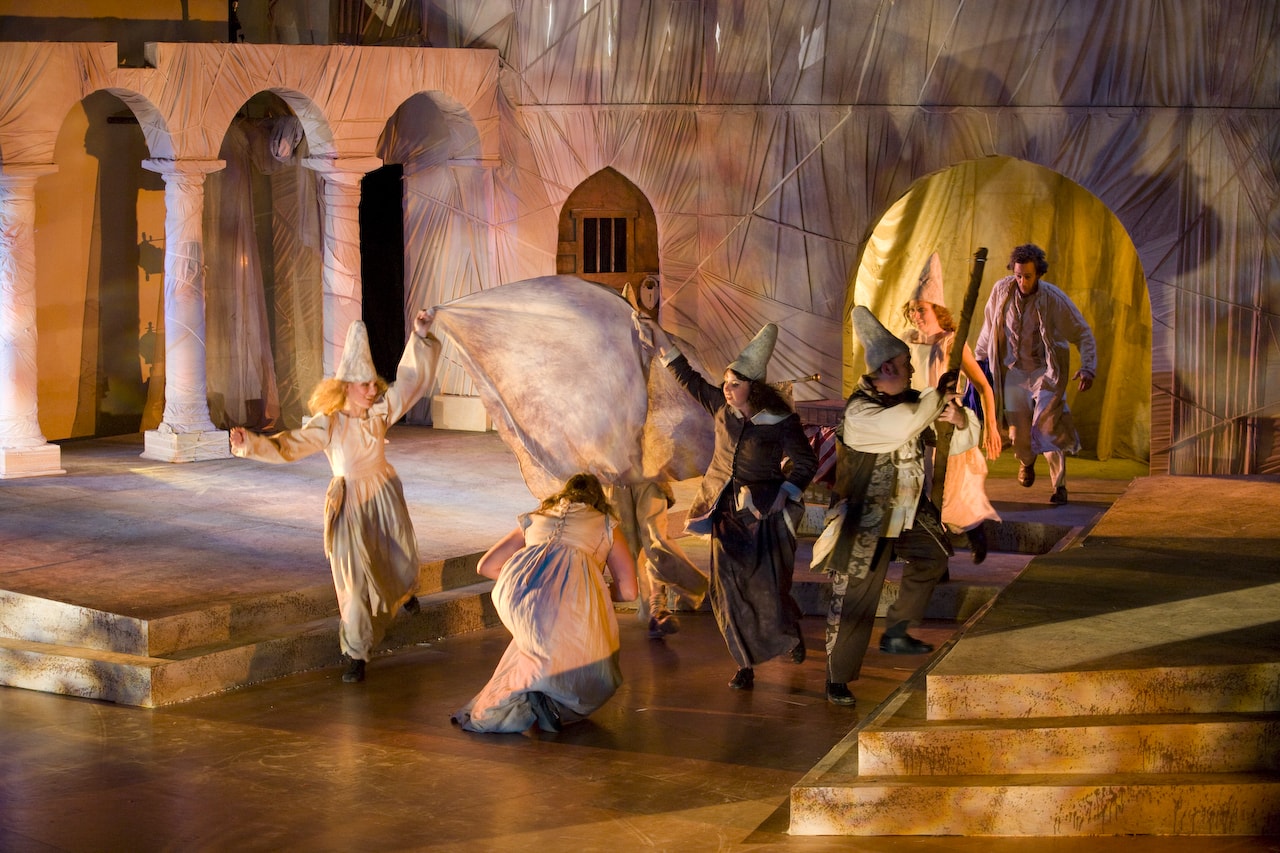
In recent years, we’ve moved towards really investing in new works by local artists. We look for stories that will resonate with the communities of Albuquerque, give a platform to historically ignored artists, and offer our audiences a different perspective. And of course, we do at least one Shakespeare play a year for Bard Crawl—a project that is based on Back Room Shakespeare Project and involves taking a full-length Shakespeare play (that has only one rehearsal and no director) into breweries and beyond. Our Bard Crawl selections are chosen based on the new perspectives we might bring to these 400-year-old plays that have been performed hundreds of times.
What’s your annual budget, and how many artists do you employ each season?
Our annual budget is $70,000. We have a core team of four, and depending on our programming, we employ between 24 and 40 artists each year. Obviously, we don’t pay a living wage (yet), but our stipends are among the most competitive in the state.
How is your theatre rising to meet the challenges of the moment, including but not limited to the continuing aftermath of Covid lockdowns, widespread demands for a fairer industry, and the current funding climate?
One of the largest impacts we felt during and after Covid was the lack of performance space. Albuquerque is home to several amazing small companies, none of which can afford to have our own spaces year-round, and we relied on several larger companies that did have their own venues. Tragically, a few of those larger companies shut down in 2020, and that’s when we made the full pivot to exploring how theatre can be made in non-traditional venues. This allowed us to do socially distanced outdoor theatre and streaming performances at the height of Covid, which broadened our reach, and led us to presenting programming that checked a lot of boxes for grant organizations.
Because we didn’t have a venue that needed to be paid for, we really backed off of fundraising on the private level. We knew our audiences were struggling to make their own ends meet; we couldn’t ask them to consider a donation when they were worried about surviving. But we kept the Pay What It’s Worth structure and found that while there are definitely people who pay $5 or less for a show, there’s just as many who will pay four or five times the suggested ticket price.
Lastly, having a theatre company led by a first-gen Latina has helped us be years ahead of the curve in terms of equitable inclusion. We aren’t perfect and there’s still work to do, but Duke City Rep has consistently been a leader in terms of diversity and representation on our stages. We’ve held strong to our value of treating everyone from actors to audiences with dignity and respect. If we ask our artists to be brave and vulnerable in the creation of art, that means respecting the minds, bodies, and souls of every single person we work with.
What show are you working on now? Anything else in your season that you’re especially looking forward to?
We recently did Bard Crawl: Comedy of Errors, which was so delightful to do in non-traditional spaces. Now we’re working on Bard Crawl: Hamlet, which will take place in October. We’ll also begin prep for the 2027 Sin Límites New Works Festival, a festival that celebrates New Mexican voices and stories, presenting the works in non-traditional, site-specific venues.
Strangest or funniest thing you’ve ever seen (or put) on your stage?
This is also tough to narrow down! Two things immediately come to mind: An actor forgot his prop knife during a show where he was supposed to slice his hand open with said knife. When the moment came, and the knife was nowhere to be found, the actor went with his gut instinct and just…ate his own hand, attacking it like he was a rabid dog. I don’t know if the audience even noticed, he was so committed, but those of us onstage with him very nearly lost it.
The second was during a holiday production, The Ugly Sweater Revue, a variety show cabaret. We invite local comedians, aerialists, dancers, and burlesque acts to perform. Last year we had a burlesque act based on the movie Gremlins, complete with Mogwai getting wet and transforming into Greta (the girl gremlin). It was strange, sexy, and hilarious.
What are you doing when you’re not doing theatre?
Catching up on sleep! But I also try to spend time outside hiking in the Sandia Mountain foothills or walking by the Rio Grande. Albuquerque has over 300 days of sunshine a year, so I try to take advantage of the incredible weather here. I also love to read, cook, travel, and spend time with friends who have nothing to do with Duke City Rep. It helps me to reset and recharge.
What does theatre—not just your theatre, but the American or world theatre—look like in, say, 20 years?
I think there are ways that theatre may have to evolve in the coming years that have less to do with specific programming and more about how we reach and connect with our audiences. My hope is that the industry will find a way to make theatre more accessible to audiences—whether that’s innovative payment structures, radically diverse and inclusive casting practices, more pro shots of major Broadway shows, relaxing stuffy theatre etiquette practices that alienate younger audiences, or exploring more non-traditional venues. I know this isn’t a universal experience, but here in Albuquerque, when I speak to people who don’t go to the theatre regularly, their reasons overwhelmingly have to do with not feeling welcome in traditional theatres. They’re worried that they won’t get theatregoing “right,” that they’ll feel out of place or won’t be able to show up as their authentic selves. I truly believe that theatre will never truly be at risk, because at the end of the day, people crave human connection. We as theatremakers and artists have to explore what we can do to increase access to that connection, and that may mean doing away with some outdated beliefs and practices.