DALLAS: They already share buildings, so why not share staff, scene shops, and other resources? That’s at least part of the logic behind the newly announced merger of the multi-venue AT&T Performing Arts Center (AT&T PAC) and Dallas Theater Center (DTC), which if approved by the boards of both organizations will make DTC the official producing arm of A&T PAC, primarily a presenting outfit for resident performing arts companies and other entertainment, in early 2027.
There are some hard economic reasons too: Both organizations have faced significant deficits in recent years. A Dallas Morning News piece quoted an A&T PAC staffer as saying that eliminating “redundancies in marketing, accounting and ticketing” would mean that 10-12 percent of the combined staffs would be laid off. The organizations’ two boards would also be blended into one.
Reached by phone, incoming DTC artistic director Jaime Castañeda stressed the positives of the new proposed arrangement. Though he only began at his new job in June, Castañeda said he’s already had a lot of conversations about finding “more efficient ways to produce in the same theatre where our landlord is also presenting work.” The merger would mean that both DTC’s mainstage productions and the offerings of AT&T PAC—which range from comedy to ballet to opera—would continue, but with changes on both the back and front ends that could benefit both artists and audiences.
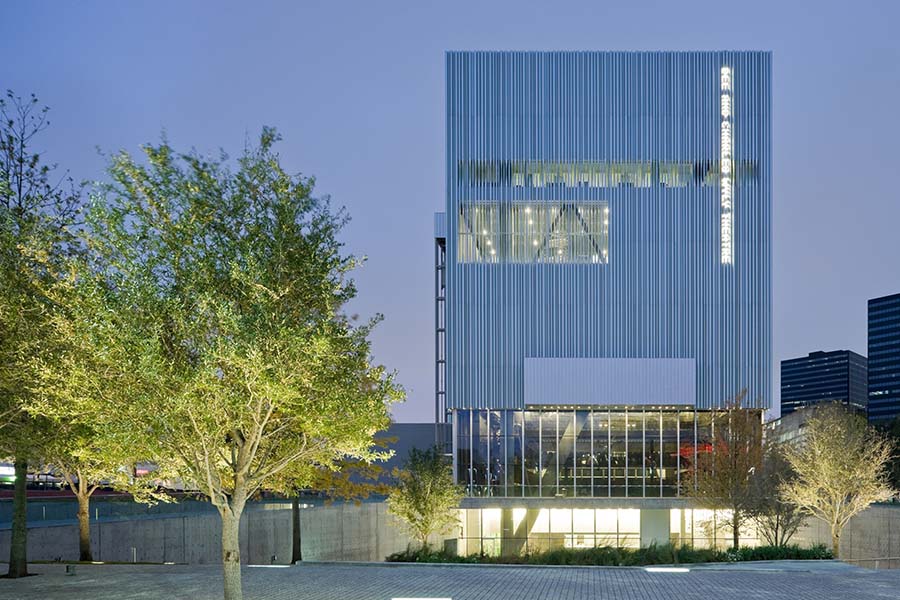
“The upside for artists is that we can do more things in more places,” Castañeda said, referring to the possibility of DTC productions appearing in the A&T PAC’s 2,200-seat Winspear Opera House; their productions have hitherto been staged at two spaces in the center—the 575-seat Wyly Theatre and the 200-seat Wyly Studio—as well as at the Kalita Humphreys, a Frank Lloyd Wright-designed space which seats around 400 and is about a 15-minute drive from the AT&T PAC’s downtown location. (The new merger would also bring the Kalita under the purview of the combined producing/presenting organization.) And while the details will have to be worked out by the newly combined sales and marketing teams, the chance for combined subscription and other ticketing packages could stand to benefit audiences for both AT&T PAC and DTC.
Concluded Castañeda, who has already begun to refer to the not-yet-officially-merged company as “we,” and who will lead alongside AT&T PAC president/CEO Warren Tranquada, “This deal will allow us to fold our operations together under one roof. How we keep all the spaces busy and humming is now our combined job.”
In an official statement, Tranquada pronounced that in the faced of the industry’s “profound systemic change nationwide…stagnation is not an option.” In its FAQs, the organizations pointed to changing audience behavior, a shift that they cited was “underway for years, but accelerated by COVID.” They also noted shrinking government support as a factor.
Since AT&T PAC’s opening in 2009, DTC has been one of its five resident companies. The others include Anita N. Martinez Ballet Folklorico, Dallas Black Dance Theatre, the Dallas Opera, and Texas Ballet Theater, who will continue to be part of the center’s programing.
“By coming together, we are able to achieve much more than either of us could do on our own,” said DTC executive director Kevin Moriarty in a statement. Moriarty’s job will be among the casualties of the proposed merger, though he will continue at his post through the transition and integration before leaving. He began as DTC’s artistic director in 2007.