1870 (155 years ago)
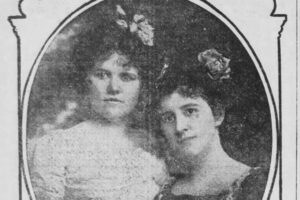
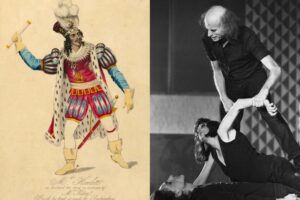
Playwright Pauline Phelps was born on Nov. 13 in Simsbury, Connecticut. Some of her works include The Sweet Girl-Graduate (1899), Aunt Sarah on Bicycles (1899), Aunt Elnora’s Hero (1900), Her Cuban Tea (1902), A Millinery Mêlée (1904), Deacon Slocum’s Presence of Mind (1904), and Betsy Holden’s Burglars (1906). She often co-authored with Marion Short and sometimes used the pen name Paul Marion. Her short play A Shakespearean Conference (1901) features a group of characters from Shakespeare’s plays, including Romeo, Juliet, Shylock, and the Macbeths, discussing how to get more people to come see their plays.
1940 (85 years ago)
Hansberry v. Lee, the case that inspired Lorraine Hansberry to write A Raisin in the Sun, was decided by the Supreme Court of the United States on Nov. 12. In 1927, white residents of Chicago neighborhoods had entered a covenant which restricted homeowners from selling or renting their homes to Black people. Carl Hansberry, real estate broker, Civil Rights activist, and father to Lorraine Hansberry, bought a home in a neighborhood controlled by this covenant. Anna M. Lee sought to enforce the covenant against Hansberry and the homeowner who sold him the house to void the sale. Hansberry’s lawyers argued that the covenant was not enforceable because only 54 percent of residents had signed it instead of the required 90 percent. The court ruled in Lee’s favor despite the facts of the case, ruling in line with a previous decision (Burke v. Kleiman) which had treated the covenant as enforceable. Lorraine Hansberry was 11 years old at the time of the decision.
1975 (50 years ago)
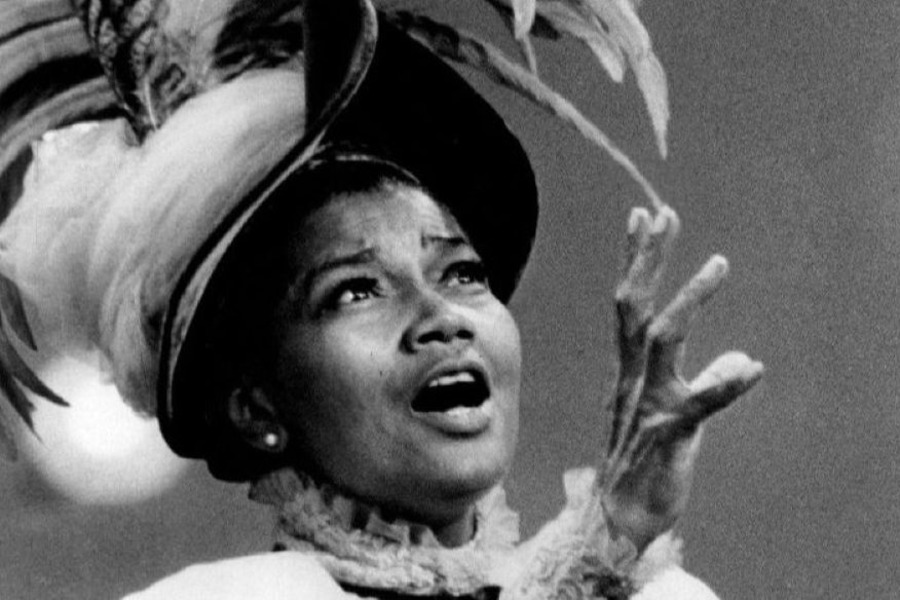
An all-Black cast revival of Hello, Dolly! opened on Broadway on Nov. 6, starring Pearl Bailey in the title role. Bailey was an actress, singer, comedian, and writer. The musical’s short 42-performance run belies the enthusiasm from critics. “For Miss Bailey this was a Broadway triumph for the history books…She took the whole musical in her hands and swung it around her neck as easily as if it were a feather boa,” said New York Times critic Clive Barnes. Bailey had taken over the role of Dolly in the show’s original production in 1967 and won a special Tony for the performance.
1980 (45 years ago)
George Frederick Cooke’s skull appeared in the role of Yorick in a production of Hamlet at Mercer Community College in West Windsor, New Jersey. Cooke was an 18th-century Shakespearean actor who found success on both London and American stages as well as developing a reputation for drunken recklessness. He triumphed on stages in Philadelphia, New York, Boston, and Baltimore until his sudden death in 1812. Years after his death, it was rumored that he was still appearing in the role of Yorick at the Park Theatre in New York. In at least one performance, this rumor was true: Dr. John W. Francis, the physician who performed the autopsy of Cooke’s body, lent Cooke’s skull for one performance and also used it in a phrenology lecture. The skull is currently in the possession of the Jefferson University Medical School in Philadelphia. The relic was offered on loan to productions of Hamlet in need of a Yorick (if they could front the $25,000 bond to ensure its safe return). The university plans to offer theatres the ability to download a digital scan of the skull and 3-D print a Yorick themselves.
2010 (15 years ago)
The world premiere of The Fox on the Fairway, a comedy written by Ken Ludwig and directed by Tony winner John Rando, closed at the Signature Theatre in Arlington, Virginia. The New York Times described the play as an “old-fashioned knockabout farce.” Best known for Lend Me a Tenor and Crazy for You, Ludwig has seen his work translated into over 20 languages. This fast-paced romp, set in the tap room of a private country club, has become a favorite of community theatres and colleges.