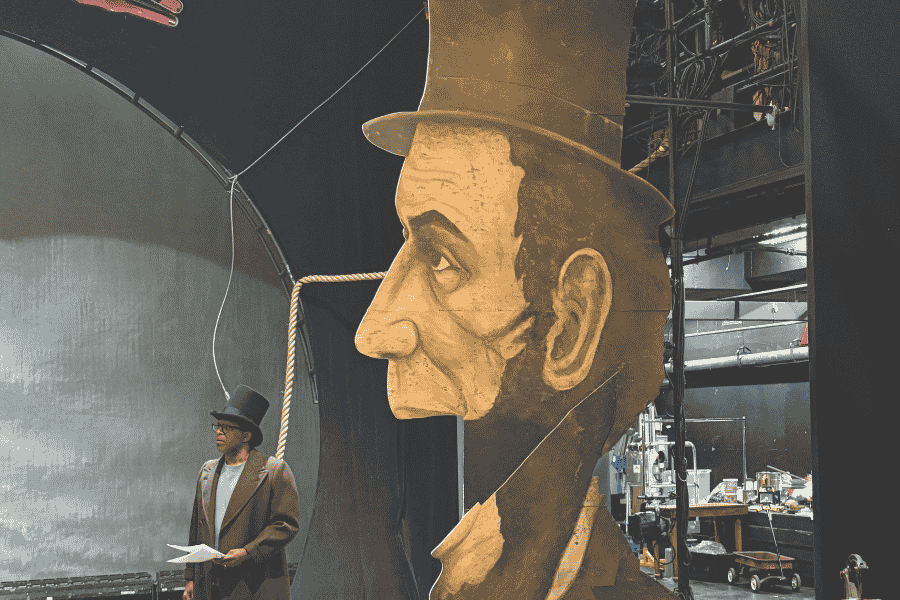
Back in 2019, history professor Heather Cox Richardson started posting summaries of the day’s political news on her Facebook page. These personal messages soon evolved into Letters From an American, an acclaimed nightly newsletter on “the history behind today’s politics” that has become part of my bedtime wind-down routine—and with an online readership in the millions, maybe it’s part of yours too.
In a chaotic, contentious, and fast-moving political climate that feels designed to disorient and overwhelm, Richardson’s straightforward analysis offers a grounding clarity that helps me process and make sense of the day’s news. Each night’s distillation situates the headlines of the moment within the larger context and longer throughline of our country’s complicated history, connecting the dots to both monitor and document the health of our democracy in real time. As Richardson puts it: “To understand the present, we have to understand how we got here.”
Reading through this Summer issue of American Theatre, I was struck by a similar sense of grounding clarity, an experience I hope you’ll share. As 250-year celebrations of the United States abound this July from coast to coast and all the places between, the long historical view in these pages expands our perspective and invites a deeper contextual reflection on the evolution and current state of the theatre field, the arts, and civic life in this country. Two feature stories offer a wider lens: one on the history of live performance in the U.S., and the other looking at recent attacks on the NEA alongside other challenges faced by the agency since its founding in 1965. Additionally, a special curated anthology highlights original creative works from Indigenous theatre artists in response to the nation’s 250th anniversary.
The articles in this issue are underpinned by questions around who we are on our own, and who we are together; who we’ve been, and who we might yet become. These questions apply to each of us as individuals, but even more to the role we have to play as artists, and as global citizens; as arts organizations, as collectives, and as institutions; as our theatre ecology, our arts networks, and our broader coalitions; and as community care and civic infrastructure for our country. Where do we find hope in challenging times? How do we care for each other, and navigate together to find our way through? What support systems and sources of inspiration are needed, to hold and fuel and lift us along the way?
There’s a daydream I wander off to sometimes, where I imagine our collective past and collective future getting together and reaching across time to find us all hanging together in the rehearsal room of this current moment. Like any good stage manager, the Past calls out a loud and clear five-minute warning, then makes the rounds to check that we’ve all grabbed a snack and handled our business on the break, and are coming back hydrated and ready to work. Seeing us assembled (thank you, five!), the Past confers quickly in the corner with the Future, our director for this “great experiment” of a piece we’re all here workshopping. It’s a long-form devising process, and while collaborative creation is notoriously messy, complicated, and almost never the shortest distance between two points, we also know that how you engage on the journey matters as much as where you’re going.
We’ve been at it a while already, and while some of us are frustrated and feeling stuck, our continuing commitment to each other is to keep showing up. To bring our best and fullest selves to the room, to share responsibility for the process and the work, and to look out for each other when someone is having a rough time, all while listening with curiosity and engaging with respect, even when there’s a lot we don’t agree on. What keeps us in it is our shared belief in and passion for what we’re making, and the responsibility we feel to our group. All of which is helped along by the hard-earned wisdom of our Past and the directing vision of our Future, which now lives inside us all—plus some timely, juicy prompts we take turns bringing into the room, which challenge our imaginations and keep refining our story.
The longer we’re together and our ideas and voices keep building on each other, the more clearly we can see it: this wild and woolly, inextricably interwoven thing we’re making that’s exponentially stronger and smarter and more extraordinary than any of us could have made alone, if only we can manage to get there. As storytellers and shapers of narrative—as culture bearers, and creative world-builders for what’s ahead—we are the fulcrum point. As imagination-fueled dreamers and architects of possibility, our time for action is now. The Future signalled for the house to open a while ago, and the Past is about to call places. Let’s do this.
Alisha Tonsic is co-executive director, national operations and business development of Theatre Communications Group.
More From This Issue
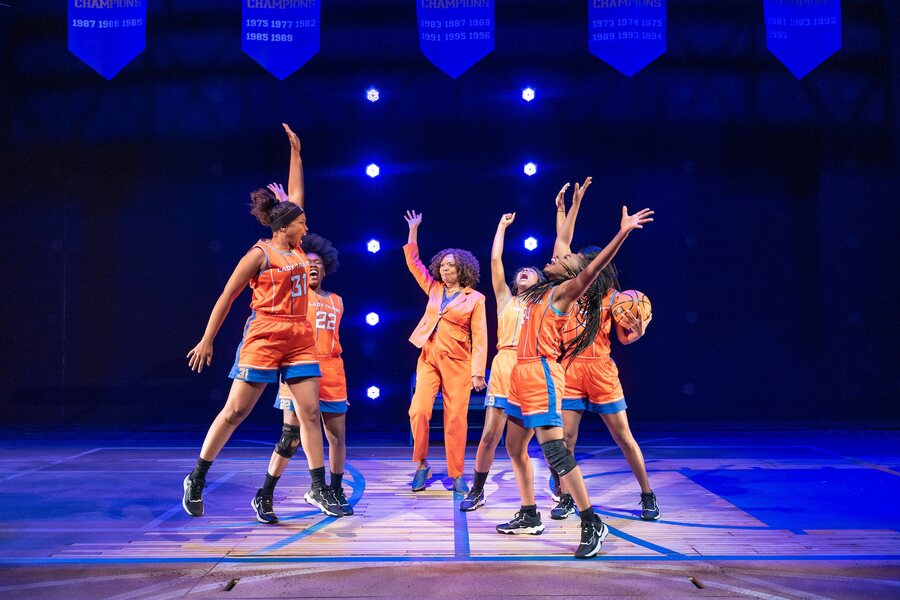
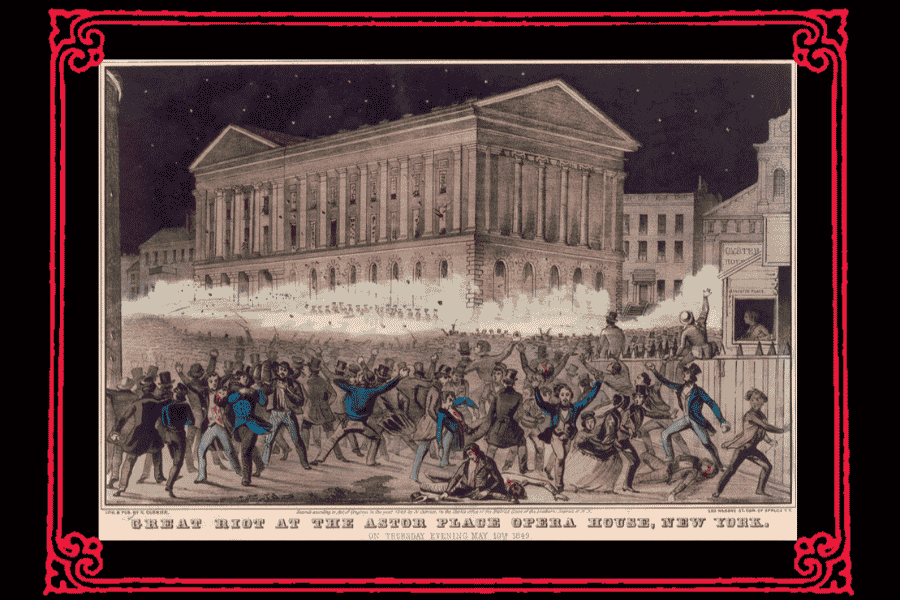
Support American Theatre: a just and thriving theatre ecology begins with information for all. Please join us in this mission by joining TCG, which entitles you to copies of our quarterly print magazine and helps support a long legacy of quality nonprofit arts journalism.