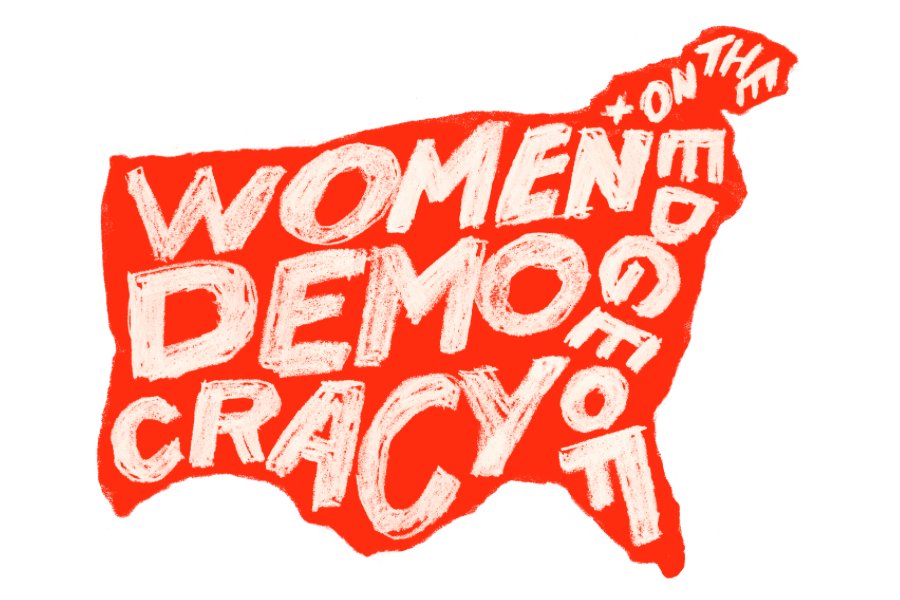
BURLINGTON, VT.: The Flynn Center for the Performing Arts in Vermont has announced that Theatre Communications Group will publish Women+ on the Edge of Democracy, an anthology of more than 30 short plays and monologues from prominent women+ playwrights commissioned as a reflection on the state of democracy in America during the country’s semiquincentennial year. This project is in partnership with the Susan Smith Blackburn Prize, the largest and oldest international playwriting prize celebrating women+ playwrights. The anthology will be available for pre-order in September, and will be published on Nov. 3.
According to the organizers, Women+ on the Edge of Democracy sets out to form a collective portrait of a nation in doubt and transformation, seen through the eyes of women+ playwrights from around the world and from across the political spectrum. Pulitzer, Tony, and Emmy winners and Olivier and Oscar nominees have responded to the questions: What is the current state of democracy in America? What can history, global context, or futurism offer us in this pivotal moment?
“Theatre has always given us a space to wrestle with the most urgent questions of our time, and Women+ on the Edge of Democracy brings together an extraordinary group of playwrights doing exactly that,” said Alisha Tonsic, co-executive director of Theatre Communications Group, which is also the publisher of American Theatre, in a statement. “TCG is proud to collaborate on the publication of this collection and ensure these works reach theatres and communities across the country at a moment when civic gathering, questioning, and imagining together feel especially vital.”
Theatres and organizations can sign up now to join the movement. Advance digital copies of the plays will be provided to theatres presenting a reading or performance of Women+ on the Edge of Democracy this fall. Performance rights will be waived for all nonprofit organizations across the country who stage any of the plays free of charge to the public in Oct. 23-Nov. 3, ahead of the U.S. midterm elections. The marathon world premiere of Women+ on the Edge of Democracy will take place at the Flynn in Burlington, Vermont, in October, with more information to be announced soon.
Dramaturgs for the project include Martine Kei Green-Rogers, Sarah Mantell, Amrita Ramanan, Zeina Salame, and Jenny Worton. Rachel Burttram Powers of Tiny Theater in Birmingham, Alabama, is also one of them. Said Buttram Powers in a statement, “Theatre and democracy share the exact same root: They both began when citizens gathered in a semi-circle to listen to opposing viewpoints and seek a shared truth. In homes across Birmingham, we’re honoring that ancient tradition. By offering a welcome, a reading, and an opportunity for discussion over food, Tiny Theater is creating intimate spaces to contemplate, consider, and really listen to the person sitting next to us.”
MOXIE Theatre plans to organize a reading of the entire anthology across San Diego County. “These plays land in the 12 days before a midterm election, and that timing isn’t decoration, it’s the point,” executive artistic director Desireé Clarke Miller said in a release. “People keep asking why we’re being so audacious about it, and I’d turn the question around: What would a proportionate response look like? Democracy is a practice, not a possession, and it only survives in rooms where people show up for each other. So we’re building as many of those rooms as we can.”
Syracuse Stage, Redhouse Arts Center, Breadcrumbs Productions, and Syracuse University’s Department of Drama have already signed on to collaborate on efforts around this anthology. Said Melissa Crespo, associate artistic director of Syracuse Stage, in a statement: “The Women+ on the Edge of Democracy initiative immediately spoke to us because it creates a space for artists and community members to come together and consider what democracy means in our lives today. As the United States celebrates its semiquincentennial, there is no better time to engage in those conversations. Where better for citizens to gather, reflect, and engage in a free society than the theatre?”