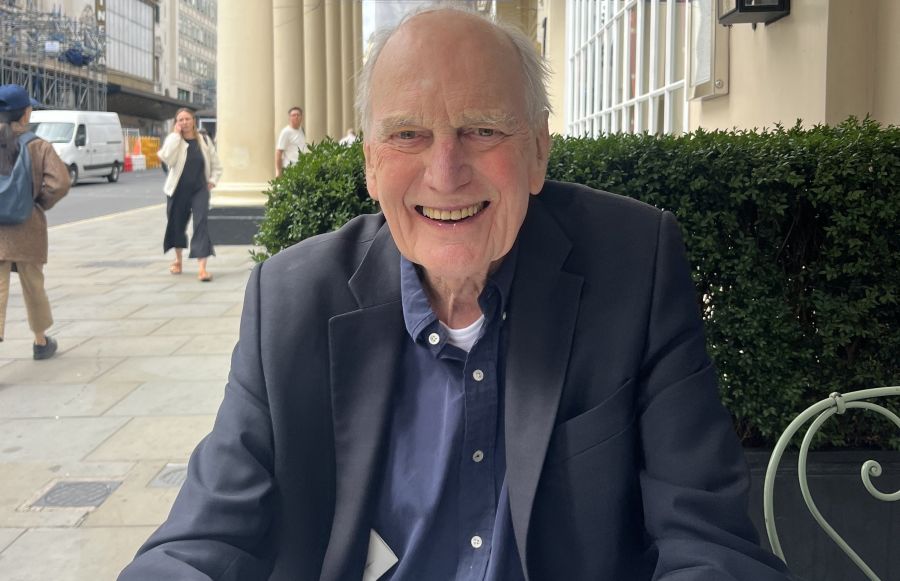
In 1996, when I was a young and struggling artistic director, a theatrical fairy godmother suddenly appeared in my life in the person of a loquacious Scotsman 20 years my senior and nearly twice my height whose vowels were perfectly formed, whose suits were always blue, and who ended every conversation with “God bless.”
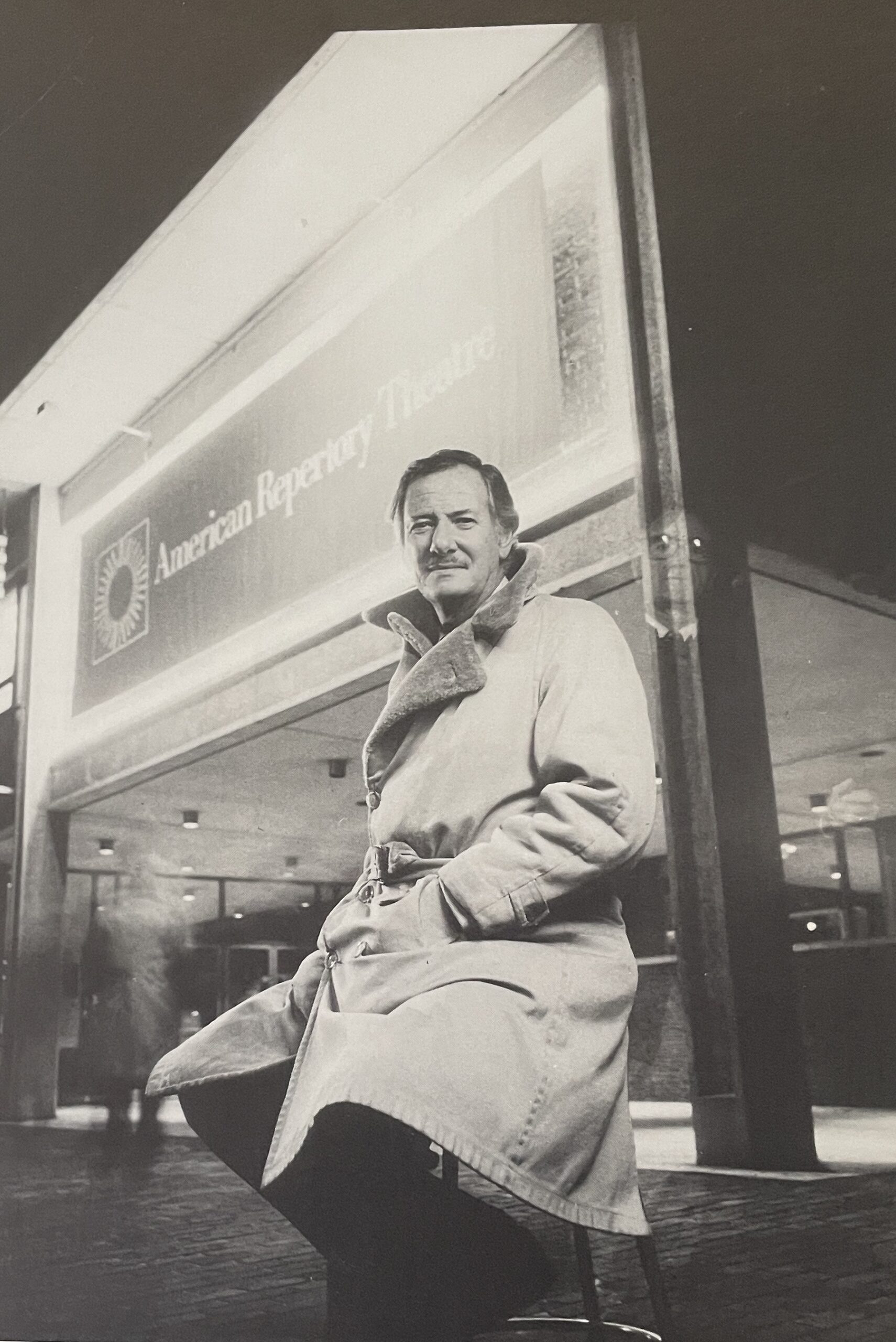
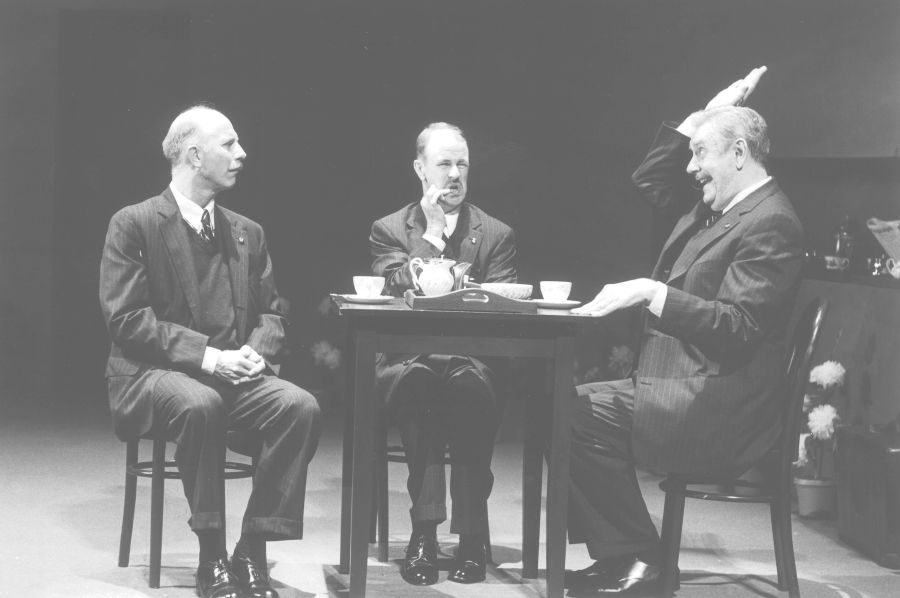
This was the inimitable, elegant, radical maverick Giles Havergal. I’d brought Giles to American Conservatory Theater to save us from an annual deficit with his audacious and imaginative four-man adaptation of Travels With My Aunt, a production that had served to rescue his own company, Citizens Theatre in Glasgow, from similar penury a few years before.
Once he turned up in San Francisco, we never let him go. He returned year after year, staging wildly imaginative versions of classics and teaching and directing in our MFA program, mentoring generations of young American actors, and infusing them with a relentless love of language, beauty, and transformation.
Of the many delicious and daring Conservatory productions he staged for us, the one I remember best was a heartbreakingly romantic, gender-fluid As You Like It that enchanted students during its “Will on Wheels” tour of SF public schools. Equally memorable was his indelible performance of Death in Venice, a heartbreaking meditation on desire and mortality that conjured entire worlds out of nothing. Giles stayed in my basement guest room so often we just called it “Giles’ room” and waited eagerly for his next arrival. It’s impossible for me to imagine that he’ll never be back.
Meeting Giles changed my life—and I am only one of so many theatre people across the world who’d say the same. His mantra could be summed up in a stunning speech from Robert David MacDonald’s 1977 play Chinchilla, which echoed the artistic philosophy of the Citz under the leadership of Havergal, MacDonald, and the designer Philip Prowse. It described the making of art as “a passion for reform, a passion for power, a passion for beauty, a thirst to show, a lust to tell, a rage to love.” What instantly fascinated me about Giles was the seeming contradiction between his refined and polished exterior (he went to Harrow and Christ Church College, Oxford, and spoke in absolutely beautiful cadences) and his radical and fearless way of making theatre.
Perhaps one permitted the other. When he arrived at the Citizens in 1970, he shocked the Glasgow establishment with an all-male, no-holds-barred Hamlet which appalled the press, delighted the public, and set the Citz on its new course. Under Giles’s leadership, there was no contradiction between highbrow (he famously staged a four-hour adaptation of Proust called A Waste of Time) and populist: all the tickets for his first few seasons were priced at 50p (half a pound), a clarion call to the entire community that this theatre would be accessible to anyone and everyone. At the entrance to the theatre, every single night, stood Giles like a benevolent Ichabod Crane, wishing his audience a wonderful evening with a wicked twinkle in his eye.
It’s hard to describe what made Giles unique. There are many imaginative directors; there are directors who also act; there are directors who also act and can adapt literature into theatrical gold. Giles could do all those things, but that was only the beginning of what made him the man that Mark Rylance has called “the greatest artistic director of my lifetime.”
Soon after I met him, I asked Giles if I could come to Glasgow to see how he did it. Not only did he say yes; he organized a program for me that lasted all day and well into the night for nearly a week. It was the most perfect mentorship I’ve ever received. I watched him embrace a poor and underserved community (the Gorbals) with commitment and compassion, taking on a conservative city council and a nervous board with grace and wit, doing outrageously inventive programming, and figuring out how to stretch every penny to make things look fabulous out of nothing. He and MacDonald and Prowse ran their theatre as if joy and invention were the currency of the realm. No apologies and nothing dull. When they couldn’t take enough risks in their main house (a gorgeous Victorian venue that was recently completely restored and which reopened, ironically, on the day of his death), they carved up their lobby into two tiny theatres where I saw one of the smartest, sexiest productions of Racine’s Brittanicus you could ever hope to see. When they couldn’t afford royalties, they wrote the plays themselves and directed and designed interchangeably. Giles made me realize that being an artistic director was an art form unto itself. Not a place for consultants and box ticking and bureaucracy but a chance to reimagine the world inside a magic box that operated by its own rules.
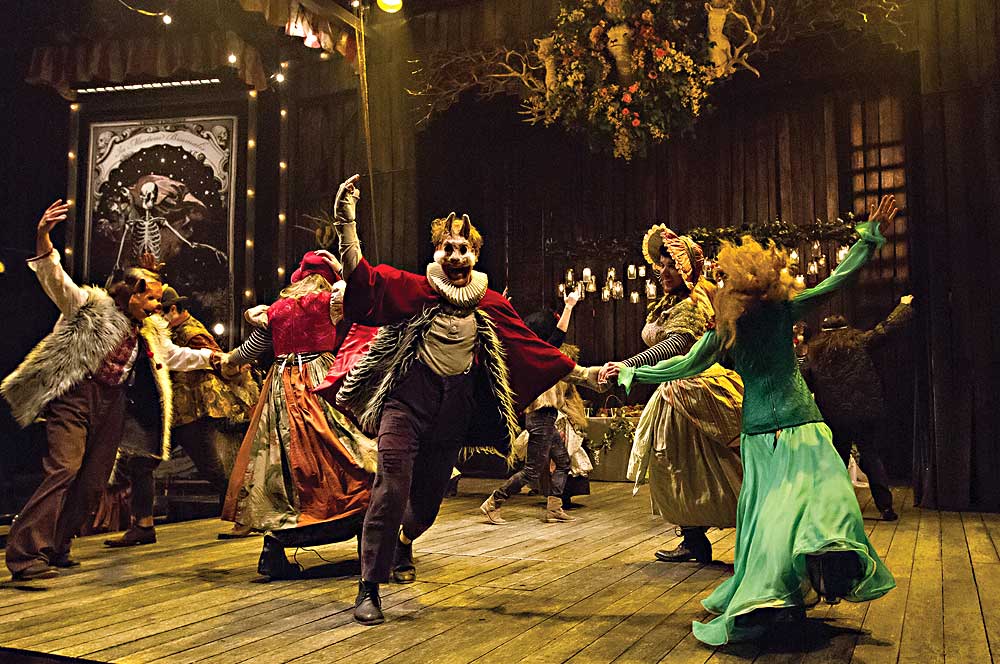
Perhaps that’s why he also became my dearest friend. He understood how incredibly hard it was to keep the lights on and the muse intact, but he always operated from a position of delight. Making theatre truly delighted him. Right to the very end, he kept a little list in his breast pocket of projects he hoped to do in the future, just in case anyone asked. He played a venomous Scrooge in the first outing of the new adaptation of A Christmas Carol I created with Paul Walsh, and bonded with every single child backstage. My own children grew up with Giles at the center of their lives, and he was particularly delighted when our little Nick became as tall as he was and could actually meet him eye to eye.
Amazingly, he never looked back: Years after he had left the Citz, he remained that theatre’s biggest fan, but also went on to work in new places, in new ways, with new artists. When I told him I was leaving ACT after 25 years, he was the one who coached me about how to handle that transition without falling into the abyss. He was always at the other end of the phone to offer a hearty, “Well done, you!”
On Aug. 22, Giles and I had one of our characteristically long and lovely lunches in London. He tucked into his food with gusto, gave me a whole new perspective on The Cherry Orchard (which I am about to direct), gossiped about everyone we knew, and told me (after much prodding) about a remarkable celebration of his life and work which his goddaughter had staged in London some weeks earlier, in an evening entitled “Travels With My Godfather.” Then we went to a matinee together at the Haymarket, a bizarre comedy from the National Theatre during which an actress removed her underpants and threw them into the house—and who should catch them but the elegant octogenarian Giles? Late into the night he was emailing me his impressions of the play, and we laughed all over again about our odd profession and how you never knew what was coming next. Two days later, as I landed back in the U.S., I learned that he was gone.
It’s remarkable to be with someone who knows exactly who he is and lives that to the fullest. At a moment of such anxiety and fear in the American theatre, I keep coming back to the resilient, anarchic imagination with which Giles Havergal imbued everything he touched. I’m sure he’s making magic with the angels and spotting undiscovered talent all across heaven.
Well done, you.
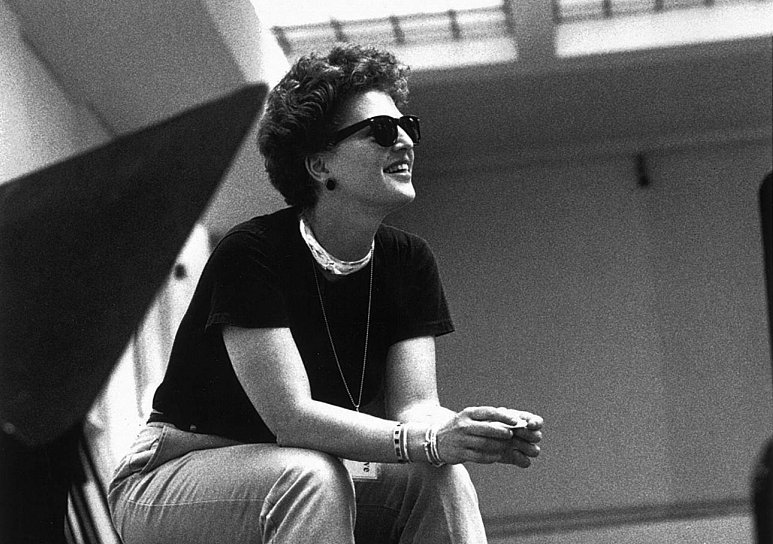
Carey Perloff is an American theatre director, playwright, author, and educator. She was the artistic director of American Conservatory Theater in San Francisco from 1992 to June 2018.