It didn’t take long for Josefina López to realize Henrik Ibsen was special.
“He’s the father of modern drama, the first man to sit and say women are fascinating, and how unfair life is for women,” López said. “I remember reading Hedda Gabler when I was 16 and really enjoying it, but I didn’t understand it. I remember just saying, ‘Oh my God, I want to do this, speak the truth, even if people turn against me because it’s true.’”
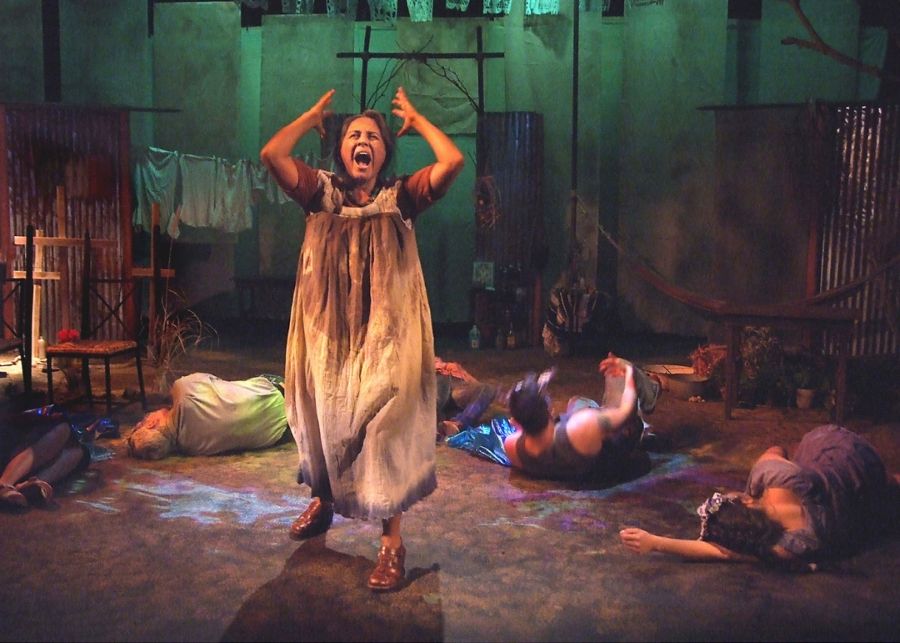
López spoke truth through her 2017 play, An Enemy of the Pueblo, adapted from Ibsen’s An Enemy of the People, which runs Sept. 27-Oct. 19 at the Western Stage in Salinas, Calif. In place of Dr. Stockmann sounding the alarm about contaminated spa water, López depicts Magdalena, a Mexican faith healer, or curandera. Magdalena, though in the right about the sullied water in the town of Milagros, is a flawed visionary, afflicted with alcoholism, which makes the townspeople even less likely to believe her.

“I want to show that women can be flawed and we can still care about them,” López said of her conception of Magdalena. “I want to tell stories where women are very complex, because there are multiple dimensions to me as a woman and a Chicana.”
López may be best known for the play Real Women Have Curves—later a successful film, and more recently a musical that played last fall at American Repertory Theater in Cambridge, Mass., and on Broadway in the spring.
Others may be wistful about the youth that fades as years roll on, but at 55, López fully embraces all that her years have brought her.
“I love who I am and want to celebrate being wise,” López said. “I also think I want to create examples of how you can love aging, and obtaining the wisdom that comes with being a grown-ass woman.”
NOTE: This piece originally appeared in our Summer 2024 issue, but that year’s run was postponed to this fall.