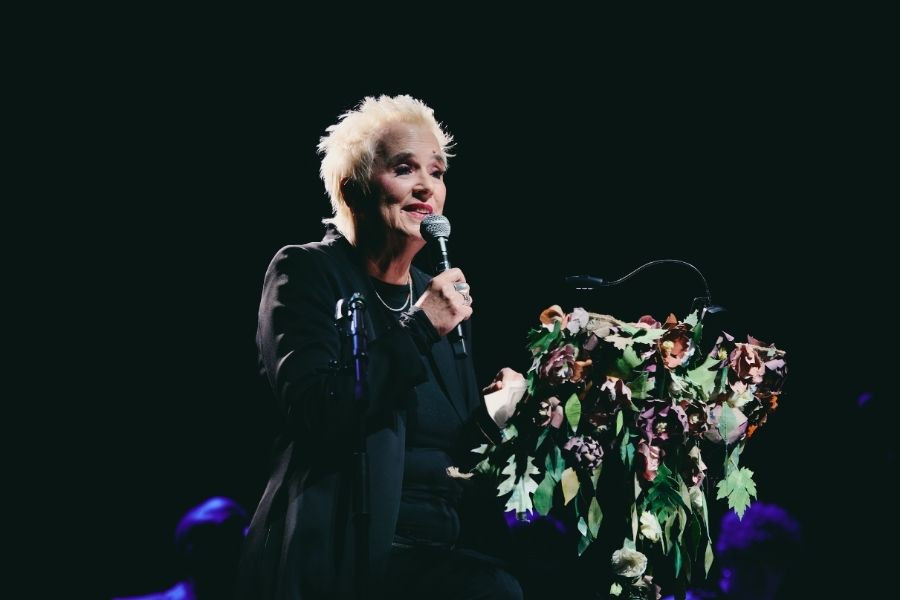
DANIELLA IGNACIO: Thank you so much for taking the time after a writing sabbatical to chat with me. Where did the inspiration to focus on the climate crisis come from, and what prompted you to write this show now?
V: I’ve been very active in the climate change movement for quite some time, in thinking about how we see violence towards women and violence toward the Earth as very similar. I’ve really been wanting to do something artistic about it. Justin and Idina Menzel approached me saying they wanted to do something together. Would I write it? I was basically, like, “Only if it’s about climate change. Yeah, that’s what I want to do right now.” They were totally game.
Why is the climate crisis and protecting the Earth part of V-Day’s mission?
I work on a lot of different issues, from freeing Palestine, to violence against women, to settler colonialism, to ending racism, to protecting migrants. But really and truly, if we don’t have an Earth, and if we’re not able to live on this Earth, all of that’s kind of irrelevant. With this administration hellbent on deregulating everything we’ve been fighting for so many years now, it’s an important moment to be addressing climate catastrophe. We see what’s happening.
Let’s just talk about heat alone, how hot it’s getting everywhere, and what that heat is doing to everything, whether it’s the seas, whether it’s tsunamis—the Global South is living a completely different reality than we are. Climate change is there and it’s swallowing up islands. It’s just constant storms. It’s ongoing destruction. We need to do everything we possibly can.
How is violence against the Earth and gender-based violence connected in your mind? Is patriarchy the link?
And economic violence. They’re all part of the same story. If we just look at women’s bodies…I was listening to the Epstein women survivors, which was so devastating. Just seeing how their child bodies were treated as objects to be transported over borders, to be sold, and those wealthy, rich, powerful men decided they wanted to use those bodies.
This is exactly what we do to the Earth. We extracted, we annihilated. We cut off mountaintops. We dug in places we don’t belong. We cut down trees. I think it has to do with this essential arrogance and dishonoring of life itself, where you don’t understand that a woman’s body is sacred, that it actually gave birth to you, that it actually brings forth life, and is life. In the same way, you don’t understand the Earth, you don’t bow down to the Earth, you don’t live in service to the Earth, and understand that she gives us absolutely everything that we have.
I was just in New Orleans. We created a play there right after Katrina; I went down there for a long time, worked with a group of women, and they wrote this beautiful musical play. For the 20th anniversary, we put it together for the first time in 20 years. Back then, we weren’t even thinking of it as climate change; we were thinking of many other intersectional issues, whether it was racism, economic deprivation, the government abandoning poor and mainly Black people in New Orleans. Now it’s completely intersectional. We understand that it’s climate change.
I think the play—the musical uprising—addresses all those interrelated issues. It’s set in a town of middle-class, working-class people trying to survive, and their children who have a much more visionary eye on the future. The struggle between those two is a real struggle everywhere: short-term survival versus long-term survival.
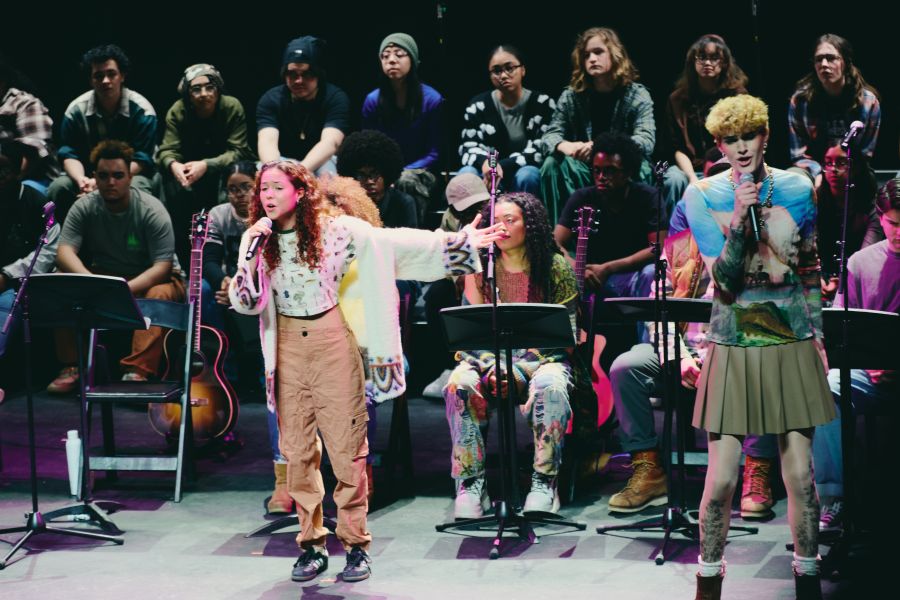
The logline of this is that it’s set in a small town with adults who are willing to “sacrifice their forest for money,” and a group of young people, led by a teenage girl named Sophia, trying to save the forest with “powers they never knew they had.” Can you expand a little more on this?
It’s a story of a mother who’s a farmer, and her daughter, Sophia, who is really connected to this forest and loves it. She’s a doomscroller, and she’s completely obsessed with the end of the world, and the only place she has is that forest to alchemize her feelings and make her feel better. A company comes along, because the town owns the forest, and they want to buy it. It’s what happens in this town when these children organize to save the forest, and it becomes very magical and it becomes very wild. I’m not going to tell you what happens, because it would be a spoiler alert. But I think it’s really about young people when the intensity of their desire to protect the Earth is in full gear, and what magic can happen. I really believe that magic is the sustained belief that something is possible, right? Then magic occurs.
Is there any, like, actual magic? Or is it just “the magic inside”?
No, there’s real magic! It is a fairy tale. I really believe that if we had our vision and our intentions lined up, our energy and our devotion, magical things would happen. Part of that is getting people to believe that we are the agents of our own destiny, we can transform human consciousness, and we can take actions that can transform our destiny.
What did the writing and collaboration process look like, since you had multiple folks working on the music and lyrics alongside your book and lyrics?
Justin Tranter and Caroline Pennell wrote the music, the three of us wrote the lyrics, I wrote the story. It’s been a wonderful process. For me, I’ve had little weird ways that I’ve written lyrics in parts of plays and whatever, but I’ve never actually worked on a whole show from beginning to end like this.
It’s very hard to make a musical out of pop. That’s one of the reasons we decided to change the form; it lends itself much more to storytelling as a concert, which we struggled to find for a while. When it got put into a musical format, it became very twee. Because pop music isn’t musical music. It has found a very Brechtian form. It’s very much to the audience: “Here we are, let’s do this.”
On the first night in Atlanta and for most of the tour, you’ll be the narrator. What is the narrator role?
Terry Tempest Williams is going to do it in Salt Lake City, because she’s from there, but I’m doing the rest of the cities. What happens is, I tell the story, then there’s a song, sometimes there’s a little vignette between people, and then I continue to tell the story. It’s really narrator-driven in the sense that it’s not like there are scenes, right? It’s more, I’m the person who drives the story forward in the old ways that we used to tell stories; it’s my favorite way of listening to things.
Young people are involved in the art exhibits and the “Earth Choir.” How were they brought in, and why was it important to get them involved?
We go to choirs in each town and invite them to be part of it. They learn the material, then our choreographer goes a day or two before and works with them. The day of the show, we have a rehearsal, and they get put into the show. What’s great is that not only do they come, but their parents and people in their community come. It’s a way of spreading the news throughout the entire community. We’ve already had the Boston’s Children Choir. They’ve all been kind of radicalized by it; they’ve become activists. Not only are they having this great artistic time, they’re understanding the issues of the play and becoming committed.
What are some ways that audiences can get involved in continued action at each site, after the tour wraps, and in their own communities?
After we do these big performances, people can take the show, like the Vagina Monologues, into their own communities. They can get their singers and their choir and put it on because there’s no set; it’s completely sustainable and doable. The hope is that it will spread, and people will have wonderful opportunities for great singers, performers, and choirs. Their mayor can be the narrator, or an elderly, beloved member of the community, or their greatest climate activist.
Maya Penn, this amazingly brilliant climate activist and entrepreneur, has formed youth councils in every city with climate change activists. They’re bringing in youth to teach everybody in every city what they can do in their cities to be effective in protecting and enlarging their understanding of the environment. There’ll be tables at every show to sign up to get involved in your community. They’ll be putting out that stuff on Instagram. They’re forming these little councils in every city so they’ll be working together after the show leaves. We’re bringing all these groups working on climate change together, particularly youth groups who might not always work together. We often work in silos in this country. We’re building a coalition.
In your line of work, I’m sure you’ve had no shortage of people coming to you saying that you’ve changed their lives, women who’ve experienced sexual assault saying they feel seen. What are some of the strongest memories you have had of people being like, “Oh, my God, you changed my life”?
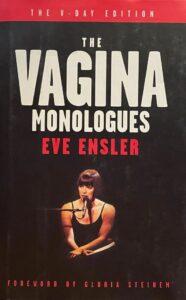 Sometimes I think about The Vagina Monologues, and it’s such a beautiful thing. Talk about magic, right? Sometimes I’m just amazed to see the reach. Whether it’s India or the Philippines or all over Africa or Pakistan, or, you know, Indiana. It was like this sisterhood that got birthed through this play of women around the world who are able to talk about their vaginas, and think about their vaginas, and protect their vaginas, and love their vaginas. I’m always so moved when I meet people in any capacity who say, “Oh my God, it was that play that began my activism,” or “It was that play that really began my journey loving my body,” or “It was that play that I met my lover, a woman who was in the show.”
It’s been the vagina that could—the engine that has been continuing to go 30 years later. I’m excited when I hear it’s been translated into another language. I was just in Albania; they’ve been doing the show there for 22 years. I’m headed to Mexico in October; they’re celebrating 25 years of the show being in Mexico. I feel like I’m in this with millions of women around the planet who have chosen to bring it to their community, who have performed, directed, produced it. It’s been one of those amazing phenomena, like, I surrender myself to you.
What is the importance of collective action in a time like this?
I’m seeing this in my show about mental illness, in all my work in V-Day, in all my work for Gaza. Why are people so lonely? Why are people so mentally unwell right now? Because they’re isolated. Why are people feeling so disempowered? Because they don’t feel that political parties represent them. What we have to do now is build the biggest people’s movement we’ve ever had before, and bring our issues together. When you’re fighting for ending genocide in Gaza, it is no different than fighting racism and the erasure of history. All are interconnected.
This is the time for artists to write into this moment, inspire people, and get people to be aware of not only what is happening but how they can be agents of change in this moment. I think artists need to defy the Kennedy Centers and figure out ways to work outside these systems. Part of it is, how do we do theatre differently? How do we construct different systems that aren’t dependent on institutions that are already complying with an authoritarian government because they’re afraid of losing their funding, or afraid of losing their status? We as artists have to be much more clever, strategic, and devoted to what we’re doing.
One of the great things about this tour is that we managed to raise money, so we’re really not dependent on any institution. We don’t have any big ad budgets. What we have is collective grassroots organizing. We’re going to all our people, saying, “Help us get the word out so we can give seats to people who need them.” We can offer tickets to farmers, to firefighters, to students, to formerly incarcerated people, to people who can’t afford tickets. Everything we’re doing is my dream of what theatre should be doing: building coalition, organizing, giving free seats away so it’s democratic and everyone can see it, and doing a play about something that matters.
What are your biggest hopes for the future of this project and for V-Day?
My dream is that more cities will invite us, that someone will see it and bring it to places that are really hurting. I hope it will go like the Vagina Monologues: It had these grand tours, then we offered it to communities, then it started getting done everywhere. I hope there’ll be some kind of album. My dream is an animated film; I think it would have such an impact on kids, it would get into their consciousness.
In terms of other projects: I’m working to develop The Apology into a play, which is another angle on how we view violence against women. I’m working on a mental health piece called This Is Crazy!, which is going to have its premiere in New York on Oct. 6. All have something to do with how we change the consciousness of the world we’re living in.
The truth of the matter is that unless we are bold and unless we stand up and unless we refuse to be bullied and silenced by this administration, they will have their way with us. My feeling is, now’s the time to go on the road and be loud and move and inspire people so they step into their best selves and become non-compliant and disruptive. Because that’s what we have to do right now.
Daniella Ignacio, a writer, theatre artist, and musician based in Washington, D.C., is a contributing editor of this magazine.