1900 (125 years ago)
The Illinois Theatre hosted its grand opening on Oct. 15 with the premiere of Barbara Frietchie by Clyde Fitch, starring Julia Marlowe. In the late 1890s, the theatre’s founders, Al Hayman (1847-1917) and Will J. Davis (1844-1919), negotiated with the owners of the building to instate a 99-year lease. Prior to a $250,000 renovation Hayman and Davis oversaw, the theatre’s building had previously served as the Jackson Street Armory and an event venue. In its prime, the Illinois Theatre served as the Chicago home base of the Ziegfeld Follies, and also presented a variety of theatrical performances and films. The venue shifted to focus solely on motion pictures in the mid-1920s. During the early years of the Great Depression, the venue was closed, and in 1936, the building was demolished—62 years earlier than the intended expiration of that initial lease.
1915 (110 years ago)
Playwright Arthur Miller was born on Oct. 17. Miller’s seminal works include the Pulitzer-winning Death of a Salesman (1949), The Crucible (1953), and A View from the Bridge (1955). In addition to being known for his dramatic writing, Miller was one of the most prominent artists to be subpoenaed to appear before the House Un-American Activities Committee (HUAC) in 1956. His summons came three years after the U.S. premiere of The Crucible, an allegorical work in which the Salem witch trials were analogized to the Red Scare of the 1950s. During his hearing, Miller candidly answered all but two of HUAC’s questions about his personal involvement with the Communist Party and its members but refused to provide additional names. For this, he was found in contempt of Congress, blacklisted from Hollywood, and denied renewal of his passport.
1965 (60 years ago)
On Oct. 27, Ron G. Davis—founder of the San Francisco Mime Troupe (SFMT), a pioneer of guerrilla theatre in the U.S.—stood trial on charges of putting on a commedia dell’arte performance in Lafayette Park without a permit. After SFMT performed three of 12 planned shows, city officials revoked the troupe’s established temporary permit due to their play’s alleged vulgarity. Refusing to submit to the city’s censorship, SFMT chose to risk arrest and continue their run as planned. At the top of the show, in front of more than a thousand attendees, Davis donned his mask and declared, “Today, for your appreciation, we perform an arrest,” before police swarmed the stage and arrested Davis and two others. Davis was eventually found guilty and sentenced to 60 days suspended sentence and one year of probation. SFMT organized multiple benefit parties and concerts throughout the fall to help cover Davis’s court costs.
1965 (60 years ago)
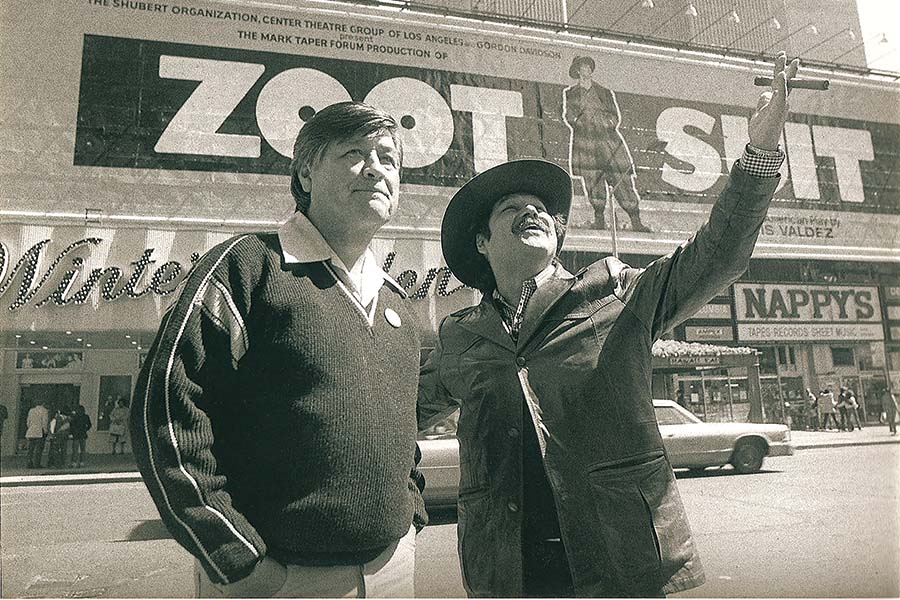
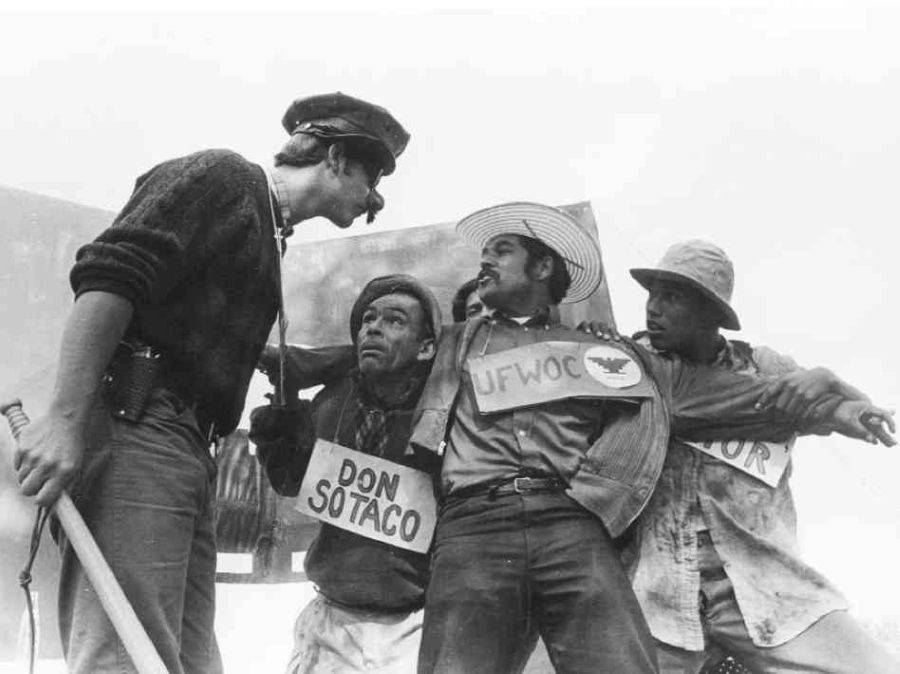
The pioneering Chicano theatre company El Teatro Campesino was born in the midst of protest. In late October, Luis Valdez, a former member of the San Francisco Mime Troupe, journeyed to Delano, California, with dual intentions. The first: to support the Grape Strike led by the United Farm Workers. The second: to pitch to UFW head Cesar Chavez an idea for a theatre organization made by and for farm workers. Treating the picket line as a stage, Valdez forged El Teatro Campesino as a way to incentivize, invigorate, and entertain workers with the intention of growing and sustaining their resistance. Throughout the Delano Grape Strike, Valdez organized rehearsals and performances for public shows blending humor, music, and movement. El Teatro Campesino continues to program theatre and do arts education from a San Juan Bautista theatre that was once a fruit-packing shed.
1980 (45 years ago)
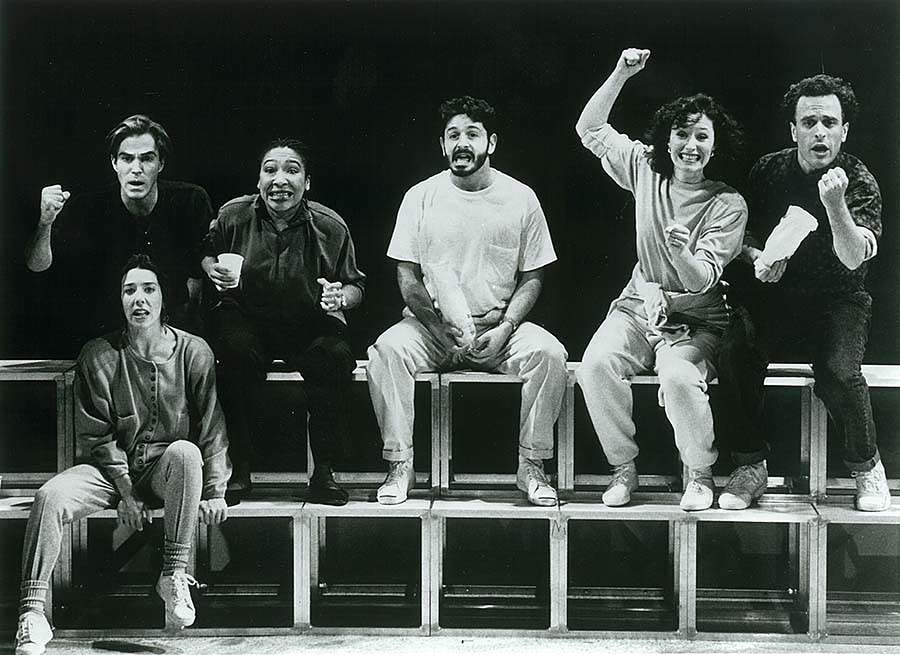
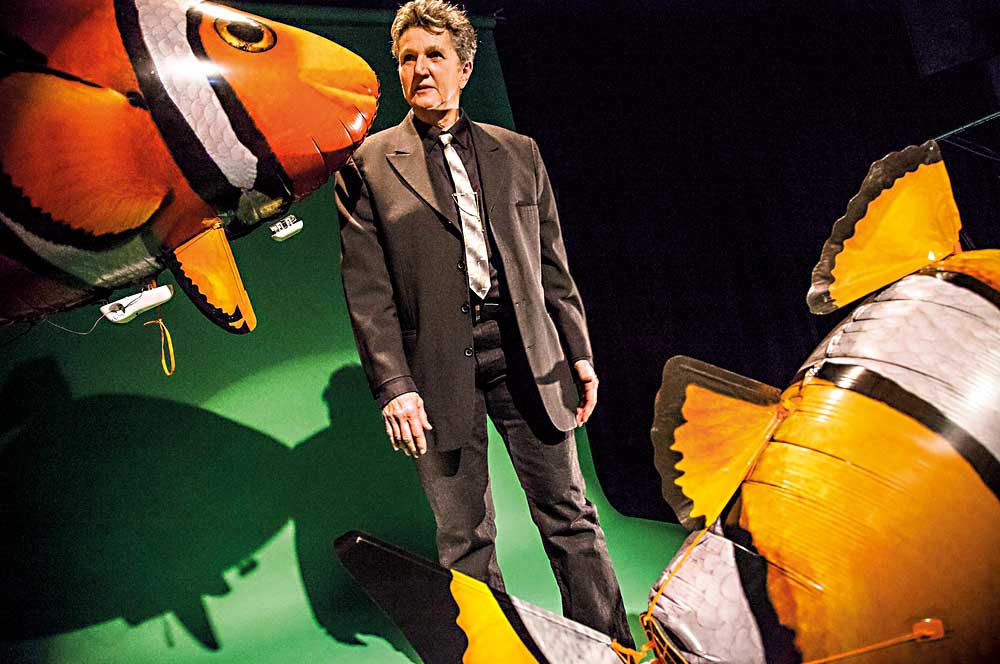
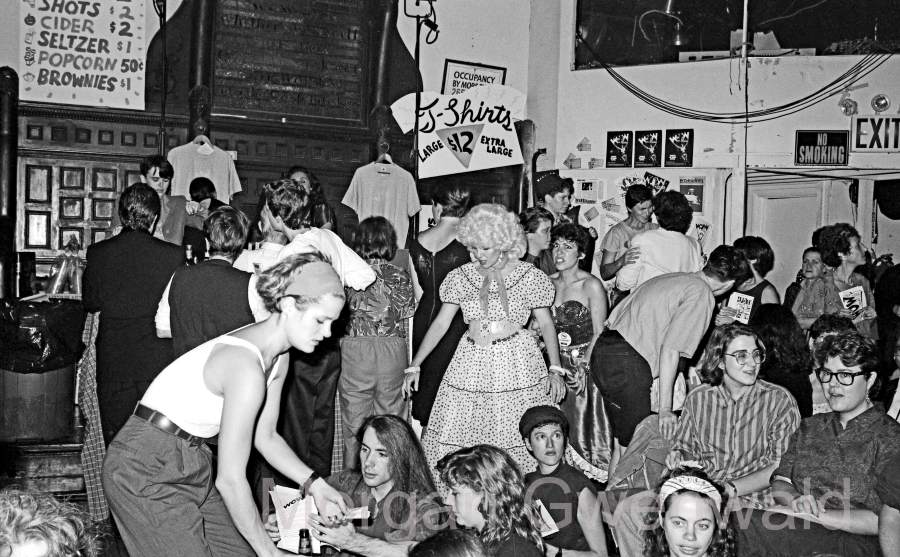
The inaugural Women’s One World Festival, an international festival dedicated to lesbian and women’s experimental theatre, took place this month in Manhattan’s East Village. Finding inspiration in the multidisciplinary arts festivals of Europe, Lois Weaver, Peggy Shaw, Pamela Camhe, and Jordy Mark organized Women’s One World through grassroots fundraising and organizing. The festival’s first iteration was hosted by the All-Craft Center on Saint Mark’s Place, which could accommodate 400 seats. Women’s One World lasted 11 days and included 36 shows from eight countries. Following two years of the festival, Women’s One World put down roots in a permanent space, evolving into the iconic, collectively run, women- and trans-centered WOW Café Theater.
2000 (25 years ago)
After an Off-Broadway run at the Manhattan Theatre Club, David Auburn’s acclaimed play Proof transferred to Broadway on Oct. 24. Proof tells the story of Catherine, a daughter living in the shadow of her deceased father, Robert, a genius mathematician. With herself, her sister, Claire, and Robert’s student, Hal, Catherine grapples with the possibility that she has inherited her father’s mental illness alongside his genius. The production, directed by Daniel Sullivan, featured Mary Louise Parker as Catherine, Johanna Day as Claire, Ben Shenkman as Hal, and Larry Bryggman as Robert. Proof would run for 16 previews and 917 performances, win three Tony Awards, and receive the 2001 Pulitzer Prize in Drama. Its first Broadway revival, starring Ayo Edebiri and Don Cheadle, opens next April.