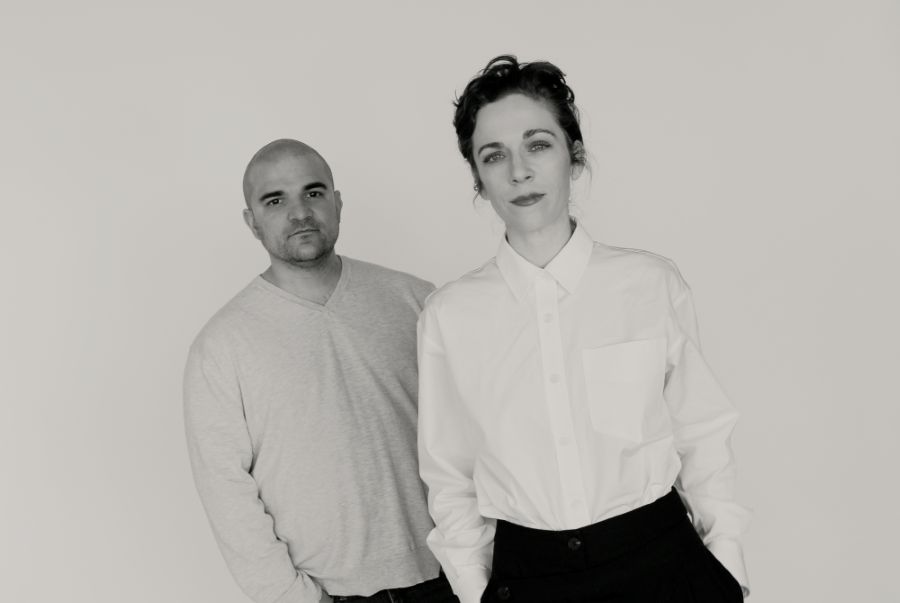
A lot of theatre artists say they don’t read criticism, and I never quite believe them. Playwright Bess Wohl has a unique approach that was new to me: She said she reads reviews of her plays “like some people watch horror movies,” i.e., barely glimpsing the scary parts through face-palmed hands. “Like, I’m aware the carnage is happening but I’m not looking directly at it,” is how she put it in a recent interview.
 I don’t think she needs to worry about any major bloodletting in reviews for her newest play, Liberation, now in previews on Broadway after an overwhelmingly acclaimed Off-Broadway run at Roundabout Theatre Company earlier this year (it opens Oct. 28). Subtitled “a memory play about things I don’t remember,” Liberation has a contemporary narrator try to imagine what her mom’s 1970s-era women’s consciousness-raising group was like. The result is that rarest of theatrical events: a play of ideas that speaks to the current American moment while being thoroughly entertaining, provocative, and moving rather than preachy, cringey, or on-the-nose. For a playwright with no shortage of strong, formally inventive work (particularly the near-wordless Small Mouth Sounds and the time-jumping Make Believe), Liberation feels like a breakthrough.
It felt like a breakthrough for Wohl too, at least in one sense.
“It took me a long time to write the play,” she confessed. (She is not typically a slow writer, if her output so far is any indication.) In part she attributed this to the size and ambition of the subject, which she researched by talking to her mom and several women who’d been activists in the ’70s. She felt daunted by the responsibility both to represent that generation’s hard-won victories and to ask the pressing question of where that progress stands now, in a post-Roe world.
Another reason, she admitted: “There are so many bad versions of this play. So often the Women’s Liberation Movement of the 1970s has been made to be cartoonish, or just a joke, with terrible wigs.” (For the record, Nikiya Mathis’s wigs are excellent, as is every element of director Whitney White’s well-judged production.) In short, Wohl said, “It’s tricky subject matter to do well. I wanted to make a play that I wished existed: a good, interesting, complicated play. How many plays are there really about this time and this movement? Not that many, when you consider what a big deal it was.”
There were also personal stakes that figured into Liberation’s long gestation.
“The play came from this very deep and real question I’ve always had for my mother,” Wohl said. “Which is: ‘Do you regret having me? Do you regret taking a slightly more traditional path than might be what you would have originally imagined for yourself?’” Wohl said. A lot of Generation X children wonder this, she said (“Like, did we ruin feminism?”), but Wohl may feel it more acutely than most, given that her mom, Lisa Cronin Wohl, actually worked at Ms. magazine, the official mouthpiece of women’s liberation, in the 1970s. “That question was something that I always had in the back of my mind: how she was navigating being a mother, being a wife, and also being a feminist—how did that all go together?”
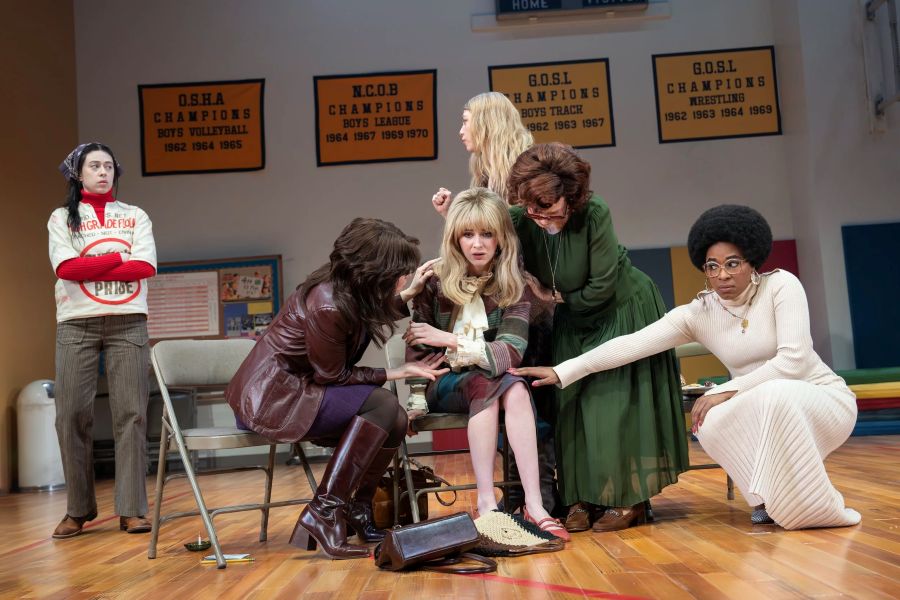
The answers, of course, end up being more nuanced than binary. In Liberation, the author’s quasi-stand-in, Lizzie (Susannah Flood), both narrates from the present and steps into the past narrative to play her mom, with sometimes awkward results; indeed, Wohl has a lot of fourth-wall-breaking fun blurring the boundaries between these two modes, even putting some of her storytelling choices under the spotlight for scrutiny. This is one reason, I think, the play never feels stale or stilted. Another reason, which I can only attribute to Wohl’s playwriting craft, is that she somehow overcomes the deadliest trap of plays depicting group discussions, which can be doomed by a kind of serial predictability—as, without even consciously doing so, we count the ensemble onstage and know each character will get their turn.
When I asked her how she pulled this off, she took the compliment but couldn’t necessarily point to choices that made it work so well. She did note one decision: Having the character who doesn’t speak at all at first—Dora, a pretty young blonde who at first mistakes the group gathering in an Ohio high school gym for a knitting circle, but sticks around anyway—become the one with the first big breakthrough, in the group’s second session. But there was no master plan for the way each character’s story unfolded, she said. As far as she could, she let them lead the way.
“Because it took me so long to write, I had this feeling of these women literally sitting with their arms folded in this room, like, ‘When are you going to get to us?’ It sounds so woo woo, sorry, but once I started letting them speak, it felt like I was listening to them more than I was calibrating, like, ‘Oh, this person hasn’t talked in a while.’ To me, the best version of writing is really just listening.”
I would be remiss if I didn’t ask Wohl about the nude scene that opens the play’s second act, which requires all theatregoers to leave their smartphones in Yondr pouches at the door (as was done for similar reasons at 2022’s Take Me Out and for different reasons at this year’s Othello). In it, the six women in the consciousness-raising group bare all and talk frankly about their bodies, in a recreation of a common practice of such groups. The result is vulnerable, funny, and, yes, revealing.
“For me, all of the complications of feminism are in that nude scene,” said Wohl. “Because, yeah, it’s titillating, it’s entertaining, it’s shocking, it’s whatever you’re feeling. And we haven’t moved beyond that—we haven’t moved to a place where a woman’s body is not a point of a lot of interest.”
That kind of interest by itself may not be a draw for theatregoers (and shouldn’t be, of course). But in addition to strong reviews, the original production garnered a particularly strong kind of word-of-mouth: the enthusiastic praise of folks who didn’t expect to like the show, based on the title and premise. That included me, but also a number of the women Wohl based the play on, who showed up to see what she’d made of their life’s work, and, gratifyingly, mostly praised her with comments like, “How did you know what it was like?” A few others, she said, “said things like, ‘You know, I walked in and thought I was gonna hate it, but you won me over.’”
Witty Sampler
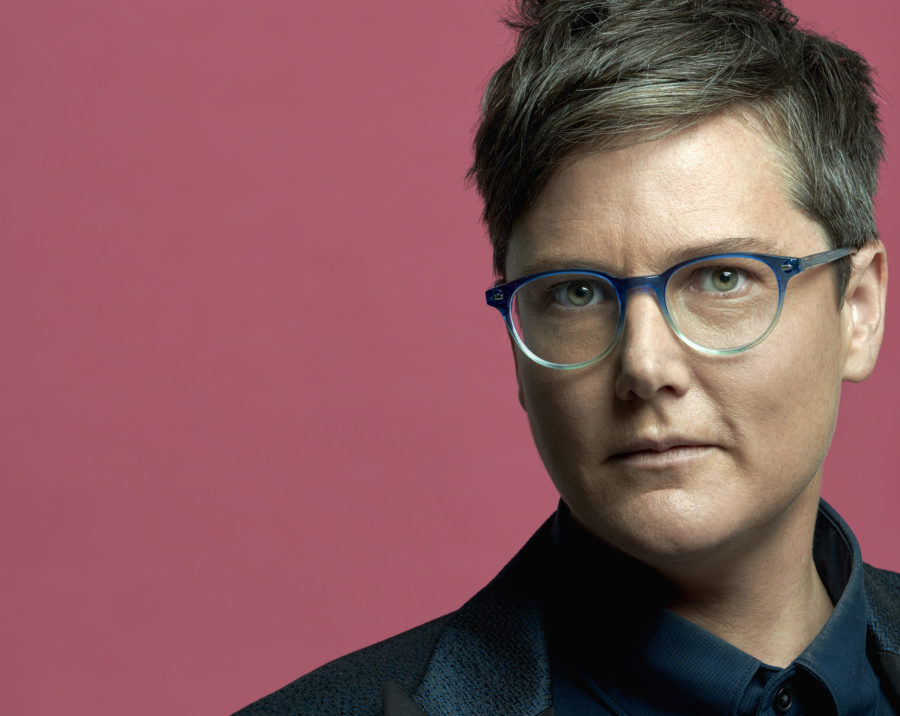
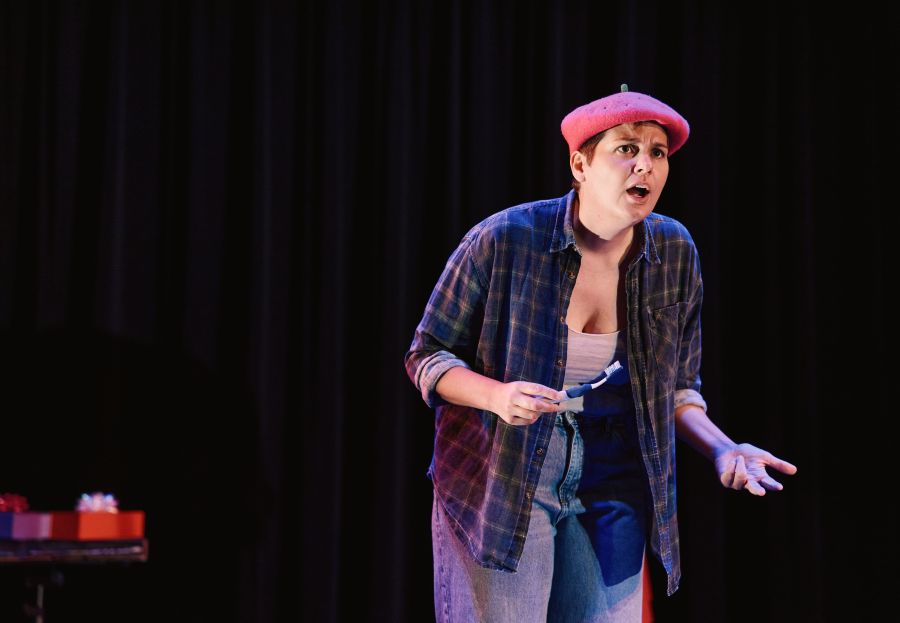
“Sometimes the beginning of something is the whole thing,” says Abby Wambaugh twice in her beguiling new comedy show The First 3 Minutes of 17 Shows, now at Dixon Place through Oct. 25. It means something different each time: First, it’s a kind of thesis statement for her show, which, as its title suggests, strings together samples of 17 different varieties of comedy and solo acts, demarcated by blackouts and a dinging service bell: prop clowning, a Moth-style storytelling piece, an ASMR bit, word games, a David Sedaris-esque essay, straight-up standup. Later, that phrase evokes loss, ephemerality—the blink-and-you’ll-miss-them joys and sorrows of life. The piece is a ramshackle-like-a-fox embroidery held together by Wambaugh’s wit and aplomb, and like the best of this kind of thing, it’s greater than the sum of its parts.
I was initially attracted both by the show’s presenter, Hannah Gadsby, and by its title, which reminded me of a show I reviewed two decades ago as part of the New York Fringe Festival, the Neo-Futurists’ The Last Two Minutes of the Complete Works of Henrik Ibsen. Though the “shows” of Wambaugh’s title refer to comedy sets, not plays, like the Neo-Futurists she brings a mix of DIY goofing and sneaky storytelling heft.
The seed of The First 3 Minutes was planted when Wambaugh, an American who has lived in Denmark for seven years, was part of the Edinburgh Festival Fringe’s Pleasance Comedy Reserve in 2023. This showcase opportunity for emerging comics not only gave her a platform but the chance to see the work of several peers. “I just fell in love with comedy for real, watching all of these different kinds of shows—clown, regular standup, more character stuff, musical comedy—and I had a new idea after every show I went to,” she told me. “I didn’t know until then that comedy can be anything. Then I landed on, well, what if I did a little bit of all of these shows?”
She came back to the Edinburgh Fringe the following year with The First 3 Minutes, then had a successful run with it in London last fall. As shows as varied as Nanette, Fleabag, and Baby Reindeer would testify, the Fringe is a place where comedy can take many forms. “They’re up for anything,” Wambaugh marveled about Fringe audiences. “You can really steer that ship anywhere you want it to go and they will follow you, as long as you’re docking it at funny. It’s this incredible opportunity that I don’t think it exists in many other fields.”
Along its digressive path, her show circles a shattering personal event from her own life—a late miscarriage, which oddly enough was the turning point that led her to begin doing standup—without losing its sweet, brisk, loopy spirit.
If Wambaugh had to choose just one of these 17 formats to do a whole show in, I wondered, which would it be? She confessed that the Sedaris mode, of simply reading pre-written material to paying audiences, sounds like a sweet gig. But she said her style “is being silly and heartfelt in a bunch of ways.”
Theatre Ex Nihilo
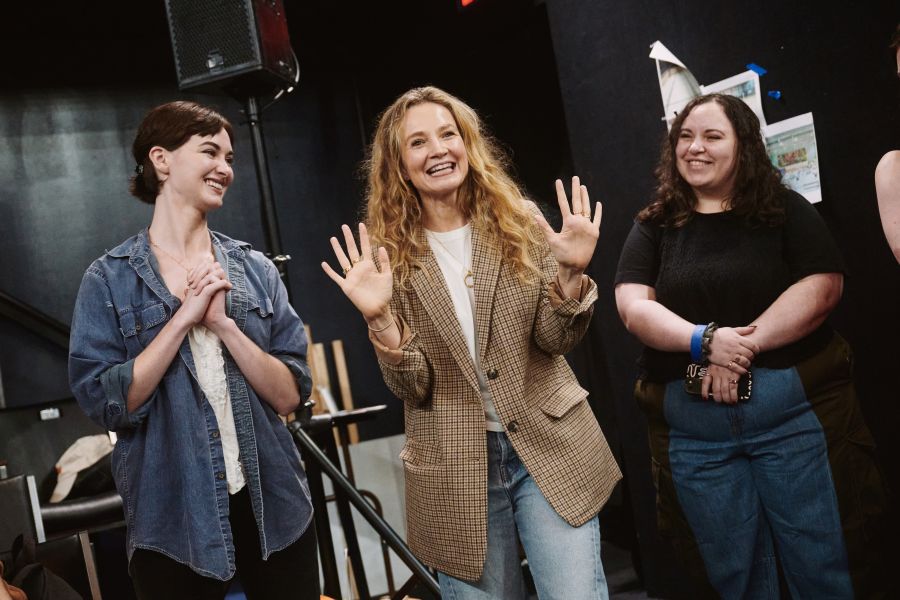
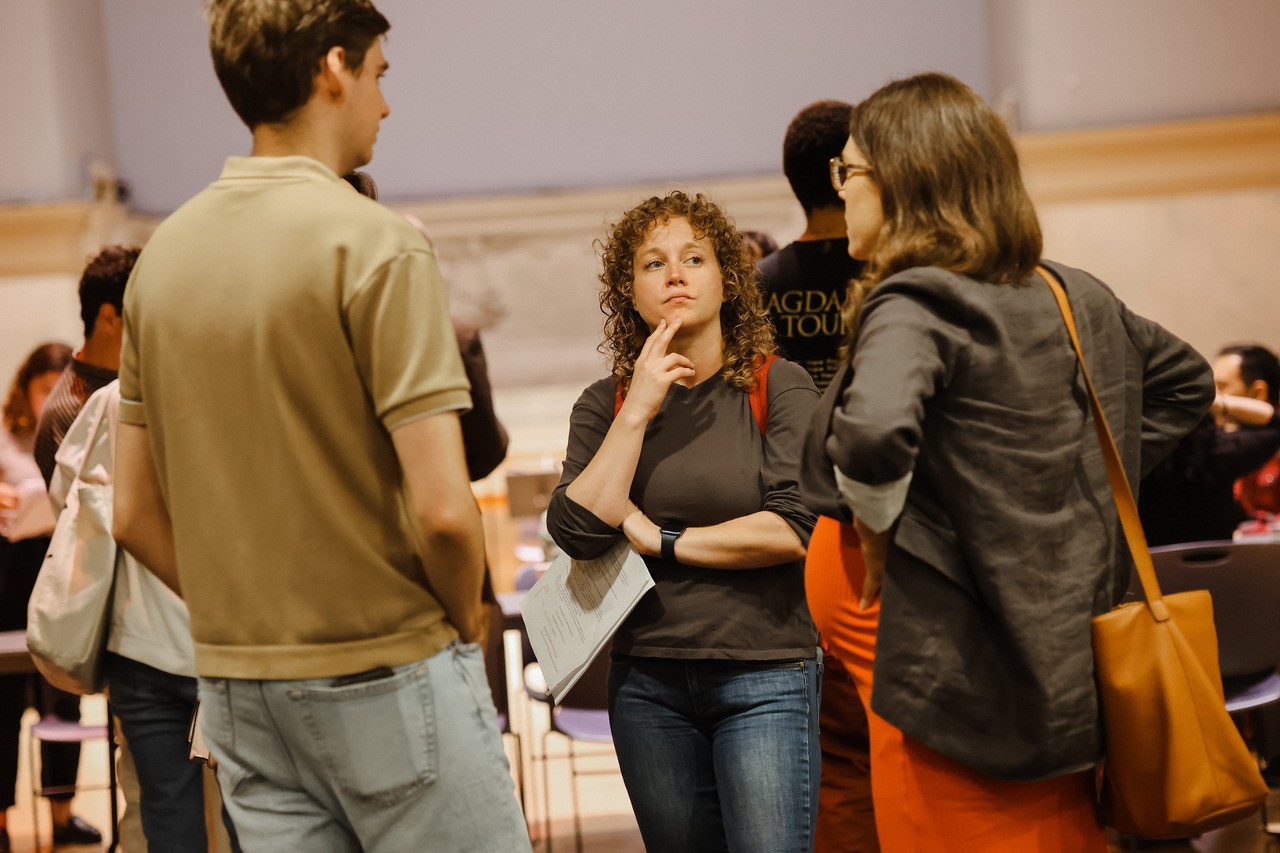
My little church in Greenpoint, Brooklyn, offers a free meal to all comers every Tuesday night. At Judson Memorial Church in the West Village, you can get a free meal (mushroom and barley soup, bread, banana cake) plus a free night of new-play readings at their monthly “Big Bang” series. Curated by playwright-screenwriter Jonathan Caren and held in the church’s main sanctuary, Big Bang lets writers put samples of their work (up to 10 pages) in front of an audience, with volunteer actors cold reading their parts.
“So many places for new plays have closed,” Caren said. “But we realized, we can make an entire evening of theatre out of nothing. We can congregate and make new things.” Indeed, while there are self-selecting writers’ groups where playwrights can gather to assess each other’s work, and private readings similarly organized, there’s nothing like trying out new material in front of the public, as any singer-songwriter or standup comic could tell you.
The night I attended last June, I saw sparky comic scenes from plays—C.A. Johnson’s Lagniappe, Ted Malawer’s Public Displays of Affection, Sarah Sanders’s Doikayt—as well as a lively excerpt from The Jills, a pilot by Susan Soon He Stanton, and a fun bit from Henchman, a feature film script by Nick Blaemire. An extra treat: Stanton’s dad, the poet Joseph Stanton, was on hand to read a few poems.
While Big Bang’s next installment, on Oct. 15, is slated to feature scenes from new work by Sarah Gancher, Noah Diaz, Bailey Williams, Zelda Carmen, and Caroline Bennett, you never know what else may happen between the soup and dessert course.
What Else Is New
Forthwith, a list of all the world premieres in the U.S. this month. (I’m breaking them into regions using the Census Bureau’s delineations):
South
A comedy in which trans healthcare collides with evangelical Christianity, Jayne Deely’s i never asked for a gofundme is running at Actor’s Express in Atlanta, Oct. 1-25. Rebecca S. Wear directs.
Jonathan Norton’s Malcolm X and Redd Foxx Washing Dishes at Jimmy’s Chicken Shack in Harlem is having the first of four U.S. productions this season at TheatreSquared in Fayetteville, Arkansas, Oct. 1-26. Dexter J. Singleton directs this historical drama.
Inspired by a Robert Louis Stevenson short story, Katie Forgette’s medical/horror drama The Body Snatcher is running at Houston’s Alley Theatre Oct. 3-26, with direction by Brandon Weinbrenner.
Not Your Mother’s Goose!, a new TYA comedy based on nursery rhymes by Michael J. Bobbitt and Sandra Eskin, plays at Adventure Theatre in Glen Echo, Maryland, Oct. 3-Nov. 2.
Fremont Ave., a new multigenerational family drama by Reggie D. White, runs at Washington, D.C.’s Arena Stage Oct. 8-Nov. 23. Direction by Lili-Anne Brown.
Kicking off its NNPN rolling world premiere at Atlanta’s Synchronicity Theatre Oct. 10-Nov. 2 is Crystal Skillman’s Rocket Men, about the former Nazi scientists who became the backbone of the NASA team that sent America to the moon. Direction by Rachel May.
FDR’s Very Happy Hour is Regan Linton’s immersive portrait of our 32nd president via his nightly cocktail hour. It runs at Actors Theatre of Louisville, with direction by M. Graham Smith, Oct. 15-26.
Washington, D.C.’s Gala Hispanic Theatre is presenting the world premiere of Héctor, el niño eléctrico (Héctor, The Electric Kid), a new bilingual musical about a 10-year-old boy who meets a wizard, written by Cornelia Cody, with music by Aldo Ortega and direction by Mauricio Pita. Performances run Oct. 18-Nov. 1.
Michael Hatcher’s new choreopoem The Blasphemy of a Good Bath plays at Austin’s The VORTEX, Oct. 23-26, with direction by Jasmine Games and Dre’ Jackson.
A new work for young audiences, Rosita y Conchita, created in collaboration with Round Rock Ballet Folklórico and set during Dia de los Muertos, runs at Penfold Theatre Company in Round Rock, Texas, Oct. 25-26.
West
Rudi Goblen’s littleboy/littleman runs at L.A.’s Geffen Playhouse Oct. 1-Nov. 2. With direction by Nancy Medina, the play follows two Nicaraguan brothers on a fateful path.
Fun premise: Joy McCullough’s Stage of Fools, playing at Seattle Public Theatre Oct. 3-Nov. 2, is about struggling feminist theatre troupe thrown a dubious lifeline by a washed-up film action star who wants to star in King Lear. Amy Poisson directs.
नेहा & Neel, Ankita Raturi’s new play about a South Asian American mom anxious to pass her culture onto her teenaged son, plays Oct. 9-Nov. 16 at the Los Angeles Theatre Center, in an Artists at Play production helmed by Lily Tung Crystal.
Prince Gomolvilas’s Paranormal Inside follows a Thai American who, fearing he’s possessed, turns to a Black businesswoman with psychic powers for help. It runs at East West Players in L.A. Oct. 9-Nov. 2, with direction by Jeff Liu.
Topanga Canyon’s Will Geer Theatricum Botanicum will play host to an interdisciplinary performing by writer/director Marshall McDaniel, Echoes of the New World, Oct. 10-17.
Dancing on the Sabbath is a group-devised adaptation of the Brothers Grimm tale “Twelve Dancing Princesses,” running at Portland, Oregon’s Shaking the Tree Theatre, Oct. 11-Nov. 8. Direction by Samantha Van Der Merwe.
Spanish Stew is comic-storyteller Marga Gomez’s 14th solo show, this one about her arrival in 1970s San Francisco, performed at New Conservatory Theatre Center Oct. 17-Nov. 23.
Five women embark on a pilgrimage to Mecca in Humaira Ghilzai and Bridgette Dutta Portman’s Pilgrimage, a co-production of Golden Thread Productions and Z Space in San Francisco, Oct. 24-Nov. 9.
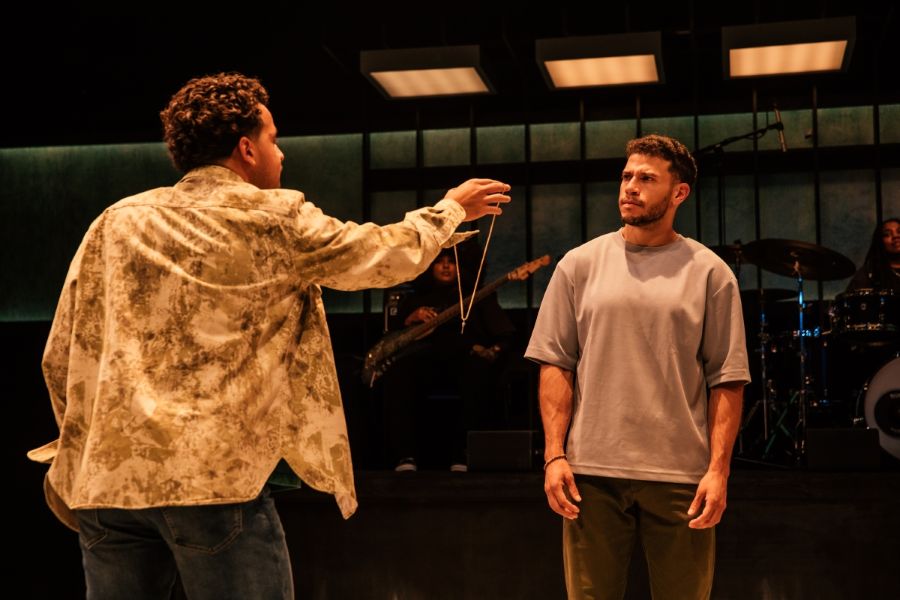
You knew Working Girl would eventually be turned into a musical, right? It’s happening at La Jolla Playhouse Oct. 28-Nov. 23, with music by Cyndi Lauper, book by Theresa Rebeck, and direction by Christopher Ashley.
A Driving Beat, Jordan Ramirez Puckett’s new play about a mother-son road trip, premieres at Mountain View, California’s TheatreWorks Oct. 29-Nov. 23, with direction by Jeffrey Lo.
Northeast
Jon Richardson’s new musical The Jack of Hearts Club, playing at Massachusetts’s Provincetown Theater Oct. 2-Nov. 2, happens also to be set in Provincetown, in a ragtag gay bar at the end of the summer in 1963.
Not to be confused with the George C. Wolfe-penned anthology show of the same title, Spunk is the premiere stage adaptation of a short story by Zora Neale Hurston, at Yale Repertory Theatre Oct. 3-25, with music by Nehemiah Luckett, choreography by nicHi douglas, and direction by Tamilla Woodard.
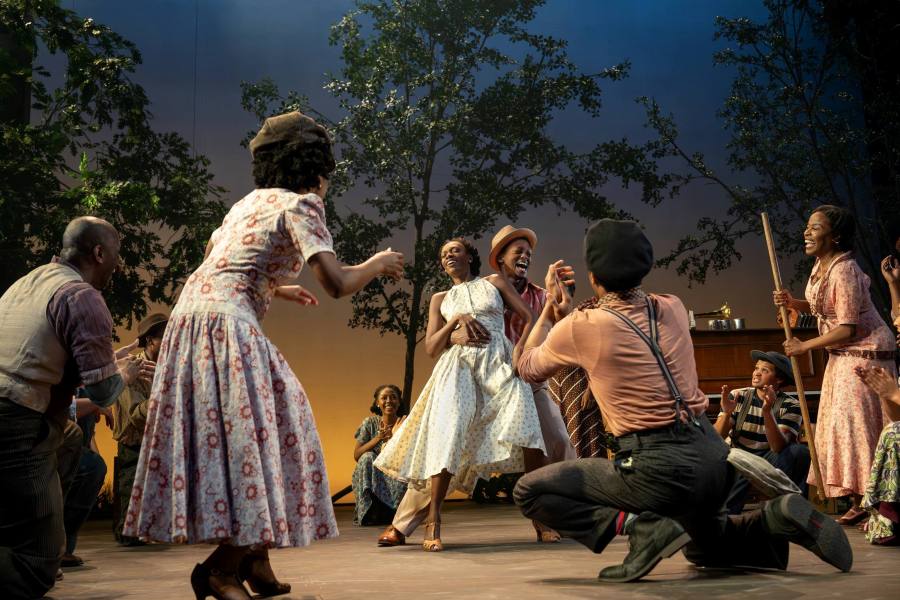
Fire!! is Marilyn Campbell-Lowe and Paul Oakley Stovall’s attempt to dramatize the creation of the first Black literary magazine in the 1930s. Under Raelle Myrick-Hodges’s direction, it runs at Philadelphia’s Quintessence Theatre Oct. 8-Nov. 2.
Other, a new play by and starring Tony winner Ari’el Stachel (The Band’s Visit), began previews at the Greenwich House Theatre in New York City on Oct. 8 and runs there through Dec. 6. Directed by Tony Taccone, it’s billed as a “dramedy about the anxious art of belonging.”
Donald Loftus’s The Springvale Armadillo spans decades in telling the story of a young leprosy patient in WWI-era Louisiana who lives to tell her story in the age of AIDS. Its premiere at the Open Eye Theatre in Margaretville, New York, runs Oct. 9-19, with direction by Michelle Macau.
At Connecticut’s Hartford Stage, the prolific adapter Jeffrey Hatcher debuts his new version of Rope, based on the Patrick Hamilton play Rope’s End, on which Hitchcock’s famous “one take” thriller was based. Melia Bensussen directs.
Triplicity is Talking Band’s new show at Mabou Mines in NYC, featuring the stories of three ordinary New Yorkers whose lives intersect with a Greenwich Village street singer. Elena Maddow is the writer/composer, Paul Zimet the director.
David Cale’s Blue Cowboy, a solo show about a meeting of two gay men from very different worlds, opens at Brooklyn’s Bushwick Starr Oct. 14. Les Waters directs.
Romy & Michele: The Musical, based on the iconic 1997 film comedy Romy & Michele’s High School Reunion, begins an open-ended commercial Off-Broadway run on Oct. 14, with an opening of Oct. 28. Directed by Kristin Hanggi and starring Legally Blonde’s Laura Bell Bundy, its book is by the film’s screenwriter, Robin Schiff, with songs by Gwendolyn Sanford and Brandon Jay.
Torrey Townsend’s Jewish Plot is running at Brooklyn’s Brick Theatre Oct. 18-Nov. 1. Billed as a “reconstruction” of a long lost play by the Victorian author I.W. Bruntmole (good luck finding any information about this mystery person, by the way), the play is aimed, according to press material, directly at “what it means to be an American Jew today.” Directed by Sarah Hughes.
Boxcutter Collective’s devised puppet theatre piece Dimension Zero, running at NYC’s HERE Arts Center Oct. 21-24, is billed as “a sci-fi puppet-filled anti-capitalist musical theatre spectacle unlike anything you’ve seen before.” Okay then!
1 Pound 4 Ounces is Khalil Munir’s one-man show about his life, incorporating tap and storytelling, in a co-production of Philadelphia’s Azuka Theatre and Simpatico Theatre, running Oct. 22-Nov. 2 at the Drake, with direction by Amina Robinson.
Playwright Anne Washburn returns with the deliciously titled The Burning Cauldron of Fiery Fire, a co-production with the Civilians that runs at Off-Broadway’s Vineyard Theatre Oct. 23-Nov. 30. It’s about an “intentional community” in Northern California facing an unexpected death in their ranks. Steve Cosson directs.
Rachel Rose Keller’s new comedy St. Hospital City follows the chaotic taping of a 1970s-era medical soap. With direction by Devin O’Neal, it runs at NYC’s The Tank Oct. 29-Nov. 9.
Midwest
Zayd Ayers Dohrn and Tom Morello’s Revolution(s), a new punk/hip-hop musical about a soldier returning from Afghanistan to find his hometown of Chicago occupied, is running Oct. 4-Nov. 9 at Chicago’s Goodman Theatre. Steve H. Broadnax III directs.
Motherhood, marijuana, and the multiverse collide in Sandra Delgado’s Hundreds and Hundreds of Stars, at Chicago’s TimeLine Theatre Company Oct. 8-Nov. 9. It features Delgado and is directed by Kimberly Senior.
A trio of modern-day witches of color resurrect a witch to hold onto their ancestral home in Ben F. Locke’s Rooted, at Chicago’s Bramble Theatre Oct. 9-Nov. 2. Direction is by Carol Ann Tan.
Great Plains Theatre Commons artistic director Kevin Lawler premieres a work of his own, Looking-Glass, at GPTC’s Omaha, Nebraska, theatre Oct. 16-19. Directed by Kimberly Clark-Kaczmarek, the play is inspired by his time working the Ollie Webb Center’s Art of Imagination program, and will be made and performed by folks of all abilities.
The End of Black Excellence, Chris Webb’s self-penned solo show exploring its title subject, runs at Cleveland Public Theatre Oct. 23-Nov. 8, with direction by Jimmie Woody.
Rob Weinert-Kendt (he/him) is editor-in-chief of American Theatre.