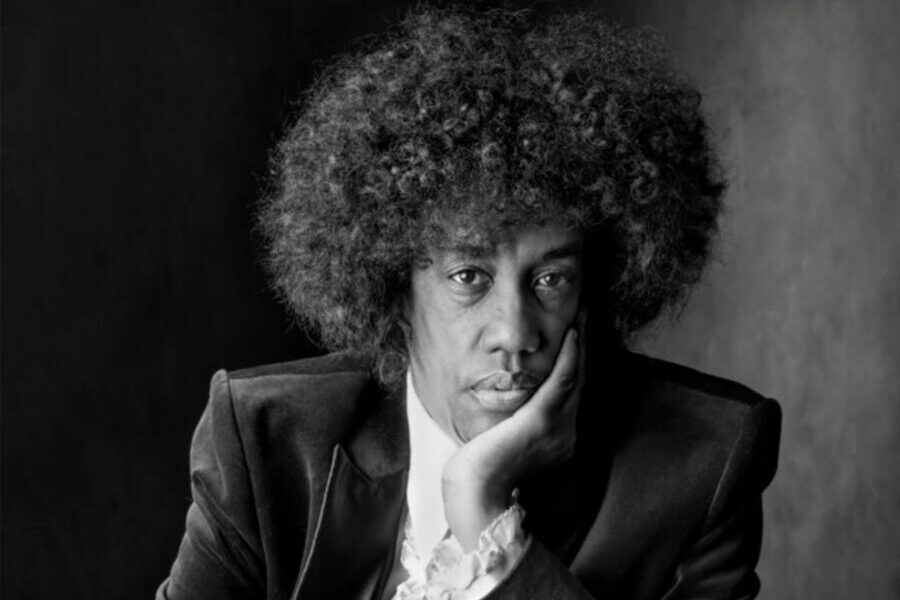
I never thought I would be a professor. And I never imagined I would live in Texas. I was born and raised in New Mexico, and—well, we New Mexicans had some opinions about the Texans who came to ski our mountains.
For 25 years I lived in New York. I ran American Records (my theatre company), wrote plays, and directed across the country. In 2015 I was invited to Austin to be a guest respondent for student productions at the University of Texas at Austin (UT Austin). The works were part of the Cohen New Works Festival, a biannual week-long festival where audiences can see up to 40 productions, tucked into every nook and cranny of the Theatre and Dance building, featuring work created, curated, and produced by students. On my first visit to UT Austin, I moved from show to show, gob-smacked—how had I never known about this magical land where the students were on fire and the teachers seemed to truly like each other?
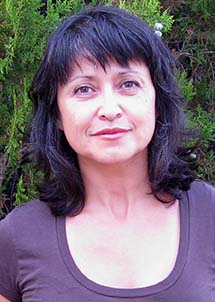
Playwriting professors Steven Dietz and Kirk Lynn took me for a cup of coffee and asked if I’d be interested in spending a semester in Austin as a guest instructor. That semester turned into a teaching gig—and now here I am a professor, and I lead the school’s MFA in Directing program.
Yesterday was a fairly typical day for me: My first class was at 9 a.m. It’s called Spectacle as a Political Tool. Two graduate directors and I teach 60 undergraduates (most in their first year) from colleges across the UT campus about how spectacle has historically informed self-governance. After that, I had meetings with grad students to talk about the classes they’ll take next semester: One will take a sound design class, another is excited about a choreography course offered by our dance program.
In the afternoon I joined the graduate designers in their studio class to discuss the art of iteration. That evening I sat in on techs: a three-person all-femme adaptation of Macbeth and an all-the-bells-and-whistles-we-can-muster staging of Cabaret.
A long day. But a wonderful day. Because I am feeling extremely grateful to have this job. Even though I never thought I would be what Kirk Lynn calls an “indoor cat,” every day I understand more deeply what the academy can offer…and every day I worry about what might happen to any one of similar graduate programs across the country.
I don’t think I’m alone in that when I hear of another MFA program closing or pausing, I fear a trend. Social media postings give us anecdotal information about these closures, but I am cautious about generalizations without comprehensive data about how many programs have closed versus how many have been created within a certain time frame. Perhaps this “wait until complete data is in” approach is simply an attempt to remain stubbornly optimistic. (Quite likely.)
That said, I reached out recently to two educators in the midst of great change: Luis Alfaro, associate professor of Dramatic Writing and director of the MFA in Dramatic Writing program at the University of Southern California (USC), and Seth Gordon, professor of Directing and Theatre Management at the University of Oklahoma (OU). Maestro Alfaro posted recently that his beloved MFA program, which has been in existence for more than 30 years, will be “sunsetted” after this school year is done. Meanwhile, Gordon plans to reopen an MFA in Directing program at OU, which shuttered about 20 years ago.
The first takeaway I gleaned from conversations with both Alfaro and Gordon is that none of the three of us think graduate school is the only way to advance a playwriting or directing practice, nor do we think graduate school is for everyone. A perfect example is Alfaro himself, a MacArthur Fellow who is in a very special group of educators who have received tenure due to extraordinary commensurate experience. Not only did Alfaro never get an MFA himself—he never went to college.
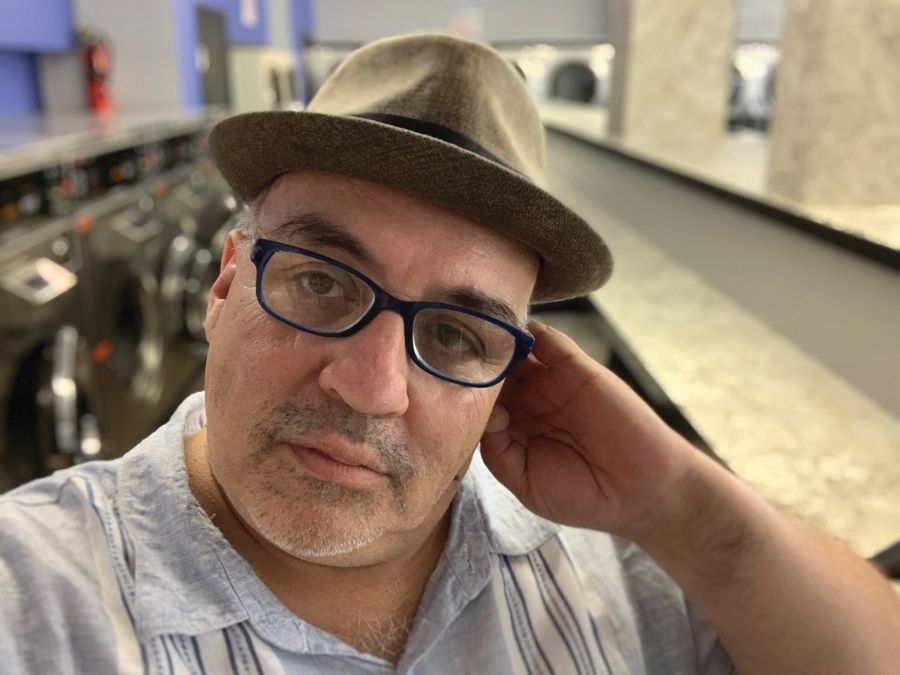
“I went straight into the field in the ’80s,” he recalled. After studying with playwright María Irene Fornés, Alfaro worked as a poet and performance artist. “The weird thing about being at USC,” Alfaro told me, “is I was raised in abject poverty in one of the poorest, most violent neighborhoods of L.A., which is where USC is.”
How did he get from there to here? “I’m a child of the apprenticeships, the internships, the fellowships, all of that,” he said. “I wrote a ton of letters to people, and said, ‘Hey, I love your work and I would love to meet you.’”
One of those meetings was with Mark Russell, who ran New York City’s P.S. 122 (and would later run the Under the Radar Festival), and who steered Alfaro to such spaces as DiverseWorks in Houston, Hallwalls in Buffalo, New York, and Guadalupe Arts in San Antonio, Texas. “I went everywhere, right?” Alfaro recalled. “Instead of going to New York, I got to go around the country. And that circuit was full of amazing people.”
One of Alfaro’s favorite spaces was Boston’s The Theater Offensive, where artistic director Abe Rybeck would “pair me up on these double bills with these veteran artists that were extraordinary.”
As I listened to Alfaro describe his on-the-job training and apprenticeships, it dawned on me: The days of a broke emerging artist being able to afford to travel the country and learn from veteran artists are gone. The cost of living has made it essentially impossible. This is where some graduate programs are taking up the slack. Yes, graduate schools are cost-prohibitive for far too many, but where an artist like Alfaro once moved from city to city seeking mentorship, we now bring the elders and leaders of the field to our graduate programs to meet our students, to offer workshops, feedback, and mentorships. An additional benefit of this new model is that our guest mentors see the work of and also interact with our undergraduate student body. What once served one emerging artist at a time is now serving many.
Alfaro and his colleagues were told by USC leadership that the reason the MFA program was closing was due to a pivot to a “revenue-based model.” This news was particularly surprising, given that USC made their Acting and Dramatic Writing programs tuition-free starting in the 2024-25 school year. I asked Gordon about this: How would he respond if OU mandated that he create a program centered on revenue?
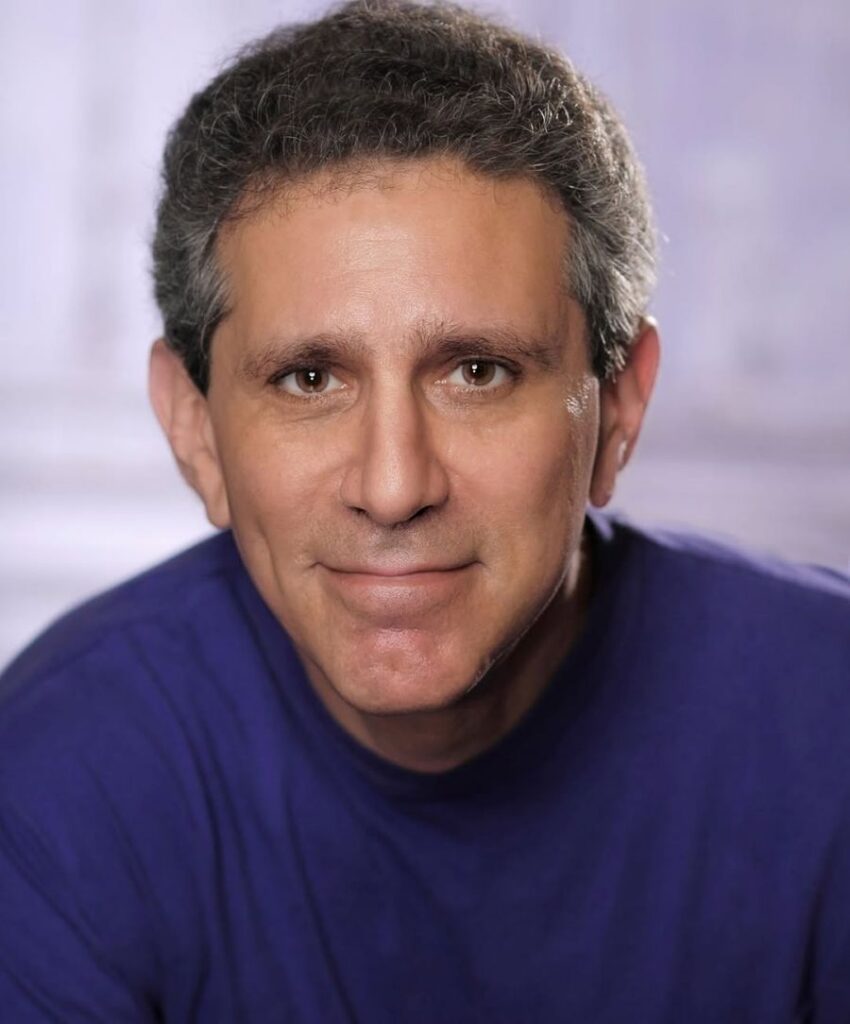
“We are a Research 1 University, as are you,” Gordon said. “So the fact that we will have the kind of impact on the field that I hope we’ll have is what we’re all about. I am assuming that if I am ever told we are switching to a revenue-based model, the subtext of that is, ‘We’re not an R1.’” The philosophy that guides both of our programs, as Gordon put it, is about “how we are going to contribute to our field: by providing it with the people that the field needs to lead it responsibly into its next chapter.”
Alfaro has trained many such leaders, with students going on to become the next generation of writers in live performance, TV, and film. He said he tailors each student’s program of study to best prepare them to lead in their own unique way. “I can see what each one means in the field,” he said.
Because USC has been accepting two writers on average per year, Alfaro explained, “You can diagnose and build a program for them. ‘What do you need?’ What we’re doing is spending time to figure out how to find them the right mentors, to connect with the right people. Then every year, there’s one that’s sort of extraordinary, and you have to build something special for that one student. That’s what graduate school can do.”
That may sound shocking. In fact, one rationale Alfaro was given for the program’s end was that this model—of many instructors hired to serve a very small number of students’ needs—is financially untenable. The fuller picture, though, is that Alfaro and his colleagues teach and mentor all across campus.
“I teach undergraduate courses, I teach in acting, I teach in critical studies,” he said. “Right now, I’m teaching a Latinx course—packed—and I’m teaching the Playwriting 1 undergrad. So I’m teaching courses that are not in my MFA program, but that bring a lot of money into the program.”
Not only are we faculty teaching across degrees and areas of specialization, so are our graduate students, who teach many of the introductory courses that bring in large numbers of students. Another common part of our work as graduate faculty is to bring our research into STEM spaces. Here at UT Austin, I watch in awe as my colleague, associate professor Kathryn Dawson, area head of the Drama and Theatre for Youth and Communities program, has been leading a cohort of theatre and dance faculty and graduate students who have been collaborating with UT Austin STEM researchers on a multi-year grand challenge involving over 100 Principle Investigators (project leads) across 40 departments, as they study various aspects of climate change and resiliency.
I asked Seth Gordon why he decided to lead the charge in restarting a long-dormant graduate program. “I don’t think we really understood at the time the degree to which we were filling a void that appears to be developing,” he admitted. “We just figured there’s a need in this part of the country.”
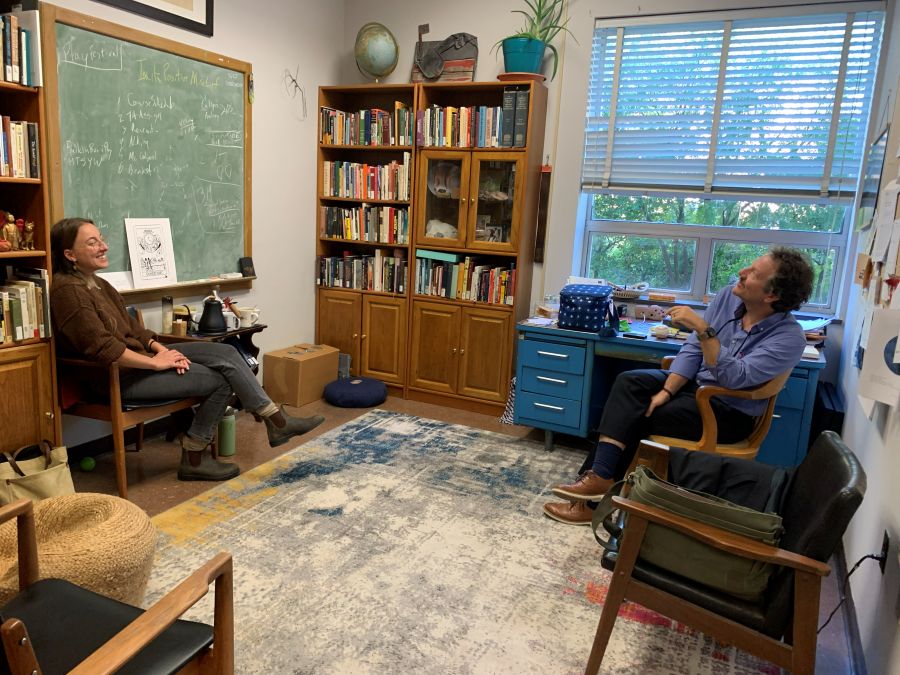
Gordon received a grant to study graduate programs in his region—which is larger than you might think. “Oklahoma, the states that touch Oklahoma, and the states that touch the states that touch Oklahoma—that right there is about 10 or 15 states,” he said. Even within that larger region, Gordon found only two comparable theatre directing MFA programs: UT Austin, where I teach, and the University of Arkansas.
His ambitions aren’t just that OU’s MFA students work in the theatre field. “I’m hoping that this program will allow people to find themselves as leaders as much as directors,” Gordon said. “My hope is to expose them to the field of directing, but also to the field of nonprofit leadership.”
Part of Gordon’s mission with this new MFA program is to nurture new companies that form among student cohorts, having already seen some success along these lines with former undergraduates, who have formed a theatre company called Co.Arts Theater Co. (formerly Collective Arts Productions). That company has also welcomed current students into its ranks, so that they’re “forging that first level of connections.”
Another gap in the field that the academy has taken up: providing space and resources to work and bridges to cultivate relationships. When I moved to New York in the early ’90s, not only was I able work in theatre for next to nothing because my rent (in Chelsea, no less!) was $250 per month, but I and my colleagues could work in grungy but cherished hole-in-the-wall venues like Todo con Nada on Ludlow Street, because those venues were affordable to self-produce in. Emerging artists today are often priced out of similar opportunities to build their oeuvre and hone their craft. They may instead get that chance in graduate school. As Alfaro notes, at a well-funded university, those resources can be extraordinary.
“Last year, I had all the second-year stage managers, mostly women and people of color,” said Alfaro. In a single year they got to work on “a big, fat musical, and then Angels in America, and Marat/Sade, and a site-specific space. Where are they going to get that training and that capacity, on that level, in the way that they’re doing on campus?”
Don’t get me wrong: Graduate programs are not perfect. I often reflect on the times I have not been the ideal mentor that a student deserved. And I am fully aware of how expensive graduate programs can be, even when tuition is waived and students get paid to teach or work as research assistants. With the cost of living, it’s still a massive investment.
But one thing I know to be true: Graduate programs are contributing to our field’s future in so many ways. Our biggest challenge at the moment is to make those contributions visible.
Though his MFA program will no longer be accepting new graduate students, Alfaro is not going anywhere. First he has his current graduate students to serve—and I’d lay down good money that these current students are going to get some of the best teaching of Alfaro’s career. He’s working every day, building new collaborations and devising new systems to keep serving all his students, now and into a new, if uncertain future.
What we all understand is that we have no theatre if we have no new plays. And Luis Alfaro—hands down one of our greatest living playwrights—has always been a mentor by nature. His dedication to passing the torch is true, and is sure to carry on in whatever form comes next.
“I feel like a drug dealer,” he quipped. “I’m gonna make you love writing a play. You won’t even realize we’re gonna write a whole play, but we’re writing a whole play.”
As Kimberly Belflower, a UT Austin playwriting MFA from 2017, put it, “What starts here changes the world.”
KJ Sanchez is a director, playwright, and author of The Radical Act of Listening: Making Documentary and Investigative Theatre. She founded American Records and leads the MFA Directing program at UT Austin.