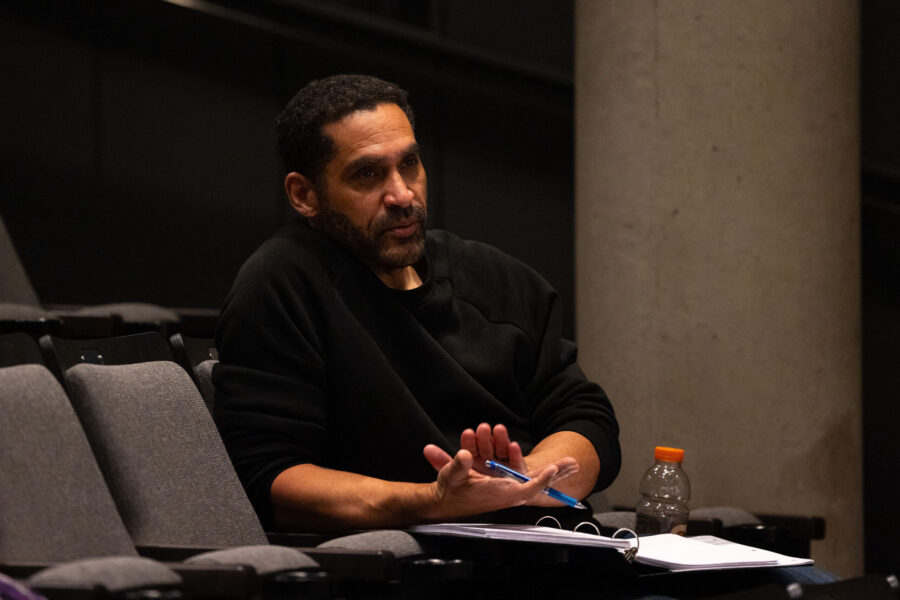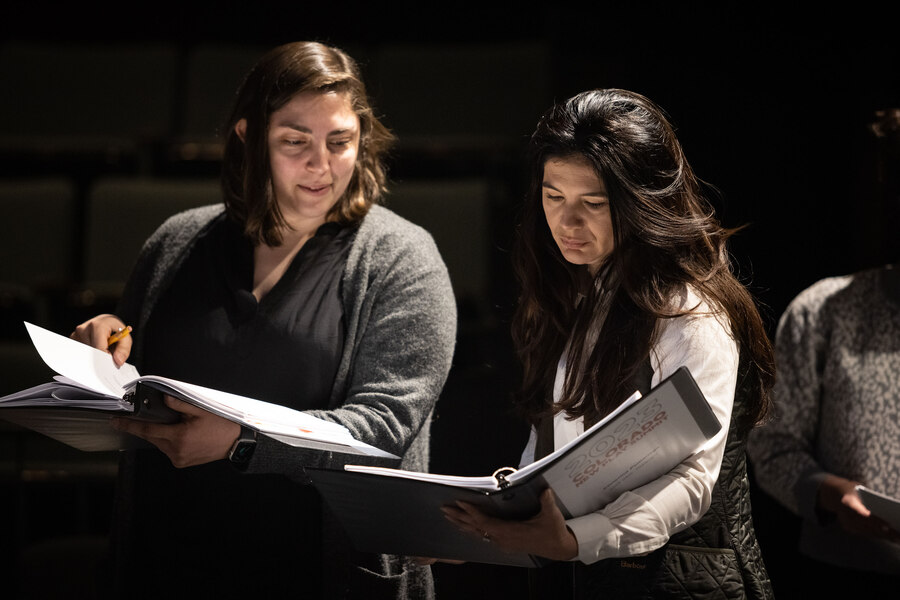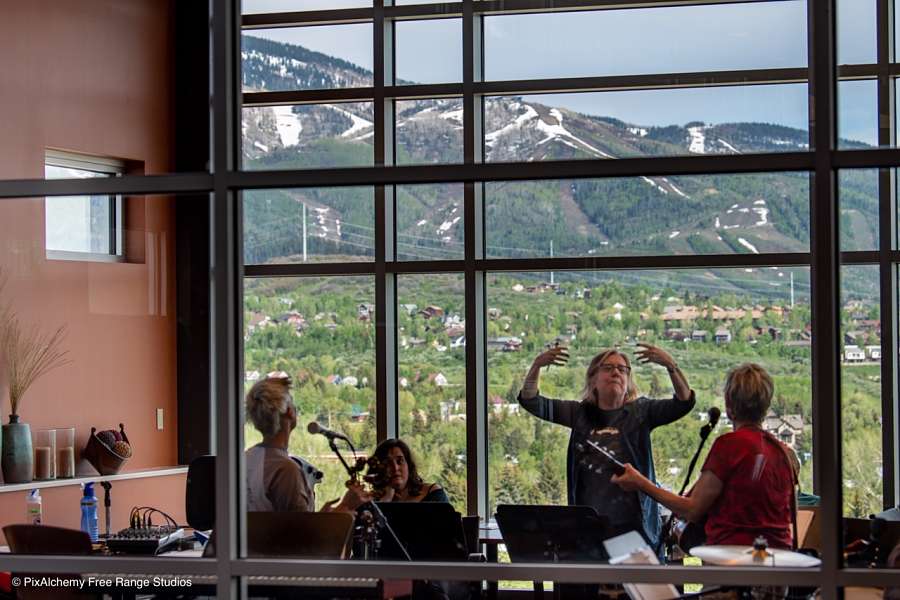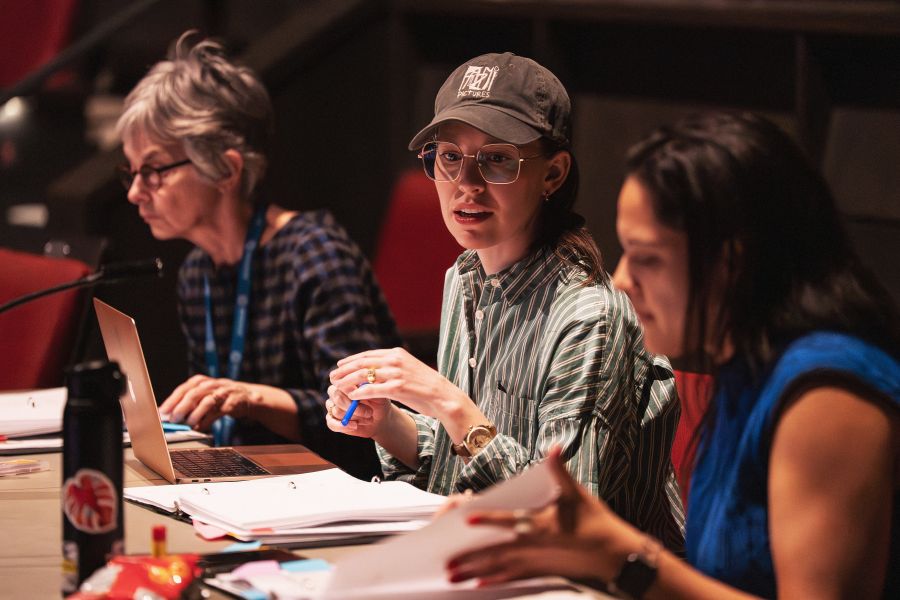
A glittering sari unfurled between neighbors. An epic Western exploded in a tale of revenge and redemption. Talking lemurs, soup dumplings, beauty influencers, and an Aztec superhero graced the stages of the 20th annual Colorado New Play Summit, which was held Feb. 14-15 at the Denver Center for the Performing Arts, with productions and readings showcasing a wide range of fresh voices and dynamic worlds.
“Walking into the 20th anniversary and knowing we’ve been developing new plays on this campus for the entirety of the Denver Center lifespan is such a special thing to celebrate,” said artistic producer Grady Soapes, who has been programming the summit for 11 years.
It’s a strong legacy, though budget restructuring means the Summit has shrunk from two weeks in the pre-Covid days to just two days. Despite the shortened time span, the festival felt both relaxed and invigorating over an unusually balmy Valentine’s Day weekend in the Mile High City. Audiences of artists, subscribers, students, and industry professionals eagerly chatted and flowed throughout the DCPA arts complex as they attended the four new-play readings and two world premiere productions: Cowboys and East Indians, co-written by Nina McConigley and Matthew Spangler, and Godspeed by Terence Anthony.
And despite the contraction in time, Soapes said, the Summit is expanding at a time when many new-play programs are doing the opposite. In DCPA’s case, he said, that growth has been about taking deeper dives into the plays and making long-term investments in playwrights. He also noted that this year’s staged readings had been moved from the smaller 200-seat theatres of previous years into 600-seat spaces to accommodate demand. Soapes attributed the expansion to DCPA’s “new-play-dedicated audience—we’ve grown that in 20 years—and how hungry our Denver audiences are for new work.”
The hunger and enthusiasm are intergenerational and communal. At one Sunday lunch, a pair of theatregoers—writer and high school student Harper Skurky-Thomas and her songwriter grandfather John Thomas—discussed their love of Denver theatre and their history of attending the DCPA over a decade. Past performances, such as Roald Dahl’s Matilda and the stage adaptation of The Wizard of Oz, marked major family memories and moments. This Summit was the sixth one they’ve attended together.
“We both love theatre, and we love going to see it together,” said Skurky-Thomas, who also named DCPA’s Women’s Voices Fund initiative as a highlight of her Denver theatregoing. “This is our favorite event of the year, because it gives us the opportunity to see things that are different.”
She felt especially excited for Cowboys and East Indians, having seen it as a reading two years prior and being able to chat with the playwrights and designers from its early phases up to the current production. “Last summer, I did a backstage tour of the DCPA, and I saw the costumes they designed,” Sturky-Thomas said. “Then this year, I get to see the show, and I get to talk to the playwrights again. It’s really cool to see a glimpse behind the scenes of how the plays get to be.”
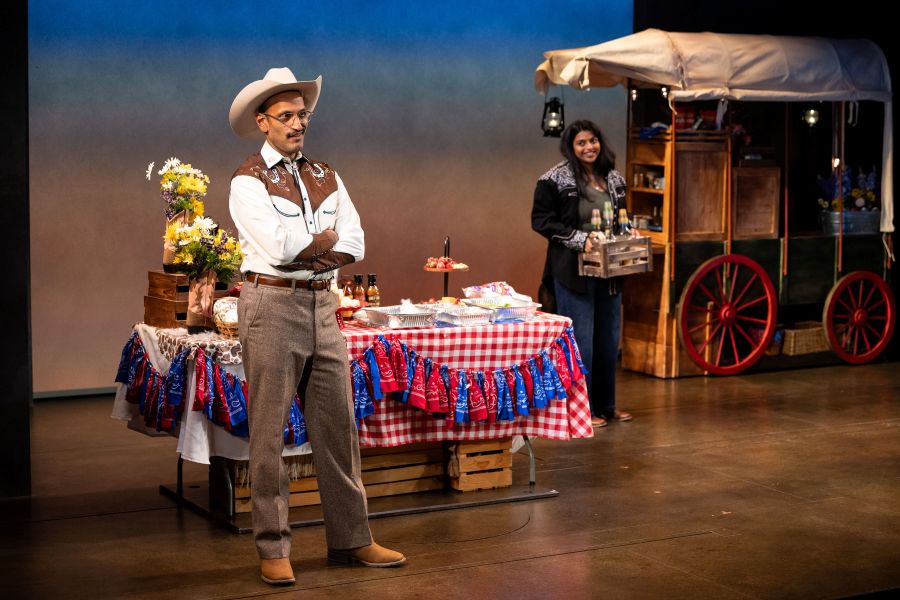
Adapted from McConigley’s 2013 short story collection, Cowboys and East Indians (which continues through March 1) depicts the present and past of Rajah and Chitra Sen, Indian immigrants to Wyoming, as their 22-year-old daughter Lakshmi grapples with the complicated task her deceased mother left her: to tie 10 saris for her sister’s wedding. An easy enough undertaking, if other South Asian Indians or cultural bearers were present, but in their small, windswept town, Lakshmi, a.k.a., Lucky, is at a loss for how to proceed (the show is set 2006, when YouTube was barely a year old and the likelihood of sari-tying tutorials was low). Her mother’s request has an even stranger wrinkle: It included the advice to seek help from the Larsons, their friendly white neighbors, who are steeped in cowboy culture.
Director Chris Coleman skillfully balances levity and suspense, with the audience cracking up at the Wyoming weather jokes and leaning in when secret invitations are extended. As Rajah and Chitra, Shawn K. Jain and Minita Gandhi have excellent comic timing and a loving chemistry, as do Christopher Kelly and Shannan Steele as Richard and Nancy Larson, portraying the boisterous yet down-to-earth neighbors. As Lucky, Sadithi De Zilva Lucky embodies earnest yearnings not only for her diasporic culture and identity, but for her late mother and for her sister’s happiness. Meghan Anderson Doyle’s costume design—from shimmering saris to vintage ’80s fashion to cowboy couture—reveals a community where the love of beauty and heritage can bolster one’s identity.
Directed by Delicia Turner Sonnenberg, Godspeed (which closed Feb. 22) transports audiences to the forlorn and hazardous outskirts of South Texas in 1865. Though the Civil War has just ended, a white former slaveholder ominously reminds a newly freed Black woman, Anna—who has renamed herself Godspeed—that “the fight still lingers.” As Godspeed travels, carrying a gun loaded with a single bullet, and searches for the man who tore her life apart, she encounters enemies, allies, and tricksters in both the vast desert and ancestral space.
While Westerns are typically associated with sweeping landscapes and sky, this ambitious drama takes on more intimacy in the round (the excellent scenic design was by Tanya Orellana). Godspeed (CG, in a high-octane performance) and her companions sit on a wagon as it revolves, echoing her tireless journey. Sand, succulents, and debris encircled the stage as if in a Reconstruction-era ritual—the collapse of the old world subsumed by the natural one. And the twanging musical interludes (sound design by Noel Nichols and UptownWorks) enhanced Godspeed’s spiritual transformation towards freedom.
The formidable Erica Cruz Hernández shone as the knife-toting Peklai, a Mexican woman of Coahuiltecan descent who both helps and goads Godspeed in her goals while speaking almost entirely in Spanish and without translation. Anthony skillfully provides clues in the other characters’ English language responses to Peklai, but never oversimplifies the historical drama’s linguistic registers, adding emotional texture to the characters, as it is Godspeed who nimbly understands her friend even when no one else does.
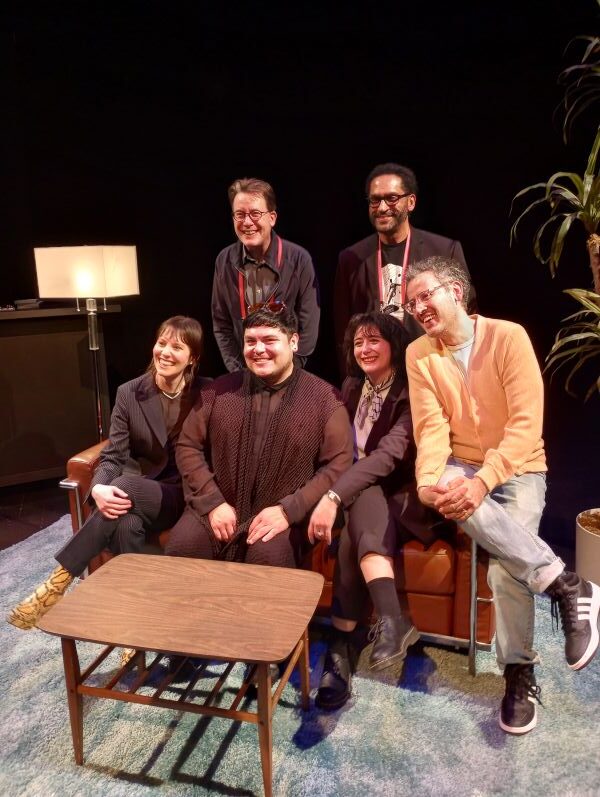
The four new-play readings also revealed distinct and imaginative places around the United States. Set in eastern North Carolina, Bonnie Antosh’s Lemuria gives a cheeky nod to Shakespeare’s King Lear while examining inheritance, ambition, and queerness in human and animal kingdoms, all with good humor and plenty of lemur enthusiasm. Meanwhile, in Alyssa Haddad-Chin’s You Should Be So Lucky, a dramedy rife with magical realism, a biracial granddaughter and her Chinese grandmother prepare soup dumplings in a New York City Chinatown apartment on the eve of the Lunar New Year. Isaac Gomez’s Influent, a DCPA commission, blurs the virtual, in-person, public, and private realities of two Latina beauty influencers reckoning with racism, escapism, and cancel culture. And Tony Meneses’s The Myth of the Two Marcos, a tender coming-of-age tale set in Albuquerque in the late ’90s, is a time-bending view of two boys who share the same name but very different lives, yet unite through their love of comics and the help of an Aztec superhero.
Amid these productions and readings, the Playwright Slam provided a fun and casual space for each dramatist to perform their own work and get silly. DCPA’s director of literary programs Leean Kim Troske and literary assistant Madison Cook-Hines emceed the event, reading informal (and hilarious) bios of the playwrights before each one got up and performed a snippet of various works: some freshly written, at least one 24 years old.
“We get to see the heart of any given play because we’re hearing it from the lips of the writers themselves,” said Soapes about the Slam. “What a rare opportunity to hear these playwrights in the American theatre reading their own work! You get a first glimpse of what’s in their heads and what’s to come.”
Speaking of what’s to come: The Summit’s middle and high school playwriting competition, programmed by Heather Curran, with playwright liaison and writing mentor Moss Kaplan, showcased staged readings of three short plays by local young authors in a packed auditorium on Sunday morning. Audrey Flege’s Scraps took on the tribulations of an unhoused teenage girl, while Kaylee Johnson and Carson McConathy’s absurdist Number 47 portrayed an afterlife waiting room. Flavia Armas’s Bajo La Misma Luna, a rooftop romance between two adolescents, addressed hopes and fears around teenage life as well the current political climate.
DCPA leadership also announced their next season’s world premieres: bogfriends by jose sebastian alberdi and How to Conquer America: A Mostly True History of Yogurt by David Myers. As is common practice, both plays had staged readings at last year’s 19th annual Summit.
With respect to his hopes for the new plays cultivated at the Summit, Soapes was full of optimism for the future.
“What we’d love to see is that these world premieres are going to be announced at major theatres across the country, and community theatres for that matter, making an impact on audience members and being produced at many scales around the country.” He added with pride: “To be able to say they started here in Denver is such a meaningful and creative experience…We want to see these plays soar.”
Amanda L. Andrei (she/her) is a playwright, literary translator, and theatre critic based in Los Angeles.