The national magazine for the American not-for-profit theatre
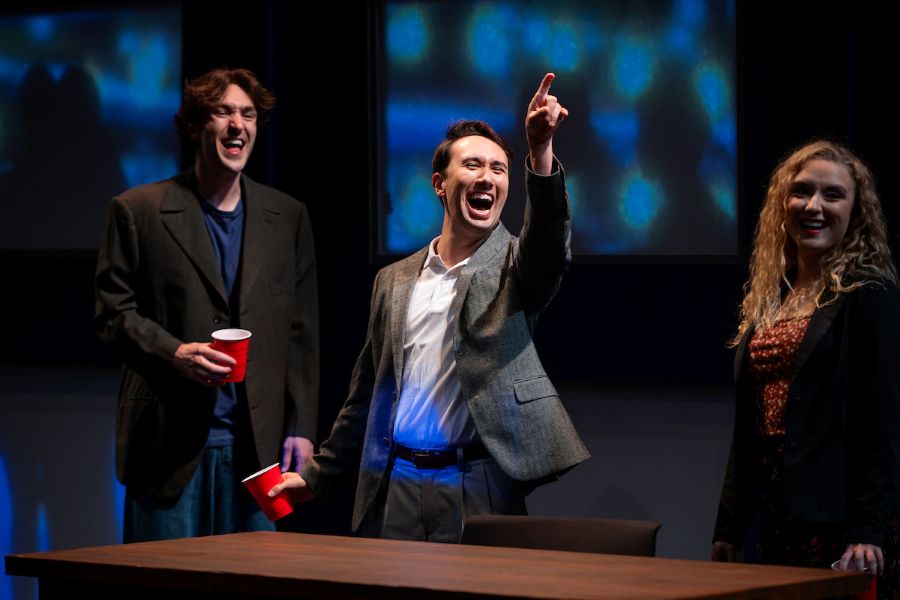
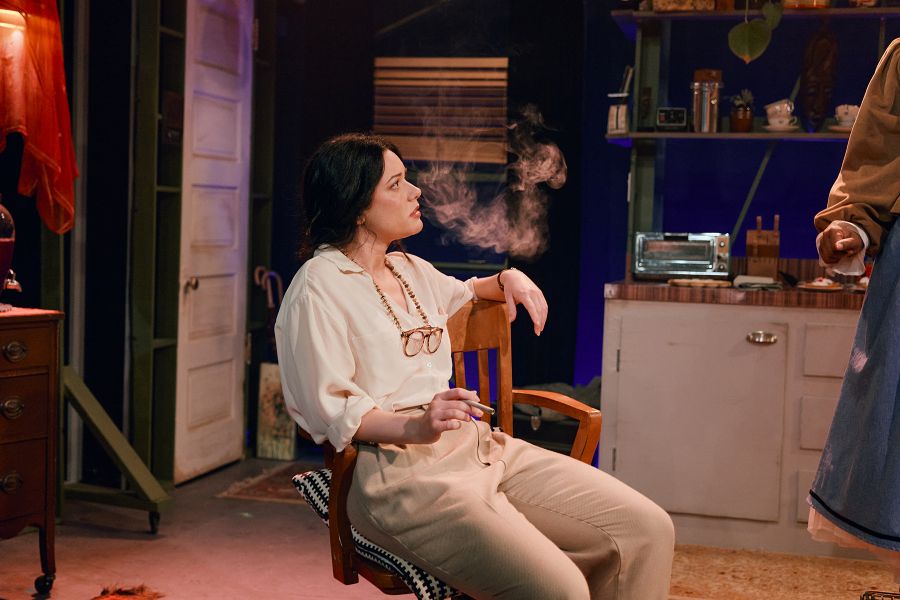
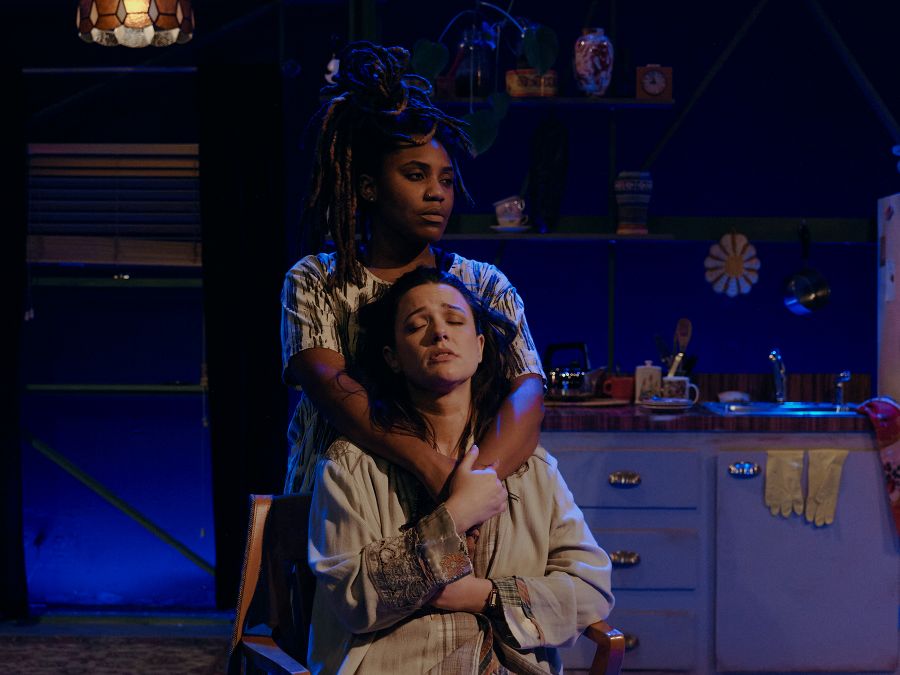
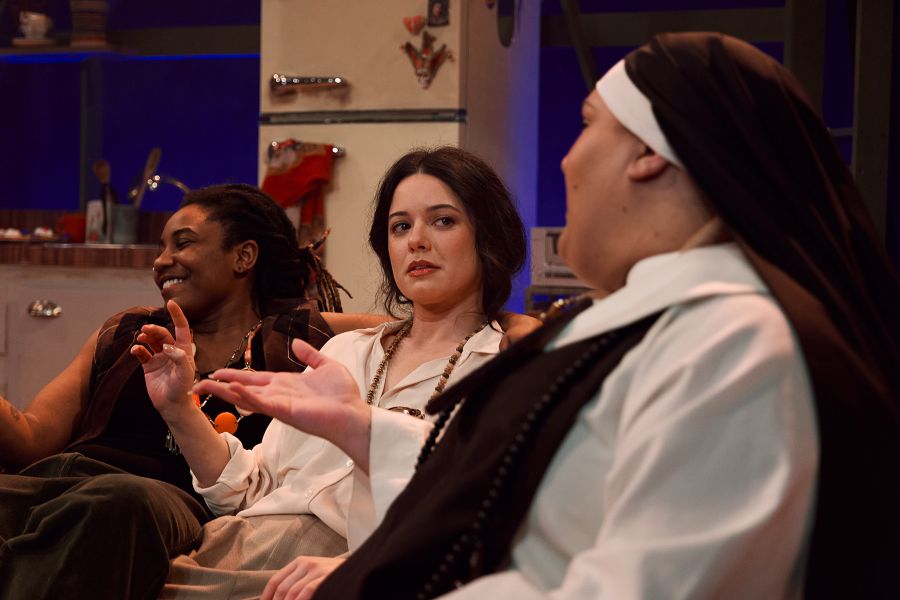
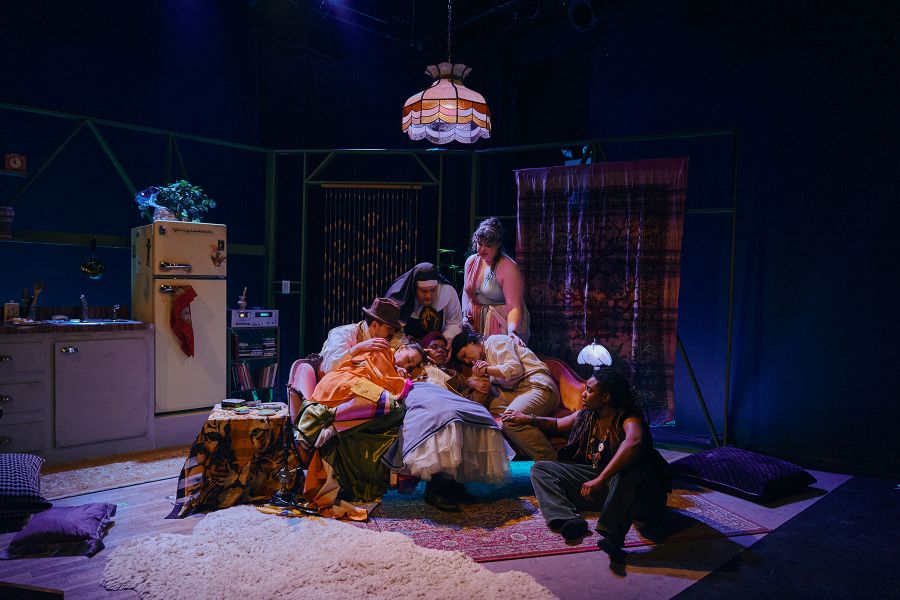
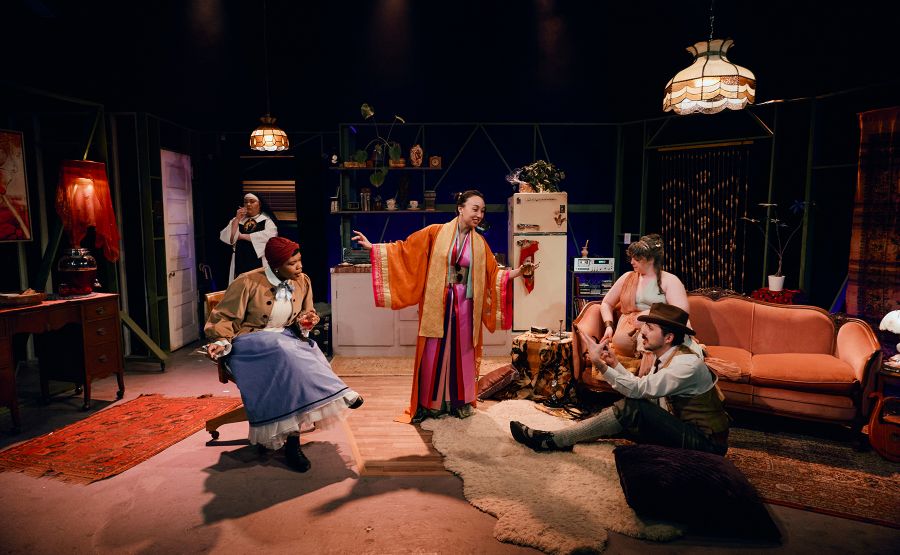
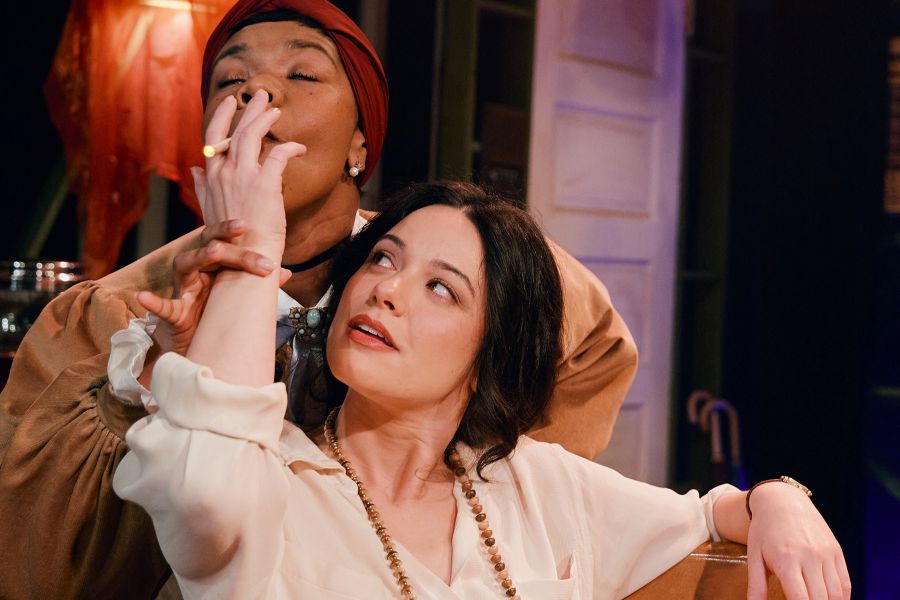
Myah Bridgewater and Brenna DiStasio in the Story Theatre’s world
premiere of "Pot Girls" by Paul Michael Thomson, directed by Ayanna Bria Bakari.(Photo by David
Hagen)
Often, when you’re in school learning the theatrical “canon,” reading numerous works that represent different aspects of theatre and theatre history, one of the plays that comes up, especially when looking at theatrical discussions of feminism, is Caryl Churchill’s Top Girls. As playwright Paul Michael Thomson noted, it’s a play that is often lauded as one of the great plays of the 20th century. But, as Thomson will tell you, lauded does not equal flawless.
“That opening scene at the dinner party is so iconic and so legendary in the theatre world,” Thomson said, referring to the scene in which the show’s lead, a Thatcher-era businesswoman, dines with an anachronistic assemblage of historical women: a 19th-century naturalist, a 13th-century Japanese concubine, a 16th-century Flemish peasant, a medieval pope (in male disguise), and a patient wife from The Canterbury Tales. “But having seen multiple productions of it, and certainly having read the script, something that occurred to me is that the folks that Marlene has around the table didn’t really look like me and my group of friends, which is much more multiracial and multi-gendered and includes a lot more queerness than we’re often able to see in traditional productions of Top Girls.”
One evening at a friend’s house, talking about the relationship between art and activism, Thomson said he was struck by the sense of community and the deep affection he had for such conversations. Thomson wondered what it would be like to take the structure offered by Top Girls—a first-act round table celebration, a workplace-set second act, and a final act that takes what you’ve seen and offers a revelation about the play as a whole—and, well, riff on it.
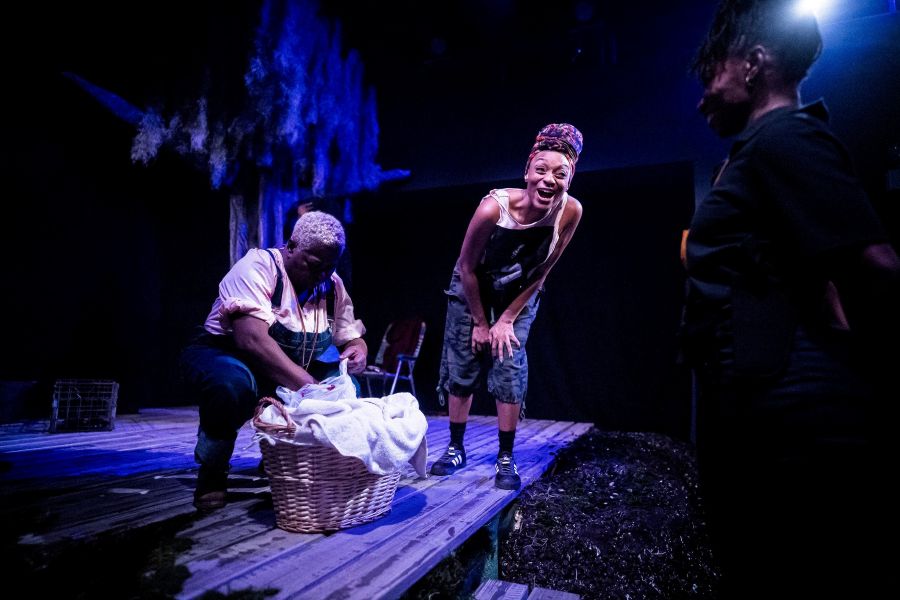
In fact, “a smoky riff” is exactly how you’ll see Pot Girls, Thomson’s newest play, produced by the Story Theatre (recently extended through March 8), billed as it runs alongside Raven Theatre’s production of Top Girls (through March 22) at Raven’s Chicago complex.
In Thomson’s new play, that first act roundtable? Now it’s a “celebratory kiki kickback blunt rotation” (to borrow Thomson’s description) as Caryl (yes, that Caryl) celebrates making her West End debut in 1982, surrounded by feminist writers from history. Act Two heads to tech for said play, and then Act Three breaks down the barrier between art and artist, playing with time and recontextualizing the play. To be clear, this isn’t an adaptation per se, and it’s certainly not a modernization (as it takes place in the same time period as its predecessor), so for Thomson, calling it a “riff” feels the most apt.
“My play really engages questions of intersectionality, specifically of race and queerness with class and gender,” Thomson said, “and while that may feel contemporary, it’s totally not.”
As a PhD candidate in Afro-American Studies through the W.E.B. Du Bois Department at the University of Massachusetts Amherst, Thomson’s studies have included deep dives into Black queer and Black feminist art and activism in the latter half of the 20th century. He pointed to the work of June Jordan and Audre Lorde and of Black feminists like the Combahee River Collective, who worked to push race and sexuality to the forefront of the conversation around feminism. To be clear, Thomson has no intentions of taking shots at Churchill or her play (“I think my play holds a lot of reverence for it”), but his studies and experiences have led him to see clearly that there were conversations around feminism happening back then that simply didn’t make it into Churchill’s play.
Where does race come in? How about queer people? How can folks who have been regularly overlooked over the years, both in media and art as well as in the discourse around feminism, have a voice? Thomson doesn’t pretend that his play has all the answers. Instead, he uses Churchill’s play as a jumping-off point to expand the conversation.
If you’re anything like me, one big thing I was wrestling with while listening to Thomson was the idea that art needn’t be expected to be all-encompassing. Indeed, that’s a major question the play is asking, Thomson explained to me, in its third act: If you have one person telling Caryl her definition of feminism is too narrow, and you have Caryl saying it would be unethical to write outside of her own experience, where should art land? Should artists only “write what they know”? Can audiences truly smell inauthenticity from a mile away? Of course, you also can’t have that exploration without zooming out to the creation of Pot Girls itself.
“The third act,” Thomson said, “reckons with that very thing of, ‘Who is this gay white boy who is having (Japanese poet and novelist) Lady Murasaki Shikibu as one of the people [in the play]?”
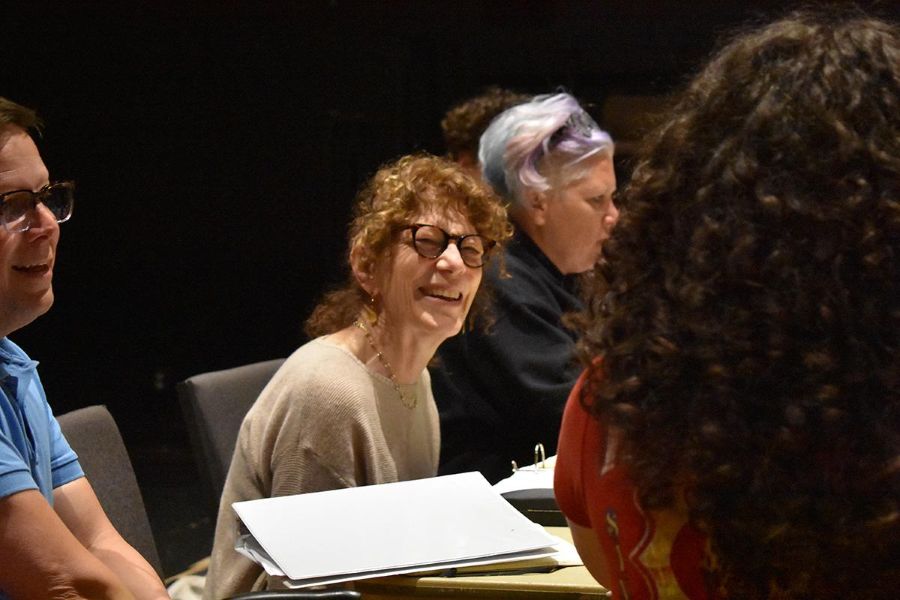
“Pot Girls” director Ayanna Bria Bakari and playwright Paul Michael Thomson. (Photo by David Hagen)
Thomson gives a lot of credit for the ability to explore this topic to the team around him, especially his fellow Story Theatre collaborators. Founded in 2015, the Story Theatre is led not by an artistic, executive, or managing director, but by an artistic governing ensemble comprising local Chicago artists, including Thomson, playwright Terry Guest, actor Brenna DiStasio (Pot Girls’ Caryl), and Pot Girls director Ayanna Bria Bakari. When I asked Bakari what her original reaction was to the concept, it was simple: Fear. Well, she clarified, excitement and fear.
“A white man writing a play and putting words in the mouths of people who are not like him?” Bakari said. “My initial reaction was: All right, huh. Let’s workshop this. Let’s get some really great minds and artists we value in the space to infuse this with the work and time it needs to make sure this play is doing good work and not harmful work in the community.”
Thomson explained that they went on to put together a “full femme” design team and a room that he said allowed them to explore “really fraught questions that are messy and not safe” in a safe way. The resulting play, which The Reader’s Kerry Reid called “a glorious and heady world premiere,” seeks to be a commentary on the theatre world in much the way Churchill was commenting on the business world. It also, perhaps most importantly, seeks to show the healing power of art.
“I hope this play changes the molecular structure of whatever’s going on in white people,” Bakari said. “I think this play is a salve. It is an ointment, not the cure. It is a multivitamin for the things that are lacking in our society, the awareness that is lacking in our society, and the ignorance that lingers in white people about their existence and how they came to be so powerful here in this country and across the world. I hope this play provides joy and laughter for those who see themselves, understand the conversations, and see the conflict that they deal with walking and working in a white dominant society. And I hope it inspires more playwrights to write the truth.”
Around the Water Cooler
Grab your water bottle. Let’s fill up and chat about some recent theatre goings before we head back to our desks.
First up, Kerry Reid details the perhaps surprising “building boom” happening among Chicago theatres. Reid checks in on Steep Theatre, which recently broke ground on a new space; Northlight, which heads home to Evanston after a three-decade stint in Skokie; TimeLine, as it continues its work on their new Uptown venue; and Collaboraction, which opens its new home in Humboldt Park’s Kimball Arts Center this month. She also checks in with UrbanTheater Company, Definition Theatre, and Chicago Danztheatre Ensemble. Coming out of seeming space crunch that saw the Royal George, Stage 773, and more shutter to local theatres, it’s honestly a bit wild—and wonderful—to see so many theatres working toward spaces for their community.
“Purchasing this property is an act of resistance,” UrbanTheater Company co-founder and executive director Ivan Vega told Reid. “It’s an act of fighting gentrification in our community. It’s being able to fully invest in the community that we’ve served and want to continue to serve.”
Elsewhere in the Reader, I really enjoyed reading Rob Silverman Ascher and Kimzyn Campbell’s coverage of the Chicago International Puppet Theater Festival that took place in January. From some Ibsen to an adaptation of Ursula K. Le Guin, through a variety of genres and topics, Ascher and Campbell were on the ground for nine of the shows in the festival, plus a local alternative for audience members who couldn’t get tickets to the festival.
Over at the Sun-Times, Mike Davis gets a tour of David Byrne’s Theater of the Mind, set to open March 11 as part of the Goodman’s centennial season. (We’ve previously covered a Denver iteration of this sensory Byrne work.) In an office building in River North, the former front man for the Talking Heads leads Davis through the upcoming immersive experience, starting with “a room with an awkward amount of doors, most of which don’t actually lead anywhere.”
“It’s a head-scratcher,” Davis writes. “But it’s also kind of cool.”
Finally, you’d be hard pressed to find anyone in the Chicago theatre community who hasn’t been talking about Invictus, which postponed its production of Cat On a Hot Tin Roof (which “may be rescheduled at a later date”) following abuse allegations about artistic director Charles Askenaizer, who was also directing the production. Block Club Chicago’s Alex V. Hernandez has coverage of the fallout, including the resignation of cast members and the ensuing investigation by the company’s board into allegations of emotional abuse and harassment.
“It is the belief of the following cast members that no powerful resolution or repair can occur without a complete shutdown of this production and the removal of Charles Askenizer as both director and artistic director of Invictus Theater Company,” reads a letter from the four cast members of Cat On a Hot Tin Roof. “This action already feels far too late and we must take action now.”
In a statement, the Invictus board said they’re “engaging a third-party investigator to conduct an independent analysis and, based on the findings, advise on appropriate next steps.”
Unapologetically Yourself
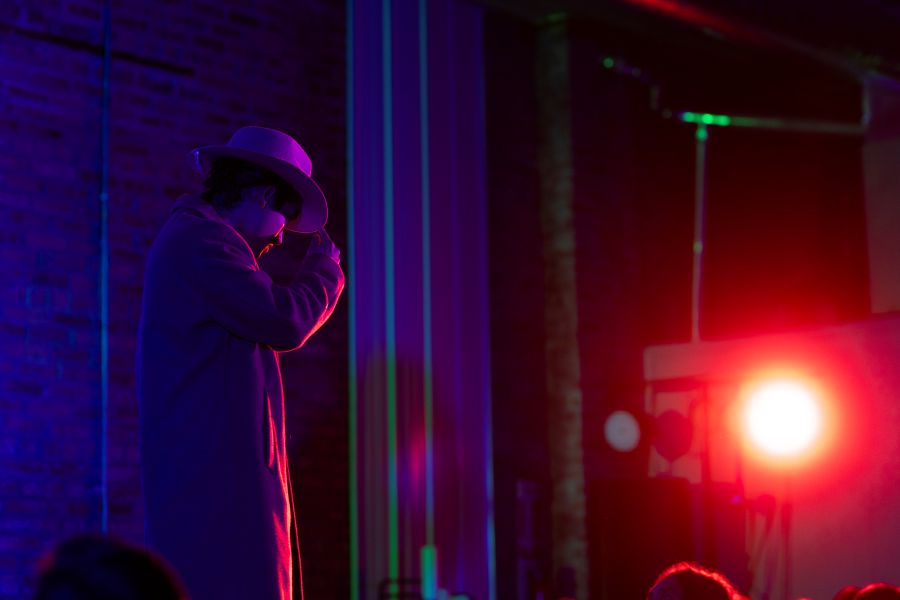
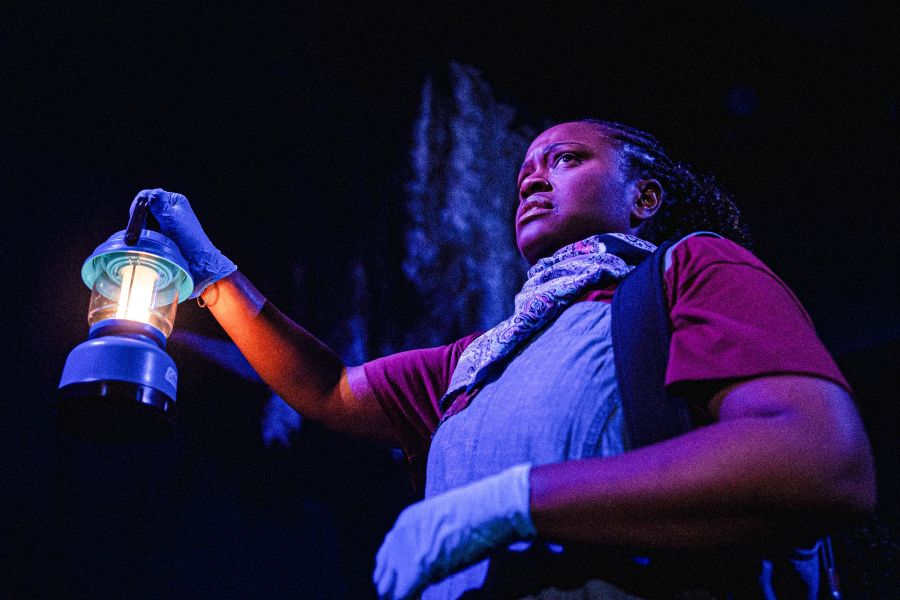
"No Trailer," an ensemble-derived, immersive sketch show directed by Ricardo Gamboa, with lighting design by Conchita Avitia. (Photo by Anthony Arroyo)
While Chicago-based lighting designer Conchita Avitia had some interest in theatrical design in high school, it was her experience as a general theatre tech student in college that paved the way for her busy and growing career.
Conchita Avitia.
“I felt more inclined to lighting because of the thought process that goes behind breaking down a script and thinking of the world we create,” Avitia told me. “Once I officially met with my professor at the time to figure out my next steps, it was my conversation with her that was the final push I needed to just go for it.”
Go for it she did. Since getting her BA in design from Columbia College Chicago in 2018, Avitia has worked around the city, from Teatro Vista to Steppenwolf, Steep to First Floor Theatre, TimeLine to About Face. Recent lighting design credits include Definition Theatre’s Black Cypress Bayou, by Kristen Adele Calhoun (through March 15), and Free Street’s Rupture & Repair, by Tanuja Jagernauth (through March 7). Next month, she’s lighting the way for About Face Theatre’s production of Modern Gentleman by Preston Max Allen (March 19-April 18), and she teased a yet-to-be-announced project with director Sandra Marquez that she’s looking forward to this fall.
Read on to find out more about Avitia’s work and passions.
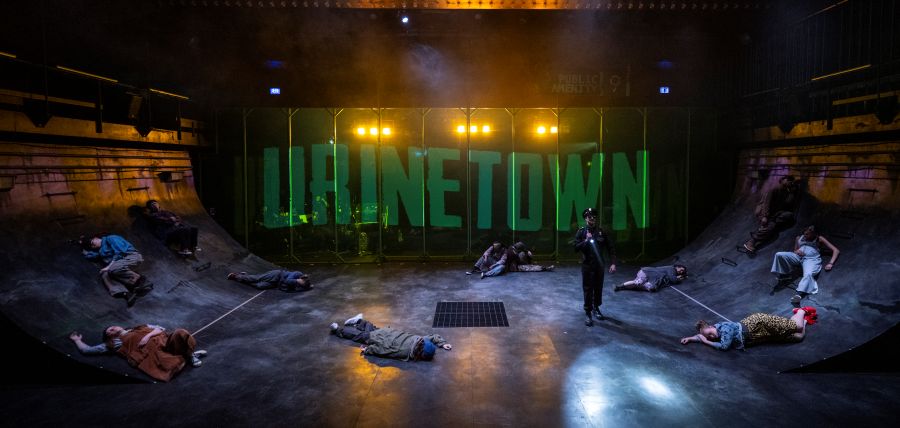
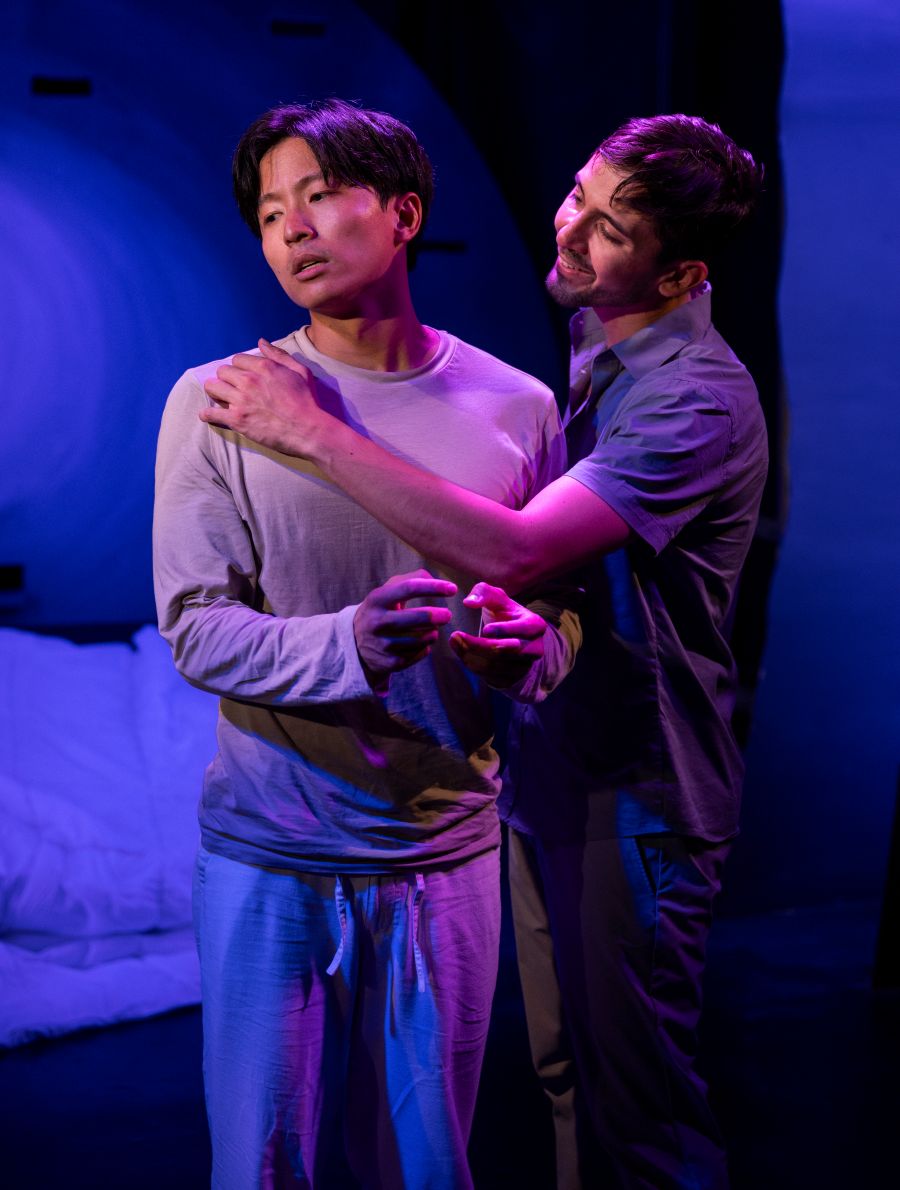
UIC School of Theatre and Dance's production of "Urinetown," with lighting design by Conchita Avitia. (Photo by Michael Brosilow)
JERALD RAYMOND PIERCE: What is the design/project you’re most proud of?
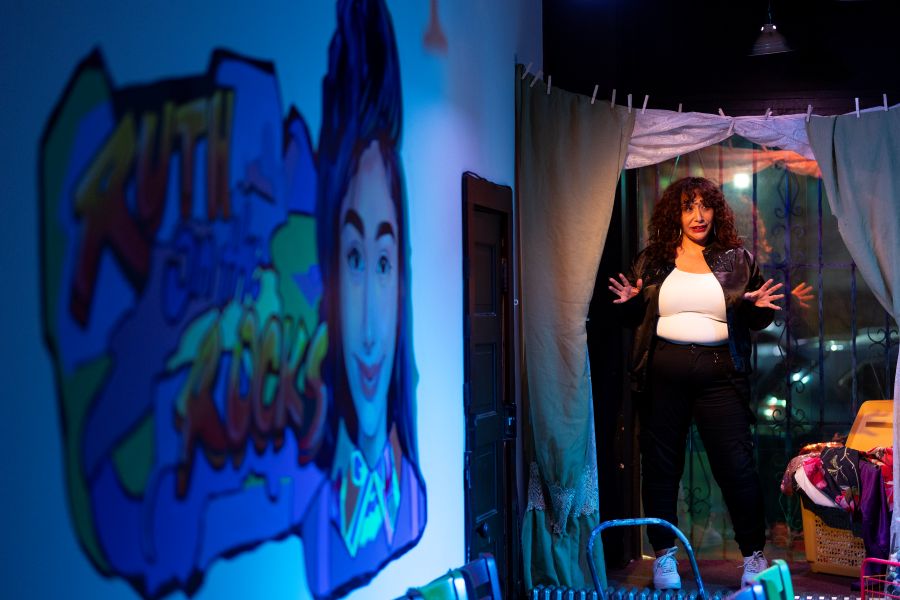
CONCHITA AVITIA: A project I’m the most proud of is a passion project I did with Concrete Content in 2024, Ruth on the Rocks. It was an immersive mix-tape style solo show—a 55-minute show where the audience had a list of songs to call out for, and with each song, a story would unfold from Ruth Guerra. This show was a love letter to the South Side of Chicago (Back of the Yards), Ruth’s family, and being Mexican and Latina while being proud of it. It was a show that challenged me to think creatively and do my job in a non-traditional way. The play was done in Ruth’s late father’s storefront repair shop in Back of the Yards, so I wanted to make sure we were preserving and uplifting the space, while still giving it new life with this play. Being able to work with Ruth Guerra (writer and performer) and Ricky Gamboa (director and founder of CC) was a refreshing experience. I hadn’t worked on anything that resonated with me as much as this one did, which is why I often refer to it as a passion project. We were a small team, but we worked hard and tirelessly.
What’s your dream project (theatre or otherwise)?
A dream project of mine would be to light a production of Little Shop of Horrors. It’s a little silly for me to admit, since I don’t work on musicals often. However, it is the first show I ever worked on in high school and it holds a lot of significant memories for me. It’s where I met my best friend and really fell in love with theatre. The exposure really ignited the possibility of taking the after-school hobby to college and making it into a future career. Not to mention it would give a 16-year-old me the full-circle moment she deserves.
What’s a common misconception about the work you do?
A common misconception, specifically for non-theatre folks, is the actual scope of a designer’s job. My family and close friends only really ever see me reading scripts and eventually showing pictures of the final product, but it’s the in-between work which seems like a mystery to them. With that also comes the misconception of representation in the field and how important it truly is, especially to the development of a young BIPOC designer’s career. Once I stepped into the real world of freelance, I did struggle to feel accepted. I didn’t run into other theatremakers who looked or had the same experiences as me. It felt isolating. While I was still working as a lead electrician, I got the opportunity to work with Teatro Vista and really found a sense of community there. They gave me the opportunity to design my first “big” show, which ultimately led to huge Jeff nominations and wins for the production. I felt seen, heard, and accepted, and felt as if I had a place in the community.
What advice would you give to students or early career theatremakers who are interested in a career in design?
Advice I try to pass along is to say yes as often as one can, be unapologetically yourself, and to make/keep connections. As an artist, especially for artists of color, it’s important to take up space and to allow yourself to have the same opportunities as others. As a young designer, I really struggled with my own identity and didn’t believe in my work. I’ve met wonderful people who shared encouraging words, led me into doors I never thought I could reach, and truly inspired me to set myself at a high standard and continue to build my craft. I aim to use my experiences as words of encouragement for younger designers I cross paths with.
Support American Theatre: a just and thriving theatre ecology begins with information for all. Please join us in this mission by joining TCG, which entitles you to copies of our quarterly print magazine and helps support a long legacy of quality nonprofit arts journalism.

 “That opening scene at the dinner party is so iconic and so legendary in the theatre world,” Thomson said, referring to the scene in which the show’s lead, a Thatcher-era businesswoman, dines with an anachronistic assemblage of historical women: a 19th-century naturalist, a 13th-century Japanese concubine, a 16th-century Flemish peasant, a medieval pope (in male disguise), and a patient wife from The Canterbury Tales. “But having seen multiple productions of it, and certainly having read the script, something that occurred to me is that the folks that Marlene has around the table didn’t really look like me and my group of friends, which is much more multiracial and multi-gendered and includes a lot more queerness than we’re often able to see in traditional productions of Top Girls.”