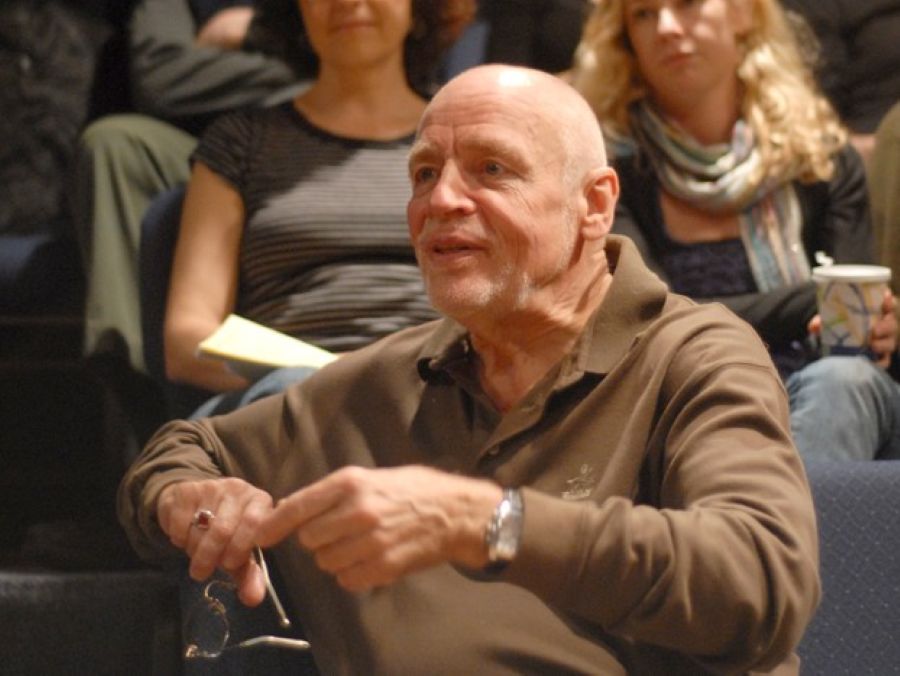
I first met Terry Schreiber in 1979, when I moved to New York City from Tennessee to study acting. He was teaching classes out of a basement off Washington Square West—the T. Schreiber Studio’s second location, after its humble 1969 beginnings in an Upper East Side Loft.
Little did I know then that Terry and I would work together in regional theatre, and that we would also later marry and have a child, Katherine (Schreiber) Cullen. Nor could I have anticipated that I would one day be the managing director of the T. Schreiber Studio for more than 45 years—a role originating from Terry’s casual request one afternoon that I “help him with some bookkeeping.”
In the intervening years, I watched thousands of actors, directors, and playwrights come into their own, personally and professionally, under the guidance of Terry and his teachers. All were led by Terry’s philosophy that artists should find their own preferred techniques, rather than hewing to a single method. He made a point of exposing his students to a range of approaches to acting, all while creating a “place of safety, not of competition,” as he wrote of his teaching environment in his book, Acting: Advanced Techniques for the Actor, Director, and Teacher.
In 1996, the studio moved to West 26th Street, where it remains today. And in 2022, Terry retired. Yet not a day went by that he wouldn’t ask about how the studio was doing, how his students were, what the teachers that kept T. Schreiber going in his absence were up to. Anyone who spent time with him in his final years knew that Terry never once stopped engaging in a meaningful way with his school. For him, and for so many actors who came through the studio’s doors, the studio was not just a place where people came to take classes. It was a home.
Thank you, Terry, for taking me and our daughter along for this incredible ride.
—Sally Dunn
To me, Terry Schreiber was synonymous with New York theatre. He had a reverence for the work that can only come from someone who enters a theatre hoping to be moved, not waiting to be impressed. I know now how lucky I was to have him in the audience multiple times, and truly wish every theatre were filled with more people like him.
Every serious student of acting should be gifted someone like him as a teacher; it was a gift to watch him teach and see his uncommon level of purity and generosity. He made so many actors into artists who understand that the reaction and the result are beside the point, and what matters is the pursuit of an organic and truthful moment.
—Mary-Louise Parker
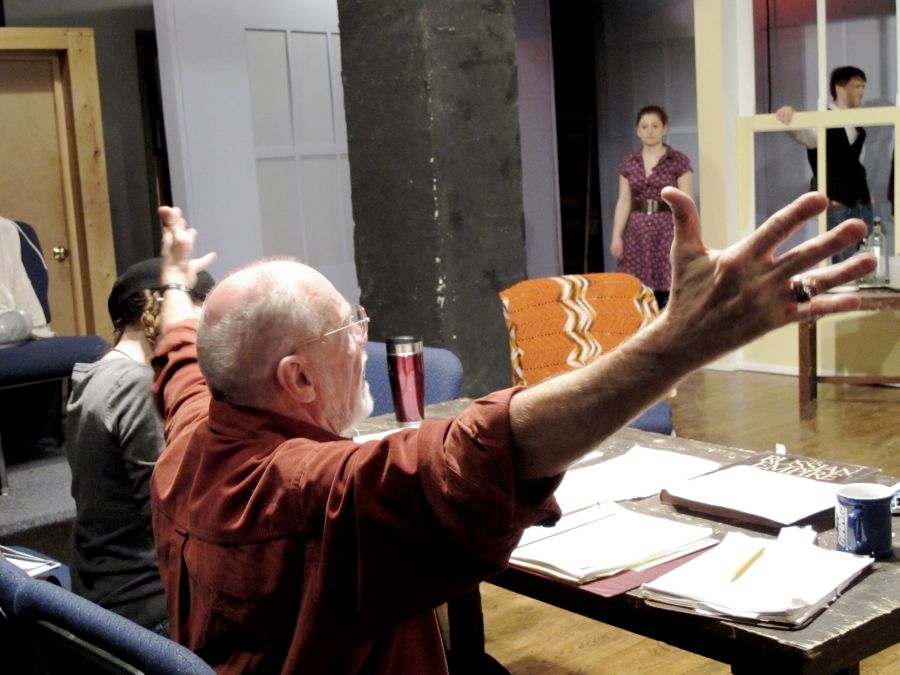
Terry Schreiber was one of my great teachers. I met him when I was in my late 20s. I auditioned for him when he was directing a play called A Very Private Life. Terry was one of the most compassionate and empathetic persons I’ve ever met. I was at a very low emotional point in my life when I auditioned for him. I yearned to be a good actor, and, despite my experience, was not completely confident in my abilities. Terry sensed my insecurity and worked with me so kindly for my audition, and he cast me in the play.
It was a challenging role, and working with Terry for the production at the Buffalo Arena Stage helped me, for the first time in my life, step into my skill with consciousness and confidence. He gave me such a great gift: the conviction that I was a good actress and that I had something to offer as a storyteller.
Being directed by him, I felt truly seen as a person and completely acknowledged by him as the artist I was meant to be. I continued to study with him when I was in NYC, and, later, with his invaluable guidance became a teacher at his T. Schreiber Studio, where I still teach to this day.
Every meeting with Terry was an experience of such joy. Through the years he supported me, seeing the shows and concerts I’ve done. Terry Schreiber was a brilliant teacher and most wonderful friend. My gratitude to him is endless. I love him very much and hold him in my heart with such profound appreciation.
—Betty Buckley
Support American Theatre: a just and thriving theatre ecology begins with information for all. Please join us in this mission by joining TCG, which entitles you to copies of our quarterly print magazine and helps support a long legacy of quality nonprofit arts journalism.