
If you would like to recommend a theatre artist (from any discipline) for a future Role Call, fill out our open Google Form here.
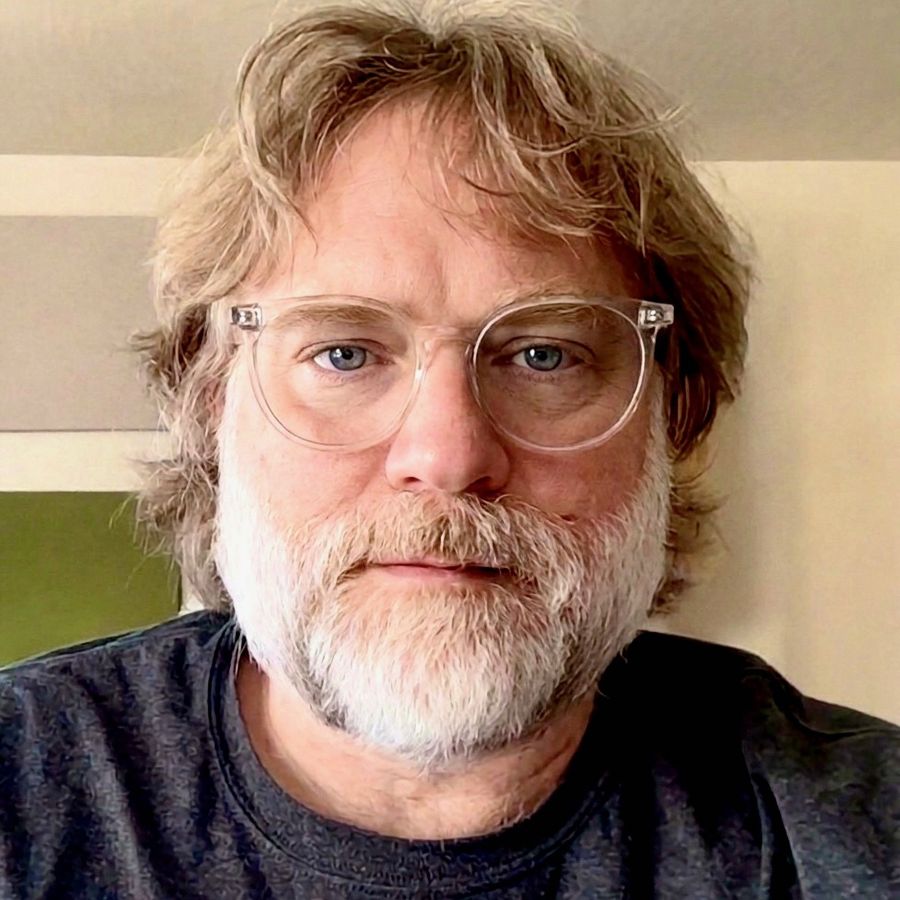
Cliff Caruthers (he/they)
Sound designer and composer
Hometown: Sycamore, Illinois
Current home: Half Moon Bay, California
Known for: A San Francisco-based sound designer and composer, Caruthers creates immersive theatrical soundscapes and experimental electronic music. His 300-plus credits include Troilus and Cressida for Oregon Shakespeare Festival; 1984, The Winter’s Tale, Pictures from Home, and Born Yesterday for Alley Theatre; Frankenstein: Playing With Fire for Guthrie Theater; and Sweat for Center Repertory Company.
What’s next: Sound design for Assimilation and Smoke and Shadows with Word for Word at Z Space, and Alice, Formerly of Wonderland, an a cappella musical, at TheatreWorks.
What makes them special: “Cliff and I grew up together in the American theatre,” said Jonathan Moscone, a theatre director and former executive director of California Arts Council. “Beyond his being an excellent designer, Cliff is deeply attuned to a director’s choices and a playwright’s words. His ear is impeccable, compositionally and design-wise, and he loves to engage in the entire experience, not just his work. He knows when to fill a silence and when not to.”
Room to improv: “I came to theatre through a strange side door: improvised music, and experimental electroacoustic music,” Caruthers said. “Each is a kind of storytelling using only sound: its texture, its weight, the way it moves through time.” This approach has allowed him to attune their work to the vibrancy of the liveness of performance. “The goal for me is to recapture the immediacy and intuition you get from improvising, making recorded audio as responsive as possible.”
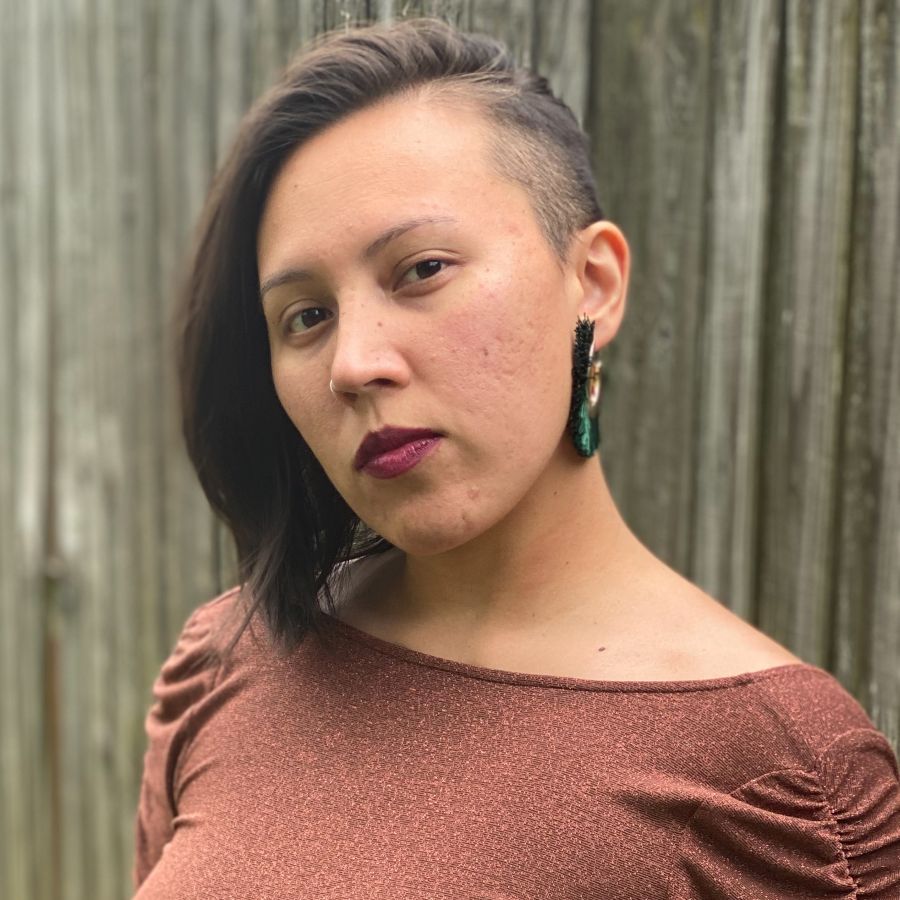
Kelly Colburn (she/they/K)
Projections designer, educator, director, devised theatremaker, and producer
Hometown: Suitland, Maryland
Current home: Washington, D.C
Known for: Colburn, an interdisciplinary artist working as a director, designer, and devised theatremaker, is best known for their projection design work in the D.C. area. Kelly was part of the design team for american (tele)vision at New York Theatre Workshop during the 2022-23 season.
What’s next: Colburn has a series of projects they’re looking forward to, mostly immediately is Some Like it Hot at Olney Theatre Center.
What makes them special: “Kelly is a devised theatremaker at heart and approaches design with that same sense of openness to the creativity of everyone in the room,” says Washington, D.C.-based lighting designer Dylan Uremovich. “She is also a lover of the experimental and the weird. If an idea sparks the imagination, the answer on doing it is always yes, even if figuring out the how will be a mountain to climb.” Added Brooklyn-based artist Molly Shayan Cohen, “Kelly is a true jack of all trades. As a projections designer, they not only bring the play to life visually, but awaken and inhabit the unseen, the visceral, to leave audiences thinking, and feeling, about the worlds they create.”
Other tools: “I’m in a moment I call ‘renaissance,’ where I’m reawakening art and philosophy in my life (for pleasure, quality of life), so I’m a bit of a sponge right now,” said Colburn of their current relationship to their work. “I just read Ursula K. Le Guin’s Carrier Bag Theory of Fiction. She talks about the primary storytelling convention = plot, structure, and conflict as a tool, and the tool is a spear. I love the way she politely and simply asks us to consider what other ways we can tell stories. What other tools do we have at our disposal? What if we understood storytelling to be an accumulation—of knowledge, of objects, of memories, of things—that then an audience can assemble and make meaning out of?”
Enjoying American Theatre magazine?

Maximo Grano De Oro (he/him)
Lighting designer
Hometown: Kearny, New Jersey
Current home: Chicago
Known for: A freelance lighting designer with experience in theatre, opera, dance, and music, Grano de Oro worked on Octet and The Brief Wondrous Life of Oscar Wao at Chicago’s Goodman Theatre, A Raisin in the Sun and The Taming of the Shrew at Chicago’s Court Theatre, and A Midsummer Night’s Dream at Commonwealth Shakespeare Company in Boston. Maximo also teaches lighting design at Columbia College Chicago’s School of Theatre and Dance.
What’s next: He will design for Luis Alfaro’s Mojada at Chicago’s Court Theatre, directed by Wendy Mateo and Denise Yvette Serna in partnership with Teatro Vista Productions.
What makes him special: Grano de Oro made a strong impression on associate professor of Theatre at Northwestern University Eric Southern, who knew him as an undergrad at Rutgers University and as a student of his at Northwestern. “It was clear to me even then that Maximo’s passion for theatre and strong work ethic were unique,” Southern said. “His keen dramaturgical instincts coupled with a sophisticated visual aesthetic make him a leader on any creative team.” Teatro Vista’s Wendy Mateo called Grano de Oro’s work “nuanced and deeply informed by his wealth of knowledge that go far beyond dramaturgy. Max is not afraid to dive in with you and push the bounds of storytelling. He has come so far, and yet the depth of his talent tells you he has a prolific career ahead.”
Traces of the self: “I love that, as a collaborative art form, I’m able to bring a bit of myself into every story I tell,” said Grano de Oro. “Recently I’ve had the opportunity to work on more Latine-centric pieces, through which I’ve been able to add my lived experiences to the collective vision of each project. I particularly felt this with The Brief Wondrous Life of Oscar Wao, where I got to be part of the team telling the story of a Dominican, comic-loving Rutgers student. Talk about bringing yourself into the work.”

Rodrigo Muñoz (he/him)
Costume designer
Hometown: Mexico City
Current home: New York City
Known for: Muñoz work as a designer explores character, identity, and storytelling through a distinctive visual language. Recent credits include Suzan-Lori Parks’s Sally & Tom (Drama Desk Award; Lucille Lortel Award nominee) at the Guthrie Theater and Plays for the Plague Year at the Public Theater, Jerome at Playwrights Horizons, Richard II at Astor Place Theatre; Beau the Musical at St. Luke’s Theatre, What Became of Us at Atlantic Theater Company, and The Counterfeit Opera and The Tune Up at Little Island.
What’s next: Muñoz recently designed costumes for the North American premiere of Public Record, conceived and creatively directed by Dan Canham and Emily Lim for the Public Theater’s Public Works at the Delacorte Theater. Next he’s designing the ripple, the wave that carried me home by Christina Anderson at Playwrights Horizons.
What makes him special: “Rodrigo is an amazing storyteller,” raved Susan Hilferty, a Tony-nominated costume designer and arts professor at NYU’s Tisch School of the Arts. “Rodrigo is always responsive to story; he uses text as his guiding light. He’s capable of doing incredibly lavish designs next to ones of specific simplicity.” Hilferty was also quick to gush about his contributions to any production team. “He is also a great collaborator who works well with directors, actors, fellow designers, artisans, and writers. Anyone is lucky to have him on their team.”
Costume as destination: “I have always said that, for me, costume design is about reading between the lines,” said Muñoz. “It’s all about finding beauty in darkness, uncovering what is unspoken, and translating emotions, memories, and desires into clothing.” Muñoz also cited his national background as an influence in his work. “As an immigrant designer, I am particularly drawn to stories that explore race, migration, gender, family, belonging, and the ways people negotiate their identities within the world around them.” Above all else, Muñoz said he abides by the idea that “costume is not the destination—the person wearing it is.”
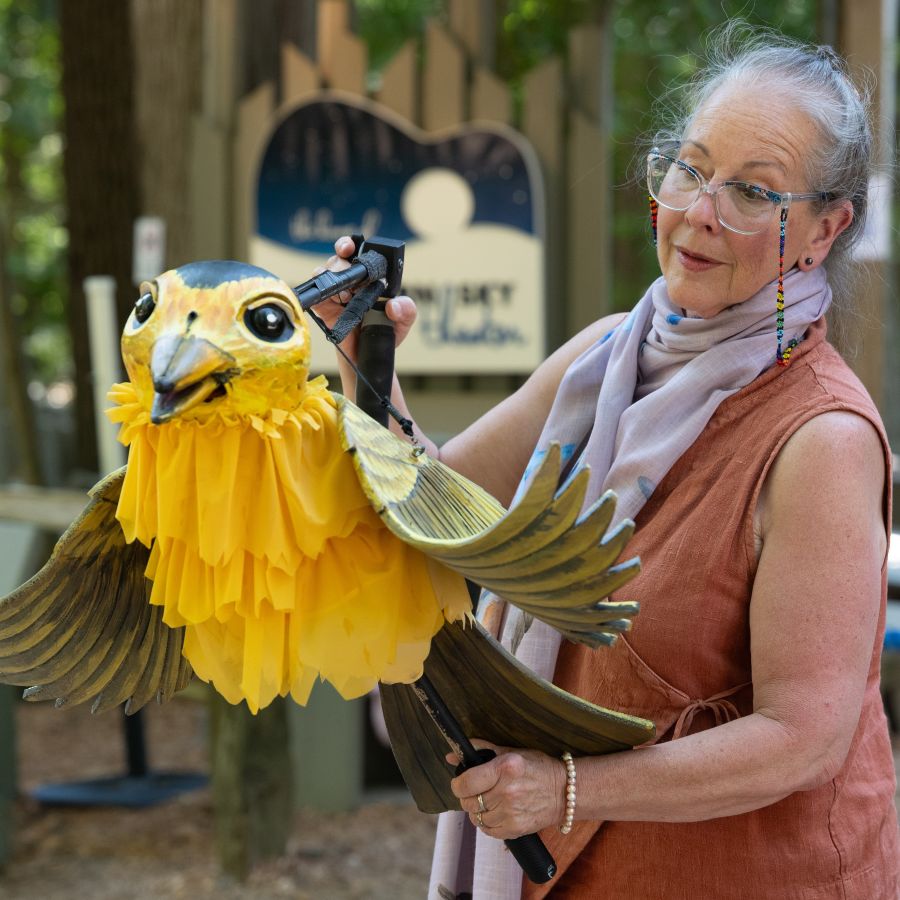
Lisa Schlenker (she/her)
Scenic designer
Hometown: Rock Island, Illinois
Current home: Milwaukee and Door County, Wisconsin
Known for: Schlenker’s credits include work with Milwaukee Opera Theatre, In Tandem, Renaissance Theaterworks, Milwaukee Shakespeare, Milwaukee Chamber Theater, Milwaukee Rep, Florentine Opera, First Stage, Skylight Music Theatre, Forward Theater, Opera Lafayette, and AFT/Northern Sky Theater, where she is currently the resident scenic designer. In addition to her design work, she’s worked for over three decades managing prop shops and building props for a full spectrum of work in the performing arts.
What’s next: She’s completed scenic design for all of Northern Sky’s summer and fall season (she was particularly enthusiastic about the world premiere of The Thing With Feathers, which ran over the summer and incorporated her puppet design and fabrication for many bird characters). She will complete scenic work on Gaslight and Ironbound at Forward Theater this fall and winter respectively,Winnie-the-Pooh: Forever Friends at First Stage this winter, and a new production of Die Zauberflöte at Florentine Opera this spring season.
What makes her special: Forward Theater artistic associate Marcella Kearns, who’s worked with Schlenker on several productions, cited her as one of her favorite scenic designers, “no matter the style of the piece.” Noting how prepared she comes into meetings, Kearns said she’s particularly impressed by Schlenker’s ability to adapt to her directorial impulses. “In our first discussions, she brings visual research, layering those elements on the scaffold of our stage, to help me get a jump on the practical alongside the aesthetic. Our early world-building always feels anchored in possibility and scalable, both inspired and grounded.”
Inner lives: Schlenker takes inspiration from such designers as Robert Perdziola, Paul Owen, Marjorie Bradley Kellogg, Van Santvoord, and Jim Maronek. “What draws me to these designers’ work is not simply the beauty of their compositions, but the breadth of their artistic vocabulary,” Schlenker explained. “Each possesses an extraordinary ability to create worlds that exist somewhere along the continuum between lyrical abstraction and meticulous naturalism, always in service of the story. Their designs are a reminder that scenery is not just architecture for actors to inhabit; it is an emotional landscape. A well-conceived environment has the power to reveal a character’s inner life, evoke memory, and guide an audience’s imagination.”

Destinee Steele (she/her)
Wig, hair, and makeup designer, founder and CEO of the Beauty Menagerie LLC
Hometown: Panama City, Florida
Current home: Haines City, Florida
Known for: In addition to her work as a wigs, hair, and makeup (WHAM) designer, Steele is an advocate for health and care of textured hair in the WHAM rooms, and a teacher of master classes on a variety of hair and makeup applications. Steele has been a part of every production for Opera Orlando since the 2023-24 season. Other credits include work on productions with Broadway at Music Circus, Orlando Shakes, and Walnut Street Theatre, and as the associate WHAM designer for Miranda Cromwell’s production of Death of a Salesman on Broadway.
What’s next: Steele is designing a few shows opening in September, including Chicken and Biscuits at Orlando Shakes, Dracula: A Comedy of Terrors at Denver Center for the Performing Arts, The Addams Family Musical at Walnut Street Theatre, and Come From Away for Broadway at Music Circus in Sacramento.
What makes her special: “Destinee’s artistry has truly elevated our productions, from Tosca to Treemonisha to The Merry Widow,” said Opera Orlando artistic director Grant Preisser. “What distinguishes her is not just her technical mastery. It is the care and respect she brings to every performer who sits in her chair. Destinee understands that hair and makeup are not finishing touches. They are the first layer of character, the moment a performer begins to inhabit someone else’s life.”
Opening doors: “What I would like to achieve in this industry is to open more doors for others who are also pursuing this path,” says Steele about her field of design. “Within my company, I would love to make the connections so that I can offer full-time wig-building work to ventilators all across the country, and to train associates to one day become full-time designers in their own right. I just want to do my part in aiding the equity of all hair textures and skin tones in the wig and makeup room.”


Support American Theatre: a just and thriving theatre ecology begins with information for all. Please join us in this mission by joining TCG, which entitles you to copies of our quarterly print magazine and helps support a long legacy of quality nonprofit arts journalism.