Theatres and performing arts organizations are facing a new wave of insurance claims. Insurance blind spots remain a quiet but serious threat to financial stability.
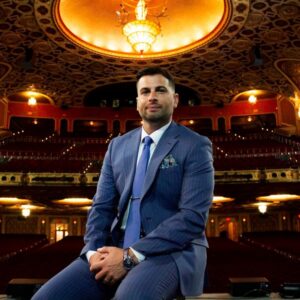
As senior vice president and practice director at Starkweather & Shepley, Stefan Petrella leads the firm’s arts, culture, and entertainment practice—a team that doesn’t just insure theatres and performers, but helps them navigate a web of exposures from historic venues to HR snafus.
From property and casualty coverage to benefits consulting and in-house loss control, Petrella’s group brings a full-spectrum approach to some of the most uniquely vulnerable organizations in the nonprofit world.
“A lot of what we see in the arts and entertainment world mirrors the nonprofit space,” Petrella said. “We approach these policies with that lens.”
That nonprofit angle is critical when underwriting coverage for organizations operating out of historic buildings or managing large-scale programming. Petrella emphasized the need to account for the specific physical and operational elements of each venue, from seating and sound systems to architectural features.
Risk in the Details: Contracts, Geography, and Third Parties
Petrella said that no two performing arts organizations are alike, especially when it comes to contracts. “Every performing arts entity is different,” he said. “If it’s a touring operation, it’s going to have a different risk profile than a resident house. Contract review is key.”
He also pointed to geography as a complicating factor. “You’ve got different rules and regulations state by state,” he said. “Touring houses might have acts coming through from all over. We ask, ‘Can you take a look at the contracts? Anything we need to be made aware of?’”
Liability exposure often shows up in overlooked areas—particularly in third-party relationships. “You see it a lot in the acrobatic space,” Petrella said. “Or in summer camps. That’s where you need your human service hat on.”
Blind Spots in Management and Cyber Liability
Sean Cottrell, senior vice president and the firm’s nonprofit practice leader, said one major problem is relying on generic management liability policies. “A majority of these are nonprofit organizations run by administrative staff and boards,” Cotrell said. “They might be checking the box—yes, they have D&O, EPLI, cyber—but what are they actually buying?”
He said that cyber is often misunderstood. “Believe it or not, a lot of these organizations feel like they don’t have a huge exposure,” he said. “But whether it’s employee records, donor data, or ticketing systems, the exposure is real.”
Cottrell also stressed how much hinges on the language of the contracts themselves. “When Stefan talks about contractual liability, that sets the framework for where the liability goes at the time of loss,” he said. “You need the right ‘hold harmless’ agreements, waivers, and subrogation clauses.”
Youth programming adds another layer. “Across all verticals, any organization dealing with children or young adults carries another set of risks,” Cottrell said. “Abuse and molestation coverage is often excluded altogether or limited to just the underlying million-dollar policy.”
Freelancers and Financial Fragility
On the freelancer side, Petrella said that organizations have tough choices to make.
“If they’re dealing with more established freelancers, some may carry their own policies. But in most cases, it’s easier to just pick up the premium,” he said. “That way, the organization folds them into its existing workers’ comp coverage.”
Cottrell added that financial instability can also trigger risk. “Some of these organizations are dependent on grants or government pass-through money,” he said. “If something goes wrong financially, board decisions can come under scrutiny. Insolvency-related D&O claims might not be common—but that’s why you buy the coverage.”
In the end, both Petrella and Cottrell returned to the same message: Arts insurance can’t be one-size-fits-all. “It’s case by case,” Petrella said. “Resident? Touring? Summer camps? Each of these has its own exposures—and they all need to be accounted for.”
For Stefan Petrella, every client deserves a standing ovation-worthy experience. As head of Starkweather & Shepley’s Arts, Theatre & Entertainment Practice, he brings both an entertainment background and risk management experience to organizations across the creative industries. Stefan believes the team’s passion for the performing arts, personalized service, and ability to anticipate challenges behind the curtain help clients focus on delivering unforgettable performances. His goal is to ensure every production has the protection it needs for a successful run.