What does it mean to be a Puerto Rican artist today?
The splitness of Puerto Rican identity—shaped by our territorial status, by the fact that we are U.S. citizens yet distinctly not “American” in the way the word is commonly understood—inevitably seeps into every part of who we are. For those of us working in the arts, this fracture is not abstract: It is lived daily, negotiated constantly. We must learn early how to stand in the in-between.
Puerto Rican artists are forever straddling the black-and-white binaries of the world, when our truest footing is in the gray. Island and mainland. English and Spanish. Creating for love versus surviving long enough to keep creating. Inheriting legacies versus inventing new ones. Making work that remembers the past while insisting on a future not yet imaginable.
This is not a balancing act for the faint of heart. It is a life spent walking a wobbly tightrope with no guarantee of stability—only the possibility that, in the attempt, something honest might emerge. The reward is a body of work dense with contradiction and clarity at once, capable of revealing the layered paradoxes of living that might otherwise go unnoticed in a simpler, more settled life.
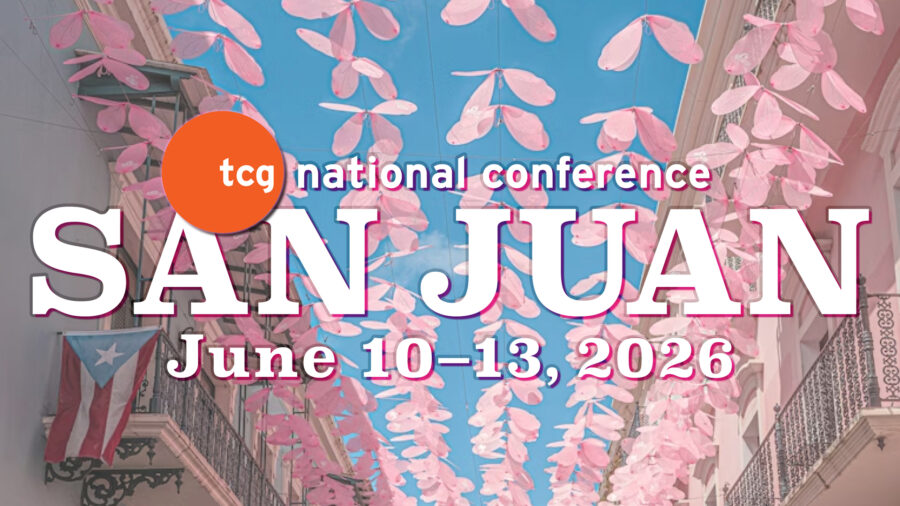
According to the theatremakers you’ll meet in the following pages—and in a series of articles leading up to Theatre Communications Group’s 2026 National Conference in Puerto Rico, June 10 to 13—being a Puerto Rican artist is less a fixed designation than a practice. It is accountability: to the work, to the community, to one another. It is creating with pride and with care, understanding art not as self-expression alone but as responsibility. It is acting at times as witness, at times as guide, at times as translator. It is experimenting, persisting, and overturning expectations with a signature of excellence.
And if I may add: It is also the quiet mastery of integration. The ability to hold contradictions without resolving them. To blur lines, and, in doing so, arrive at a way that has long been present but is only now granting itself permission to exist on its own terms.
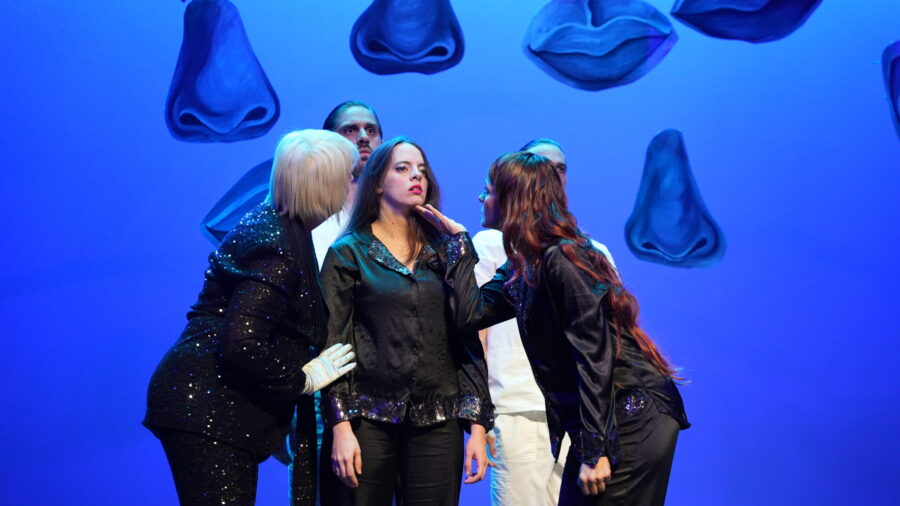
Gabriela Saker
Doughy eyes bursting, orange flecks in their smoky brown: Embers smolder eternal in Gabriela Saker’s gaze. Ask her about acting and that fire snaps, coiling in restless heat. For this Princess Grace Foundation Award winner, it is the unraveling of the self—an exposure that sears before it soothes.
Saker is from Cuba, a place where, she remembers, music poured from the streets, peeling paint clung to walls, and each day demanded inventiveness and survival. She left as a teenager for Puerto Rico, her mother staying behind. Mostly raised by her father, she grew up attempting to embrace a partial female mirror—someone to hold her fragility before she mistook it for weakness. She armored the parts that felt sunburned.
At 17, she saw two plays by Luis Rafael Sánchez in a single weekend: La Pasión Según Antígona Pérez, a reimagining of Sophocles’s Antigone in a Latin American political setting, and Quintuples, a series of satiric monologues about the Morrison family. In a dark room, strangers didn’t flinch at the dropping of shields.
Though she earned a degree in journalism and Hispano-American literature, her electives were each a whispered confession in the direction of the stage. She started living a double life: By day, she reported for NotiCel and El Nuevo Día, moving from culture into politics, education, the economy. By night, she shed herself to become different characters entirely. Each half demanded her whole; her mind cleaved in two.
In 2017, she found herself in a production abandoned in midstream by its lead producer. Stepping in, she sensed a latent ambition rekindle: the desire to stage her own plays. From that came Teatro Público, a production company that would bring to Puerto Rican audiences work that was thriving elsewhere, yet absent at home. She drafted a 10-year plan, teeming with momentum, only to have it be halted that September by Hurricane María. In the charged pause that followed, her own restlessness settled into clarity: graduate school. Juilliard said yes.
In her craft, Saker parses every detail like a detective to build brimming worlds. Intellectual rigor matters as much as physical impulse. Her characters are less inventions than extensions of herself: sometimes controlled combustions, sometimes unrestrained.
The summer after her first year in her master’s program, inspired by a class on the founding of American theatre companies and the reminder of what she had left unfinished, she resolved to revive Teatro Público. She began resurrecting the company while juggling schoolwork—taking it online, balancing exams with co-directing and endless emails, moving from Zoom calls straight into rehearsals, unfazed by the pandemic already afoot. Austerity was an old acquaintance; its limits bent around her.
After graduation, roles came quickly: regional theatre, Shakespeare festivals, Off-Broadway. So much so that she now arcs regularly between Puerto Rico and New York. Calling it a bridge feels too neat. “Sparks” feels more accurate.
Staying in place multiplies opportunity, while leaving one place extinguishes something in the other. This is the friction: Even in an interconnected world, presence matters. Her questions remain: Which character demands that I reckon with things I have yet to uncover? Which commitments can I honor without rupture?
“I created a deep, intimate relationship with my mother through distance,” Saker says. “When you can learn presence in that gap, you can do that with anyone or anything.”
Ultimately she has learned patience. Her life has morphed relentlessly. She thinks of the author José Saramago, who wrote that trees are bound to the earth by their roots and can part from it only in death. Humans, by contrast, don’t have to perish to begin again. Saker feels this viscerally. She belongs to motion, to ignition, to the moment before the flame.
Sylvia Bofill
Plaza Antonia was its own kind of terminal: literary students drifting past drama majors, someone leaning against a column, pencil tapping, another dozing atop a backpack.
Sylvia Bofill remembers her 20-year-old self hovering in the bustling traffic circle between classes, catching fragments of casual musing: Did anyone get the play’s ending? What was the exhibition trying to say? Who else noticed that line? At the University of Puerto Rico’s Río Piedras campus, learning spilled outward—through hallways, across benches, carried in voices that lingered long after the bell rang.
“A country is found in its tribes,” Bofill says. “In the conversations that pass among its people.”
A two-time Schomburg Visiting Scholar at Ramapo College and a theatre professor for more than 17 years at her alma mater, Bofill notes that her homeland has long been considered “un pueblo de artistas”: small, but reverberating with creative lives. Teaching there is intense and intimate, with much of the island’s cultural history seldom touched in curricula prior to college. She insists the young minds in her charge encounter literary luminaries like Julia de Burgos or Manuel Ramos Otero, claiming their stories as inheritance before they dissolve into myth.
“I say that the classroom is the trenches,” she adds. “What I intend to do here is open up analysis, critical thinking, and feeling.”
Bofill’s apprenticeship ran on a tangle of influences: a Catalan grandfather, a Dominican grandmother, a mother who taught literature, a father who spoke in numbers. Born in Puerto Rico, Bofill spent two years in Wales, then Maryland, before returning home by age 11. She devoured pan-American literature as a child, drawn to realism and the experimental—to books that forged her searching, probing mind.
Discovering dialogue in her third year—a passage into the psyche and its private realms—opened a secret door, yet it could not temper her urge to merge writing with directing. She left for Columbia University, enticed by Cuban playwright Eduardo Machado, who taught her to imagine scenes not as words on a page but as real moments one could see, hear, smell, and feel.
Amid this golden age, she entered the company of giants, Anne Bogart and Bryan Kulick, alongside two Puerto Rican peers to form a trio jokingly dubbed the “Puerto Rican Mafia”: a director, an actress, and her, the playwright, who was admitted to directing classes as the friend who could step in on any scene. She also directed her play Windows, a drama that follows three generations of Puerto Rican women trying to break free from the past, which was professionally produced Off-Broadway.
Yet, not long after, New York City’s ceaseless hustle wore her down. She felt boxed in, straining against artistic labels; by night, she lay flattened, craving time to play. This longing for freedom, and for the nearness of the sea, brought her back to the island.
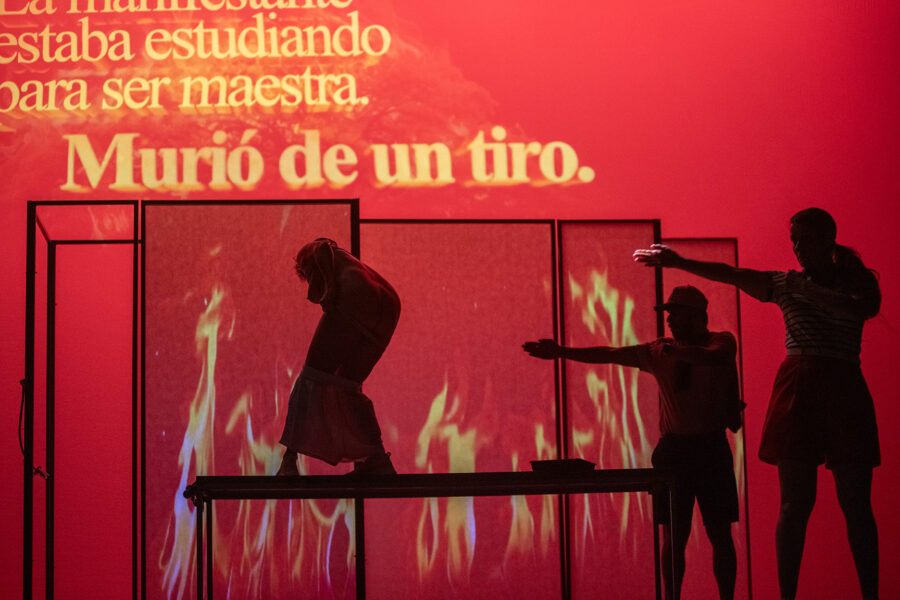
Bofill maintains that creating begins with listening; she is most often drawn to the political and to the taboo. Her most recent project, La Erre, follows a former 1970s activist who leaves her Bronx teaching job and drifts through New York, coming apart along the way. Prettiness is beside the point; she seeks the wound, calling the result “tropical Expressionism.” Onstage, she works like a painter, composing in images, textures, and colors. The whites, blues, and reds of our flag permeate every stroke.

Didi Romero
The sun washes over rows of sorbet-pastel houses as the blue cobblestones vanish beneath a moving swarm of hand-pulsing partyers, vejigante masks surprising at every turn, stilt walkers lifting the spectacle upward—it’s “Las Fiestas de la Calle San Sebastián.” Eleven-year-old Didi Romero raises a kazoo. A thin note cuts the noise. Somewhere behind her, a group of trumpeters takes the cue. Her jaw drops. The street rearranges itself around the uproar.
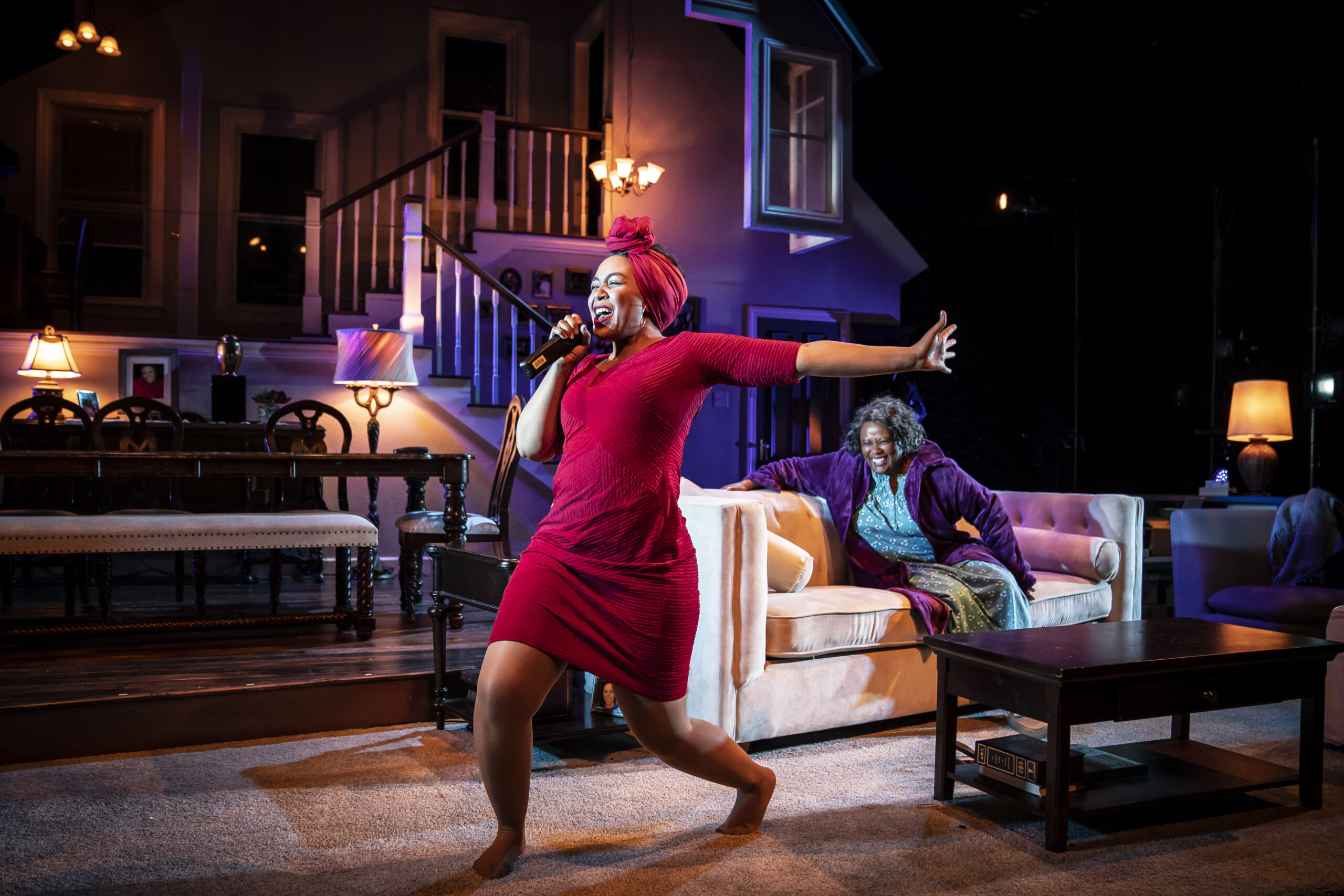
Fifteen years later, Romero steps onto the 54 Below stage in a red dress and glossy black boots, singing Raye’s “Where Is My Husband!” with the ferocity of a teenage girl rehearsing imagined stardom in her bedroom, only months after closing her run as Queen Katherine Howard in Broadway’s Six. She moves in staccato: long nails flashing, hips snapping, black mane tossing as she leans into the microphone, shaking with abandon.
The heir to Puerto Rican music royalty—her grandparents were orchestra director Papá Candito and percussionist Sonia López—Romero snorts at the idea that a white coat or a briefcase might have made her the family’s black sheep. In a way, she is the little sister of the bloodline. She learned from the missteps of those before her; her mother’s rare tardiness to a rehearsal taught her punctuality. She inherited the rebellion too, slipping into spaces of entertainment left unclaimed.
The AMDA graduate’s screen work resists neat categories. She first appeared in the Benjamin Lopez-directed Mixtape back in 2022, then crossed into Disney+ territory with coming-of-age Gina Yei, now entering its second season. Still, she gravitates toward the offbeat, the uncanny. Her upcoming short, Imago, directed by Ariel Zengotita, centers on a girl whose mother turns into a cockroach. Maybe it’s the appeal of stepping out of bounds. More likely it’s Romero’s dark humor.
In a sense, striking out on her own has made her more deliberate in choosing roles that reflect her island’s dignity (sorry, West Side Story—Puerto Rico won’t be sinking back in the ocean on her watch). She carries herself steady, even when her white-passing appearance confounds casting offices. In audition rooms, she serenades in Spanish: Selena’s “Como la Flor,” or a ballad version of Bad Bunny’s “Si Estuviésemos Juntos.”
“I’ve come to understand that my version of being Latina is enough,” Romero says. “I’m interested in authenticity, and I follow what feels right.”
A Boricua in the diaspora (she lives in New York), Romero at times feels a creeping nostalgia, a tug toward dominoes and tres leches in the fridge. But then she thinks of Rita Moreno and Raúl Juliá. Leaving was never a betrayal. It was expansion.
For the final performance of her Broadway debut at the Lena Horne Theatre, she asked the audience to bring Puerto Rican flags for the curtain call. When the lights dimmed, the fans rose—Argentinian, Venezuelan, Peruvian, Boricua—into a standing ovation, her name filling the room. She knelt at center stage, yellow flowers pressed into her hands. A note was struck. Once again, the room rearranged itself around the sound.

Manuel Morán
Once upon a Monday in January, 8-year-old Manuel Gabriel earned his orange belt in Taekwondo. One knows this because his father, Manuel Morán, records his son’s life with a novelist’s compulsion. On Facebook, the duo appear in brief domestic fables: matching ugly Christmas sweaters before a tree; a walk along a white-sand beach; guayabera shirts stiff and ironed, posed for a formal portrait. Each post reads like a chapter in a family story where routine becomes escapade and small gestures seem enormous.
“My kid is the best thing that’s happened to me,” Morán says. “I create because of him and for him, which is incredible, because he happens to be my biggest fan and greatest critic.”
Morán’s story began in third grade, when a puppetry troupe led by Leopoldo Santiago Lavandero visited his school to perform La Plenópera del Empache, a Plena-driven farce about a gluttonous boy. He remembers the interior courtyard, heat pressing down, sweat gathering at his neck and arms, classmates fidgeting beside him. Onstage puppets, actors, singers, and live music intertwined into a world beyond anything he’d seen.
That afternoon never fully resolved. Years later, through one educational theatre program after another (earning him a PhD), Morán carried a single conviction: Theatre could be porous. Theatremakers could sustain multiplicity without breaking.
Fascinated by twinkling stars, the enchanted, and conjuring magic, Morán created Teatro SEA, the Society of the Educational Arts, in 1985. The nation’s leading bilingual arts-in-education organization and Latino children’s theatre, with a stage on Manhattan’s Lower East Side and offices in Puerto Rico and Florida, it is Morán’s way of giving another generation what that first encounter had gifted him: sea, “to be”—the possibility of becoming anything one might desire.
Around it grew a constellation of projects: the International Puppet Fringe Festival; El Musical, a Latine musical theatre incubator; and BORIMIX Puerto Rico Fest, a month-long celebration of Puerto Rican heritage, arts, and culture. There are also books—twists on classic tales like A Tango-Dancing Cinderella and ¡Viva Pinocho! A Mexican Pinocchio—alongside tributes to such cultural icons as Roberto Clemente and Frida Kahlo.
“I want audiences to touch the root of their own nostalgia,” says Morán. “For me, it’s vital that Latinos see themselves in these stories, feel proud of where we come from, and recognize the people who shaped us.”
Mindful of the identity struggles facing the island’s youth, he walks Manuel Gabriel through the questions he once faced—i.e., it’s perfectly normal to eat tostones for lunch and make snow angels at night. That guidance continues in El Avión, a lively music group whose performers sing in character as the crew of a fantastical airplane, with his son playing the Little Pilot. Together they worked on an album about school-day experiences, from bullying to migration, which is soon to be released.
Forever chasing wonder, Morán remains a child at heart. He performs in rooms full of kids, peeking through curtains to catch their glimmering eyes before the lights go down. In a way, he is still the boy on the balcony of his Vega Baja home at sunset, strumming his guitar, birds gliding and church bells ringing, grounding him in a meditative silence that launches his inexhaustible imagination.
Regina García
When Regina García walks into a room, she reads it the way others read a face. She notices the traffic first: how bodies enter and exit, where movement clogs, whether the space allows breath or withholds it.
White-gray streaks thread through her shoulder-length hair, a brown beaded necklace resting against her chest. The Chicago-based stage designer could be mistaken for an artisan at Ballajá market: someone fluent in materials, patience, and the slow logic of hands that know how to wait.
“Do you remember in English class,” García says, “when the teacher diagramed a sentence? Subject, predicate, noun, verb, adjective, etc.? That’s how I work. The most important thing is always in the middle, and the rest serves as supportive information.”
Her theatrical worlds, influenced by modern architecture and the Hispanophilia in Puerto Rican design, carry the marks of use: tile floors worn smooth, wrought iron fences stitched with floral motifs, façades softened by wooden shutters. García thinks in layers, building the image from the outside in: amapolas climbing the fence, then the doorway, the curtain, the window behind it, another curtain, and finally the sofa, half-hidden, waiting.
Her internal structure began with consumption. As an adolescent on the island, she moved through visual art, standing before early exhibitions of Arnaldo Roche Rabell at Plaza Las Américas, keeping an eye on the work emerging from La Escuela Central de Artes Visuales, and orbiting painter Andy Bueso. His studio doubled as a classroom for young kids and adults learning to draw. There, García absorbed art as service.
She calls herself a late bloomer. Painting gave way to sculpture, sculpture to theatre, almost by accident. During her third year at Sarah Lawrence, a study-abroad scholarship took her to Florence. She attended performances she could not linguistically enter— Italian, she notes, is less familiar to Spanish than one might expect. And yet she would leave theatres in tears, struck by the stage’s chameleonic nature, its amorphous lights and textures, and the way meaning slipped through without translation.
After working as a production assistant with Pregones/Puerto Rican Traveling Theater and completing graduate study in stage and film design, García was recruited to join the St. Louis Black Repertory Company, where she spent eight years. She stayed in the Midwest. Teaching followed, along with regional collaborations, and the founding of La Gente: The Latinx/é Theatre Production Network.
She has become vocal about limits long treated as optional—among them the routine violation of the “10 out of 12” rule. “Family, and time with them, is a core value for us Latinos,” she says. “Theatre is a calling, but it is also a job.”
Through every phase of her career, García remains a hands-on maker. She still creates paint elevations—detailed guides that show exactly how every surface should be painted—the old-fashioned way, even as the process turns digital. She builds one or two sketch models at a quarter-inch scale, letting abstraction find its feet. Through these small, cumulative gestures, her work asserts its singularity, and she remains the connector at the center of her creative universe.
Mikephillipe Oliveros
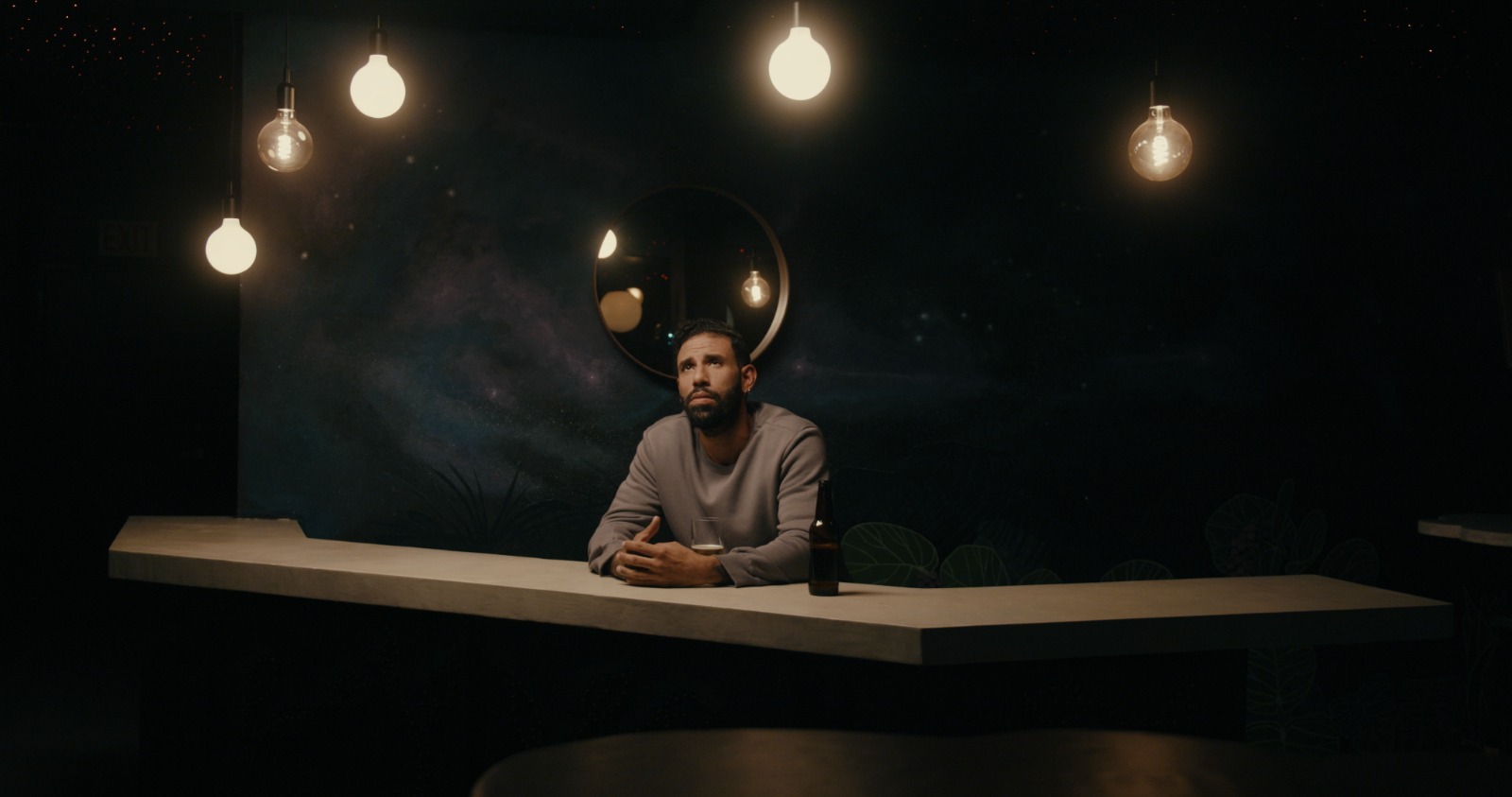
Behind the wooden bar at El Corozal, Mikephillipe Oliveros shakes and stirs the next cocktail. Older men nurse their Budweisers, their laughter rough, their silences heavy with half-remembered regrets. For 30 minutes—perhaps the length of a sketch—he watches the world in miniature, becoming a part-time therapist, a close-mouthed witness. He narrows in.
“I think about what García Márquez’s mother said after he won the Nobel,” he says, referring to the Colombian author. “That ‘Gabo’ simply had a very good memory, and everything he wrote had been told to him by someone before. That feels true for me too.”
At 23, carrying those borrowed voices with him, Oliveros co-founded Teatro Breve with an eclectic group of kindred spirits. The company, which turns 20 this May, grew from a shared instinct for a rhythm the rest of the island is still learning to match: a season of plays, a YouTube channel, the podcast “Radio Breve,” an online store, and film ventures like the stoner comedy Picando Alante.
Within the collective, his plays have treated Puerto Rican life as a documentary archive, capturing the mundane until it became his calling card: street-smart, funny, snapshots ironically haunted by the passage of time. Piononos S.S., set aboard a spaceship carrying humanity’s last survivors, and I Live Where You Vacation, following two partners in search of a secret beach that proves anything but, remain theatrical staples.
Zoom in. Oliveros learned to notice before most people even knew how to look. After school, he went to his best friend’s house, where shelves were heavy with Jorge Luis Borges hardcovers, conversation threaded through tales of Pedro Albizu Campos, and Fellini flickered on the television on an otherwise unremarkable Tuesday. By ninth grade, they were making homemade films together.
“I always joke that I latched onto someone else’s dream,” he says. “Somehow it led me here.”
Comedy, for Oliveros, was never about mere laughter. Puerto Rico, crushed under the weight of economic collapse after 2006, needed lightness, brevity, and truths that could be swallowed whole. Standup drew him in. It required total immersion and relentless self-reflection. He cut his teeth on the alternative scene with friends Roy Sánchez-Vahamonde and Vicente “Chente” Ydrach, and in 2016 he launched his standup show Personal, a solo mosaic of family, politics, and identity. Most recently, his TV special Nasciturus traced the “lost year” of Covid, digging into the strange intimacy of waiting.
Zoom out. Oliveros’s capacity for focus does not end with his artistry. Known for what he calls “host syndrome,” he said he finds himself impulsively caring for everyone in any room: topping off drinks at a party, ferrying platters, or handing you the coffee with latte art on a date. Those same instincts drive him to animate the island’s cultural ecosystem, pushing for workshops and entrepreneurial systems he wished he’d had coming up. He remains the glue of his Teatro Breve, facilitating, supporting, and keeping the vision alive even as members pursue ventures in Hollywood and New York.
“Achieving the dream is the easy part,” he says. “The hard part is sustaining it.”
Miranda Purcell is an actress and journalist working across film, theatre, and communications in Puerto Rico and the U.S., with credits in award-winning projects and major news outlets. She is a 2025 TCG Rising Leader of Color and an alum of the National Critics Institute.