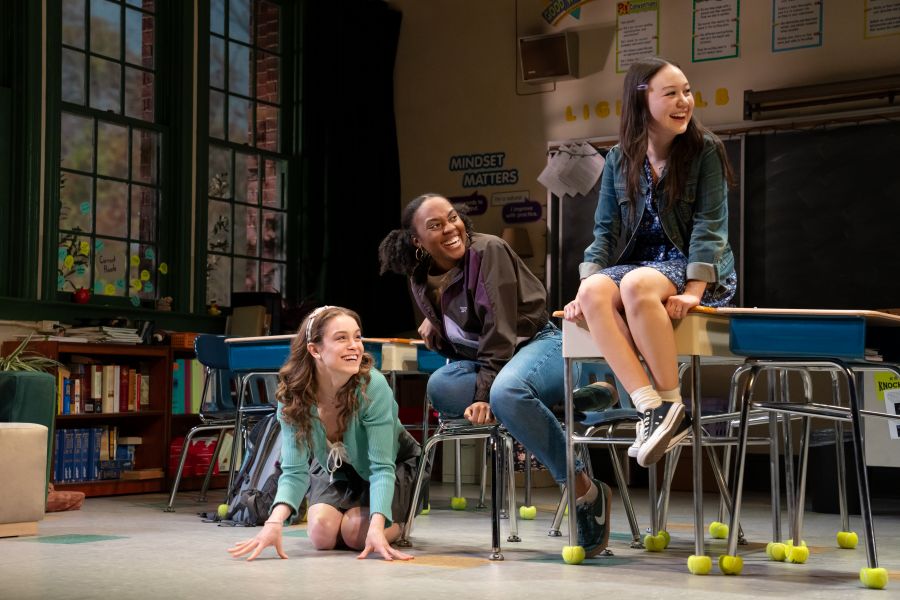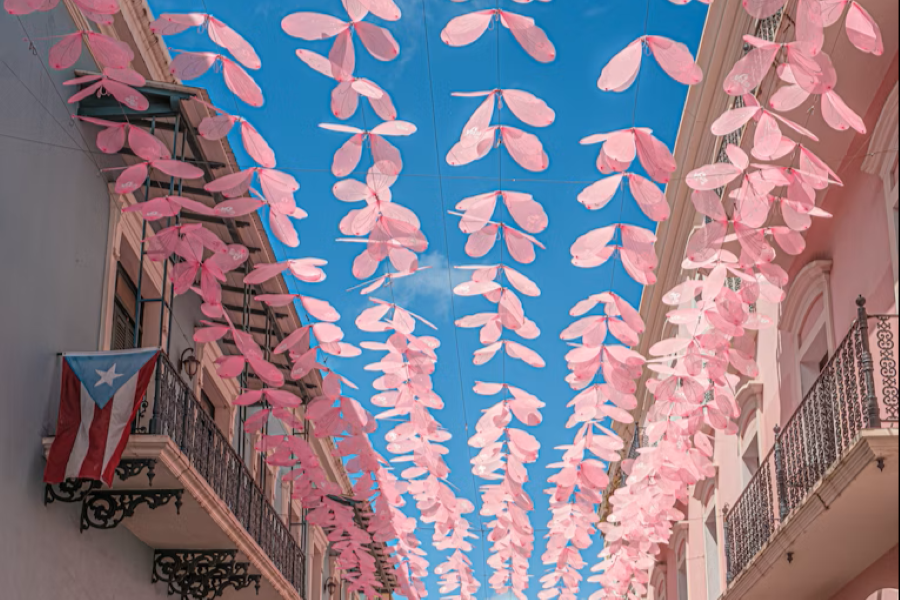
This summer, Theatre Communications Group will convene its National Conference in San Juan (June 10-13), which will provide an opportunity not only for theatremakers to gather in Puerto Rico, but to learn from a theatre community shaped by deep cultural memory, rigorous artistry, and ongoing political and economic realities.
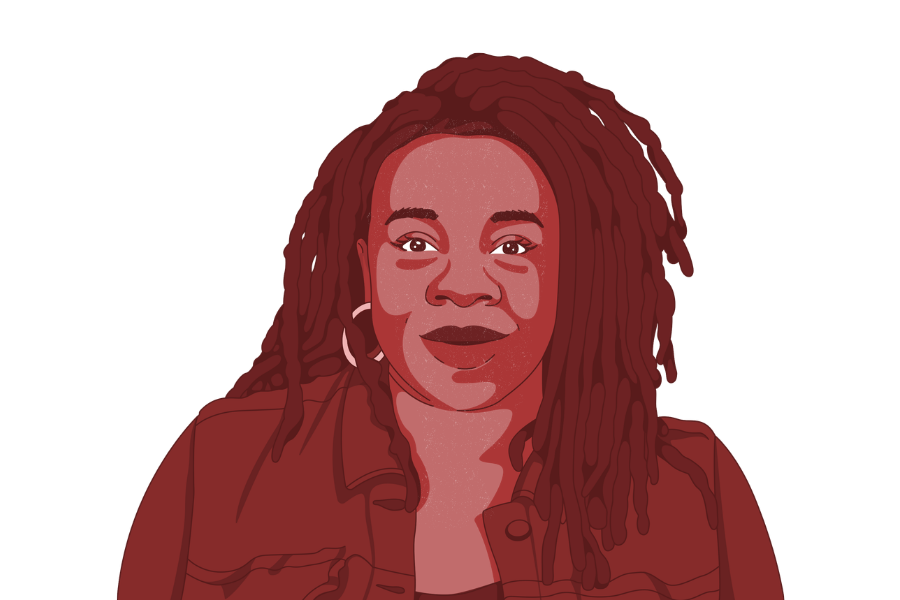
To help illuminate that landscape, we spoke with Rosalina Perales, a retired professor in the Departamento de Drama at the University of Puerto Rico, Río Piedras. As a distinguished Puerto Rican theatre historian, critic, and researcher, Perales’s scholarship spans theatre in Puerto Rico and across the Spanish-speaking Americas.
BRIGITTE VIELLIEU-DAVIS: What is the first thing you want our conference community to understand about theatre in Puerto Rico? What is a common misconception you find yourself correcting?
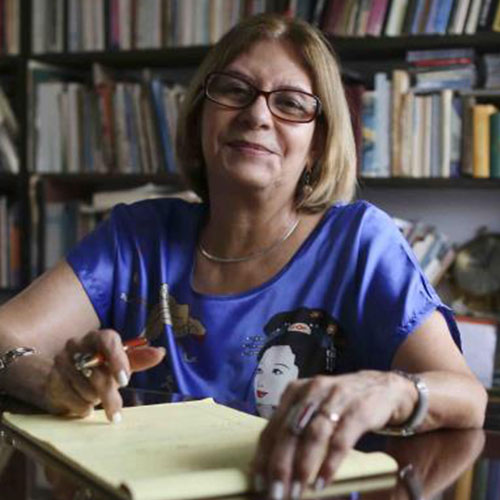
ROSALINA PERALES: I want conference visitors to know that Puerto Rico has had theatre since the 19th century, and that we are well trained and knowledgeable in the field. Our national theatre became firmly rooted in the 1950s, producing classics by playwrights such as René Marqués, Francisco Arriví, and Manuel Méndez Ballester. The generation of the 1960s modernized this theatre with new techniques and focus, without losing its national perspective and cultural identity, and later generations expanded the range of theatrical expressions. Well prepared actors working across different kinds of theatre have also helped new trends develop.
A misconception I often correct is that there is no good theatre in Puerto Rico—no great texts or performances comparable to other countries. The truth is, we have both. The problem is that people don’t know it, even in Puerto Rico. Puerto Rico has abundant talent, supported especially by the Drama Department at the University of Puerto Rico, and, today, also by programs at private universities and independent institutions.
From your vantage point as a historian and critic, what were some major turning points that have shaped Puerto Rican theatre, and which forces still feel most alive today?
Traditional Puerto Rican theatre is attached to ideological, social, and historical questions shaped by two successive colonizations, the Hispanic and the North American, which continues to the present. The creation of the Commonwealth (Estado Libre Asociado) in the last century also contributed to a “Boricua” identity, named by our diaspora and concerned with history and unresolved questions of identity. The dramaturgy written up to the new millennium reflects these concerns.
Since the 19th century, our theatre has traced its origins and developments. Alejandro Tapia y Rivera (1826-1882) stands out for early plays about racism, feminism, social issues, and freedom. A key turning point for national theatre was the 1938 theatre contest sponsored by the Ateneo Puertorriqueño. The winning plays established paradigmatic themes: defense of the land (identity), migration from the countryside to the city and its consequences, and migration to the United States. In the following decades, playwrights such as René Marqués, Francisco Arriví, and Manuel Méndez Ballester helped form a canon of Puerto Rican classics.
The 1960s and ’70s brought new styles and experimental theatre. In the 1960s, Myrna Casas brought and used absurdism and Expressionism in works such as Absurdos en soledad and La trampa. Luis Rafael Sánchez desacralized theatre through new themes, tone, and structures in plays like Los ángeles se han fatigado, La farsa de amor compradito, and Quíntuples. Even when experimental, the subtext often denounced colonialism and defended Puerto Rican identity.
In 1966, the student group El Tajo del Alacrán marked another turning point: the birth of popular theatre. Influenced by Bertolt Brecht and Augusto Boal, artists emphasized popular, didactic theatre engaged with the poor and oppressed, affirming identity and supporting the struggle for independence. Street theatre and collective creation expanded, shaped by the political atmosphere of the time.
In the 1980s, “Nueva Dramaturgia Puertorriqueña,” linked to initiatives at the University of Puerto Rico’s Drama Department, also mattered—both for new playwriting and for sustained research and historical recovery of our theatre (work mostly done by the playwrights Roberto Ramos Perea and José Luis Ramos Escobar). Alongside textual dramaturgy, a transformative, corporal, alternative theatre emerged, and technology has increasingly reshaped staging and audience relationships. Political and economic changes remain living forces, including long-term struggles around culture, identity, and support for the arts.
What pressures most affect what gets produced right now, and where do you see the most inventive responses to limited resources?
Pressures include the ideological struggle that has divided the population, the deterioration of the education system, and the lack of resources to stage classics or modern plays with large casts. There has also been a loss of audiences—especially for artistic theatre, strong dramatic work, and classics—which can undermine excellence in production.
The lack of education can lead audiences to think that farcical theatre, which creates laughter with low resources, is the only option. Lately, musical theatre has also grown quickly. Dramatic theatre and classic textual dramaturgy have lost much of their public.
But even with minimal resources, Puerto Rican theatre continues to offer strong work in many forms: new playwrights using new structural and staging techniques; dance-theatre and theatre that includes dance; circus theatre with corporal work and acrobatics; and alternative and experimental theatre made by prepared directors and actors. Traditional realistic plays also continue across the island, alongside the quick growth of musical theatre and commercial farce.
How do language and audience shape the work in Puerto Rico, and what tends to get lost when Puerto Rican work is interpreted through a U.S. lens?
There is hardly any English-language theatre in Puerto Rico, and definitely no bilingual theatre scene. About 15 years ago, I created a bilingual course in the Drama Department with Christopher Olsen, and we produced a few works with students, but once we retired, the program disappeared. Spanglish appears mostly in farcical comedy, generally at the level of vocabulary—not with the full syntactic system you might see in some Nuyorican plays in New York and elsewhere in the United States. Spanish in Puerto Rico is constantly absorbing English vocabulary (often badly pronounced), but the essential structure of the language has remained. When a play is written by a good playwright, the Spanish is good. When it is written by young people shaped by daily language shifts, or when characters have lived in the U.S., the Spanish can become more Spanglish or lower-quality Spanish, which can affect the quality of the text.
When Puerto Rican work is interpreted through a U.S. lens, our essence—our local cultural identity—can get lost.
For visiting theatre professionals—and readers who want to support Puerto Rican theatre beyond the conference—what kinds of support matter most?
All of the above. People in different theatre disciplines naturally want their own field supported, but funding across disciplines, with stipends proportional to the work, would be fair for most. This support could be distributed through commissions, partnerships, or direct funding for selected projects.
Brigitte Viellieu-Davis is an educator, writer, and theatre artist based in San Juan, Puerto Rico. A co-ambassador for Puerto Rico with the Dramatists Guild of America, she works to build community and visibility for Puerto Rican theatre creators.