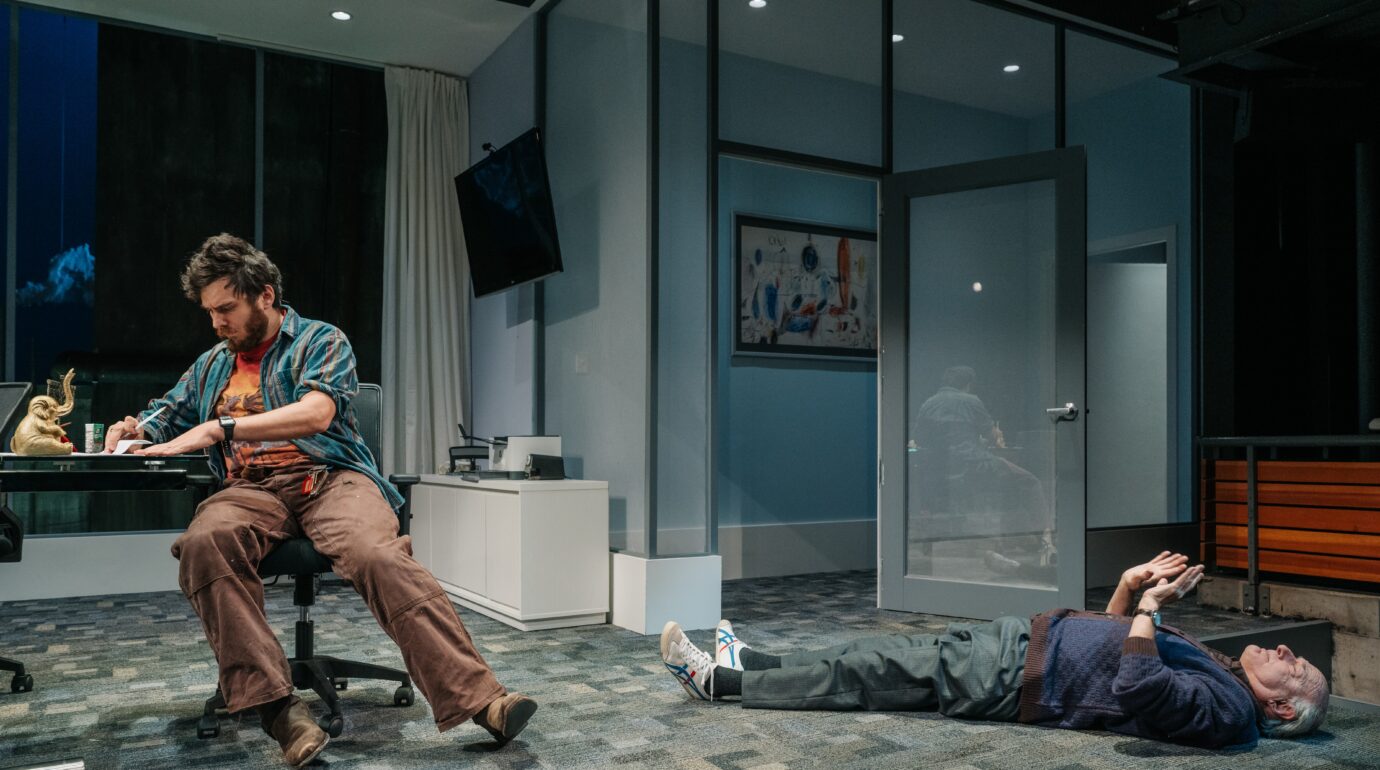
The premise of Hanukkah Spectacular, Max Posner’s new play, at Washington, D.C.’s Woolly Mammoth Theatre Company Nov. 14-Dec. 13, sounds a bit like a mix of Annie Baker’s The Antipodes and Mad Men. In a deserted NYC talent agency conference room, four writers attempt to pen a smash-hit play about Hanukkah that can compete with the many Christmas extravaganzas on U.S. stages.
“There’s something to it that’s like Stereophonic,” said Posner, referring to David Adjmi’s hit play about a rock band making an album. Likewise Hanukkah Spectacular, which is directed by David Cromer, strives to depict the craft of playwriting in real time. “That’s a process no one really gets to see, and it’s unique and absurd,” he said. “I think this play tries to realistically capture the texture and actual work of four people at a table trying to turn nothing into pages of something.”
As in real life, the task ends up being far more arduous than anticipated. Meanwhile the religious context of the show-within-a-show begins to give it political, almost mythic stakes, as the writers try to turn a Jewish holiday commemorating a successful yet violent revolt into something palatable and sparkly for general audiences.
They start out making a play “for bozos in Midtown,” said Posner, “but realize that the table work they’re doing is a continuation of this sort of endless, difficult, almost Talmudic conversation. That kind of conundrum and ambivalence is, I think, unique to this moment in time, or maybe just extremely heightened in this moment.”
Of artistic director Reggie D. White and the staff at Woolly Mammoth, Posner said, they “didn’t just program this play, they committed. A world premiere can only be as brave as the theatre standing behind it.”
Eve Bromberg is a critic and writer from Brooklyn. She worked as part of American Theatre’s editorial team this past summer and is completing an MFA in Dramaturgy at Columbia.


Support American Theatre: a just and thriving theatre ecology begins with information for all. Please join us in this mission by joining TCG, which entitles you to copies of our quarterly print magazine and helps support a long legacy of quality nonprofit arts journalism.