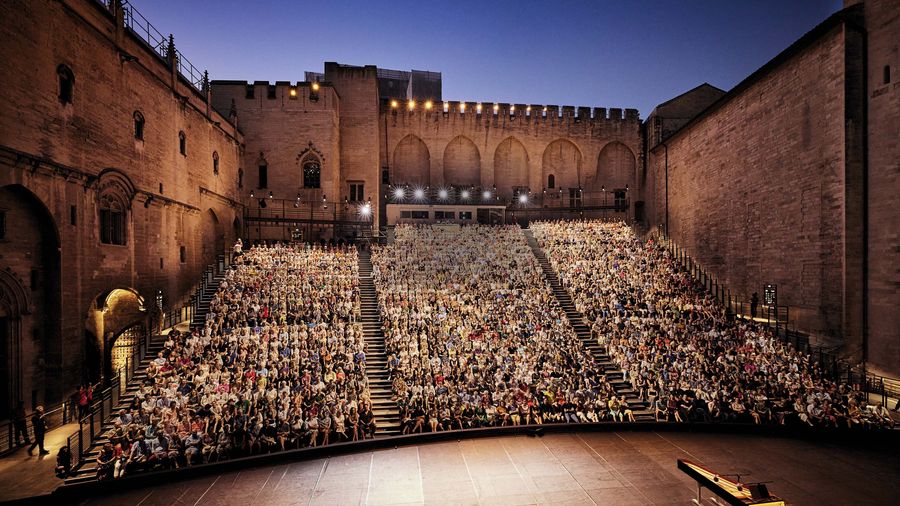
Upon the bridge between past and present, between languages spoken and unspoken, stands the enduring Festival d’Avignon, a famed gathering of theatremakers from around the world in a stunning medieval French town. Apart from marking its 79th birthday, this year’s edition (July 5-26) promises to strike a particular chord with theatremakers seeking both survival and celebration, according to a statement by festival director Tiago Rodrigues.
While “essential values are today threatened” in the global political landscape, Rodrigues writes, the Festival d’Avignon “has always been at the crossroads of celebration, the public’s encounter with the performing arts, and civic engagement.”
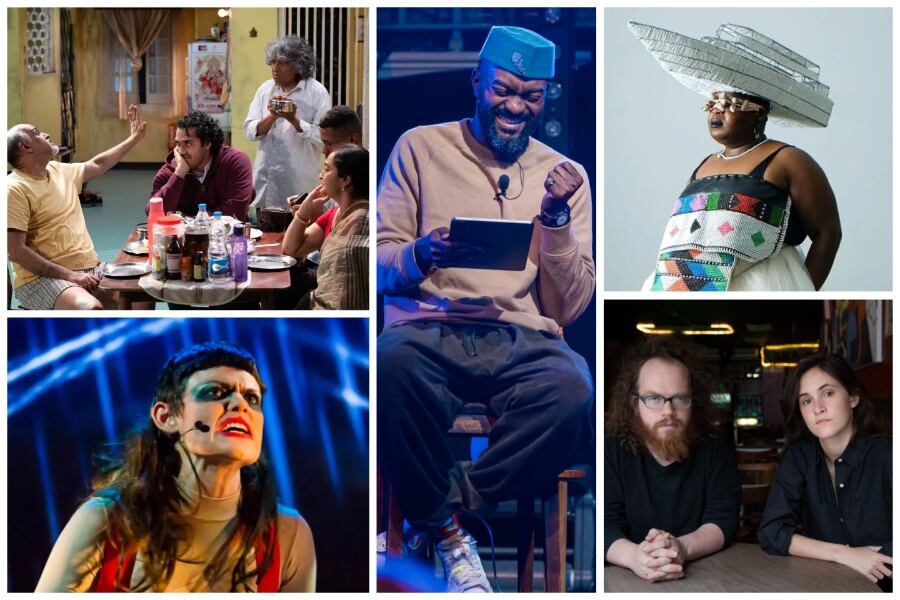
Across the 22 days, the fest will host more than 300 events, including shows, lectures, debates, readings, and screenings, at the UNESCO World Heritage Site Palais des Papes, the fest’s permanent venue La FabricA, and more than 30 venues in the surrounding town. A total of 55 percent of projects are produced or co-produced by the festival, with 73 percent of programming created and premiered on-site at Avignon. Of the artists involved, 54 percent are international, and 58 percent will be making their first festival appearance.
Avignon first-timers, both audiences and artists, are important to Rodrigues. Each viewer, he told me in an interview, is able “to read the festival and take away a wide range of artistic forms. Each person charts a unique path of discovery. Any citizen is an owner of this festival, even if you never visited. You’re just discovering this public heritage—this belongs to you.”
Another first this year: highlighting a non-European language. This is the third time the festival has invited a “guest language” to guide and ground programming. This summer, the language is Arabic, the fifth-most spoken language in the world, and the second-most spoken in France. Nearly a third of shows will be performed in Arabic, by artists with strong connections to such places as Tunisia, Morocco, Syria, Palestine, Lebanon, Iraq, and more. In meetings and events throughout the festival, they will aim to center the guest language, and translation and communication resources will be offered in French, English, and Arabic at all events.
The schedule of events may look dizzying to potential first-timers. Fortunately, there is a “first time” address and initiative made to welcome audiences, with wraparound programming and resources specific to those who have not previously attended or who might feel like they don’t necessarily belong.
Framing the festival in metaphors of memory, anticipation, and mystique, Rodrigues calls it both a blank page and a score reinterpreted each year. For both first-timers and repeat visitors, he said, the festival can be “an imaginary memory, made of projections, expectations, and desires.” What dreams may come, I wonder, when I shuffle into this immortal playing field?
Support American Theatre: a just and thriving theatre ecology begins with information for all. Please join us in this mission by joining TCG, which entitles you to copies of our quarterly print magazine and helps support a long legacy of quality nonprofit arts journalism.