
Jerald looks back on Jeff ceremonies of yore, investigating their value and how they might garner momentum for the future.
I admit, I can be a bit skeptical about the Jeff Awards. I have no ill will toward them, nor for the folks who like to attend one of Chicago’s so-called “theatre proms.” I readily acknowledge that the awards, and that “Jeff Recommended” stamp of approval, are a boon for winning and nominated companies and artists looking to make their names or solidify their places in the minds of audience members. Hell, I’m right there with everyone, curious who is nominated and who will win. (Justice for a show I loved?)
But I also count myself among the many over the years who have looked at the awards with a mix of confusion and frustration. In 2017, Morgan Greene of the Chicago Tribune documented many of the questions and concerns I’ve also heard from artists around the city: that the judging committee was too white (Tracy Letts told the Tribune that he wouldn’t invite the committee to Linda Vista) and that the awards fail to consistently recognize artistic excellence in the city.
“I don’t think of them as having a whole lot to do with artistic excellence or merit,” Kirsten Fitzgerald, artistic director of A Red Orchid Theatre, told the Tribune at the time. “I think of them as having to do with preference.”
So I’ve mostly turned my attention away from the awards over the years, save a compulsory glance at the nominees and winners press releases. Why do I bring all of this up? Well, honestly, because, after a recent interview, I feel I may have underestimated the Jeff Awards—the ceremony more than the awards themselves—as a place for community and a potential catalyst for change.
Playwright, actor, and producer Paul Oakley Stovall estimated it was about 10 years ago when he was asked to be a Jeff presenter. At the time, he recalled, he was acting in Chicago and he kept coming up against this idea that “if you don’t know Shakespeare, then you don’t know the classics,” he said. So when the opportunity arose for him to be in front of much of the Chicago community onstage for the awards presentation, he decided to seize the chance, warning his co-presenter that he was “going to do something.”
In his speech, Stovall announced the intention to start the New Classics Collective, a group that would set out to excavate and uplift stories of artists who are LGBTQ+, women, and people of color—overlooked classics, essentially—and then to create new stories “when the occasion calls for it.” The goal, he said, was to anoint new classics in the American theatre.
“I kind of painted myself into a corner,” he admitted in a recent interview. “Then we had to follow through with it.”
And so New Classics Collective was born, with a core group of Stovall, Marilyn Campbell-Lowe, and Cheryl Lynn Bruce. As Campbell-Lowe recalled, early on they were each set a task to pitch three shows they’d like to see NCC produce. Then they started having meetings, talking with artistic directors who were interested in the new collective’s mission and curious how they could help.
“I think that’s a testimony to gumption,” Stovall said of the support they received, “that sort of unabashed gumption that a lot of young people have who are fighting to be heard. They want to rock the system. They want to shake things up.”
Eventually they met with Alexander Burns, artistic director of Philadelphia’s Quintessence Theatre, who commissioned two projects from the collective. The first (and NCC’s first production), Written by Phillis, a work that brought to the stage the life and poetry of Phillis Wheatley, received its world premiere in 2023. And their second work, Wallace Thurman’s FIRE!!, is set to run later this year (you can read more about it in our upcoming Fall issue of American Theatre magazine).
Both set out to accomplish NCC’s goal: uplifting works and voices that might be overlooked—Wheatley’s poetry, an all-Black literary magazine with works from folks like Zora Neale Hurston and Langston Hughes—and arguing for their place in what are considered “the classics.” It’s work I’m intrigued to see continue to grow over the coming years (especially with Campbell-Lowe teasing that one of the larger Chicago theatres has shown interest). In the meantime, I’ll take this as a reminder (or, perhaps, a wake-up call) that maybe what the Jeff Awards offer, outside of actual awards—i.e., a chance for the Chicago theatre community come together and maybe, just maybe, spark something new—might not be so bad after all.
—Jerald Raymond Pierce
Now See This
Have you ever been to the zoo and wondered to yourself: What if these animals were doing Shakespeare? Okay, neither have I. But after seeing the effort St. Louis Shakespeare Festival has gone through to create Romeo & Zooliet, that may change. Written by Jennifer Joan Thompson and directed by Tom Ridgely, this retelling of Shakespeare features astonishing puppet design by Michael Curry Design (known for work on The Lion King and Frozen, among other major accomplishments). Check out this video from Fox 2 St. Louis as well as the videos on St. Louis Shakespeare’s Facebook page to go behind the scenes of this fun new production, created with and for the Saint Louis Zoo. It’s up through Aug. 17.
Around Town
Gabriela catches us up on a few items you may have missed!
For the Chicago Reader, Kerry Reid reports on the Pivot Arts Festival, which celebrated artists of the global majority at Northwestern’s Wirtz Center through July 27.
Kimzyn Campbell celebrates Transilience: A Trans Pride Festival, which spanned three days of trans excellence in Chicago parks July 10-12, with Dawn Heilung of Gender Fucked Productions promising it’s not “like every other street festival in Chicago” (Reader).
Scott Vehill, Prop Thtr cofounder, died June 5 at age 68. He’s remembered for championing fringe theatre and believing “anything out there was fit to be examined.” Kerry Reid pays tribute in the Reader.
Fleetwood-Jourdain Theatre connects Black stories of the past and present, writes Reid, with Gloria Bond Clunie Playwright’s Festival and Pass Over this summer under artistic director Tim Rhoze (Reader).
For the Chicago Tribune, reports Chris Jones, Samuel D. Hunter’s Little Bear Ridge Road transfers from Steppenwolf to Broadway this fall with Laurie Metcalf and Micah Stock, though Steppenwolf has removed its name from the production.
Calvin Christian School students honored freedom seeker Caroline Quarlls this past Juneteenth, bringing 1843 Underground Railroad history to life, writes Susan DeGrane for the Tribune.
Anna D. Shapiro has stepped down from directing Amadeus at Steppenwolf for health reasons. Robert Falls will direct in her stead, reports Chris Jones for the Tribune.
Also in the Tribune, Emily McClanathan writes about True Colors drag troupe, which was founded by Chrysanthemum and Karen Forester to uplift “drag for all,” and features performers with disabilities.
John C. Reilly will bring Mister Romantic to Steppenwolf September 13-14, reports Jones, featuring American musical vaudeville (Tribune).
Mike Davis gives us the latest around town for WBEZ (Davis was recently announced a Rising Leader of Color fellow with TCG). He reports on how Chilina Kennedy transforms into the title role for the world premiere of Billie Jean at Chicago Shakespeare Theater, showing off pro tennis moves through August 10; about Lili-Anne Brown’s direction of The Color Purple at Goodman Theatre with longtime collaborators she calls “a who’s who of local creatives”; and on Madhuri Shekar’s Dhaba on Devon Avenue, which ran through July 27 with Writers Theatre and TimeLine Theatre Company after a five-year pandemic delay.
For the Chicago Sun-Times, Courtney Kueppers announces Goodman Theatre’s “100 Free Acts of Theater” across all 50 Chicago wards for its centennial celebration.
And for New City Stage, Hugh Iglarsh highlights playwright Amy Crider, who has written 22 full-length plays since age 47 and is self-producing Buddha’s Birthday at the Edge Theater (through Aug. 17).
Chicago Chisme
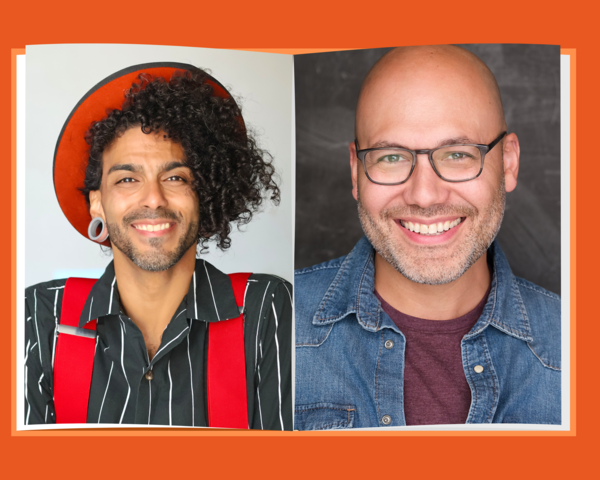
Every month we check in with Chicago/Midwest theatre artists about what’s getting them out of bed in the morning and keeping them up at night. More below from Jean Carlos Claudio, creator of Memorabilia at Teatro Vista, who’s currently starring in Book Up! With Goodman Theatre, and Ivan Vega, co-founder and executive director of UrbanTheater Company (UTC), which turned 20 in May.
What are your self-care practices right now?
Jean Carlos: I have a few things that I currently practice to take care of myself, like allowing myself to take naps when I feel overwhelmed with everything that surrounds me. But the one I’ve been enjoying the most is making time to see friends. I discovered how much joy and happiness I bring to my life by sharing time with people I love. I believe that taking care of others is another way to take care of yourself.
Ivan: I recently completed a five-month recovery from a fractured heel, so I’ve been focusing on reconnecting with my body through stretching, strength work, meditation, and walks. I’m also making intentional time for my family by creating experiences together, sharing meals, spending time outdoors, watching movies, laughing, listening to music, and playing board games. These moments ground me and bring me joy, especially during a time when so much feels uncertain across the country.
What’s one thing you wish people knew about the art you make or the way you make it?
Jean Carlos: Sometimes I ask myself the same question! I want people to know that when I’m onstage, I am also being myself in a way. I can explore or expose a very hidden part of me that most of the time is nearly impossible to express. Like looking deeply into someone’s eyes and telling them your feelings without fear, shame, or regrets. Connecting with people in a very personal way is something that we often struggle to do. When I’m onstage I feel that I can share myself without feeling that I’m being seen through a magnifying glass.
Ivan: Our work at UTC and my work as an actor stem from a place of deep love and care. Every project, every process, is layered with history, resistance, mentorship, and a sense of community. We create space for healing, build trust, and hold up mirrors to our culture and collective experience.
What are your hopes or resolutions for American theatre in 2025?
Jean Carlos: I hope that people can truly see how powerful a weapon is theatre and performing arts. I hope that we don’t have to have multiple jobs to sustain our lives. I hope people understand that theatre can’t be replaced by AI. I hope.
Ivan: I want to see more theatres truly rooted in their communities, sharing power, sharing resources, and taking creative risks that reflect the times we’re living in. My personal resolution is to keep pushing, to keep nurturing, to keep building, and to never lose the fire that brought us here.

Support American Theatre: a just and thriving theatre ecology begins with information for all. Please join us in this mission by joining TCG, which entitles you to copies of our quarterly print magazine and helps support a long legacy of quality nonprofit arts journalism.