1945 (80 years ago)
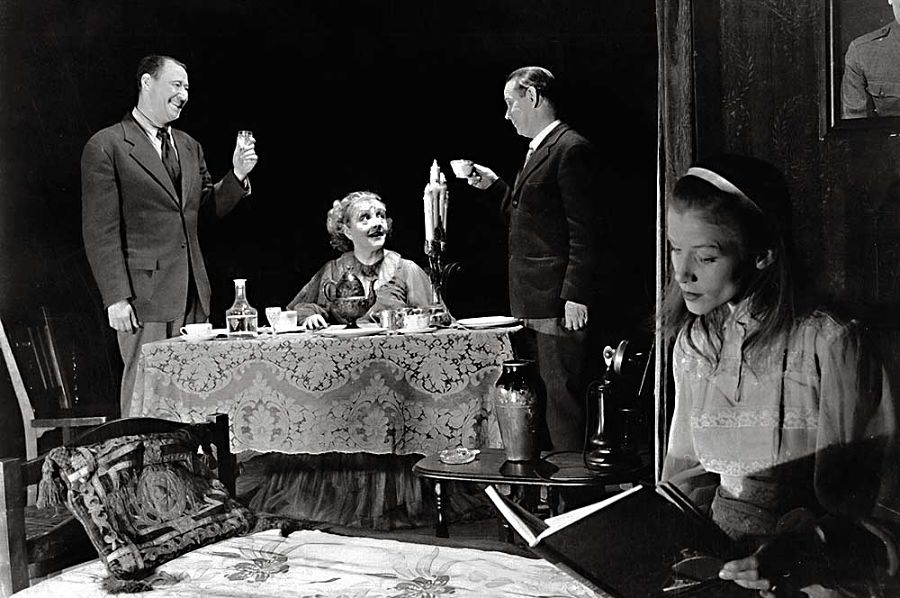
Tennessee Williams returned to New York after spending the summer at a resort in Mexico writing poetry and a play he would later name A Streetcar Named Desire. His return in September coincided with the opening of his play You Touched Me!, his much-anticipated follow-up to the hugely successful The Glass Menagerie, which ran for 561 performances on Broadway. Expectations were high for his new work, co-written with Donald Windham. The play open on Sept. 25, and The New York Times review the next day pronounced You Touched Me! “not an improvement nor an advancement; in fact, it represents quite a step down.” It ran for 109 performances and closed on Jan. 5, 1946.
1955 (70 years ago)

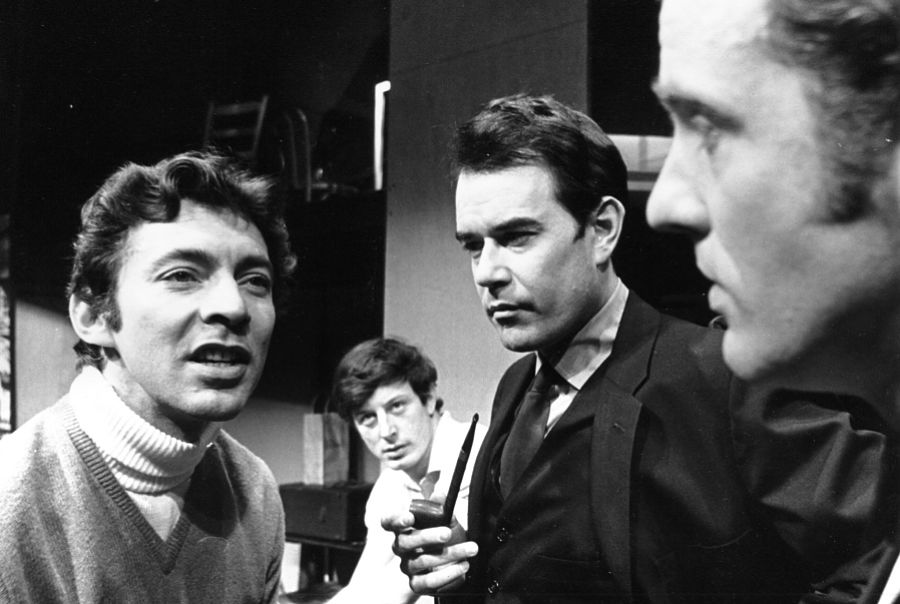
A View From the Bridge opened on Broadway Sept. 29th at the Coronet Theatre (now the Eugene O’Neill Theatre). Arthur Miller’s play, an exploration of masculinity and cross-cultural tension, follows an Italian American family living in Brooklyn. Eddie Carbone, a dockworker raising his orphaned niece, agrees to house his wife’s undocumented relatives from Italy, with tragic results. The original Broadway production won Richard Davalos a Theatre World Award in 1956 for his role as Rodolpho, one of the Italian nationals, who pursues a relationship with Eddie’s niece. Actor Van Heflin played the original Eddie and Martin Ritt directed. Subsequent Broadway revivals came in 1983, with Tony Lo Bianco in the role, under director Arvin Brown; in 1997, with a cast featuring Anthony LaPaglia, Alison Janney, and Brittany Murphy, under director Michael Mayer; in 2010, with Liev Schreiber, Jessica Hecht, and Scarlett Johansson, under director Gregory Mosher; and one in 2015 with Mark Strong and Nicola Walker, under director Ivo van Hove (imported from London’s Young Vic).
1965 (60 years ago)
The National Foundation on the Arts and the Humanities Act of 1965 was signed into law by President Lyndon B. Johnson on Sept. 29. The act created both the National Endowment for the Arts (NEA) and the National Endowment for the Humanities (NEH). In a Rose Garden speech, President Johnson declared, “We will create a national theatre to bring ancient and modern classics of the theatre to audiences all over America.” The hope of forming a national theatre similar to that in other countries was never realized. Instead, the NEA has funded many regional theatres across the country. In May of this year, many of those grants were terminated.
1975 (50 years ago)
 The Board of County Commissioners in Allegheny County, Pennsylvania, signed the resolution to open the Pittsburgh Public Theater on Sept. 4; the theatre opened with Tennessee Williams’s The Glass Menagerie Sept. 17, followed by One Flew Over the Cuckoo’s Nest and Twelfth Night. Founders Margaret Rieck and Joan Apt selected Ben Shaktman as artistic director. Shaktman had been the first recipient of the Fulbright Fellowship in playwriting. He served in the role until 1982. During that time he directed the majority of the productions (including Menagerie) and established the theatre’s financial foundation. With successful ticket sales and many sold out performances, the Public was able to expand to four productions the following season.
1975 (50 years ago)
Harold Clurman died on Sept. 9 of cancer. Clurman was a director, author, and co-founder of the Group Theatre. Inspired by the Moscow Art Theatre, he worked to create a permanent acting ensemble in the United States. After the Group Theatre ended in 1941, he produced and directed films before returning to New York and having a long, successful career as a director. From 1943 to 1960, he was married to the influential acting teacher Stella Adler, who had joined the Group through Clurman. A prolific author of theatre criticism, he wrote a book on Henrik Ibsen, simply titled Ibsen. In his book On Directing, he wrote, “It is not the director alone who gives the play its direction.”