The John F. Kennedy Center for the Performing Arts has always been a part of my life. Growing up just outside of Washington, D.C., in the 2000s, I always saw its large marble building as integral to my city’s landscape, just as much as the Washington Monument. I came of age in the building, seeing Theater for Young Audiences as a kid, national tours of Broadway musicals as a middle schooler, and music concerts as a high schooler.
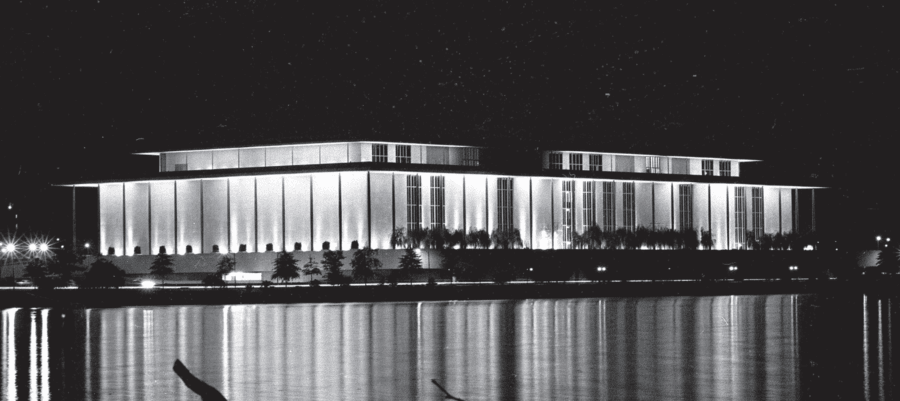
The creation of such a multifaceted arts organization was only possible thanks to the federal government. In 1958, President Dwight D. Eisenhower signed the National Cultural Center Act, which allocated D.C. land for a culture center, and mandated that it would be a privately funded organization. President John F. Kennedy helped fundraise for the building before his assassination, and his successor, Lyndon B. Johnson, helped dedicate the center as a “living memorial” to Kennedy. Johnson remarked at a groundbreaking ceremony that “artistic activity can enrich the life of our people, which really is the central object of Government.” The Kennedy Center officially opened in 1971.
More than 50 years later, from August 2022 through March 2025, the Kennedy Center was my employer. My official title was junior copywriter/coordinator, advertising communications, in which role I collaborated with marketers and programmers to promote the Center’s wide range of performances. I edited dance season brochures, interviewed artists for a patron magazine, wrote radio ads for comedians, and sent emails for free Millennium Stage shows. I was especially proud to promote the Social Impact team, which provided outreach programs to local and national communities. The team often used the Center’s recently built REACH space to provide classes, staged readings, discussions, festivals, and more.
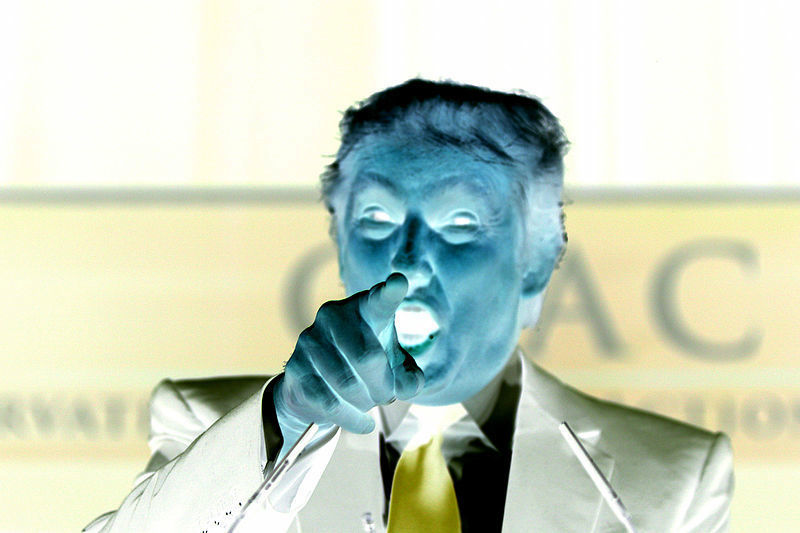
My job dramatically changed early this year. On Friday, Feb. 7, The Atlantic reported the Trump administration’s plans to fire Kennedy Center board members (who historically were appointed by the president for six-year terms). Trump stated these intentions himself with a Truth Social post on the same day, which also said, “Just last year, the Kennedy Center featured Drag Shows specifically targeting our youth — THIS WILL STOP.”
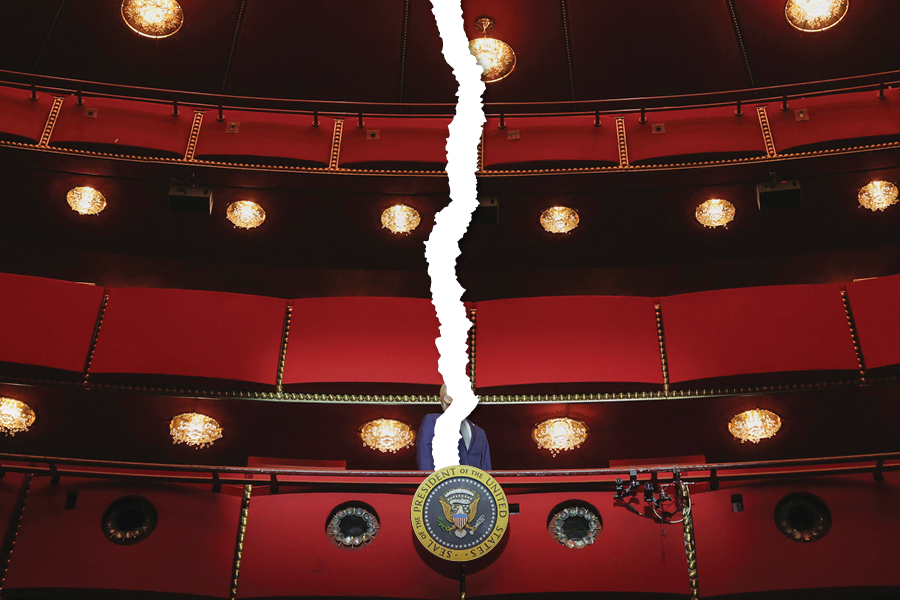
I spent the rest of that weekend waiting for the dominos to fall, and soon they did. On Tuesday, Feb. 11, I attended a meeting which confirmed that chair of trustees David M. Rubenstein had been fired. The next day I got a last-minute notification for an all-staff meeting, so I frantically wiped snow off my car and drove into the office. In a short speech, Deborah Rutter informed us that she was no longer president of the Kennedy Center. Earlier that day, Trump fired Biden-appointed board members and appointed new members who voted him in as the new chair of trustees. Ric Grenell, a former diplomat and intelligence officer, became the center’s interim executive director (he now serves as president).
Also suddenly gone were executive leaders like Myles King (vice president, governance and strategic communications, who had been with the Center for over 17 years) and Eileen Andrews (vice president of public relations, who had been with the Center for over nine years). It seemed that Rutter, King, and Andrews had all been fired. The Kennedy Center thus joined a list of governmental or federally funded organizations whose workforce has been decimated by the Trump administration.

I watched all of this with a sense of numb powerlessness, my mind thrumming with questions. Would artists and audiences still want to show up to the Kennedy Center? How was I supposed to market an institution if I didn’t even know its mission and values anymore? Would I be fired too? The following week, a manager described my position as that of a worker bee; I was only there to sell tickets, so my job was safe. Answers to my other questions became clear over the following months. Bands like Low Cut Connie, artists like Issa Rae, operas like Fellow Travelers, and Broadway national tours like Hamilton all cancelled bookings. By June, The Washington Post reported that subscription sales had fallen 36 percent from the previous year (the Center disputed those claims).
The new leadership’s mission and values emerged, too—not because they communicated them to employees, but because they put them online for anyone to see. On LinkedIn, I discovered that Rick Loughery and Nick Meade, longtime aides to Grenell, joined the Center in managerial roles, despite having no previous experience at any arts organization. On Instagram, I learned that Andrews’s replacement, the former ballerina Roma Daravi, had praised Trump for “ensuring the Kennedy Center supports real artists, real patriots, and has real MAGA values to preserve and enrich our art institutions.” I wondered what made someone a “real patriot” and if I was included in that category.
Most confusing to me was Grenell’s self-contradictory messaging. He told Politico that he and the Trump administration offer “voices of tolerance.” But they’re not tolerating bisexual and transgender Americans; instead they are actively erasing their existence from the federal government’s language, memorials, and museums. He waxed poetic about Dolly Parton’s music, though Parton is widely known as an LGBTQ+ advocate who consistently supports drag queens.
Grenell also critiqued Kennedy Center protesters, calling for “some sort of decorum” while also saying that “everyone should be welcome.” He’s apparently advocating a genial brand of civility politics, though his abrupt takeover of the Kennedy Center was far from civil. Where was Grenell’s decorum when he told musician Yasmin Williams, for instance, that the Social Impact team was “DEI bullshit”? If Grenell wants everyone to be welcome in the Center, why is he doing evangelical Christian programming? Yes, that welcomes a specific group of people, but there’s no equivalent programming for people of other religions.
Take politics out of this for a second. Imagine I were working for a Fortune 500 company and that, over five days, half of its board were fired, under-qualified management came in, and I were expected to carry on with no dissent or critique. You’d probably call that a toxic workplace. When I shared that analogy with a friend, they responded, “That just sounds like private equity.” True. But I didn’t sign up to work in private equity; I signed up to work for a nonprofit arts organization. And because our under-qualified management included the most powerful person in the world, Kennedy Center employees were expected to simply fall in line.
I did try to fall in line for a while, never expressing my true opinions to coworkers, burying my anguish under a stern poker face. Sometimes I fantasized about showing up to my cubicle in full Chappell Roan drag in protest. In reality, I scrutinized each outfi t I wore for any chance it was too flamboyant or queer; I became paranoid that I was being watched online and in-person. It reminded me of my upbringing in the Catholic Church, where some colleagues might defend me individually, but as a queer man who accepts all members of the LGBTQ+ community (someone Grenell would call a “radical gay”), my presence was no longer institutionally supported.
Some of my coworkers expressed a new commitment to doing their jobs and staying the course, until they could no longer. Some Kennedy Center employees have even made efforts to unionize. But the writing was on the wall for me. Once Roma Daravi started overseeing some of my copywriting, I no longer felt comfortable having my name associated with the Kennedy Center. My writing there was never journalism, but from now on there would be no clear editorial process to protect my words from being changed or censored. If my job was truly that of a worker bee, mindlessly carrying out the tasks of my managers, I could no longer carry out tasks that hurt my own communities, that hurt myself. I gave my two weeks notice, with my final workday on March 24. Two days later, the Kennedy Center’s Social Impact initiative was dismantled, with seven employees laid off.
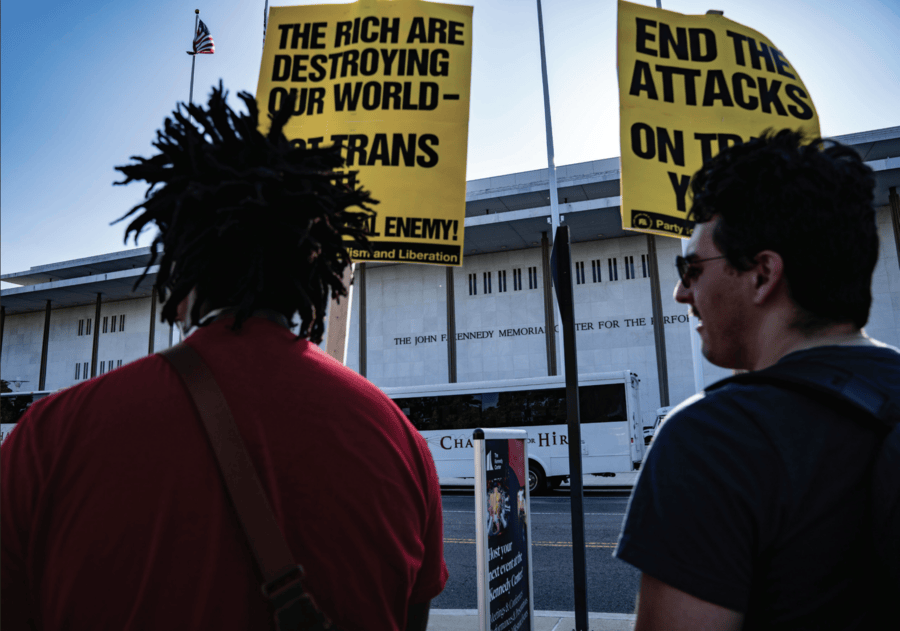
Quitting a job on principle is an immense privilege—one I have as a single man with no dependents. So many Americans don’t agree with or feel ambivalent about their jobs. But I used to feel proud of my Kennedy Center role, and I was feeling ashamed to have even briefly harmed my communities. Plus, I was leaving an entry-level role. If high-level programmers quit their Kennedy Center roles, they’d have a much harder time finding open job positions of a comparable scale (especially in the opera, dance, and symphony industries).
Still, both entry-level employees and high-level programmers have left their Kennedy Center jobs and rejoined a competitive job market. Some of my former coworkers have found new arts administration roles in D.C., but I’ve also seen many leave the city and/or pivot into healthcare, education, journalism, or museum work. The Kennedy Center once provided D.C. with a dense concentration of talented leaders in the performing arts. Now much of that talent is leaving the D.C. and arts communities altogether.
For the Kennedy Center, this damage might be irreversible. There are few legal protections shielding the organization from the whims of current or future politicians. Trump has set a dangerous precedent, essentially reshaping the Kennedy Center in his own image. The Center feels less like a “living memorial” to a slain president, and more like a towering monument to the current one (Trump has said he’ll host the upcoming Kennedy Center Honors) and his wife (in July, House Republicans voted to rename the Kennedy Center Opera House after Melania Trump).
Recently I’ve been considering why I wanted to work at the Kennedy Center in the first place. It certainly wasn’t because of the money: my starting salary was $45,000 before taxes (more than $9,000 under the living wage for a single, childless adult in D.C., according to MIT’s living wage calculator). But I wanted to pay my dues and see how a large arts operation was run. Before taking the job, I lamented to a friend that I’d be promoting “cruise ship entertainment”—commercial productions that were a far cry from the experimental playwrights I studied in college. But the Kennedy Center provided shows my entire family appreciated, including my grandparents (the National Symphony Orchestra), my tito (rapper Yasiin Bey/Mos Def), my young cousin (Aladdin), and my parents (Natalie Merchant). I wanted to provide gateways for all audiences into the arts, as the Kennedy Center had always done.
In fact, at crucial points in my life, the Kennedy Center had been a gateway to understand my own queerness. In 2017, shortly after graduating high school, I saw the national tour of the musical Hedwig and the Angry Inch at the Kennedy Center. It was my first time seeing a live show with drag elements, and the musical’s gender-fluid protagonist gave me profound language and imagery to help me better express my sexuality and gender identity. In June of 2024, I attended an NSO “Declassified” concert with my parents, which featured drag performers in a pre-show. For a brief moment, the Kennedy Center also became a gateway for my parents to experience the queer world that I was living in. Earlier this year, I also attended the Theater for Young Audiences production of Finn, which staged a story about acceptance across identities. It’s the kind of story I wish I had seen as a kid. My heart breaks for the LGBTQ+ kids, teenagers, and adults who won’t be affirmed at the Kennedy Center throughout their lives the way I was.
Part of me hates myself for leaving the job. Isn’t this the coward’s way out? Isn’t this exactly what Trump and Grenell want—for dissenters to leave so they can fill their organizations with yes men? But the Kennedy Center can’t be a “reform from within” situation right now, as much as I’d like it to be. Kennedy Center workers who collaborate with the new management in good faith can still be unceremoniously fired, like the dance programming team was this August. LBJ believed the role of both the arts and government was to “enrich the life of our people,” but Trump and Grenell are making devastating decisions on who “our people” includes. Just as Trump is trying to legally redefine what it means to be “American,” he is also attempting to redefine which Americans can make and see art. Our work as Americans right now, as citizens and artists, is to continually expand the definition of “our people.”
How? First, we can provide alternate routes into the arts. The beauty of the Kennedy Center was that for someone like me, Theater for Young Audiences could be a “gateway” to seeing opera and dance in the same space. I believe more nonprofit theatres should program a diverse range of performing arts as “gateways” into their play and musical programming. I’ve seen this happen successfully around D.C., with Woolly Mammoth Theatre Company providing Spit Dat open mics, Signature Theatre providing a cabaret series, and Studio Theatre providing space for Washington Improv Theater and a bar that’s open to the public. The more people see theatres as third spaces for social gathering, the more they’re likely to see shows.
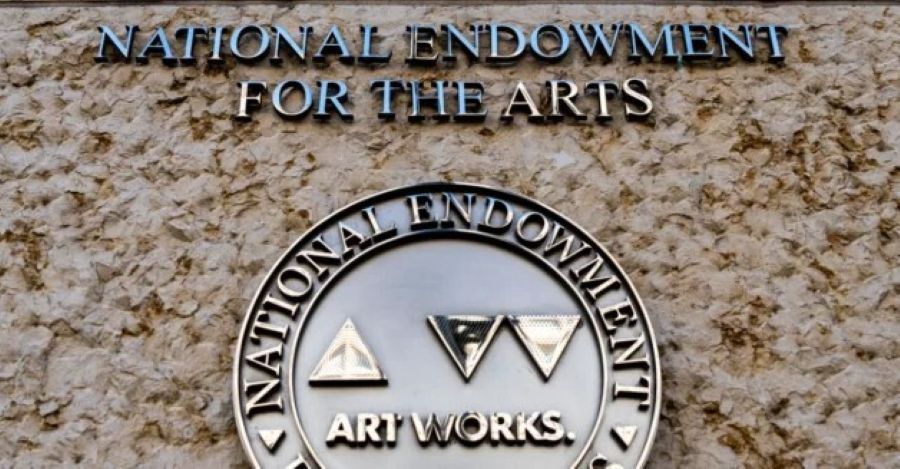
Second, we need shows in the Washington, D.C., area that share the stories of the most vulnerable people living in the area: immigrants, members of the LGBTQ+ community, undocumented Americans, and more. With the National Endowment for the Arts withdrawing and terminating grants, and the House Committee proposing even more cuts, it seems to me that many local D.C. theatres and organizations are being cautious with their programming. But if the government is censoring creative expression, and local artists censor themselves out of fear, then we’re left with few shows that rattle, provoke, inspire, or even confront contemporary politics. Many queer audiences and audiences of color, myself included, want to see our lives onstage. If the Kennedy Center won’t do that, we’re happy to spend our money elsewhere and support organizations that believe in us.
Finally, we need more platforms for people to safely speak out about the Kennedy Center and the Trump administration. Most people who have shared their difficult experiences with the Kennedy Center have been visiting artists like W. Kamau Bell and Guster, Social Practice resident Philippa Pham Hughes, or celebrities like Ben Folds (former artistic advisor to the National Symphony Orchestra). We’re missing the stories of the people who made the Kennedy Center run every day: stagehands, bus drivers, marketers, programmers, assistants. Just as historian Dr. Jason M. Chernesky has been creating an oral history project for fired federal workers, we need a variety of platforms (from publications to workplaces to even theatre shows) for arts workers to share their experiences. Sure, we may not be hugely public figures. But if we all prioritize our anonymity above all else, then no one advocates for our industry or our experiences.
After leaving the Kennedy Center, I felt that protesting the Trump administration or even sharing my story seemed pointless. Gaza is in a humanitarian crisis, ICE agents are abducting people across America, and D.C. now resembles a military state patrolled by the National Guard—and I want to complain about voluntarily leaving a job? But Trump’s attempt to control artists and educators is about controlling Americans’ access to storytelling, history, even objective truth. We should take this “culture war” seriously. A political takeover of the arts is more than just symbolic; it’s indicative of a very real takeover of American thought and imagination.
Providing new gateways to the arts, supporting marginalized people around D.C., and speaking up will not be easy. It will also require personal sacrifice. By simply writing this essay, I may be putting myself in an even more vulnerable position. But it’s a sacrifice I’m willing to make. It is my own small contribution to enriching the life of our people, with “our people” including any American who’s willing to listen.
Nathan Pugh (he/him) is a journalist and culture critic currently based in Washington, D.C.