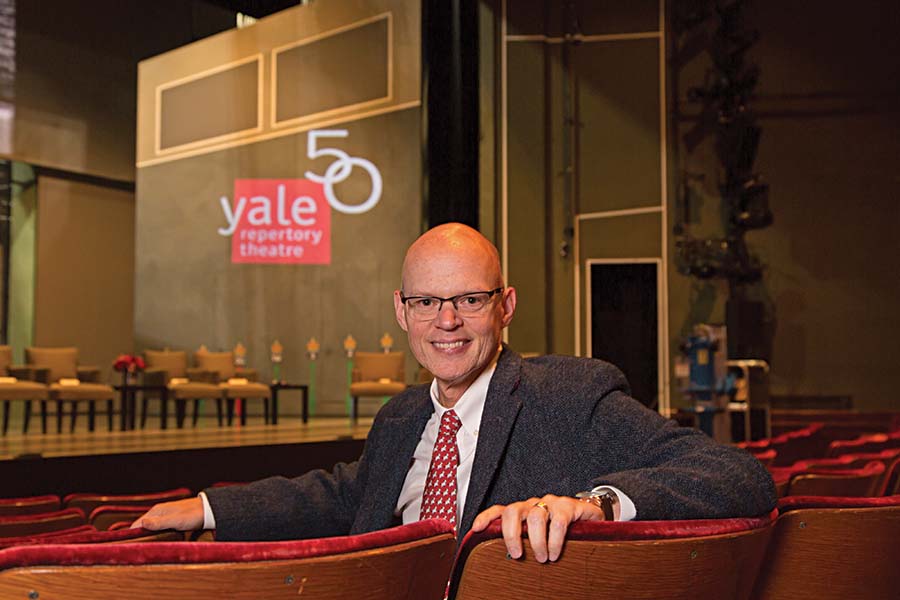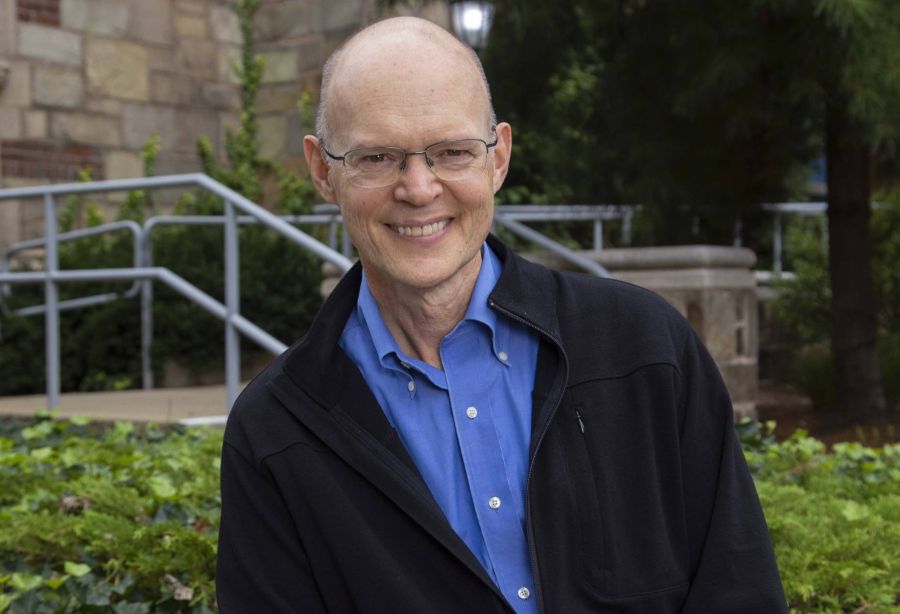
ROB WEINERT-KENDT: In James Magruder’s book about Yale Rep, The Play’s the Thing, the director Robert Woodruff says that a company’s DNA is set from the beginning and it never changes. Would you say that’s true of Yale Rep? If so, what is that DNA?
JAMES BUNDY: I guess that DNA is: a theatre that is consistently trying to keep an eye on on a sense of risk-taking within the field, and aspiring to influence, both in the wider field and in the pool of trainees who are responding to the work and in some ways defining themselves aesthetically, either in agreement or opposition to what’s going on at the Rep. It’s not that the Rep predetermines the outcomes for all students; rather, it provides a crucible of risk-taking in front of a live audience that serves as—depending on the student—either an inspiration or a negative example of what that student might might want to do themselves in the field.
It’s telling that I started by asking about Yale Rep, and you immediately talked about it in relation to the school. Which makes sense, because these are really two jobs. Do you see them that way, or as kind of a two-pronged single job?
We always list the school first, because the school runs the Rep, and the justification for the Rep’s existence is its impact on training. So the decisions we make at the Rep are much more often driven by training and the experience of students than they are by the experience of the audience, which isn’t to say that we don’t regard the audience. We have tremendous regard for the audience, who we’re inviting into this environment, and therefore we try to run the theatre at the highest of art and management discipline.
It seems like the risk-taking you mentioned goes hand in hand with the training.
Yeah, if there’s a theatre that should be taking risks in the United States, it’s definitely one that is 90 percent endowed.
Speaking of which, I know that one of the achievements you can claim is putting the funding in place to make the Geffen School of Drama at Yale tuition-free in perpetuity. I know that improving the facilities was another priority of yours. What’s the progress report on your wish list?
When I got here, there was a broad consensus that the No. 1 issue here was financial aid for students. The No. 2 issue was compensation for our faculty and staff, and the No. 3 issue was facilities. We are in the process right now of budgeting, and we have a new facility designed which will house the drama school, the repertory theatre, the undergraduate program in theatre, dance, and performance studies, and the Yale Dramatic Association, which is largest undergraduate extracurricular theatre organization. We anticipate that building will open at the beginning of the next decade, so I won’t be in the job when we finish, but I might actually be in the job when we break ground. We’ll find out.
And yes, all degree and certificate candidates are now attending tuition-free. In addition, about 75 percent of our student body are receiving need-based financial aid living stipends.
It seems like your program is doing well while a lot of others in higher education are contracting or even under threat from the current presidential administration. Are you feeling pressure or foreboding?
The Big Beautiful Bill contains an eight percent endowment tax on five institutions—Harvard, Yale, Princeton, Stanford, and MIT—that will force us to cut literally millions of dollars out of our budget over the course of the next three years. Now, we’re 90 percent endowment funded and we have a $44 million budget, so it’s not an existential threat to us, but we too will be contracting. It does create the prospect of circumscribed programming and potentially increased cost for students—not tuition per se, but it may constrain our ability to maintain the financial aid we provide for stipends.
Since we’re talking about money, I wanted to ask you about another quote in the Magruder book, in which a drama librarian at Yale says you “could charm money out of people.” Can you talk about the fundraising part of your work?
I’m fortunate to work in an environment where there are a great many people at Yale, alumni of the graduate and professional schools, and also alumni of Yale College, who are passionate about the theatre and about creating a brighter future for early-career artists and managers, and who can can see the the benefit to society of supporting those aspirations early in people’s careers. And early in my career, I got to see Bill Rauch at work up close [at Cornerstone], and I learned a lot about mission and about expression and about writing and about how to be with people from him.
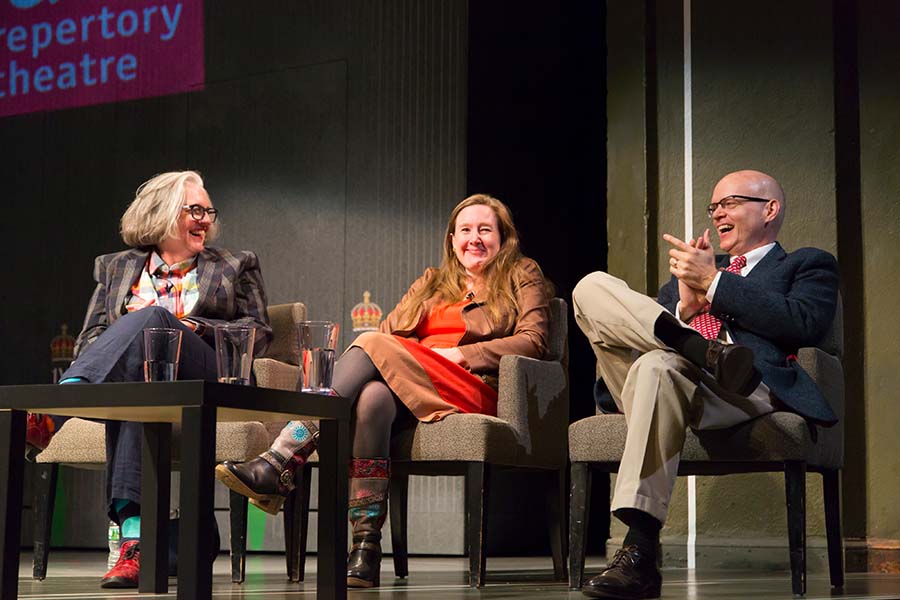
You originally went back to Yale to get an MFA in directing, and you’ve directed a fair amount in the job. Did taking the job at Yale mean you were giving up a busy freelance directing career?
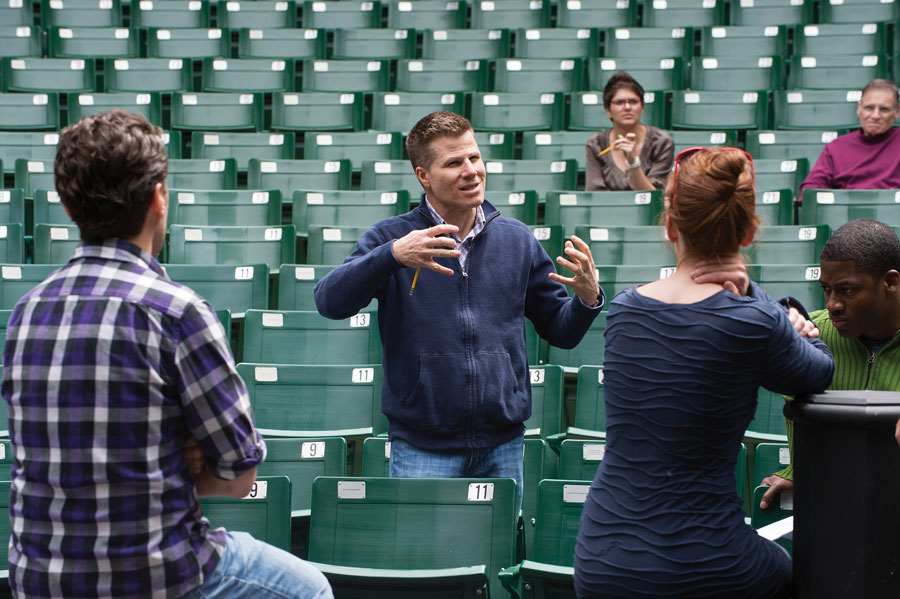
I don’t think this is a great job for somebody who wants to advance their directing career. Particularly in this environment, the last thing a school as diverse as ours needs is to hang its artistic hat on the genius and fortunes of one person. In my view, even my directing every year would be too much, given the number and range of voices who could be produced at Yale Repertory Theatre. By the same token, I think it’s been important for me and for the community for me to have some skin in the game, because if I’m not practicing, if I’m not taking risks, if I’m not collaborating meaningfully, artistically, I think it’s hard for me to stay abreast of the issues that our students and our guest artists are actually wrestling with.
One question I usually ask folks at this juncture: What has changed the most in the years you’ve been in the job?
In training, the most salutary change I’ve seen over the course of my career is that over time, experientially, faculties have become much more sophisticated in teaching the student who is directly in front of them, as opposed to establishing a kind of uniform or blanket standard for what the training is that would have historically missed or underserved a significant percentage of students. I think students are seen much more clearly, and encouraged much more directly, to bring their full selves to the project, and they are much more likely to be seen and appreciated with a sophisticated perspective on their differences from and similarities to other students. Ron van Lieu uses the metaphor of the soloist and the member of the ensemble. Ideally you want people to be able to do both.
What has changed in the theatre more broadly?
We’ve been very fortunate in the last six years that literally hundreds of our colleagues signed the letter We See You, White American Theater. That was a courageous and inordinately constructive communication. You’d have to be either utterly irresponsible or morally bereft not to take seriously the concerns expressed in that document. So I think a thing that has changed is that there’s a much healthier and more explicit conversation about, broadly speaking, the development of equity and anti-racist practice in our field. That’s a huge change over the course of my career. It’s not to say that those conversations hadn’t begun before that, or that there weren’t already exemplary organizations and individuals. But the depth and breadth of discourse is much greater, and it’s mainstreamed; it’s not in pockets.
Also, I think we’re witnessing in real time the power of Baumol’s cost disease, and we are navigating, I think with much more sophistication, the allocations of capital that make it possible for resident theatres, institutional theatres, and even actually small theatres that are catering to a specific audience. It’s pretty clear that the field as a whole got over-invested in bricks and mortar, and it took a while, as with any kind of correction, to figure that out. You’re now seeing a lot of strategies to navigate that over-commitment through co-productions and shared tenancy. That’s some of what the Public Theater is doing: a major flagship theatre that is essentially welcoming other creatives into their space because the cost of producing is so high.
Speaking of producing, can you talk a bit about your audience?
Most of our audiences live in Greater New Haven. It also turns out that Zora Neale Hurston is a box-office champion: Spunk brought people from out of state. That show was the fourth highest-selling show in the last 35 years at Yale Rep, and the other three all had movie stars in them.
That’s amazing.
It is amazing, but then you kind of put your thinking cap on, and you’re like: Zora Neale Hurston and fabulous music and a story nobody’s ever seen before? There was a lot of delighted surprise, and that often leads to ticket sales.
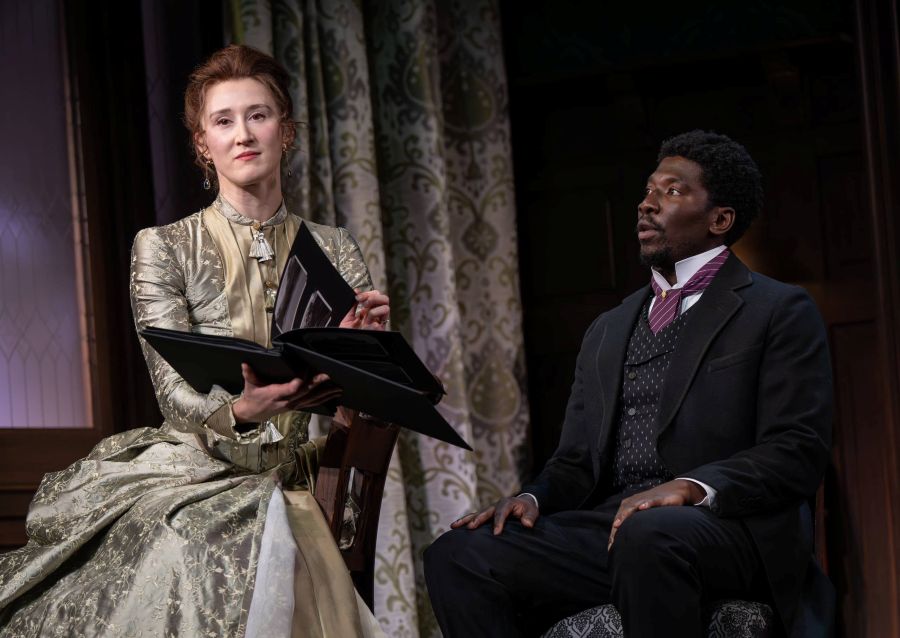
You’re directing Hedda Gabler as your final effort at Yale Rep. Why that play?
One of the things that’s baked in the DNA, I believe, of our school is that the Rep is never going to not do new plays, and the Rep is never going to not do canonical works, because exposure to the new and rethinking or reexamining the old are essentially evergreen projects. So pretty much everything we do is going to fall into one of those buckets.
The thing about Hedda is, an awful lot of people think they know exactly what Hedda Gabler is and what it’s about, that it’s a play written by a dead white man, and he was a colonized writer. That’s certainly true, but his interests go far beyond any label that might be put on him and his capacity. Hedda is a play that has a very clear and somewhat famous plot—unless you’ve never seen it or read it, and there are a huge number of people who’ve never seen it or read it. So on the one hand, you could say, well, who needs Hedda Gabler? Why Hedda Gabler now? That’s a totally valid question. My perspective is, it would be great if we lived in a society that was free of misogyny and bias and self-harm and suicidal ideation, where women had bodily autonomy—wouldn’t all those things be great? If those things were true, we wouldn’t need Hedda Gabler.
Have you seen Nia DaCosta’s film Hedda, and is your production in dialogue with that in any way?
Well, it’s only in dialogue in retrospect. The film has lots of departures from the plot that create different kinds of ambiguities than are in the original, but they’re still ambiguities and they’re interesting. And there’s some spectacular filmmaking; more power to them.
Not to spoil it, but the film has made a different choice with the ending that reminds me a bit of how James Ijames chose to end Fat Ham.
You know, directing Hedda is a little bit like directing Hamlet, actually, because the play is sufficiently, and in the best possible way, underwritten, and that allows you to recognize that there are other ways it could go that you hadn’t thought of yet, and wouldn’t you like to see it again in somebody else’s production? It’s also the kind of play that could really kick your ass.
You directed Paul Giamatti in Hamlet, didn’t you?
Yes, and that’s the last time I felt like this about a play—like, oh my goodness.
What do you mean by underwritten? Say more about that.
There’s a lot of oblique conversation, but the backstory of all of these characters is very much up for grabs. I think a lot of different people would come out of any given production talking about why Hedda does the things she does, and they could all be right. The plot is spelled out, but the motivations are not spelled out exactly. That’s where I think the play provides perhaps the greatest possible mirror for us to look at ourselves.
Because you’re an educator as well as an artist, I want to close by asking you what advice you would give to your successor, or to anyone who wants to work in this field.
I would say: Be brave and compassionate. I continually find that in the great experiences I’ve had in the theatre—as an audience member, as a collaborator, as a supporter—there’s a common thread that people have dared, and that they’ve also really cared about the work and about the people that they’re doing it with. I think if you’re doing those two things, not only is it hard to get too far afield, but it’s also more likely that you’ll accept the kind of guidance and correction from your colleagues that leads to a better result than you could have imagined or delivered on your own.
Rob Weinert-Kendt (he/him) is editor-in-chief of American Theatre.