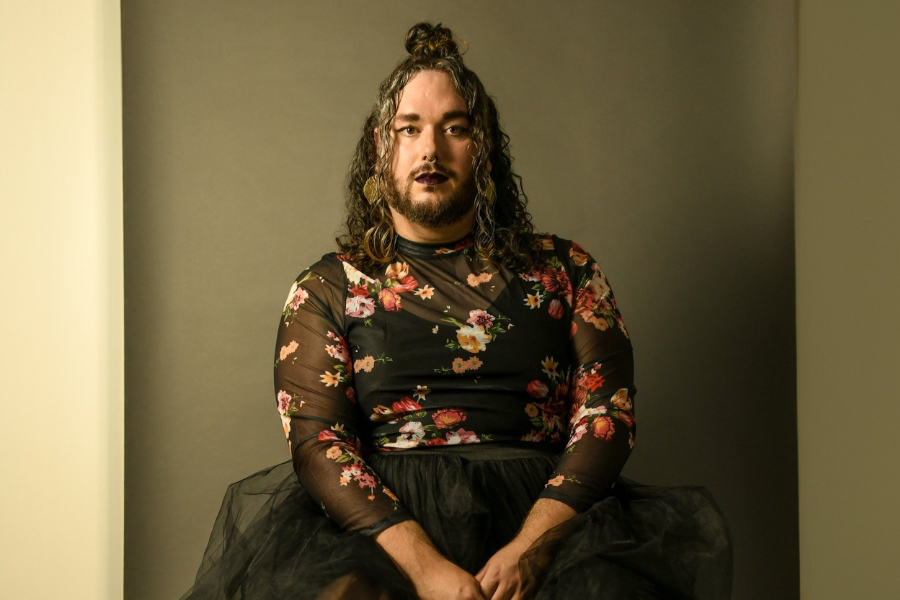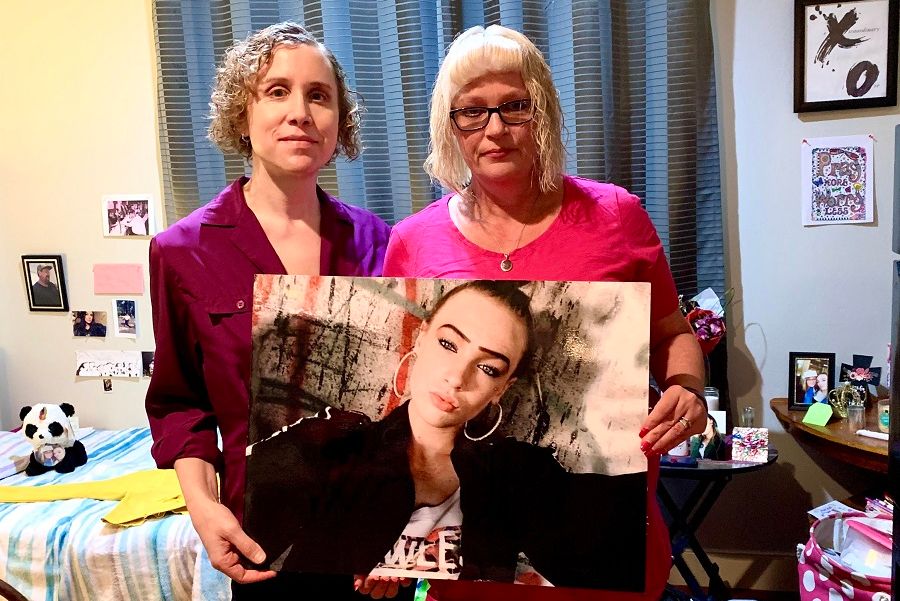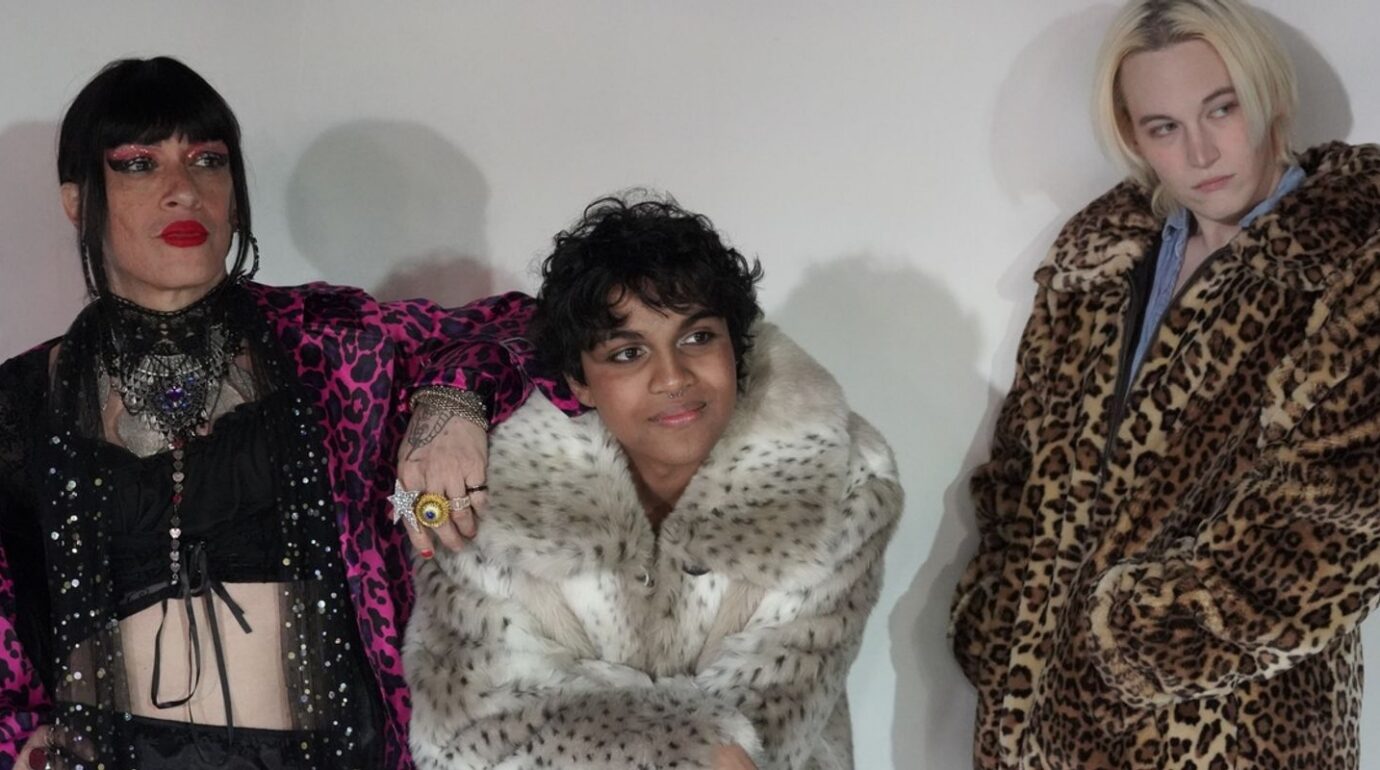
Where can you go where it feels safe to sit with relaxed shoulders? When I first moved to Seattle in 2005, it was Bauhaus, a coffee shop on the corner of Melrose & Pine. My first visit was spent upstairs, reading Daniel Clowes’s Ghost World straight through. I left feeling exposed, as if Clowes had read the most private entries from my Livejournal and put them to print. A few months later, a friend and I stood in line to order, eyeing a barista perched on a counter, changing an LP in the record player. My friend turned to me and said, “I’m going to be the mother of his children someday.” By 2007, I was nannying their firstborn.
For more than a decade, Charlie’s Bar & Grill on Broadway was another refuge. On Nov. 4, 2008, after voting for the first time, my friends and I walked through the back doors just as the news broke that Barack Obama had won the presidency. The room exploded in celebration. I called my mother from a payphone near the restrooms and we cried tears of joy.
During Pride weekend 2015, I crammed myself into a booth in the back corner of the bar, my eyes wide, heart breaking. It took over an hour to order a few of the last appetizers available. By dawn, the restaurant sat empty. It would never reopen.
These days, I regularly bring friends to the café at the Panama Hotel. On the corner of 6th Ave. and S. Main Street, a sign hangs: “Welcome to Nihonmachi.” The shop is cozy, the atmosphere warm. I’ve become good pals with the house cat, Miu Miu. Yet those same walls hold the reality of decisions our country made, ones that targeted an entire community. Every time I walk to the second floor, I pause at a glass window built into the floorboards of the café. Below, household belongings remain stacked, never reclaimed by those who were forcibly incarcerated in the Japanese American internment of the 1940s.
Growing up, I understood that my existence is the result of survival. Members of my family made decisions under the threat of genocide—choices they might never have made otherwise. Somewhere in the halls of Ellis Island are my Great Aunt Marie’s registration forms, as she arrived as a last-minute “shipped in” bride to meet a man she’d never seen. Born in the 1890s, she lived just past the turn of the new millennium—a beating heart for every second of the 20th century, carrying with her a largely unspoken trauma.
History doesn’t disappear. It shifts, refracts, and sometimes fades. My Aunt Dorothy shows me a photo of Great Aunt Marie, draped in a fur coat, with raven black hair and dark piercing eyes. My own brown eyes meet hers in the mirror; hands and face tanned, black hair cut in the shape of a bowl. Looking at her, the same as looking at myself, I just watch.
Coming out to my family as queer and trans was an awakening. The reaction was mixed, but today the core of my immediate family is united without judgment. My niece and nephews are being raised knowing their Aunt Ada just as she is, present and loving.
I’m lucky. I know how much sorrow and despair lingers in the trans community, much of it tied to the fragility of familial bonds. The broken trust that can come from estrangement, simply for acknowledging who you are, can be overwhelming. Few people ever come back from that, and those who do can carry a deep understanding of the difference. Decades ago, I was instructed not to inform certain members of my family of my coming out. That they wouldn’t understand it—some perhaps wouldn’t even know it was possible.
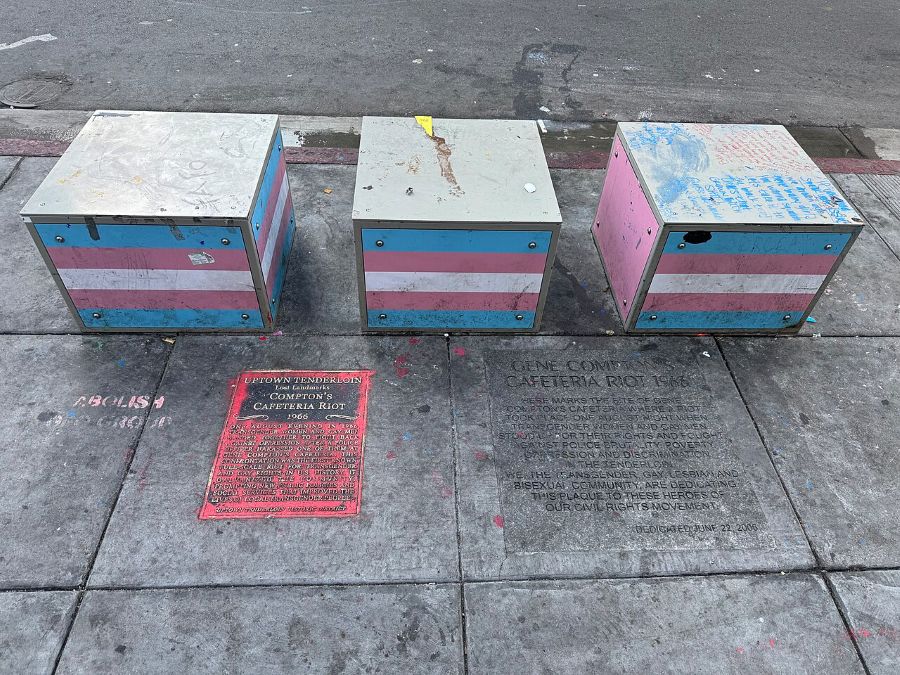
For trans folks living in 1960s San Francisco, their existence was boldly public. In congregating at Compton’s Cafeteria, a chain with a location on Taylor Street in the Tenderloin District, even for a few minutes, community was formed and tensed shoulders went slack. Having opened in 1954, by 1966 Compton’s had become a hub for trans women, many of whom made ends meet through sex work.
Newcomers seeking refuge noticed this visibility. While the seeds of mid- to late-20th-century activism were being watered with compassion, many groups were simultaneously tested by systemic oppression and laws designed to assail their dignity. Citing loitering as a motive, the managers of Compton’s Cafeteria frequently called police on trans patrons, sometimes even demanding entrance fees to drive them away. The activist group Vanguard, formed in 1965, was eventually banned from entering the venue, prompting them to stage a protest outside on July 19, 1966.
Weeks later, on a hot weekend evening, police were called again. What happened next has been described as a moment of combustion: a trans woman splashed coffee at an officer’s face and chaos erupted. Patrons weaponized anything within reach to push the police out, a tactic that ultimately succeeded. Furniture went flying through the window. The fight spilled into the street, growing more personal and violent. Somewhere nearby, a newsstand was set on fire and a police car trashed. A day later, members of the community returned, staging another protest resulting in further altercations.
That summer evening would later be understood as one of the first public events to ignite the modern LGBTQ rights movement in the United States, though it is often overshadowed by the June 28, 1969, Stonewall Uprising in New York’s Greenwich Village.
The scrappy history of Compton’s strikes me as painfully real. Its relative obscurity in our larger cultural memory is unsurprising; acceptance of trans people has long been contested even in progressive spaces. Fear of association was palpable, and fractions formed. Assimilation promised safety, while for others, conforming to a society that denied their humanity was unacceptable. Radical spaces where people cared for one another were created, and served as essential havens from hostility. In fact, many claimed the reason they congregated at Compton’s in the first place was in response to the transphobia they experienced at gay bars throughout the city.
While on a trip to San Francisco, playwright Mikki Gillette visited the original site of Compton’s Cafeteria on Taylor Street. Though long closed, the location is now marked so visitors can pay homage to those who bravely pushed back when no other means of justice seemed possible.
“I feel like there are just a few areas of trans history that are documented, and when I find them I am so interested to see what life was like,” Gillette told me. Inspired by her visit, she wrote a play about the 1966 riots, and eventually brought her script to Fuse Theatre Ensemble in Portland, Oregon, where she’s based.
Founded in 2008, Fuse has inspired local audiences with politically driven new works and inventive reinterpretations of classic texts. Their annual OUTwright Festival has showcased many of Gillette’s plays, including 2023’s Blonde on a Bum Trip, which explores the lives of Holly Woodlawn, Candy Darling, and Jackie Curtis, known as part of Andy Warhol’s Factory scene. In 2024, artistic director Rusty Tennant opted to give Gillette’s play about the Compton’s Cafeteria riots a reading, and now Fuse is staging Riot Queens at Portland’s Back Door Theatre through March 29.
Helmed by Pittsburgh-based director Harper York, the play dives into the lives of several trans women who frequent Compton’s on the eve of the riot, exploring their relationships, challenges, and activism. The play highlights what is often lost in broader historical accounts: the lived experiences of those directly involved, or around the close periphery, of such events.
In discussing the production, Gillette talked about a challenge also familiar to me as a casting director: that plays written with trans characters are often perceived as difficult to cast. In reality, trans, non-binary, and gender nonconforming performers live all over the country. All that is required is time, trust, and creating space for them to show up. In Portland, Fuse has assembled a reliable, multitalented collective who participate as availability and interest allow.
“We built that pool a couple of times,” Gillette said. “Talking to someone who is like, ‘I did theatre in college and just never thought there would be a place for me in it again,’ and then getting to see them onstage and see how talented they are—that’s really rewarding.”
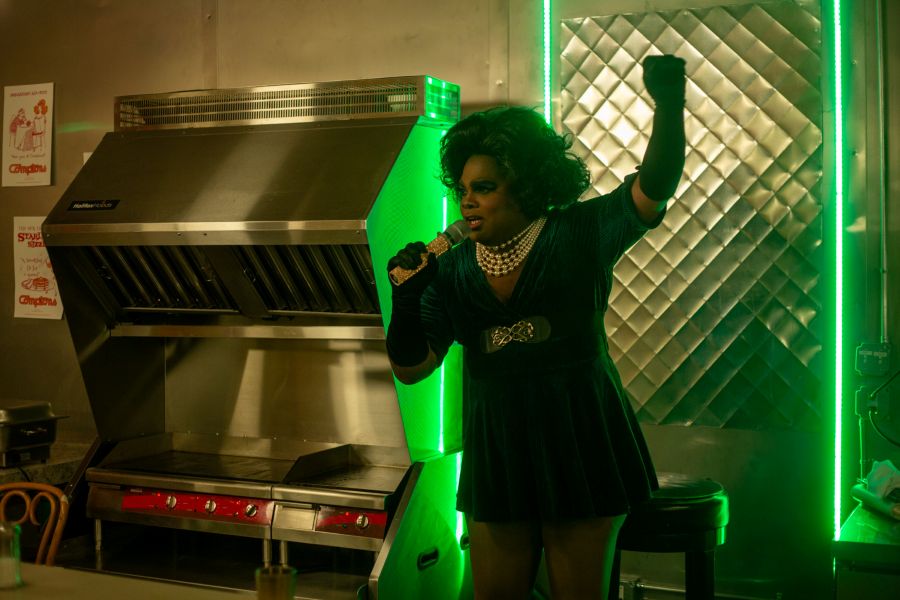
Meanwhile, some 630 miles down the West Coast, San Franciscans can slide into a booth, receive a plate of pancakes and a cup of coffee, and watch the action unfold just feet from their table. This immersive play, The Compton’s Cafeteria Riot, takes place on Larkin Street at the Tenderloin Museum, not far from the actual site of the riots. It is now running to sold-out houses through June, following a similarly packed engagement in 2025.
Created and written by San Francisco legends Donna Personna and Collette LeGrande, with playwright Mark Nassar, The Compton’s Cafeteria Riot, first staged in 2018, is produced by the museum and directed by multi-hyphenate theatremaker Ezra Reaves. These creators felt that an up-close, lived-in experience was key to telling the stories of trans people who navigated daily life in 1960s San Francisco. For Personna and LeGrande, it was also about giving faces to a community they met firsthand upon their arrival.
Personna, who hails from San Jose, appeared on the San Francisco scene decades ago and became familiar with the scene in the Tenderloin. She felt a deep affection for the community, though she could recognize, as she put it, that “they were ultra traumatized. I saw they were very much in danger. I established in my mind, ‘I don’t really want this life for me; I want to have a job in this life, I want an education. I don’t want to have to battle every step of the way.’ So I left them and became a hippie.”
Personna would go on to follow public street art by groups like the Fabulous Cockettes, and later served on the boards of Trans March and Transgender Day of Remembrance. A documentary chronicling her life, Donna, directed by Jay Bedwani, debuted in 2022 at the Frameline Film Festival. Personna’s journey was all her own, as she described: “I never wore women’s clothes. It was against the law to buy women’s clothes and to impersonate a woman. So I put on men’s clothes that I bought at men’s stores. But when I put men’s clothes on my body, they turned into women’s clothes. And that’s my truth.”
Meanwhile, in Santa Barbara, 15-year-old LeGrande and her friend decided to run away, hopping on a Greyhound bus destined 320 miles north to San Francisco. Wandering the Tenderloin, only several blocks from the bus depot, they were spotted by locals in the neighborhood, who suggested they seek shelter at Compton’s.
“The minute I walked in and saw all those beautiful women, I knew exactly where I was and what I was supposed to be,” LeGrande shared. “I don’t know how I knew, I just knew, if that makes any sense. I don’t know why it took me so long to figure it out; I guess it was just the atmosphere I was in. From that point, it was a whole different thought process for me.”
LeGrande would later reign twice as the Grand Duchess of the Ducal Court of San Francisco and heir apparent to the Queen Mother of the Americas. She has worked tirelessly supporting causes for charity, and performs regularly at Aunt Charlie’s Lounge. Along with Personna, LeGrande appears in the 2014 documentary short Beautiful by Night, directed by James Hosking.
“You learned to be a strong person,” LeGrande said, “because once you got to be in that kind of atmosphere where you had to fend for your own life everyday and deal with people—girls in those days carried knives in their bags because they had to. You never knew what kind of situation you were going to be in. You’d go to jail, and come out and be right back where you were. It made me a strong person, and I felt, I don’t want to be anywhere else but here because I can do and live the life I want in San Francisco. It’s the best decision I ever made in my life.”
Personna credits historian, professor, and filmmaker Susan Stryker’s film Screaming Queens: The Riots at Compton’s Cafeteria, which premiered in 2005 at the San Francisco International Lesbian and Gay Film Festival, for planting the seeds of The Compton’s Cafeteria Riots. While watching Stryker’s film, Personna had an epiphany. “Oh my God, I used to go there!” The connection seemed significant. She half-joked, “When I’m talking fancy, I’ll say I was sent there by some transgender goddess to witness this, and survive it, and retell the stories later.”
Stryker later served as a dramaturg for the production, and her documentary was also crucial for Gillette in Portland as she wrote Riot Girls.
“It made me think that there must have been stories like this about most major cities,” Gillette theorized. “Nobody has done the work that Susan Stryker did to capture that for us, so to get to cast my mind back into that time and really take in the stories the people were sharing was really inspiring.”
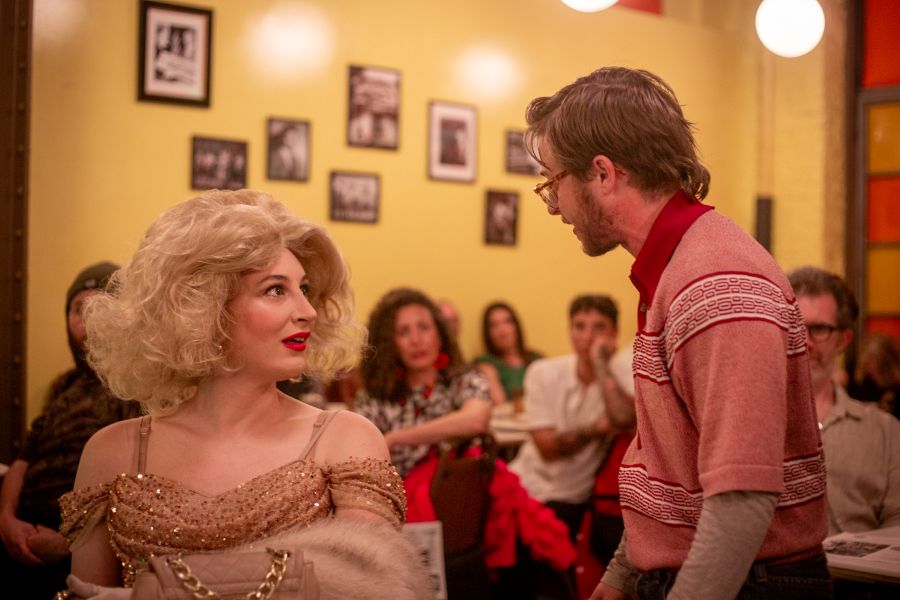
Also participating in my conversation with Personna and LeGrande was actor-activist Shane Zaldivar, who has been with the piece since 2018. Moving to California from Florida in 2014, Zaldivar now works for the city of San Francisco’s Office of Transgender Initiatives, and moonlights as the Pop Up Drag Queen, performing throughout the streets of the city, powerfully blending art and politics.
“I felt a connection to San Francisco,” Zaldivar said. “There was something about this place, from the queer history to being able to access queer spaces. I used to even joke, ‘Wow, they have glitter on the sidewalks here!’ There are parts of San Francisco where that’s the case, and that blew my mind.”
Throughout the conversation, a thought kept returning from the chat I’d had with Gillette earlier that day: that it matters that this story is being told in 2026. It matters that these productions are created, performed, and crewed by trans, non-binary, and gender nonconforming theatremakers in Portland and San Francisco. Why, though, does it have to feel like such an act of bravery?
“I wish it weren’t so timely,” Gillette admitted. “I hope there’s something inspirational about the way these characters come into awareness about what is happening to them, and use the tools of advocacy to fight back against it.”
Said LeGrande, “This story is about people who want to be themselves and aren’t allowed to at the time. If audiences can come away with an, ‘Oh wow, those girls really were themselves, even though they had to deal with a lot of adversity, they were themselves’—that is what I would like to see.”
Personna added, “For me, it’s not a transgender story. It’s a human story. Because for me, to isolate it to ‘trans’ is like separating transgender people from humans. I want it to resonate and be relevant just for being human. That’s another part of it. We’re just human.”
“This piece is designed from the stories that have led to what we get to enjoy now,” Zaldivar said. “How can you be under the LGBTQ umbrella and not know the work, and the fight, and the struggle that went behind what we’re going through still now? Here’s a lovely opportunity specifically under the umbrella of theatre.”
Nearly 60 years after the riots, trans existence is still under attack. The indefinite eradication of trans existence in public life has been openly called for by elected officials and at political events. We are falsely accused of grooming children—a claim that lands differently now that I am an aunt to young children. Our Second Amendment rights are now being questioned, as propaganda is spread that suggests we’re more likely to commit mass shootings. And in some quarters we have been scapegoated into the primary cause for the Democratic Party’s loss in the 2024 presidential election. Allyship feels fragile. Though, some may wonder, hasn’t it always? The ebb and flow seem to follow a pattern, as it always has.
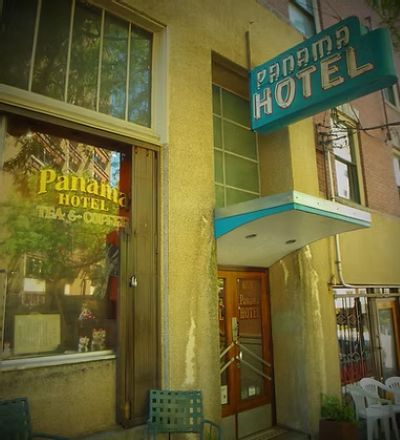
The other day, I walked into the Panama Hotel. Fiona Apple’s cover of “Across the Universe” lingered in my head. I intended to continue reading Patti Smith’s Bread of Angels at some point that day. But first: a visit with my friend Melissa. Conversation flowed effortlessly. I glanced through the glass floor, across the brick walls, the map of the neighborhood, black-and-white photographs of eras past. The artifacts of history all around us, bearing witness.
Over the past year, something has shifted in me. I seem to cling to everyday life to avoid spiraling amid the chaos outside my progressive Seattle bubble. For me, street harassment is rare, misgendering even rarer. I focus on my friends and my family. My dreams of creating video essays about film history, the Academy Awards, Kim Stanley, or whatever else I love and want to talk about drift around; several scripts and outlines await renewed attention. Maybe I’ll move to Los Angeles and try my hand in casting films? I wonder. What matters throughout is knowing who I am—and loving that self.
Down the coast, theatre audiences bear witness to an event from nearly 60 years ago, while the lives of the artists between their performances, simply living, transparently human, mirror my own.
What comes next? Dream big, I say. I know I will be.
Ada Karamanyan (she/her) is a casting director currently based in Seattle. Her current interests include writing long-winded emotional responses to films on Letterboxd (@ aaakay), hanging out with her cat Bebe Neuwirth the cat, and daydreaming about mid-century houses with private pools in Palm Springs.