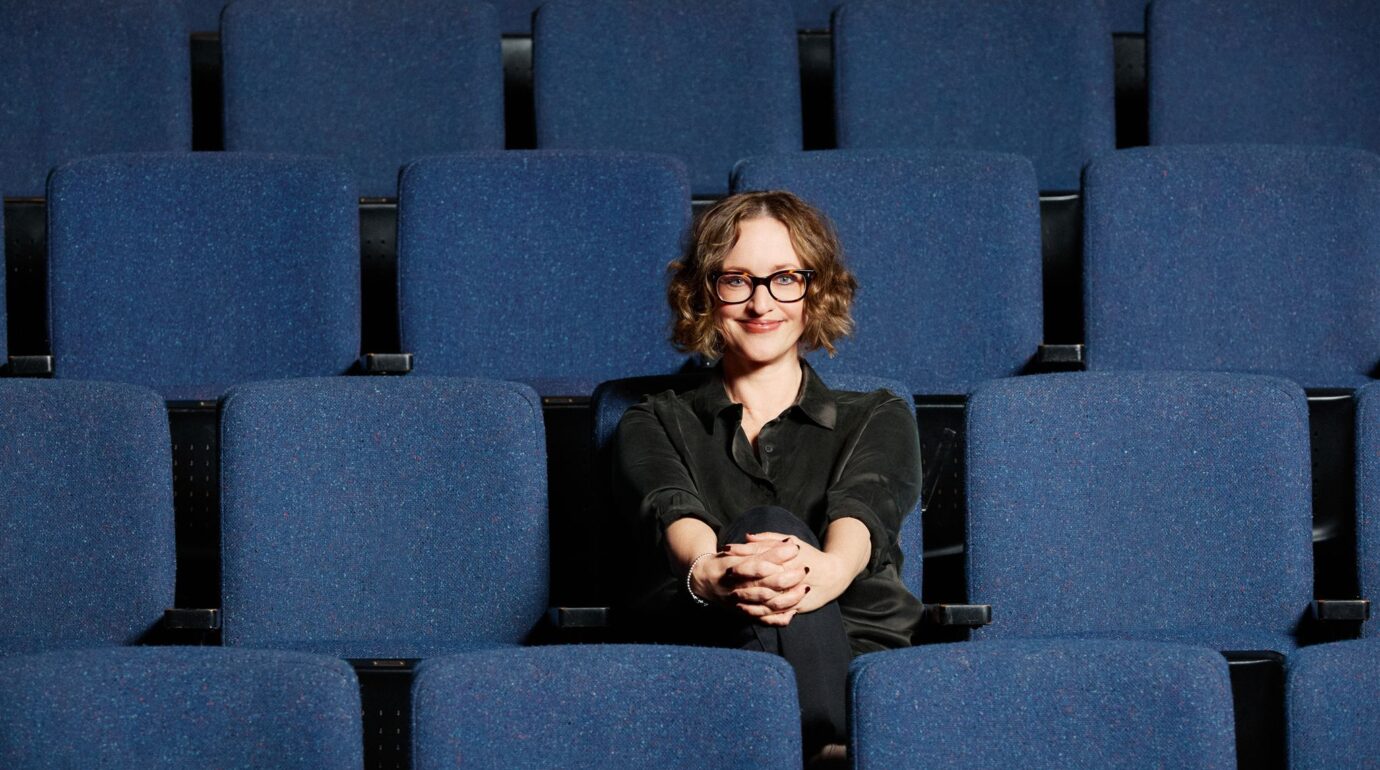
ROB WEINERT-KENDT: Congratulations, Jessica! When do you officially start on the job?
JESSICA STONE: Officially, I began in November, but it’s a sort of three-pronged onboarding process. I started as a sort of consultant, and now I’m in sort of Phase Two—some of that is about my youngest son. He is a junior in high school, so I couldn’t uproot him and bring him out West, you know, for his final year in high school, and I don’t want to miss his last year by taking myself out West and not being with him. So I am Zooming like it’s 2020, in meetings all day, and I’m back and forth from the East and West Coast as I navigate this personal transition with parenthood, and this professional transition, which is new for me and exciting, but it gives me a minute to get my sea legs.
In the video you made about getting the job at La Jolla, you referred to the “infuriating, invigorating, and beautiful path of acting.” Could you talk a bit about why you felt like you wanted to move beyond acting?
I was very, very lucky. I worked on and off Broadway, and I worked all over the country in regional theatres, and I worked in television. I had a little stint in the ’90s where I went from one failed sitcom to the next. Then I hit my 30s and met my husband and we started a family, and I still was working, but it wasn’t as compelling to me. I had more opinions than other actors seemed to—about the light and the set and character development and the tone of a scene that didn’t match the tone of another scene. And I was feeling the downtime between acting jobs was less interesting. So I started asking friends who were directors if I could just sit in on rehearsal, just to be part of the process, not even because I thought that I wanted to direct; I just wanted to be in a room. I started assisting Nicky Martin and Joe Mantello and David Warren and Chris Ashley.
And then the Forum gig came along, courtesy of Nicky Martin.
Yes, I got bit by the directing bug. I really loved all of the challenges, all of the collaboration and conversations with all the designers. There was one moment in my very first tech, where an actor had a question, and I looked out to the audience to the director to answer, and I was like, “Oh, that’s me!”
Though I had worked a lot and loved my time as an actor, the directing work really started to kind of fall in my lap. I got an agent very quickly, who is still my agent to this day, who I adore. I started to be too busy to even act. There was a time I didn’t call myself a director for a couple of years, and then there was a moment where I realized I actually didn’t want to act anymore. I don’t miss it. I miss the camaraderie a little bit, but this job is so much more gratifying to me.
So I directed all over the country: musicals and plays and Shakespeare and Shaw. It was a great way to work and feel inspired and raise little kids, because I could work summer vacations and school vacations around the gigs that I accepted, and my kids would come and visit and I just loved it.
Did any of your regional gigs include La Jolla?
No. As a matter of fact, I directed at the Old Globe five times, so I really love San Diego. I think of it as a little home away from home, actually, because I worked there so much, and my kids were out there so much. [Artistic director] Barry Edelstein gave me the opportunity to direct my first Shakespeare. It was also the first time I directed in the round, and the first time I directed outside. That was a very important training ground for me, and I really fell in love with the San Diego audiences. It made me sad over the years, as the pandemic hit and Elephants kept me so busy; every now and again, I’d be having dinner with my husband and kids, and we’d be like, “Remember San Diego?”
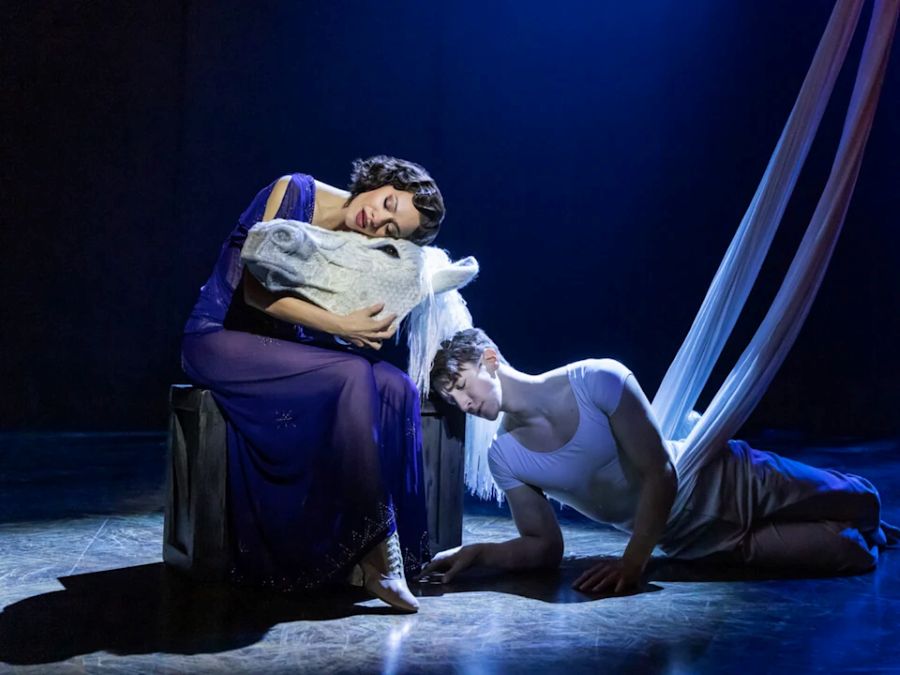
What made the leap to artistic director your next move?
You know, mentorship is so important to me. Williamstown is like a big teaching hospital, and I care a lot about that. As I tell my own story, it’s not lost on me that it took a handful of people who were like, “Let me give you a shot—I know you’ve not done this before, but let me give you a shot.” There’s something so important and beautiful about that. There have been people in my life who have said, “That’s too big for her,” and then there have been people in my life that have been like, “Dream away; let’s hear it.” And I always want to be the person for somebody else that tells them to dream away.
So is this the kind of role you dreamt of?
It was a similar kind of community nudge. Chris Ashley was one of the first people that I assisted. We would step out of rehearsal, and he would say, “Thoughts?” He wanted to know what I thought about what I witnessed, and he took it in. When this opportunity first came along, I was on my way to check in on the Kimberly tour, and I got a text from Eric Keen-Louie at La Jolla, who is the producing artistic director and is invaluable to the Playhouse—he has an incredible eye, incredible taste. He texted me, “I’m just saying: La Jolla is a nice place to live,” and showed me the announcement that Chris was leaving. I was kind of confused and dismissed it. I was like, “I am entrenched in New York. I’m a freelance girl, and I have my kids in college. I don’t speak institution. What are you talking about?”
But people kept sort of nudging me and saying, “Hey, have you considered this?” They kept sort of poking at it. And one day, Rick Elice, my collaborator on Water for Elephants, said to me, “Have you ever really had an artistic home?” And I said, “I have in fits and starts: Williamstown for a time, the Globe at a time.” And he said, “What a lucky thing to have; I really yearn for that myself.” And I thought, this isn’t actually about me finding an artistic home for myself, although that would be wonderful; it’s that I have the opportunity to provide that home for others. As you know, the Playhouse has such a reputation for new work, which is really exciting to me, but new work is so vulnerable. It really is like you’re caring for somebody else’s newborn. The idea that I could be in the trenches with teams of artists at any given time and offer support and feedback, and that I could be a part of that vulnerable, very beautiful process—I suddenly thought, I’ve been looking at this all wrong.
So I started to dip my toes in the water and do a little research, and then I started understanding that when you are a freelance director and you direct a piece, you have one conversation with an audience over the course of a run, over the course of an evening. But if you’re the artistic director, you have a conversation with an audience over the course of a season and over the course of years, and you have the opportunity to bring theatre to people in their community. You have the opportunity for learning and engagement. You know, I read these production reports from the POP (Performance Outreach Program) tours, and it’s so moving, these artists going to schools and hearing about the talkbacks with students. You can be a part of something that’s actually vital for the fabric of a community. As I started doing my research and doing initial interviews, I thought: Not only do I want this job; I think I have to have this job. So that was the pivot.
 One thing that’s impressed me about La Jolla is that, as many shows make it from there to Broadway, so much of the work is locally focused. You mentioned the POP Tour, but there’s also the Without Walls (WOW) festival of site-specific theatre, the Latinx New Play Festival. Those are part of Chris’s legacy, right?
Yes, and it’s really impressive and humbling. I’m glad you mentioned the WoW festival; I just experienced it for the first time two weekends ago, and it’s arguably one of the coolest things the Playhouse does, and that Chris spearheaded. I saw this piece, Tea Party at the End of the World, where this woman invited maybe 35 people into a room and served us tea, and talked about the history of tea and these particular pots of tea, and somehow wove a story of her dad getting cancer and mortality into this tea party. It seems inconceivable and incongruent, but it was the most moving piece of theatre, and that cannot happen at the Atlantic or on Broadway. And right now, more than ever, gathering people together live in a space and asking them to experience something, and asking them to drop their walls, is maybe the most important thing we can do for each other. You can’t have that without the WoW festival, without these kinds of immersive, interactive festivals that are asking us to drop our preconceived notions of what an afternoon of entertainment is supposed to be. I’m so excited by that.
Having been a jobbing actor and freelance director yourself, I wonder if you have thoughts about the push in recent years for a more just playing field and better working conditions.
Having lived on the road, and having a husband who has lived on the road, I care a lot about artists feeling safe and comfortable and at home when they arrive. I don’t think anyone quite understands how demoralizing it is to pack your suitcase, arrive at a place that’s not the greatest, and have to buy a new thing of salt and pepper, to stock yet another temporary kitchen from the ground and having living conditions that aren’t ideal. So I do care about something as unsexy as housing.
Beyond that it’s complicated, because everybody’s got different things that make them comfortable. So it’s not as easy as just giving a condo a facelift. I do know how unmoored one feels when trying to start a new job, and so I care about that. In terms of the topic of diversity in theatre, I care a lot about programming that enables audiences to see and hear their own stories. It’s also about going into the community and meeting people where they are, and offering them stories and pieces of theatre they can latch onto and feel inspired by and feel inspired to then make theatre a habit. And then you want your staff, your creative team, your company management in general to reflect what the world looks like and what the country looks like.
So it is a multi-pronged approach, and we are nowhere near where we need to be—and by we, I mean the world, America, not just La Jolla. It is a conversation that we have to have daily, weekly, monthly, to always be better.
A number of artistic directors these days are producers, but you’re a director. How much will you get to direct at the new job?
It’s part of my contract that I have to direct one thing a year. It’s funny, I’m reading as much as I can, meeting with as many writers and directors as I can, and I’m just amassing a list of things that I love. I said to Eric and Debby Buchholz, our managing director, who’s spectacular, “You know, I could probably program the next three or four seasons right now, because I have so many things that I love.” But I can’t direct two things in a season for the first couple of years, so I’m learning kind of the cadence of it all. I am going to do one thing a year, and I look forward to connections with folks in New York, connections with the folks in San Diego. They’re not mutually exclusive, but sometimes it can be a different itch that you’re scratching—I look forward to doing a play that I love, and not worrying about any kind of hustle or spotlight, but just beautiful writing and actors, and to just let it be for that moment in time in San Diego. I look forward to that.
By the way, my oldest is also a high school junior in New York City. Where does your kid go?
He’s at LaGuardia, and he’s a jazz guitarist. Raising teens in New York is not for the faint of heart!
Rob Weinert-Kendt is the editor-in-chief of American Theatre.