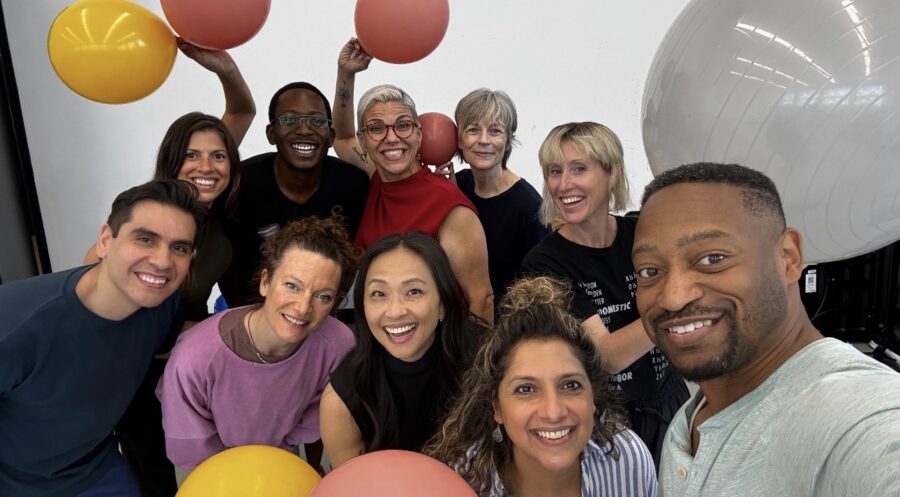
One of the most rewarding parts of my career as a high school theatre educator is how many of my alumni have stayed in contact with me long after they graduated. I frequently check in with my former students to see how they are doing and what aspects of my teaching have helped their transition into studying theatre at the college level and beyond.
As a part of my summer reflection in July, I use what my former students share with me to revisit and revise my curriculum before the new school year starts. I feel a great sense of responsibility as their teacher to ensure they have the tools to pursue their passion after high school, since many of my students discover their passion during high school and decide to study it in college.
As a result of those conversations over the years, I have made changes to better support our student artists. At my school, Miami Country Day School, we pay for students in the theatre program to take headshots every year so that each student has current headshots that we use both in-house and which they can also use to submit to colleges, auditions, etc., on their own. I also created a one-person-show festival where students devise their own plays and perform and produce them in their senior year. And I developed TV and film courses and a film festival, where students work with a professional production company, where we hold master classes with professional directors, casting directors, producers, directors of photography, etc., to film scenes for their reels.
More recently, we created an artist-in-residence program, in which students work with industry professionals, complementing the multiple master classes we hold each year with working actors, choreographers, vocal coaches, theatre directors, and film directors.
This summer, I had the opportunity to connect with past students who had recently graduated from their colleges and universities. In our conversations, we discussed the most valuable lessons they received during their training at their respective schools—and what they wished they’d been taught. Those conversations also highlighted topics that need to be covered at the undergraduate level.

Nina Lardi, New York University, BFA Drama, class of ’26
“Everyone tells us this industry is about connections, but no one tells us how to foster properly and tend to them without being too ‘needy.’ It is one thing to be lucky enough to have met certain ‘important’ people in the industry, but at what point do you reach out?”

Renee Mandel, Long Island University Post, BFA Musical Theatre, class of ’24
“Something I wish they had taught me at school is the Business of Acting. Recently, I worked with an audition life coach who helped me figure out how I want to market myself. Things like that I wish I had learned in school.”

Pablo Pernia, New World School of the Arts, BFA, class of ’21
“The most valuable things I learned in high school are that theatre jobs fall into one of three categories: for the love, for the résumé, or for the money. To avoid burnout and continue on your own artistic path, you always want to aim for jobs and opportunities that fulfill two out of the three, and if we’re lucky, all three.” ( I did teach him this, but I need to give credit where credit is due. I learned this from my professor, Tracey Moore.)
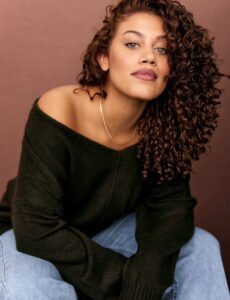
Amaris Rios, Emerson College, BFA Musical Theatre, class of ’24
“Learning the craft is important, but having a skill you can monetize keeps you in the game, like video editing, sound design, lighting design, headshots, and résumé building. Have a skill that keeps you in the industry even when you’re not acting. This industry is expensive in time and money, so learn a skill that will make you an asset in any room.”

Christopher Cheng, American Musical and Dramatic Academy, Certificate in Musical Theater, class of ’19
“Something I wish they had taught me in school is the importance of reading through and understanding the various contracts. What protections do we as actors have based on our status as non-union or union actors? While booking any job is an incredible achievement for any actor, it is important to know every detail in a contract.”

Gabriela Abramowitz, The University of Miami, BFA Musical Theatre, class of ’25
“In school, you may be cast in roles you would never be cast in professionally, because educational theatre is simply about learning, not the industry. That freedom is a gift. At the same time, understanding that professional casting comes with different realities would have helped me better appreciate those opportunities and prepare for the industry ahead.”

Michael Port, USC, BA Theatre with an emphasis in Acting, class of ’26
“I’m currently creating my own short-form social-first series, and there is a lot more to learn about the process and the art form in general. I think film and acting schools can start to integrate this as an option for those who may be interested in using the internet to our advantage as young people growing up in the digital world.”
After hearing from my former students, I was curious how professors are addressing those concerns and how it’s shaping their teaching today. I am lucky to have made such incredible connections this summer with educators whom I truly respect at the National Alliance of Acting Teachers, Teacher Development Program, who are also reflecting on what they wish their own training had better prepared them for, and how they can address those gaps in their teaching. I am happy to report that many of the concerns my alumni shared are being addressed in their practice.
Julia Devine, Assistant Professor of Practice, Directing/Acting at Virginia Tech: “At Virginia Tech, I prepare artists for multi-hyphenate careers. I’m always creating new work in theatre and film, which means modeling for students how to stay open, curious, and attentive. I look out for professional development opportunities in teaching, directing, and acting. And here’s one big gap I’ve filled: Since I’m passionate about financial literacy for artists, I received my Accredited Financial Counselor designation to help artists build sustainable lives. That’s the little cherry on top.”
Joy Osmanski, Assistant Professor of Theatre, Screen Acting at UNLV: “Nate Bynum had the prescience to create the Screen Acting department at UNLV in the 1990s, and it absolutely delights me to be a direct conduit of information from the professional set to my classroom. Because the industry is constantly shifting, I’m able to adapt my lived experience to pedagogy that is, hopefully, relevant and applicable. The Hollywood environment can feel made of an insurmountable number of locked gates. My goal is to open as many of those gates as possible for my students.”
Lisa Brescia, Chair of Performance & Associate Professor of Acting, Stephens College: “Thankfully, as an industry professional, I can speak from personal experience. Additionally, throughout their final year of training, we introduce and explore a range of online resources for students (and graduates) to seek representation and submit self-tapes for professional opportunities at the local, regional, and national levels in theatre, film, and TV. Also covered in our training are two helpful books regarding the business of acting. These are From Craft to Career by Merri Sugarman and Self-Management for Actors by Bonnie Gillespie. Furthermore, it is critically important for us, as instructors, to stay well-informed about how the industry is changing; when we have questions, our professional relationships and connections allow us to find answers for students and alumni.”
Jessica Jensen, Senior Lecturer of Theatre, Aurora University: “I have pursued independent research and studied the work of a wide range of theatre practitioners. I have also connected with former teachers and mentors to discuss effective strategies for scaffolding advanced practices to meet the needs of my student population. Most recently, I attended the National Alliance of Acting Teachers’ Teacher Development Program, which not only equipped me with the practical teaching tools but also connected me with a vibrant community of acting educators from across the country. That network will be an invaluable resource and one that I can connect to for collaboration, support, and pedagogical curiosities.”
Shaheen Vaaz, Professor of Theatre and Head of Performance, Department of Performing Arts, Los Angeles Pierce College: “As an educator and director, I’m very demanding of actors’ thinking, using logical inquiry, reasoning, and their intellectual independence. While pushing them to dissect and analyze the script and the character, I also emphasize the belief that each actor is enough and that within them lies everything. Mental acuity combined with a deep sense of self and wholeness—that’s the ticket to greater, richer work.”
This is not a goodbye, but more of a see-you-later, as this is the last education column I will be subbing in for Allison Considine. It was an honor to share my summer with you! As you spend the rest of the season on some much-needed self-care, I invite you to join me and these incredible educators in reflecting on our practice. Hopefully, you get invited to a coffee date with a former student who will share their wisdom with you. To any of my former students who happen to read this column, thank you for making me a better teacher. Let me know when we can schedule our next chat. Coffee is on me!
-Cristina Pla-Guzman
✏️ Around the Web ✏️
- If you are looking to feel inspired, I recommend my career coach, Melissa “PK” Tonning-Kollwitz! Follow PK on Substack to listen to their podcast, It’s All About the Process, and check out the Monologue Database.
- I am so looking forward to covering the New York Film and Stage Festival later this July, so I loved reading this New York Times article on Plays, Musicals, and Theater Festivals worth traveling to this summer.
- I am also so excited about Lin-Manuel Miranda and Eisa Davis’ Warriors musical that will open on Broadway in 2027.
- Make the most of summer! Look at this article from the Scene for self-care tips for theatre teachers.
- All theatre teachers know that we are constantly looking for new material for our students; PerformerStuff.com is a great resource offering audition materials, songs, and monologues.
- Need some new classroom resources or ideas? Check out this learning center from the Educational Theatre Association. Plus, here’s some great professional development.
- I am glad I discovered these podcasts that have really taught me a lot about the “business” side of show business, such as That One Audition and Audrey Helps Actors.
- And around social media, here are some great accounts I follow that you should check out:
 On Social Media
Theatre educators: What do you wish your training had better prepared you for? How have you addressed that gap in your teaching?
AT Readers Respond:
Wendy Bable
Being from a rural, working-poor family means you’ll likely be behind your peers your entire career, if you can afford it at all.
Tom Burch
I think back to my undergrad and wish more had been covered about what it’s like to be in the industry, and the ancillary/adjacent job opportunities that exist with a degree in Theatre. As a college professor now, I try to focus some of my time on that for my students.
Marshall Jones
Professional development is key because the industry has evolved so much, even if you graduated 6 years ago in pre-Covid times. In order to address the needs of our students to navigate the world of professional theater, we must remain aware of constant changes in the field.
Jennifer Polansky
I don’t think we do a good job training teachers how to juggle all the administrivia. And nobody talks to brand new teachers about how important that stuff becomes. You can be amazing at directing, have huge participation after-school, be wildly competitive, and if you can’t get the counselors on your side, get your principal to like you….you get stuck. Negotiating the classroom doesn’t stop at the door to the classroom.
John Tourtellotte
That if you’re going to run an educational theatre program in the K-12 system, it’s not ONE job – it’s THREE:
- Teach Theatre Classes
- Direct Productions (usually after school)
- Program Management
And if you don’t get a good handle on doing #3 first, you’ll have a much harder time being effective in Jobs 1 and 2. And very, very few programs in the country (with the possible exception of programs that have degrees specialized in teaching Theatre) have any sort of funnel of training to prepare folks for #3. Also, seconding what several folks have said – many Theatre programs don’t teach pedagogy, to say nothing of teaching how to manage the extravagant amount of administrative tasks that are inherent in the K-12 classroom of today.
Melissa Toomey
A lot of new plays are not “American realism,” so applying acting techniques from that era of the theatre (Strasberg, Meisner, Adler, Stanislavsky) dogmatically can be limiting. Having a broader approach that includes more experimental techniques makes more sense for approaching contemporary plays. Generally, I think acting training should include more current texts so students can understand what kinds of work are being written NOW.
Add your response here.
From the Archives
The Path: How 6 Actors Learned Their Craft
I really enjoyed this 2024 article exploring the best training to reflect human behavior onstage, which can take as many forms as life itself.




Support American Theatre: a just and thriving theatre ecology begins with information for all. Please join us in this mission by joining TCG, which entitles you to copies of our quarterly print magazine and helps support a long legacy of quality nonprofit arts journalism.