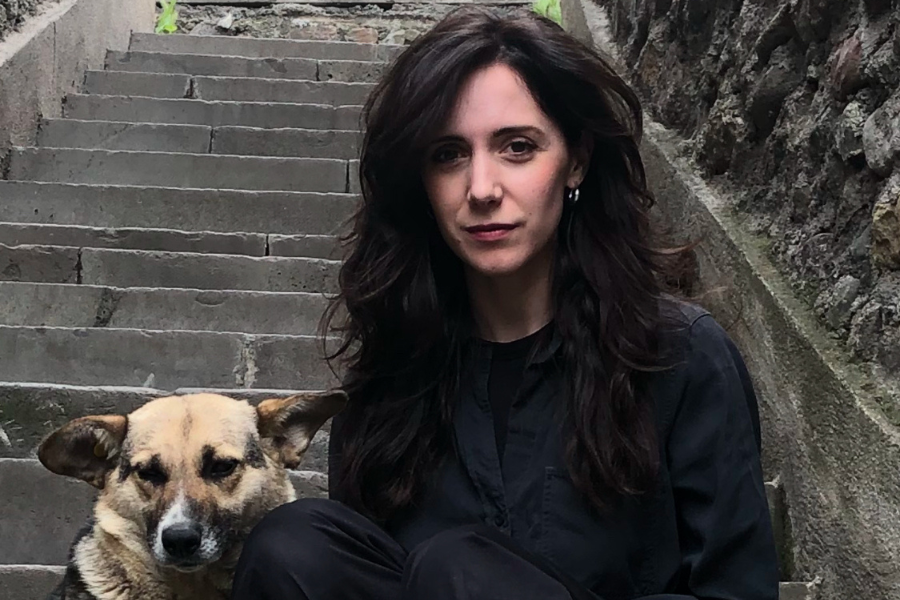
Playwright Talene Monahon talked with Andrea Martin, the Tony-winning actor who originated the roles of Markrid and Rose in Meet the Cartozians, about the play’s development and impact. This is a longer version of an interview that appeared alongside the full playscript of Meet the Cartozians, which is published in the Summer 2026 print edition.
ANDREA MARTIN: How did this play come about? I think readers would like to know, because every time I explain the play to somebody who hasn’t seen it, they’re immediately attracted to the historical component of it.
TALENE MONAHAN: I started thinking about Armenian identity and how it intersects with whiteness during the summer of 2020, when I had a lot of time on my hands. There was this big reckoning with racial justice and I was thinking a lot about colorism. I got into sort of an argument with my mom about whether her parents, my Armenian grandparents, were white. I was like, “Of course they’re white.” And my mom was like, “I don’t know that their experience was of being white people.” Then I remembered there was a court case that settled this question, so I Googled that, and lo and behold, the entire transcript of this 1925 court case exists online. It’s really long, and in some places really boring, and in some places really fascinating. But the whole thing is sort of ugly and strange; the way people are talking about race and ethnicity and identity in the transcript is bizarre to a modern ear. And even though they don’t speak a lot in the case, I was really struck by the testimony of Tatos Cartozian and Hazel Cartozian. Then I read that there was a brother, and that he didn’t testify. I got really wrapped up with who these people might have been, and what it meant ultimately that they won the case.
At the same time I was going through this massive transcript of this court case, I was watching Keeping Up With the Kardashians for the first time. I found myself jumping back and forth between the two—the court transcript and the reality show—and thinking about Armenian American identity then and Armenian American identity now. That’s kind of how the idea for the play formed in my mind. I thought about some of the most famous Armenian women—and how I don’t know that they could exist in the way they do in society right now if this court case hadn’t gone the way it did one hundred years ago. I was thinking a lot about the legal privileges that whiteness grants, but also just the weirdness of the Armenian American identity, being sort of Christian from the Middle East, and from this really small country where people are like, “Is that Albania?”
I never thought anyone would produce the play. I was sure that it was so niche; there are so few Armenians, and no one’s gonna care except for me. In some ways, it felt like a writing exercise to debate these questions for myself. Every time I sort of felt like I understood something, then I started arguing with myself about it, which I think is why the characters are so confused in the play. In some ways, it felt like a writing exercise to debate these questions for myself. So it’s been heartening to feel like so many other communities relate to the play—that it’s not a uniquely Armenian experience. What I’ve learned is that this experience I had worried was too niche ended up being the play’s superpower. There is something about the kind of unknown, mysterious factor of Armenian identity in American society that allows our community to be a pretty ideal blank slate on top of which we can discuss these thorny questions of whiteness and the way it makes people behave. I ended up being like: It had to be the Armenians!
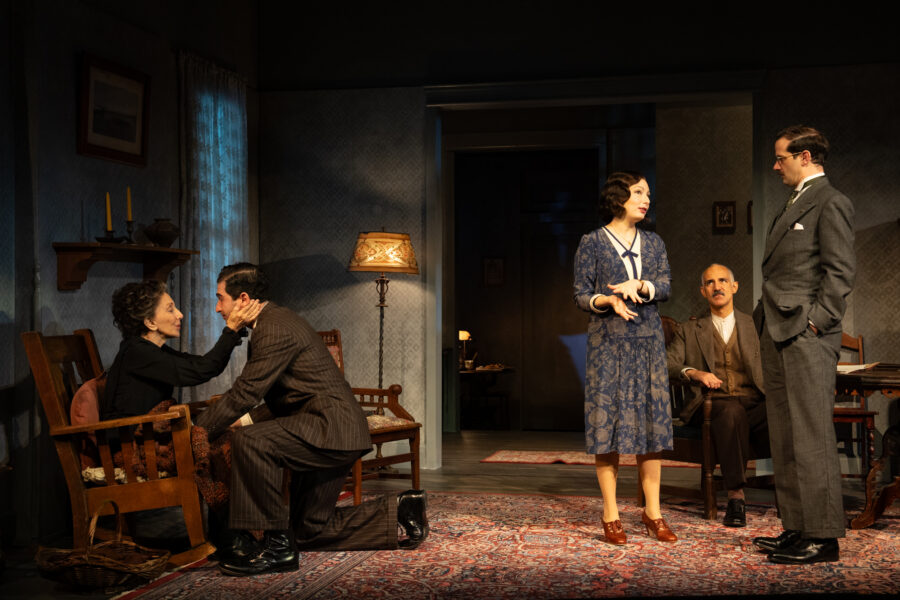
Well, Armenians are so dispersed around the world that, at the core of every Armenian is that we’re just looking for somebody to connect with. Your play did that. But you just said something I don’t think is true: I don’t think the characters you created are confused. I think what made them so profoundly interesting is that you had each person examine two different sets of reality. It made it so rich, to be able to play a character that has beliefs and is very adamant about their beliefs, but also can learn at the same time another belief. I think it was so dimensional.
When I say confused, what I mean more is that I’m not really interested in writing a play that delivers a single answer or a clear message. So maybe “confused” is a less generous way of describing what I was really going for and trying to work out, which is that there are many different perspectives on what it means to be a white person in America and what that experience is, and how it relates to a person’s religion, to the way a person presents physically, to a person’s citizen status. Even within a family, there can be different experiences. I don’t have an answer about what makes a white person. I think that is a question that we are still struggling to understand, and the play is not designed to answer that question.
But it’s designed to have people think when they’re leaving the theatre what it means to be white. I don’t think people left and just said, “Gee, that was really good. Anyway, should we go to the Smith?”
I hope so. That’s the dream. It was very moving to have people from different ethnic backgrounds relate to the conversations in the play; that was really exciting to feel. But also, having Armenians in the audience was so great because they were so enthusiastic—the thing about Armenians is we really hold this amazing duality:we are so starved for representation, and also we’re obsessed with ourselves!
Are we doing that for posterity—as a way to keep Armenians alive?
I don’t know. There’s so much pride, sometimes too much pride. Like, calm down. Armenians will tell you that they invented everything.
Well, I do love that they invented the Armenian alphabet. And they invented a pot.
I have to discuss going to Armenia. This is before I knew you. I was in Debet, in the countryside, and there’s this incredible school for Armenian children in a very rural town, this very well-resourced school, and there are all these Armenian children learning there. I walk in, and there’s the Andrea Martin Auditorium.
That is because of the Children of Armenia Fund, Garo Armen’s organization, which has transformed villages that were abandoned when the Soviet Union left. Garo has really given Armenia a future, because he’s educating children that wouldn’t have been educated. So I love Garo, and I love Alice Saraydarian, his beautiful partner. When they said they were going to name that auditorium after me, I’m like, “Oh my God, that’s better than a Tony.”
I’m curious to hear more about your relationship to Markrid and your relationship to Rose, and what it was like approaching two different characters in one play.
Well, luckily, I knew intimately the two prototypes of the characters. My grandmother, for instance, had come over from Turkey, and so I was very familiar with the person who feels misplaced, displaced, yet still has so much pride, and for whom it’s difficult to assimilate. I understood and had great affection for that woman, because I love my grandmother. And then, Rose is like many of the Armenian women I know today, probably my age, who are culturally involved and in everybody’s business. She knows the answer to everything and is not afraid of grabbing you by the arm and pushing you into another conversation—just aggressive and stubborn and loud and proud. These women I have great affection for too.
Do you have a favorite line or a favorite moment from the play?
Oh, God, I’ll probably start crying when I say it. The moment in the first act when the lawyer wants to know if I was married, did I have a husband, you wrote this beautiful, maybe six or seven lines, where she couldn’t give in to the great tragedy that he was no longer alive. She couldn’t help herself from having the memory of watching her husband beheaded, but she didn’t break; for the sake of her family, she had to remain sturdy and strong, and had to say, “My husband, yes, he makes things, he builds things.” She couldn’t allow herself to fall apart. I think that tells a story, in just those few lines, about so many women who couldn’t allow themselves to fall apart and had every right to, seeing their husbands, their children, their friends raped, beheaded. I mean, this is their life, but they couldn’t crumble. You captured that in that moment. It was so beautiful. So I remember that; thanks.
That speaks to this challenge I felt in writing the play, which is knowing that a lot of the audience wouldn’t know what the Armenian genocide was and hadn’t heard of it, so I had the burden of explanation. But at the same time, even though this family had been personally affected by the genocide, I felt strongly that they would never speak about it—it was culturally forbidden, and also it was still too soon. So one of the challenges I was reckoning with when I was writing Act One was, how do I convey that these are people who are carrying an unimaginable amount of trauma, without them ever having a conversation about it? And then it was interesting to contrast that with the second act, several generations removed from the genocide, which centers on a group of people who are talking very freely about trauma and the way they personally feel the effects of experience the genocide, talking so freely about this event that happened to their grandparents and their great-great-grandparents. I’m interested in the way we talk about these things, and how it changes over time as we get more removed from it generationally.
You know, you can be physically removed, but I think if you’re an Armenian, the reality of the genocide is in your body. I think that you’re just one beat away from expressing what that feels like, even if you’re not talking about it every day. I think it’s really passed down through generations, the pain. There’s a guilt, and it’s unresolved. I always think of Armenians constantly trying to defend themselves; maybe that’s why they’re so loud, to point out, “I’m strong, I can do this!” It’s complicated.
Another thing I thought a lot about was this idea of when we as assimilated Armenians can sort of opt into identity and when we can’t. Everyone in the family in the first act has an accent; they come from this foreign culture, and are actively working to assimilate, to sort of tamp down on these things that define them culturally, which in some ways is a very tragic process. I think a lot about this in my family, because my family today is obsessed with being Armenian. And a lot of that is because of things that have been passed down from our grandparents and the experience of growing up in a pretty tight-knit Armenian community. But there’s also this sense of…I feel like I have the privilege to opt in or out at any time of this identity on sort of like a superficial level. I get to be like, I’m going to look up a traditional Armenian recipe, or I’m going to get some Armenian jewelry, and no one’s going to “other” me for doing that. It’s going to be this fun sort of exotic thing that I do. And that is a privilege that really comes from being several generations into assimilation–which is related to the legal privileges gained from this case.
I also feel like we had different experiences growing up, because there’s this big Armenian community outside of Boston, so I had so much of my Armenian family right there in the area. We lived five minutes away from my grandparents, and we had Armenian grocery stores; I was baptized in an Armenian church, I went to sleepaway camp and Armenian nursery school. My mom was in an Armenian women’s club that met once a month. So it was a big part of my community and culture. My sense is that there was less of that up in Maine, where you grew up.
Yeah, no, there was none of that. The most important thing was to try to be not Armenian. My father’s goal was to assimilate. His father changed his name. I used to do that joke: “My grandfather’s name was Papazian, but he saw the name Martin on the side of a truck, so he took the name; he also took the truck.” That would get a laugh. Why was it so important to assimilate? Because when Armenians came here from Turkey or Armenia, what they had witnessed was so painful and grotesque that I think to start fresh in a new country, it was imperative to let go of all of that. I don’t know how people could hold on to the Armenian culture when all they saw was pain and all they all they wanted was safety, right? They escaped out of necessity, so I think they felt they had to assimilate or else maybe something terrible was going to happen to them.
I know we’ve talked about how this process felt different and new to you. Looking back, what do you think your process was on it, and how do you feel about it now?
I don’t know if you know this. You and I did a reading at Lincoln Center. I thought the play had more than I could even understand in one reading, but I was so drawn to it, and to your enthusiasm and kindness and youth and adulation for me—which really is the only thing that I cared about. [Laughter] We finished it, and I’m like, “Oh my God, she’s written this potentially really funny part, and I’m really frightened that I’m going to do it like I played the character in My Big Fat Greek Wedding.” I was really concerned that it was going to be over the top, and I didn’t want that. So I asked my agent if he would introduce me to David Cromer, and the first thing I said to him was, “If I do this, please don’t let me be Aunt Voula in My Big Fat Greek Wedding.” I’m sure he would have liked something like, “How are you? It’s so nice to meet you.” Anyway, he was fabulous, he said that’s not at all what was expected of me. That gave me confidence that I could do it with him at the helm, and that I wouldn’t lean on things that I’d known had worked in the past.
And you really didn’t. I think we all had to sort of find the line in the play between allowing it to be funny, but never at the expense of how real people behave.
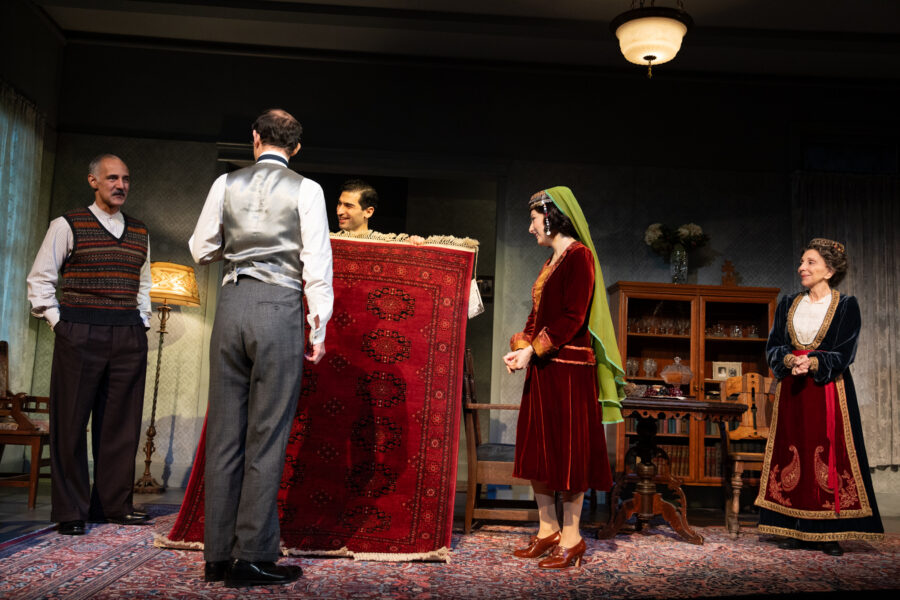
I’ll tell you a big thing that surprised me, and also Cromer, was that we both had an idea that the first act was going to be really difficult to figure out, because we had people speaking Armenian, with different degrees of accents, a huge amount of legal exposition, and it was set in 1924, so there was a formality to it. There were just a million things that felt really hard. And we both felt that Act Two was going to be so easy and was going to play like gangbusters, and if we could just get the audience to Act Two, we would be okay.
It was really the opposite; the big challenge once we started previews was figuring out Act Two, whereas Act One, the way Cromer crafted it, was so successful that he felt that the audience came back and got mad because they were like, “Where’s that nice family? Who are these people talking about their gluten sensitivities?” Audiences were really kind of mad, and we had to win them over and show them that these were people who were also worth caring about, even though the stakes didn’t feel as high. So it was a real process, landing Act Two tonally, and also cutting it. Allowing Act Two to sing was about figuring out where to cut and being really sensitive to audience attention spans.
You had a beautifully exotic first act that wasn’t very long and whetted people’s appetite. You gave them characters they’d never seen before.
And then I took them all away!
Just as the audience was sitting back, saying, “Oh, wow, and look at that head gear, and that costume, and wait, this Armenian girl is falling in love with a lawyer, and what is that going to be like?” Then all of a sudden, they’re uprooted, and now you’re in the modern day, with loud Armenians talking about the Kardashians—it’s a big shift. But here’s the good news: You succeeded. People have never said words to me as kind as they did after that show, like, “This is the best play I’ve ever seen,” or, “This the best work you’ve ever done.” I’m like, “Really? I’ve done so much.” [Laughs]