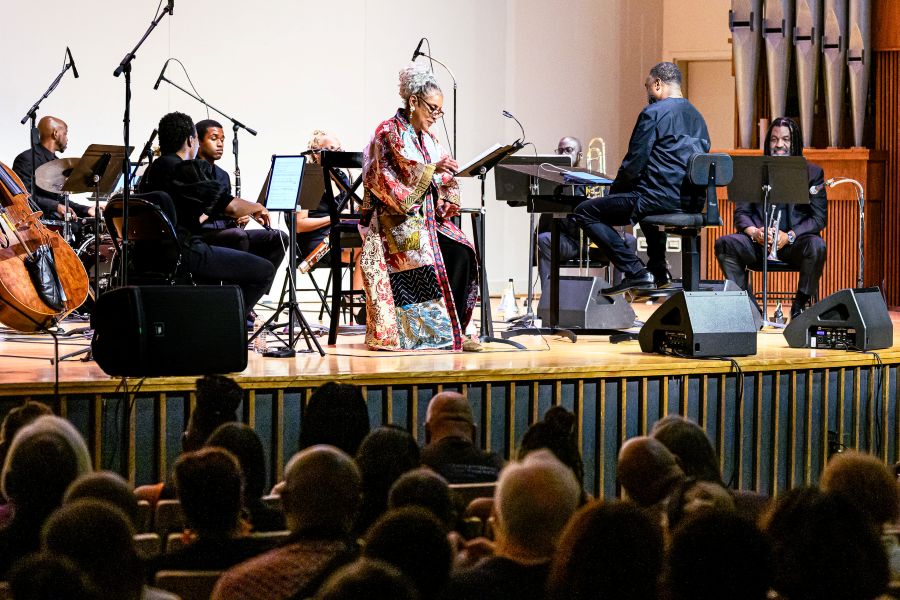
Two years ago, actress and producer LaChanze posted a video on Instagram of herself, stage manager Lisa Dawn Cave, and performer Alton Fitzgerald White walking to the opening gala of North Carolina Black Repertory Company’s International Black Theatre Festival in Winston-Salem, North Carolina. Adorned in purple and gold, LaChanze swung the camera around to show a spirited marching band welcoming guests as they entered the Benton Convention Center. She turned the camera back on herself, flashed a beaming smile, and said, “I love my people.”
Prior to seeing that video, I wasn’t familiar with the IBTF. But I instantly knew that, as a theatremaker myself, it was imperative for me to attend the next festival, which ran July 27-Aug. 1. After a few days on the festival’s holy ground, it dawned on me that the IBTF is more than workshops and plays. For 37 years, it has also served as a gathering for families, friend groups, and organizations to be (re)united by the power of theatre and storytelling.
This year’s IBTF kicked off with a royal gala, with guests adorned in shades of purple amid elegant matching decor. I had the pleasure of dining at the Visit Winston-Salem table with influencers and creatives who came to town particularly for this occasion. With the exception of the Visit Winston-Salem team themselves, for all of us it was our first time attending the IBTF.
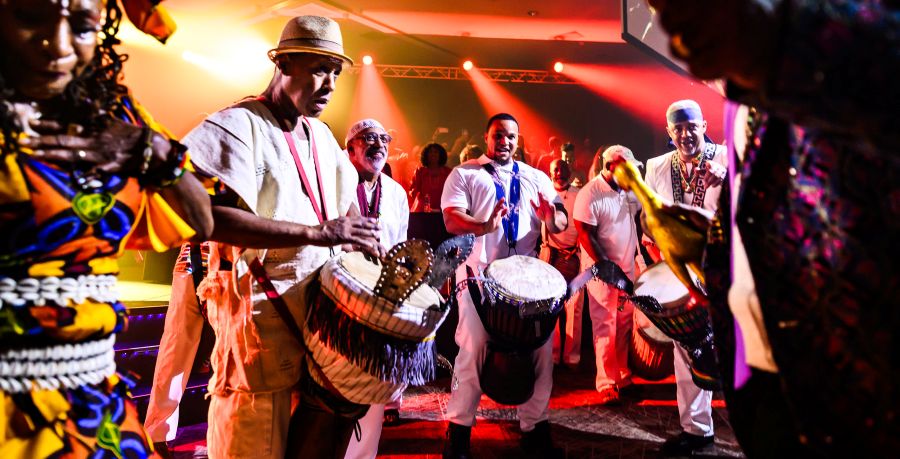
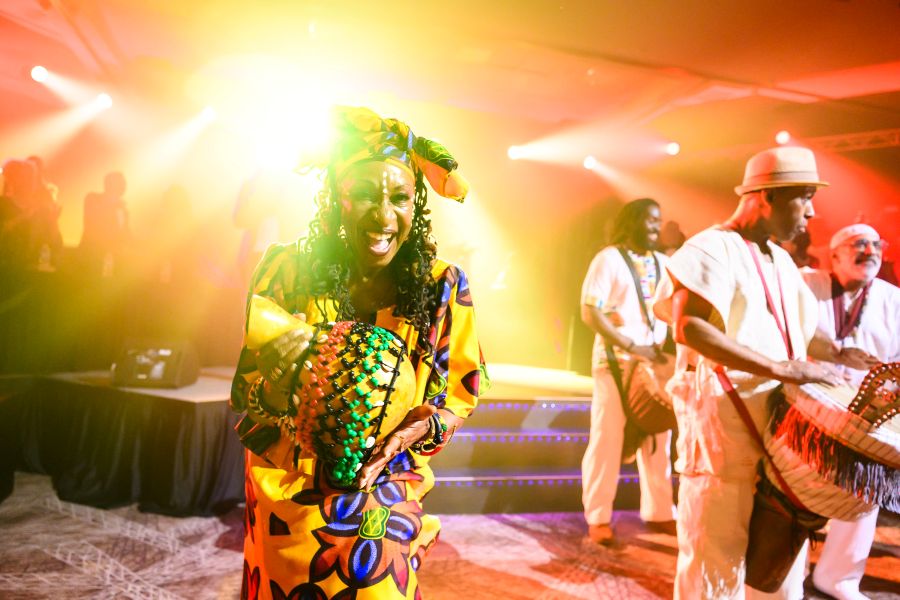
On multiple occasions, we were encouraged to “get a good spot” from which to capture the opening. I was oblivious to what they were speaking of—until I heard the sound of bold drums. In some West African cultures, it is tradition to welcome guests with drums; many believe drumbeats invite the ancestors into the room. Suddenly a sea of phones went up in the air to catch the most exhilarating African drum performance I’ve ever witnessed. (To be honest, I feel strange referring to it as a “performance.”) A performer wearing a Falui mask led the way, as men with djembes and women with shekeres followed down the center aisle. Though this was my first time attending the festival, it felt like opening with the drums was more than a mere biennial tradition; it is also a way to remember the spirit of the late founders of the IBTF, Larry Leon Hamlin and Sylvia Sprinkle-Hamlin, and to invite their memory into the room.
About 10 minutes into the drum opening, a celebrity procession began to take place, with everyone from Sade Lythcott (CEO of National Black Theatre) to stage-and-screen royalty Phylicia Rashad. One by one, artistic directors, Broadway stars, and theatremakers marched and danced to the beat of the drums while making their way to their seats. Playwright Angelica Cheri was presented with the August Wilson Playwright Award, New York Theatre Workshop artistic director Patricia McGregor took home the Lloyd Richards Director Award, Wren T. Brown received the Larry Leon Hamlin Producer Award, and Rashad was honored with Sidney Poitier Lifetime Achievement Award—just to name a few. Said Rashad in her acceptance speech, “This festival is an affirmation of humanity.”
Given that the festival is every other year, IBTF took a moment to remember those who have died since its last gathering, including theatrical producer Woodie King Jr. and beloved actor Malcolm-Jamal Warner, among others. Actor and singer Chester Gregory performed, giving the audience a taste of what to expect at his featured show Being Black on Broadway, and Jimmie “J.J.” Jeter, who currently stars as Aaron Burr in the national tour of Hamilton, brilliantly performed “The Room Where It Happens.” The evening closed with a soul-stirring performance from jazz singer Matelyn Alicia. I left the gala with a full heart and couldn’t believe that this was just the beginning. There was still a week full of plays, workshops, and theatre goodness to indulge in. I was ready to explore all that the IBTF had in store.
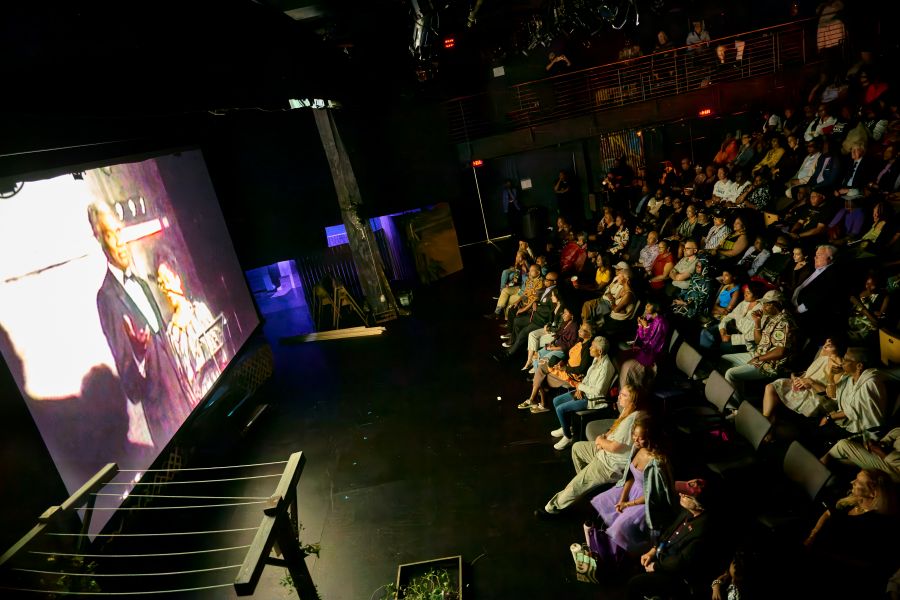
One of the most anticipated events of the IBTF was the sold-out world premiere of the documentary film Holy Ground, co-directed by NC Black Rep producing artistic director Jackie Alexander and filmmaker Ka’ramuu Kush. Holy Ground should be a required watch for newcomers like myself. Through interviews and rare archival footage, the audience learned about the festival’s founders.
Larry Leon Hamlin founded the North Carolina Black Repertory Company in 1979, creating what is credited as the first Black professional theatre company in the state. After hearing a discussion about the crucial needs of Black theatres across the nation, Hamlin had an idea to create a Black theatre festival. Hamlin’s goal was for Black companies to perform for the public, share resources, and raise awareness for said companies. The first IBTF was held Aug. 4-20, 1989, and was attended by Dr. Maya Angelou, who also served as chairperson of the first festival, Oprah Winfrey, and many other distinguished figures in the arts.
Thirty-seven years later, the IBTF has generated more than $230 million dollars for the Winston-Salem economy and continues to draw theatres and attendees from around the globe.
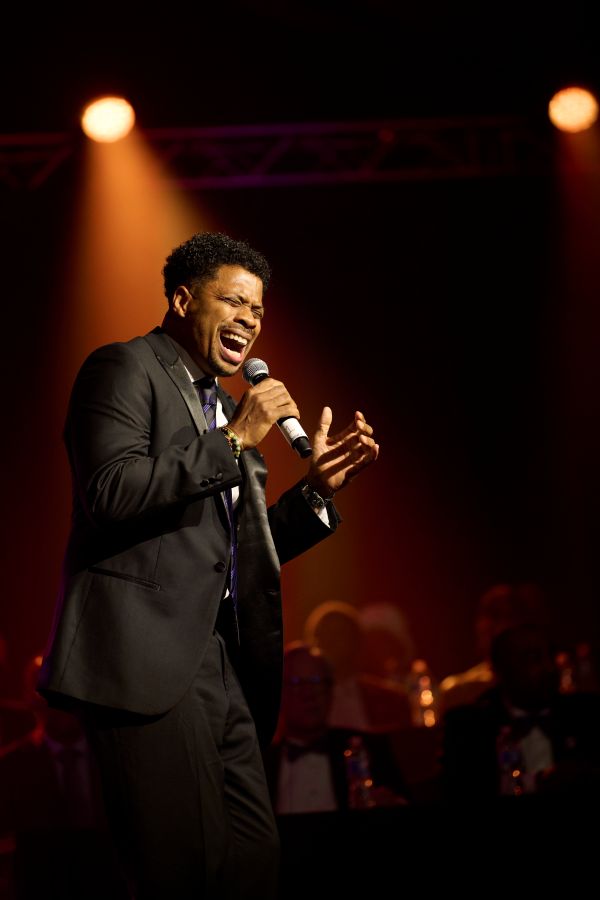
At this year’s festival, Chester Gregory’s Being Black on Broadway was captivating, as he shared stories and songs from his journey as a performer. Prior to closing the show, Gregory mentioned how the audience always “gets mad” when he forgets to save a portion of the show for dancing, so he led the audience through decades of dance moves. That’s when it hit me: Though the IBTF is biennial, many attendees make sure to come to every festival. They’ve been doing this for years, and by doing so, they’ve created a sacred tradition that feels like family.
This impression was confirmed on the shuttle bus ride back to the hotel. I sat next to a woman who said she traveled to the festival with her actual family, and that they’ve been coming for years. Something similar happened while attending the play Blooming In Dry Season by Eljon Wardally. I sat next to an elderly woman who was attending the festival for the first time with her niece, who is a regular attendee. And members from the sorority Alpha Kappa Alpha, who sat next to me during Branden Jacobs-Jenkins’s Everybody, told me it was their second time attending the IBTF, and they planned to return every time from now on.