ROB WEINERT-KENDT: Congrats on your tenure. Why leave now?
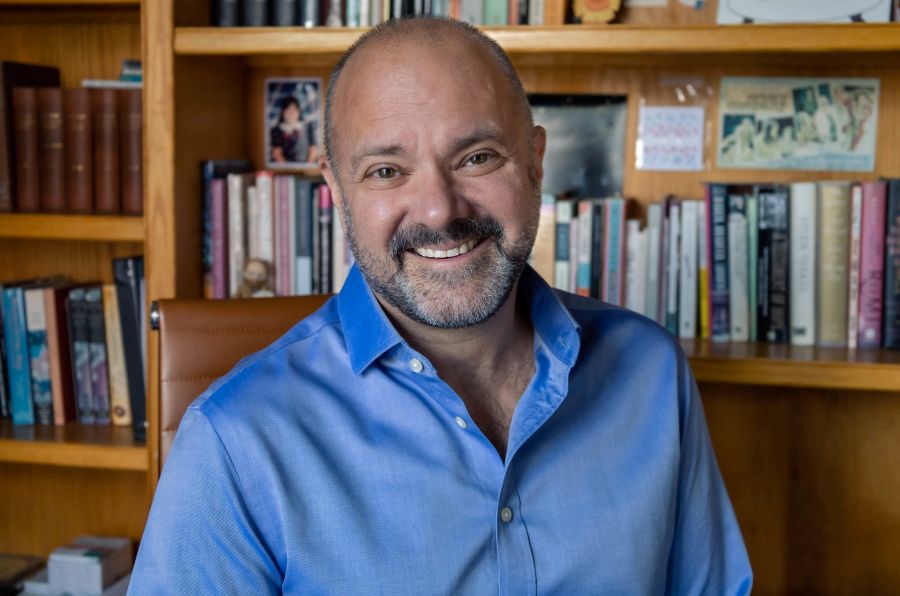
CURT COLUMBUS: Starting in 2016, I started talking to my board, and I said, “I want to be gone by 20 years.” I’m 61 years old now, and I’d like to start another chapter as opposed to simply, you know, at 67, sort of going, “Okay, now I’ll ride off into the sunset.” I want to do something new.
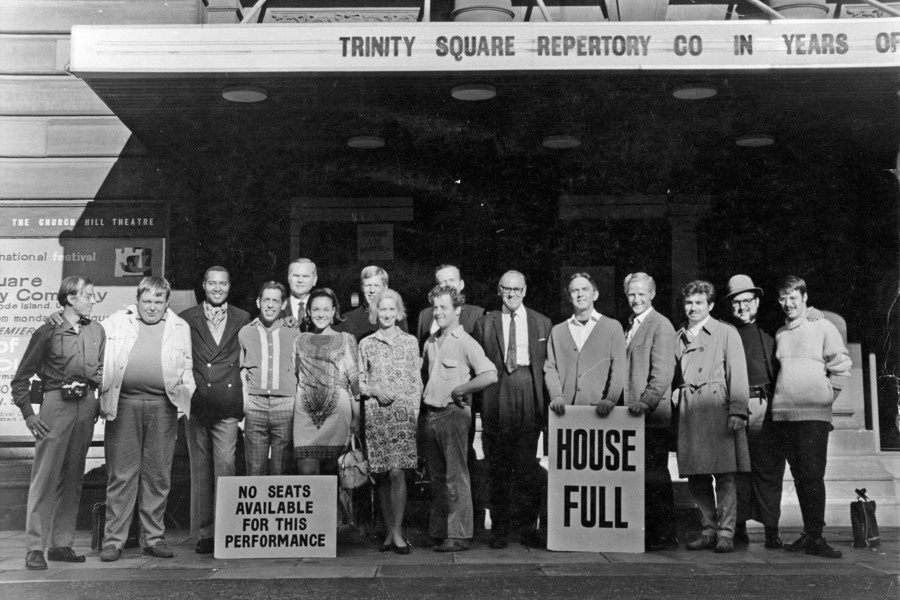
Trinity Rep is one of the few theatres founded in its time that still has a resident acting company. What’s been your relationship to that legacy?
When I got here, there were great actors who had spent their whole lives there, but the company wasn’t allowing them to artistically grow in new ways. So in my first year, we made an investment with a bunch of money from Mellon Foundation in these workshops where I was like, “Hey, if you’ve got a play, bring it in. We’re going to read it.” At the end of the first company workshop, one of the longtime company members, Bill Damkoehler, a great actor who’d been there for almost 50 years, said, “Oh, I see what you’re doing. You’re getting us to do barre work.” Most people, once they get past a certain age, aren’t asked to do that. So company members who had just been contract actors were now directing, writing plays. We doubled down on our company model, because I still firmly believe that local art by local artists for local audiences is the way that the American theatre should function.
Trinity Rep also had a longtime association with nearby Brown University’s MFA training program.
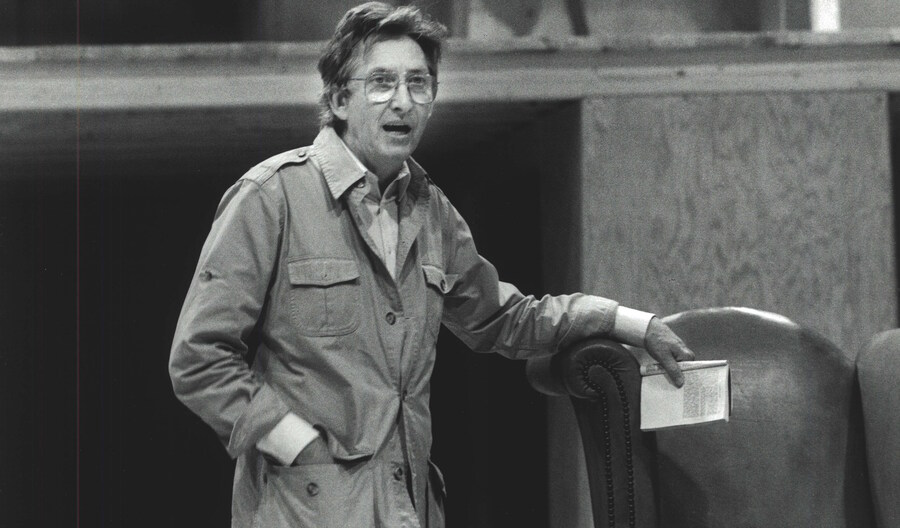
Oskar started that, but that program ended last year, which is unfortunate, because we produced some incredible artists over the last 20 years: Miriam Silverman, Susannah Flood, Crystal Finn, Whitney White, all of the people at Fiasco Theater. It was a very influential program, and I believe will continue to be, but there were some structural issues that never went away, and those became insurmountable.
I’m gonna say that I think the future of theatre training may not be the three-year MFA. That three-year MFA in acting, directing, playwriting, etc.—what if we imagined it differently? Our most successful artists were multihyphenates. Rick Dildine, who runs the Children’s Theatre in Minneapolis, was an acting graduate from the Brown Trinity program. We wanted to make more folks like that. Ken-Matt Martin, a graduate of the directing program, is also a producer. I think training models generally need a rethink.
So there’s a continuing relationship with Brown, and we’re looking at what the next model could be. I’m hopeful that there’s going to be a new acting apprenticeship program, and that instead of being a three-year MFA, we’ll go back to the thing we used to do that produced people like Richard Jenkins and Viola Davis, folks who came through Trinity, who did a year with us and then went on to do other things.

What did you learn by doing theatre in Chicago?
I started with the late, great Remains Theater, with folks like William Petersen and Martha Lavey, Amy Morton, Gary Cole, Natalie West—these fucking incredible artists. I was just this kid, and they were like, “Hey, come in.” The way that Chicago theatre formed me is that everybody did everything. The first show I worked on at Remains, there was Billy Petersen, fresh from his To Live and Die in L.A. movie star-ness, hanging speakers in the grid of the Organic Theater. I spent a decade at Victory Gardens Theater, which kind of opened my aperture to the playwriting experience, under Dennis Zacek and Sandy Shinner’s mentorship there. I spent a decade at University of Chicago, actually starting their program there, and then I spent a decade at Steppenwolf. Martha Lavey was probably my greatest mentor of all time, and also my very dear friend.
What did you learn from her?
I learned everything from Martha. She threw me into board meetings and production meetings, the marketing area, the development area. I was in every part of the theatre, and she was gently guiding me, and sometimes not so gently, because it was Martha. She was one of the greatest minds I’ve ever encountered. We became friends because I was directing her in a show at Victory Gardens. That’s the other thing that Chicago theatre taught me: that theatre is best in an ecology, where there are lots of thriving theatres, and that if you don’t have a thriving theatre ecology, your single theatre will actually not succeed particularly well.
How’s the Rhode Island theatre ecology?
Well, there’s the Gamm Theatre, there’s Burbage Theatre Company, Wilbury Theatre Group. When I interviewed for the job at Trinity Rep, one of the board members said, “What will you do about the competition from the Gamm Theatre?” I said, “I will encourage it.” She looked at me like I had two heads, and I said, “A rising tide raises all boats.” I’ve directed at the Gamm; I love Tony Estrella. I love the work that they do. Having a thriving theatre community is good for Trinity Rep, and we have a thriving theatre community in Rhode Island now.
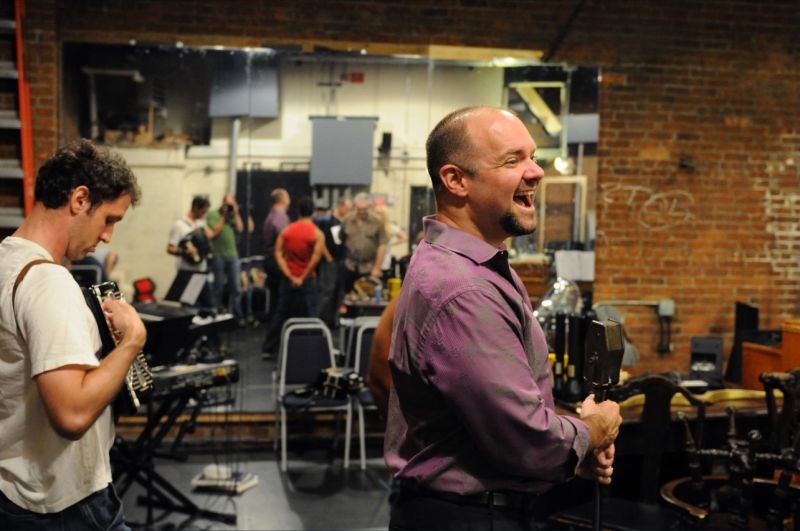
You’ve directed a lot of work at Trinity, and I’ve always wondered how folks who run theatres are able to juggle the creative and management aspects of those jobs.
One of the kids—he’s no longer a kid, he’s in his 40s now—who was a stage management apprentice in my second season just wrote me an email and said, “I remember you in the middle of rehearsal, where 10-minute breaks would happen, and someone from the development team would come over with a stack of letters that you had to sign, and you would sign them while continuing to talk to stage management and make notes. And I thought, ‘How does somebody do that?’ And then I realized that is just the job.”
You just have to learn to multi-task.
And you have to enjoy it. The thing that you have to remember is why you’re doing it. You’re not doing it for you. You’re doing the job for the artists you employ, for the audiences you impact, for the students who come to see your shows. I got into the theatre because I wanted to make a difference and I wanted to have joy, right? It was a place where I felt accepted. I didn’t feel weird like I did in the rest of my time in school. I think a lot of folks who do theatre professionally lose that joy, and what a shame! Because why would you do it otherwise?
The harder part, as I went further on, is finding the writing time. That’s something you need to be able to clear the decks to do, and I don’t write as much as I used to because I write freaking emails all the time. You have to stop doing that.
Can you think of a few highlights from your time at Trinity?
I was recently reminded of the number of musicals I directed at Trinity. I was so fortunate I got to work with Dave Malloy on Beowulf: 1,000 Years of Baggage. He wrote it for like six people, and we turned it into a ’70s rock opera, and it was so much fun. And I’m just about to do an interview with an academic about a production of Camelot that I did that I set in the London Tube. The great Eugene Lee designed it. The actors entered from the top of the upstairs theatre and walked down these long stairs like they were coming into the subway. We did the overture like a wartime newsreel. It was so cool.
I don’t know if you want to recall any of the low points of your 20 years, but I’m going to ask.
I can tell you a low point. It was during the 2009 financial crash. If you put this next part in the article, people will think I’m crazy—but people already think I’m crazy. So we had laid off four people, and we were starting to cut people’s salaries, and fundraising was drying up. I was thinking, am I going to see this theatre close? I’m sitting in the Chace Theater—our building was built in 1917, and it does have spirits in it. I’m by myself and it’s 11 o’clock at night. And I say aloud, “Why me? Oskar got to have all of these years where fundraising was really easy, and why not me?” And I heard a voice say, “You have been requested,” as if someone spoke it in my ear. I looked around. I was alone in a 520-seat theatre. I was ready to just go, “This is too tough. I’ll go back to Chicago and be a translator, be a director.” But “you have been requested” kind of stopped me, and there I was.
Talk about hearing the call.
I encountered the spirits since then, but that was the strongest time.
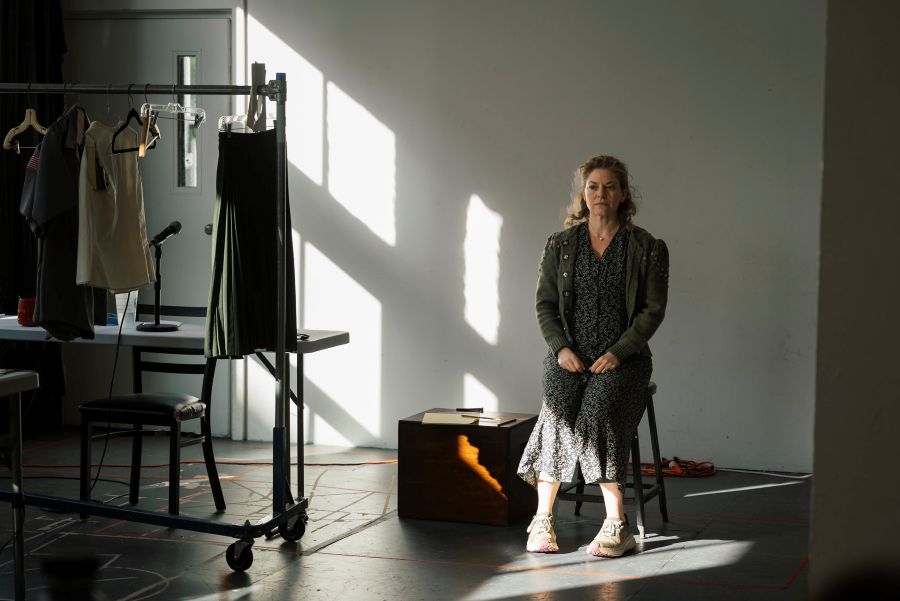
Tell me about The Getaway Driver.
It’s a piece about two real women, one named Katherine Ann Power, who in 1971 was a student at Brandeis University. She got involved in the anti-war movement and became radicalized, and they did a bank robbery. She’s driving the getaway car, and as they’re getting away, the lookout decides he wants to shoot a cop, which means they all go on the run. Katherine Power stays on the run for 23 years. She is the longest-running woman ever on the FBI’s most wanted list. When her son is 15, she starts a whole new life and she turns herself in. That’s the beginning of the play. That’s like the first two monologues. And then we meet Clare Schroeder, whose father was the cop who was killed, and how this has impacted her life. It’s a little bit like No Exit, because these women are inextricably linked by this event that neither of them had any control over.
Have they actually met?
They met at the parole hearing and have run into each other once since then. But Claire wants nothing to do with Katherine, and they both just wish that this was not the narrative that defined them. It’s also a local story, and it’ll be fun to tell with two of my resident company actors, with whom I’ve done some of my greatest work over the years.
There have been a lot of questions raised recently about leadership transitions at U.S. theatres, and how boards and staff can better support the leaders they hire. Is your theatre ready to support Meredith?
My board has been talking about this transition for two years, so they knew it was coming. Did it have its rocky bumps? Yeah, the search process had bumps, but I’m so thrilled with the outcome, because Meredith has been ready to lead a theatre for a number of years now, and she’s exactly the person to lead this theatre.
Artistic directors have to be prepared too. They have to get information. Part of what Martha Lavey did for me was artistic director executive training. I feel there’s a real lack in our field in how people get prepared for the job. Meredith has prepared by doing the work at Actors Theatre of Louisville, where she was associate artistic director. What I can tell her about are the idiosyncrasies of Trinity, so we’ve been meeting every week, we’ve gone through different parts of the theatre and we’re going to keep doing that through September, and I’ll remain a resource. I’m purposely leaving the state, though I’m still keeping a place in Providence. My husband and I live here in Vermont; that’s purposeful, so that it can become her theatre.
You know, following a leader like Oskar Eustis—talk about a larger-than-life figure. There were certainly expectations that I was going to be like Oskar, and I am not like Oskar, and unapologetically so. I say that with love. He is a dear friend; I adore him—and I don’t want to be him. So I don’t want my successor to be me.
What’s next for you?
More writing and some consulting. My husband has a travel business where he takes theatre groups to London and Stratford and Dublin and places like that. So I’m going to do some of that work with him because then we both get to travel together, which will be fun. But I want to continue to do work in the American theatre. I was explaining to my friend, Kelvin Dinkins, about why we do theatre: I said, it’s that little boy that is still inside of me that was so painfully shy, so marginalized everywhere else, and I do it because that kid still needs that, and so here I am.
Rob Weinert-Kendt (he/him) is editor-in-chief of American Theatre.