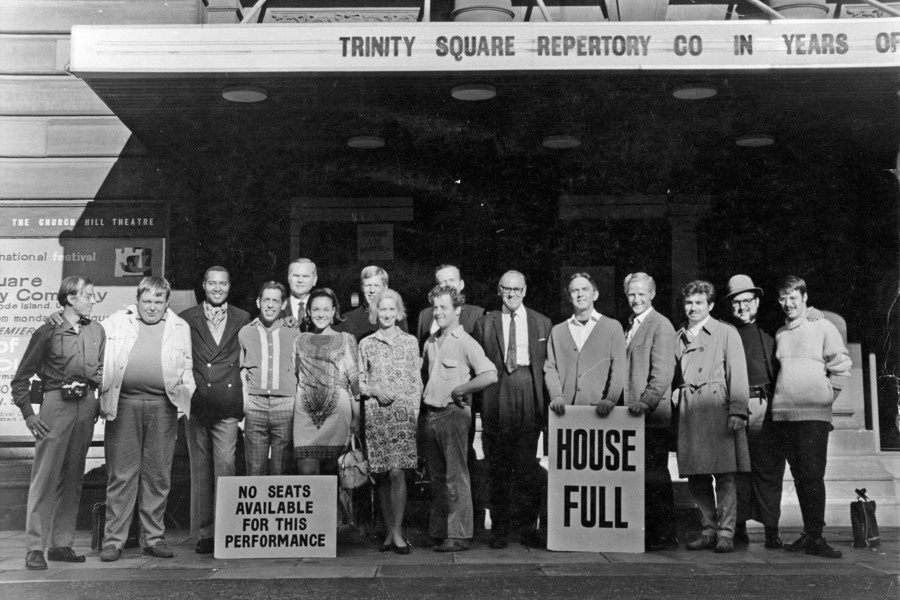
 In 1950, when Zelda Fichandler co-founded Arena Stage in Washington, D.C., the inaugural production of She Stoops to Conquer featured a program note explaining that the theatre’s “permanent staff of distinguished actors and technicians, many of whom have come to Arena Stage via the stages of other cities, now all call Washington their home.”
Such permanence offered performers a place to lay down roots in a fickle business. Arena’s in-the-round layout also emphasized their talents: Big sets are trickier in the round, so it’s a format that naturally prioritizes performance. A repertory model also gave the actors consistent pay; when not performing one show, another was always in rehearsal. In Arena’s first five years, “We put on 55 productions,” Fichandler noted in The Long Revolution.
Repertories meant a single company could perform classics, Shakespeare, and modern works in one month. The plays revolved; the actors stayed the same. Many regional theatres still present varied fare and have repertory in their titles, even if casting has moved to a per-show basis.
Under the old model, “It was a season contract—you knew you had work all year,” said Karen MacDonald, a founding company member of American Repertory Theater, established in 1980. The gig came with teaching posts through Harvard College. “The first year I was at ART,” MacDonald recalled, “I was in seven shows—and that was not uncommon.”
In 1967, 17 years after its founding, Arena produced The Great White Hope, making stars of James Earl Jones and Jane Alexander and becoming the first play to originate at a regional theatre and transfer to Broadway. Once paved, that commercial pathway has become, for many regional theatres, a super-highway. In addition to shifting the aesthetic priorities of many theatres, this has also changed how actors and other creative staff are hired.
While ART “used to do 25-person Shakespeares,” as MacDonald put it, and its founding artistic director, Robert Brustein, famously held out against commercial impulses, his successor, Diane Paulus, has turned the company into a major pre-Broadway hub, with Tony-winning transfers of Pippin, Six, and Life of Pi. The theatre released its acting company in 2010, two years after Paulus took the job. (ART did not respond with comments for this article.)
At their best, acting companies give audiences familiar faces, performers places to grow, and cities an artistic focal point. To become part of an ensemble can represent an actor’s commitment to their home, and their home’s commitment to them. But from the start there were also downsides and cross-pressures in this model.
As Fichandler wrote, “The audience got tired of the same faces; actors wouldn’t stay because the lure of TV and film was too overpowering; limited casting options shortchanged productions; it was cheaper to job in actors for each production, while money was needed to build up the administrative machine and raise funds for sheer survival.” As Mary Robinson’s oral history of Fichandler’s career, To Repair the World, makes clear, internal frustrations and personnel conflicts are also unavoidable in the company casting model, as not everyone gets the roles they crave.
When a company dissolves, MacDonald said, it “does make it harder for people to make themselves known, but it also expands the idea of company: This is Boston, and it is a company of actors. You get to see them in this show, in that show. I think that seems to be a way forward, to think of Boston as a community as opposed to, ‘I only work at this theatre.’
“Hopefully,” she added, “everyone gets a shot to work at every theatre.”

Sarah Anne Sillers was born and raised in Maryland, returning to the DMV area after graduating college in 2013 to work as a theatre administrator. At the same time, she was auditioning for roles and started booking Equity contracts, juggling a desk job alongside daytime rehearsals. “I found myself with one foot in two different boats that were diverging, and I had to make a call about which one I wanted to commit to,” Sillers recalled.
She opted for the life of a full-time actor, working across Washington, D.C., and booking gigs of various sizes while always keeping her eyes on bigger venues like Arena. Going after larger companies, however, also meant more competition.
“If you talk to people who have been working in D.C. since pre-2010, they’ll tell you the best way to get seen by the Equity companies was to get a New York phone number and put that on your résumé,” Sillers said. “You can be local, but you have to do a little bit of trickery and make the casting directors think you’re from New York.” (She said she personally hasn’t resorted to this ruse.) Indeed, in regional theatres, it’s not uncommon for principal tracks to go to New Yorkers while locals understudy or book ensemble roles. (Karen MacDonald, in Boston, returned to ART to understudy Cherry Jones in The Glass Menagerie, moving to New York with that production.)
This competition with New York actors is a thorny topic. “I’ve heard actors talk about this as long as I’ve been working,” Sillers said. In anonymous interviews, actors from California to Massachusetts said that local Equity Principal Auditions sometimes feel merely symbolic, with contracts frequently going to out-of-towners with bigger credits. These same actors understand the need for directors to cast a wide net. They also know that, if they were to publicly raise their suspicions about this practice, their power disadvantage in relation to theatres could put their future employment at risk.
In a city without acting companies, each individual opportunity is an individual contract, and local loyalty can be thin on the ground. Meanwhile, competition with out-of-town actors can make it harder for local ones to subsist on contracts alone. Still, Sillers believes that local casting in D.C. has “shifted for the better.”
“A lot of casting directors in the last 10 years or so have a more open mind about local talent,” she said. “I certainly count myself as a beneficiary of that open-mindedness.”
Arena Stage’s current artistic director, Hana S. Sharif, said she is sensitive to locals’ needs. “I have a mandate I give to my team: that every show we put on our stage has some ratio of local actors,” she said. “It’s one of the ways you keep great talent in your region.” Speaking more broadly of her third Arena season, Sharif said she sees her tenure in part as an “opportunity to throw open the doors to people who don’t audition for us anymore. I’ll tell them: These are fresh eyes, we’re here, and we want to know who’s in our community. Our responsibility means not just serving the patrons but the artists like myself who’ve chosen to make this their home.”
Last year, Sillers said, “I had had a terrible audition season—a lot of rejection. That’s par for the course, but it was starting to weigh on my spirit.” But after auditioning unsuccessfully at Arena for 12 years, she booked Damn Yankees. “Sometimes it’s the ones you least expect,” Sillers said of her first Arena credit, in a new adaptation of the musical chestnut, which became one of Arena’s highest-grossing shows post-pandemic last fall.
In the role of Doris, Sillers got to play ball with Broadway actors—and in turn she got to show them a thing or two. “I know the good coffee spots,” she said. “I can be the guiding presence for the out-of-towners.”
She also got to play with locals, including Rayanne Gonzales. Like Sillers, Gonzales carved her own path in D.C.: She played Sister in Arena’s 2005 production of Damn Yankees, and reprised the role 20 years later, also at Arena, this time opposite Sillers.
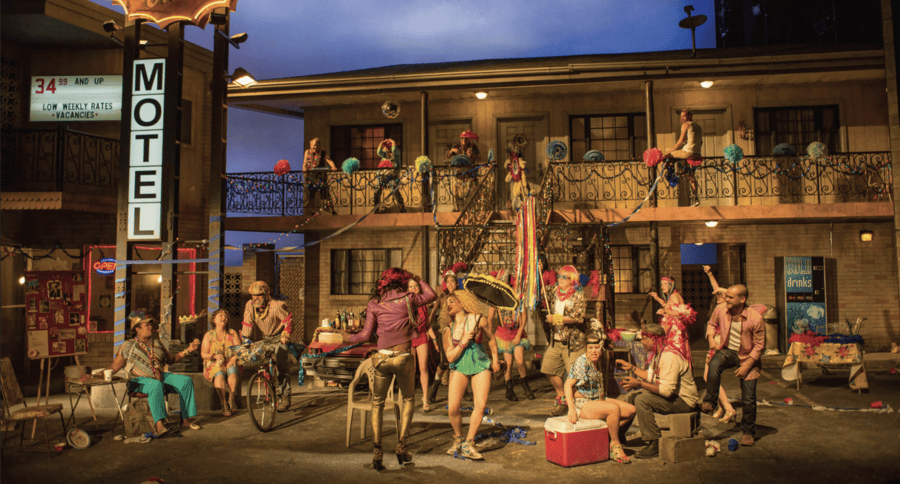
In most regional casting, the actors may be local (if a play is homegrown), from New York (if it has commercial enhancers), or from various markets (if it’s a co-production with other theatres). Actors in resident companies, however, receive job preference, and a season is planned around them.
“I’m involved from Day One,” said JC Clementz, director of casting and artistic operations at Chicago’s Steppenwolf Theatre Company. As a famed ensemble theatre, Steppenwolf looks for shows with “opportunities for multiple ensemble members, ideally three-plus,” Clementz said.
Members of the Steppenwolf ensemble—dozens of actors, directors, and playwrights—are not contracted or salaried, but they remain at the forefront of programming. Three-quarters are Chicago locals, Clementz estimated, and each season about a quarter of the roles go to the ensemble. For the theatre’s current 50th anniversary, he noted, “I think we have a record number of ensemble members coming back.”
Steppenwolf is not alone in prioritizing company members in season planning. Dallas Theater Center’s resident artists, like the Steppenwolf ensemble, consist not only of actors but also directors and playwrights, while Bloomsburg Theatre Ensemble, in Pennsylvania, features a nine-person collaborative staff that includes administrators who steer the artistic direction of the theatre. Founded by the students of legendary acting teacher Alvina Krause, Bloomsburg Theatre Ensemble aims, in Krause’s words, to be “as important to its community as schools and churches.”
These three theatre companies operate in uniquely different ways, but all share an emphasis on local engagement—which may also attract audiences. Yes, stars can spur ticket sales, but audiences also notice when their own are not onstage. Casting director Alaine Alldaffer, who works from New York and casts for some regional houses, said she pays attention to this. “Audiences get a little prickly if there are more New York actors than local ones,” she said. Alldaffer has learned to juggle multiple priorities: directors who want a wide pool of choices, theatres that want a name, and local actors who want a job.
“The biggest myth—and this is basically with New York producers and directors—is that regional actors are ‘B actors,’ and that is not true,” she said. “Those actors are not in New York not because they’re not ‘good enough’—they’re wherever they are because that’s where they are.”
She pointed to David Cromer’s 2009 New York production of Our Town, itself a transfer from an acclaimed Chicago run. In 2012, when it moved to the Huntington in Boston, she said, Cromer “loved the Boston actors so much, I ended up not being involved—he used all Boston actors.”
At Steppenwolf, ensemble members get priority. But after that it’s Chicago actors first.
“That’s essential to the ecosystem, because we want actors to be able to stay in the city, make a living, and not think, ‘Oh, I have to go to New York or L.A. in order to get cast,’” Clementz said. “The more opportunities we can get for actors to stay, the easier my job is too.”

Acting companies can afford artists space to grow together over time, whether across decades or even just a season, as at Oregon Shakespeare Festival, where dozens of performers are hired each year to perform in rep all spring, summer, and fall.
Acting companies that pay artists to hone and devise, instead of performing a product, remain rarer. In Philadelphia, Campbell O’Hare is a member of the Wilma Theater’s HotHouse Company, founded in 2015 to give Philadelphia artists paid weekly opportunities to train, read plays, and develop their artistry. “A lot of our audience comes to shows specifically because of the company, to know what this group will get up to next,” said O’Hare.
Roles in Wilma shows often go to company members (the Wilma website lists 19 current members). In many regional theatres, O’Hare said, “You bring in folks who don’t know one another and have to race to put something together in a month.” HotHouse, though, can give shows an edge. “We can start half a mile down the road,” as O’Hare put it.
She recalled a 2025 production of The Real Thing at Philadelphia’s Lantern Theater in which she played Annie. “There’s so much intimacy, romance, and history between these characters, and the person playing my husband—it was maybe our fifth or sixth show together in the past two or three years.
“Each time I find myself across an actor I’ve worked with before, it’s in some new configuration of our shared history that feeds that relationship,” O’Hare continued. “On a human level, I’m getting to have so many varied, really intimate, different kinds of relationships with my peers around town, which feels like one of the biggest gifts of my life.”
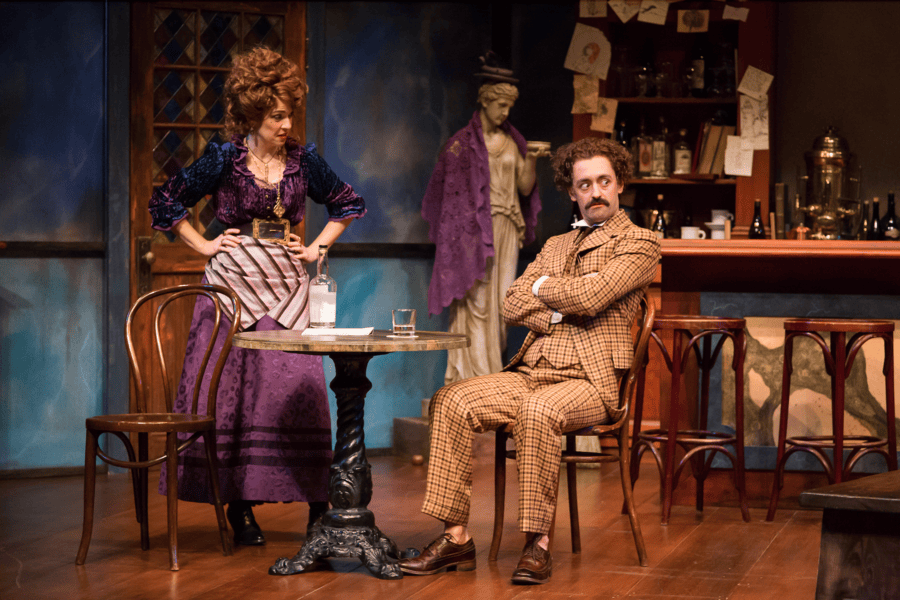
Creating community is a grounding force and superpower for regional acting companies. American Players Theatre in Spring Green, Wisconsin, and New City Players in Wilton Manors, Florida, feature artistic ensembles full of locals who return again and again to their theatres’ stages. This helps establish financial security, through one-off but recurring contacts. But one large theatre is trying a more permanent model: Houston’s Alley Theatre, which now has the only full-time, year-round resident acting company in the United States. “It’s been life-changing,” said David Rainey, a resident actor now in his 25th season at the Alley.
The resident acting company has been a staple of the Alley since its founding in 1947. But it wasn’t until 2020 that the theatre put its company members on salary. Today the company comprises seven members, including Rainey, who also teach classes and lead community engagement work. Members are embedded in the Alley Theatre’s identity, where they become central to the theatre’s fundraising, and, in educating its next generation of artists, create continuity. This effort is growing: This year, the University of Houston/Alley Theatre MFA Program in Acting will launch, placing students in residence at the Alley.
“We program our season entirely around actors’ strengths and growth spots,” said former Alley associate artistic director Brandon Weinbrenner, who will soon join Everyman Theatre in Baltimore (for its part also home to a resident company). Echoing Arena Stage’s original intent, the Alley’s theatre itself was built with a de-emphasis on design. Though it now includes an elaborate fly system, the theatre was initially built without flies. Said Weinbrenner, “The goal was to make each story about the actors.”
For Rainey, the Alley has created both an artistic temple and a practical lifestyle. “For the first time, I have not had gaps in my employment,” he said. “I was able to pay things off.”
There are also budget benefits for theatres: Actor housing and transportation, a major line item for theatres that ship in artists, are not an issue. Putting actors on salary is not a one-to-one cost trade-off, of course. But it does reveal the Alley’s dedication to local investment. One resident acting company member, Michelle Elaine, got her break after being called in to understudy an Alley show.
As one of the oldest professional resident theatre companies in the country, the Alley has weathered the same pressures in terms of costs of living, production budgets, and changing theatregoing habits that all U.S. theatres have faced in recent years. While there is no single formula for a theatre’s success, theatres can choose their priorities. The Alley chose its people.
“We go through our lives as theatre actors, and we rarely get the opportunity to build roots, to have a normal family life,” Rainey said. “A resident company allows that.”
Billy McEntee (he/him) is the theatre editor for The Brooklyn Rail. He has also written for Vanity Fair, The Washington Post, San Francisco Chronicle, and Them, among others.
NOTE: This story originally misquoted Brandon Weinbrenner as saying the Alley Theatre has no flies.