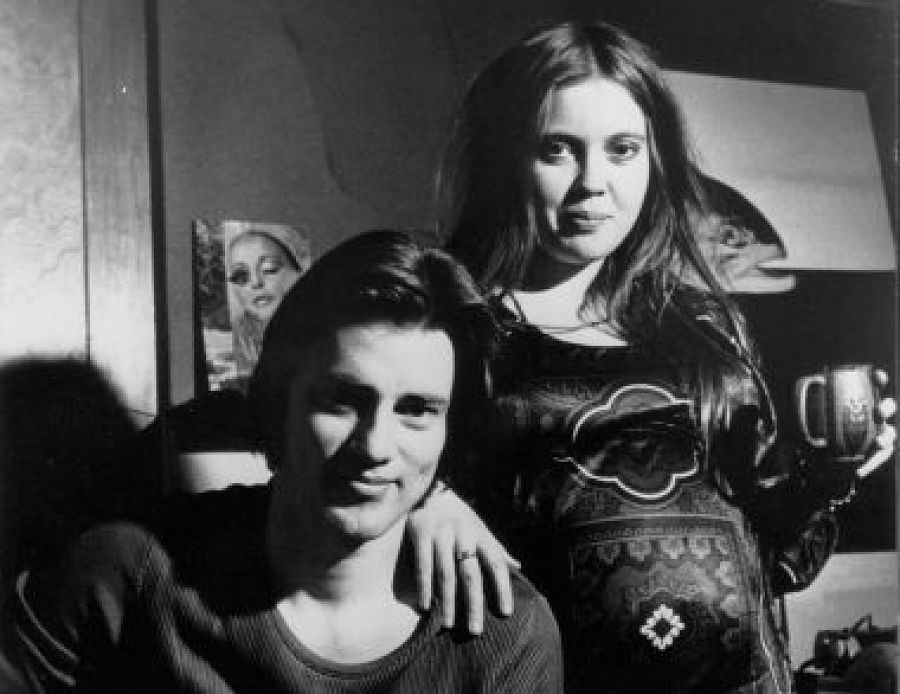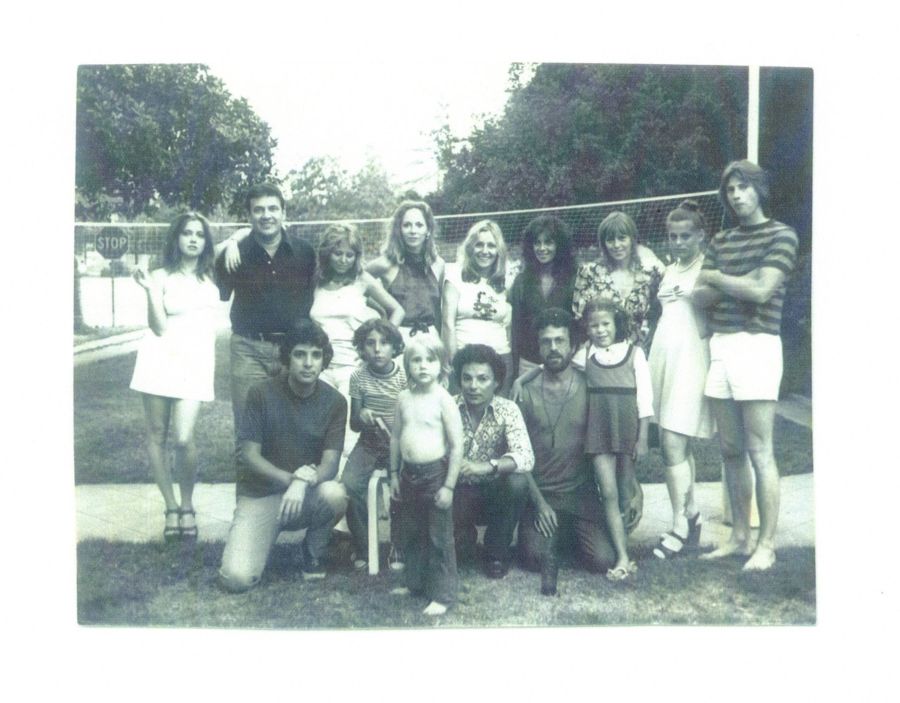
In the first week of July 1978, Sam Shepard, the playwright, actor, and “poet laureate of America’s emotional badlands,” joined the ad hoc teaching faculty at the inaugural Padua Writers Workshop in Claremont, California, later renamed the Padua Hills Playwrights Workshop and Festival. Situated along the foothills of the San Gabriel Mountains, very close to where Shepard was reared, the workshop in time became, as one reporter archly mused, “famous for having audiences trudge from site to site, following some dusty, moonlit trail to a bank of bleachers behind a sagebrushed hill. Lights would hang sometimes from a grid, sometimes from a tree. The actors might be pacing, in costume and character, on the stage clearing, just waiting for their audience to arrive. For the next play, the audience would find itself on the hoof again.”
The workshop and festival constituted a three-week program led by Shepard’s longtime friend Murray Mednick, another avant-garde playwright who cut his teeth Off-Off-Broadway in the 1960s. Mednick had transferred to Southern California a few years earlier from New York and accepted a teaching position at nearby La Verne University. The workshop, with support from the college, became a reunion of sorts for Shepard’s early Off-Off-Broadway cohort, as along with Mednick, there was Lee Kissman, Shepard’s foremost leading man of the 1960s; Shepard’s wife O-Lan Jones, an accomplished actor and playwright in her own right; and an outré band of teacher-playwrights, all friends from their Greenwich Village years, that included María Irene Fornés, Michael Townshend Smith, Walter Hadler, John Steppling, and John O’Hara—now seasoned dramatists primed to forge true artists out of whichever theatrical novices elected to attend Mednick’s drama workshop in that first summer.
Padua Hills was a Spanish Mission-style estate in the San Gabriel Valley perched on a mountainside ridge with lush groves of olive and eucalyptus trees. Mednick described the compound’s smog-infused desert air as “yellowish…you could see the particles almost.” Yet despite the haze, Padua Hills, originally constructed to honor the area’s Mexican roots, was “a mystical site,” a visitor that summer observed, “guaranteed to inflame writer’s itch.” When Mednick was asked decades later how Padua Hills compared to an East Coast rival, the Playwrights Festival, at the Eugene O’Neill Theater Center in Waterford, Connecticut (which Shepard and other OOB dramatists had attended in 1965), Mednick replied with unbridled self-assurance: “They were shithouse compared to us. You can quote me.” Then he paused wistfully. “It was the most important American theatre festival probably ever. It was that good.”
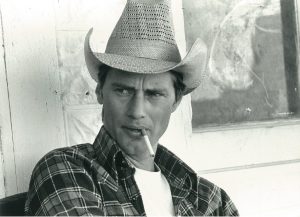
The panoramic vista from the patio of the Padua Hills estate looks across the San Gabriel Valley toward the Hollywood Hills 40 miles to its west. The drive back to L.A. took you down the bottom third of Potato Mountain and onto historic Route 66, then straight through the sprawling exurban corridor that was Sam Shepard country—Azusa, Duarte, Arcadia, and South Pasadena—large towns or small cities in and around which Shepard grew into early manhood. By the time the dramatist had arrived at Padua Hills in the summer of ’78, Shepard had just heard he’d been awarded the Pulitzer Prize for his most recent masterwork, Buried Child.
Murray Mednick exhorted his playwrights, and his numerous apprentices thereafter, to workshop “environmental pieces which could be performed on the grounds,” as one student recalled, and thus integrate their natural settings into their dramatic dialogue. And he encouraged the actors at the workshop to follow suit, emphasizing “a physical sense of the space…a special emphasis on speech, language that could compete with the environment for attention, and a direct awareness of the audience as part of that environment.”
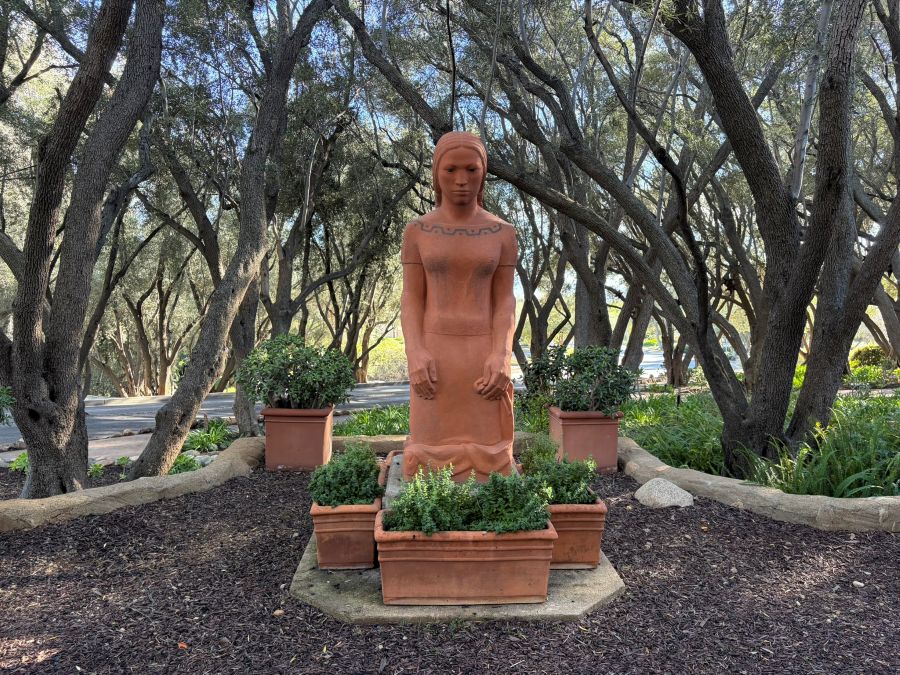
Shepard composed two plays at Padua Hills with Mednick’s assignment of environmental integration in mind—the first he tore up, along with its title, and then Red Woman, a comedic monologue named for a life-sized terra cotta statue of a Native American woman that was sculpted in the 1940s by the Scripps professor Albert Stewart. Locals affectionately refer to this object of Shepard’s fixation as “the Indian maiden,” and she still stands proudly at Padua to this day in a tree-shaded courtyard. The monologue is about a hustler named Dan, originally played by veteran OOB actor-director Bob Glaudini, who wretchedly attempts to convince the ghost of his jilted lover Theresa (the red woman statue) to reveal the location of a buried treasure. Dan’s speech slips from lofty romantic reverie to street idiom, and his pathetic entreaties ultimately give his game away: “You know I’d marry you if I could,” he cajoles. “It’s just that right now I need to get a hold of some cash. A little nest egg. Ya see what I mean?”
One of the theatre tyros who’d signed up for Mednick’s inaugural workshop wrote the musical score for Red Woman. David Henry Hwang, an incoming senior at Stanford University, was home with his parents in L.A. for summer break when he spied an ad in the Los Angeles Times: “Study Playwriting with Sam Shepard.” “I was a big fan of Sam’s work, so I clipped this ad and sent it in,” recalled the Tony Award-winning author of M. Butterfly, “and there were only two of us who applied to be students, so we both got in!” Hwang didn’t socialize much with the OOB playwrights, and he commuted from home. (“I was way too young and way too uncool to hang out with these folks socially,” he averred.) But the budding dramatist was also a trained jazz violinist, so “given the rather hippie-ish vibe” at Padua, he practiced in the woods. “Of course, I was deliberately hoping to catch Sam’s attention, and felt I stood a chance because I was actually a good musician. My strategy worked! Sam called me over and asked if I wanted to basically improvise a score to accompany his script, and I got to collaborate with my hero!” Perhaps most importantly at Padua Hills, Hwang had begun writing what would become his breakout, the full-length comedy FOB, “based on the exercises given to us by Sam, María Irene Fornés, and others,” which garnered the 22-year old his first of three Obie Awards to date.
Shepard had set free Hwang’s dramatic muse among the groves of Padua Hills: “Sam’s approach to teaching was all about being led by intuition, impulse, and happenstance,” Hwang recounted of his time at the inaugural festival (and a later workshop) with Shepard. “Along with Irene [Fornés], I’ve come to feel I learned from them how to write from my subconscious.” One class session, he remembered, “involved Sam leading us in a Dada-esque exercise where we wrote something, cut out the individual words, tossed them into a container, then pulled them back out randomly to create a new text. These sorts of exercises opened my mind to how to bring my stories and characters to life. I learned to be a playwright at Padua.”
The Padua Hills Festival transferred the avant-garde ethos of Off-Off-Broadway to the West Coast, and soon passed it down the years, in various alternative venues, through the work of pioneering dramatists like Shepard, his younger sister Roxanne Rogers, Mednick, Fornés, Hwang, Hadler, Smith, Steppling, and soon enough, Jon Robin Baitz, John O’Keefe, Kelly Stuart, Martin Epstein, Julie Hebert, and others while the workshop was still active. By 1995, they had run out of money, but the artistic director Guy Zimmerman revived it as Padua Playwrights Productions in 2001 and collected a book of essays on the festival, aptly titled Outlaw Theatre: Field Notes from the Padua Playwrights Workshop and Festival.
Indeed, in 2001, Roxanne Rogers, speaking as a working actor, director, and playwright, declared that Padua Hills was “an outlaw and misfit within the theatre community.” “We need Padua for artistic nourishment,” she went on, “and Murray is a tough teacher, a hard taskmaster who’s crafted many of us into artists.” Mednick, a pillar of avant-garde American theatre history, sadly passed away, at the bounteous age of 86, on Oct. 17, 2025.
Now, with only a couple of years before the Padua Hills Festival’s 50th anniversary, Mednick and his vital sanctuary for “outlaw theatre,” originating from the East but soon inextricably interwoven with SoCal culture, should be praised for inspiring experimental, environmental, and spiritually dramatic visions that embraced the natural environs while brazenly defying the mostly anodyne spectacles emanating from the far more glamorous Hills to the west. Most presciently, perhaps, Mednick hoped to transmit to his audiences “a certain overall warning,” as he wrote in a 2022 retrospective about his pioneering theatrical career, “about a coming moral plague, which has more or less come true, morally and otherwise.”
Robert M. Dowling is professor of English at Central Connecticut State University and the author of the most recent biography of Sam Shepard, Coyote: The Dramatic Lives of Sam Shepard (Scribner Publishers, 2025), and the critically acclaimed Eugene O’Neill: A Life in Four Acts (Yale University Press, 2014; finalist for the Los Angeles Times Book Prize for 2015).