1821 (205 years ago)
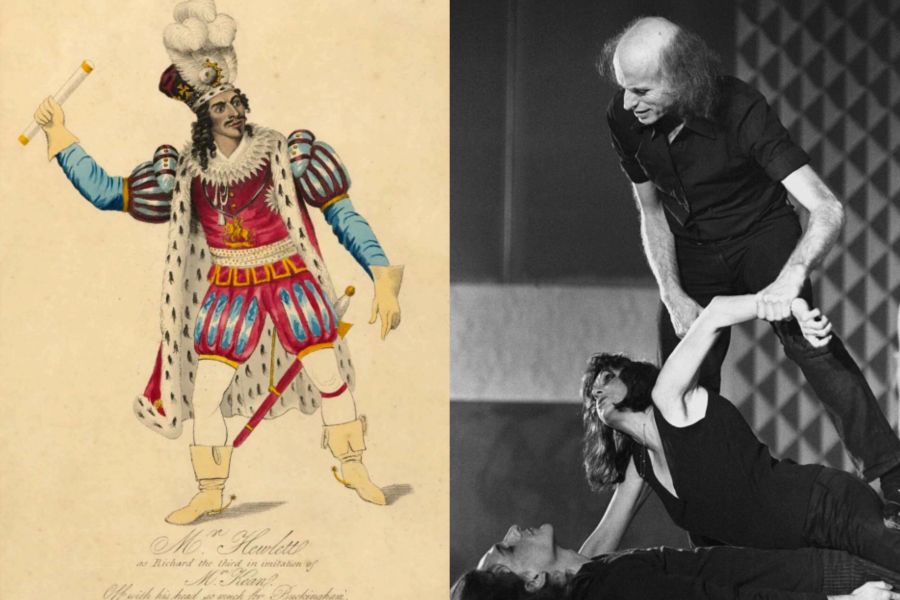
The African Company, the first African American acting company, opened its first production, Richard III. The titular role was originally played by an enslaved man whose name is not included in the historical record (James Hewlett later took on the role). The African Company was founded by William Brown, a former ship steward from the West Indies, after his success operating a tea room and entertainment hub in Manhattan called the African Grove. The African Company performed for mixed-race audiences and challenged the racist notion that Shakespeare wasn’t suitable for Black actors. The company also produced original work, including the earliest known play from an African American playwright, The Drama of King Shotaway (thought to be written by Brown himself). Two actors from the company went on to further notoriety: James Hewlett became the first African American actor to tour performing Shakespeare, and Ira Aldridge played Othello in London and became the first internationally acclaimed African American Shakespearean actor. Carlyle Brown dramatized the story of the Richard III production in his 1987 play, The African Company Presents Richard III.
1936 (90 years ago)
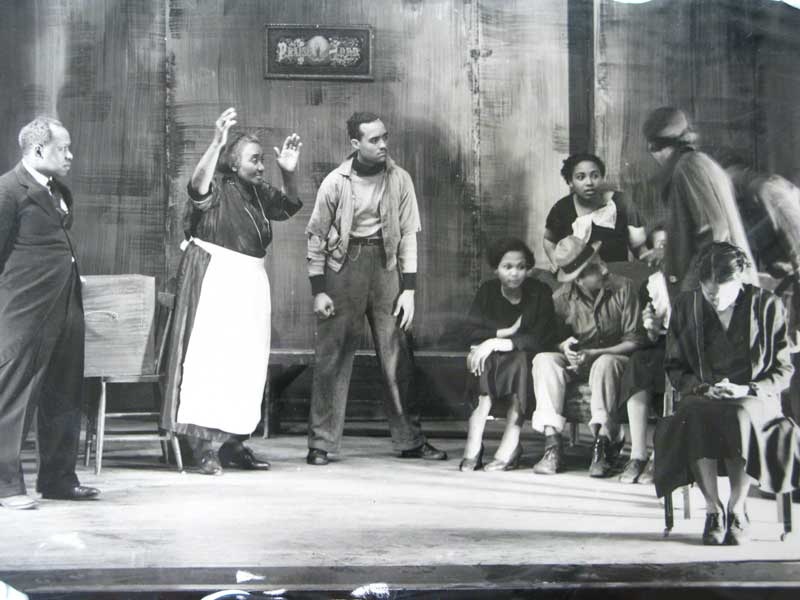
The Negro Repertory Company in Seattle opened Theodore Brown’s adaptation of Lysistrata in partnership with the Federal Theatre Project. The performance was scheduled to be the first of a three-night run. Despite strong reviews and a sold-out opening night, the local administrator of the Works Progress Administration closed the production the following day, decrying the sex comedy for indecency. A dispute over artistic freedom followed between the FTP and WPA, with the NRC continuing to rehearse in hope that the show could reopen. Ultimately, the production remained closed, but the Seattle WPA agreed not to censor future FTP productions. Other plays by Theodore Browne include Natural Man, about the legendary rail worker John Henry, and A Black Woman Called Moses, a play about Harriet Tubman and the Underground Railroad.
1971 (55 years ago)
Living Theatre co-founders Julian Beck and Judith Malina, along with six other company members, returned to the United States after spending 65 days imprisoned in Brazil without trial. The avant-garde theatre company had been living in Brazil since 1970 developing their site-specific play cycle, The Legacy of Cain. In July 1971, 17 company members were arrested on charges of marijuana possession, and 13 were imprisoned. The charges and imprisonment under Brazil’s military dictatorship received widespread condemnation from artists and intellectuals, including Jean-Paul Sartre, Susan Sontag, Jean-Luc Godard, and James Baldwin. The Living Theatre would go on to develop Seven Meditations on Political Sado-Masochism in response to their arrest and imprisonment in Brazil.
2001 (25 years ago)
Theatres across the country went dark in the aftermath of the 9/11 terrorist attacks in New York, Washington, D.C., and Pennsylvania. While performances were on hold, theatres did open their doors for community events, including town hall meetings and benefit performances for organizations such as the American Red Cross. While most theatres quickly reopened following the attacks, both programming and revenue were impacted in the aftermath. One casualty: The Roundabout Theatre Company’s planned revival of the Sondheim musical Assassins, as the subject matter was deemed too sensitive in the post-9/11 environment. This was an unfortunate echo of the show’s original Off-Broadway run at Playwright’s Horizons, which coincided with the outbreak of the first Gulf War and closed after 73 performances. (Roundabout finally opened a Tony-winning production of Assassins in 2004.)
2021 (5 years ago)
Broadway reopened after remaining closed for 18 months due to the Covid-19 pandemic. Hadestown and Waitress were the first musicals to start back up, with Hamilton, Chicago, The Lion King, and Wicked following suit, along with new play Lackawanna Blues. Lin-Manuel Miranda, Kristen Chenoweth, and Julie Taymor each delivered short curtain speeches commemorating the milestone. Broadway’s return came five months after New York City opened a vaccination center exclusively for performing arts workers, at which time Mayor Bill de Blasio and Anthony Fauci had cited the fall as a target date for Broadway workers to return to work. The coordinated reopening required patrons to present proof of vaccination against coronavirus and to wear a mask, restrictions that remained in place into 2022.