Welcome Speech
Good morning, everyone.
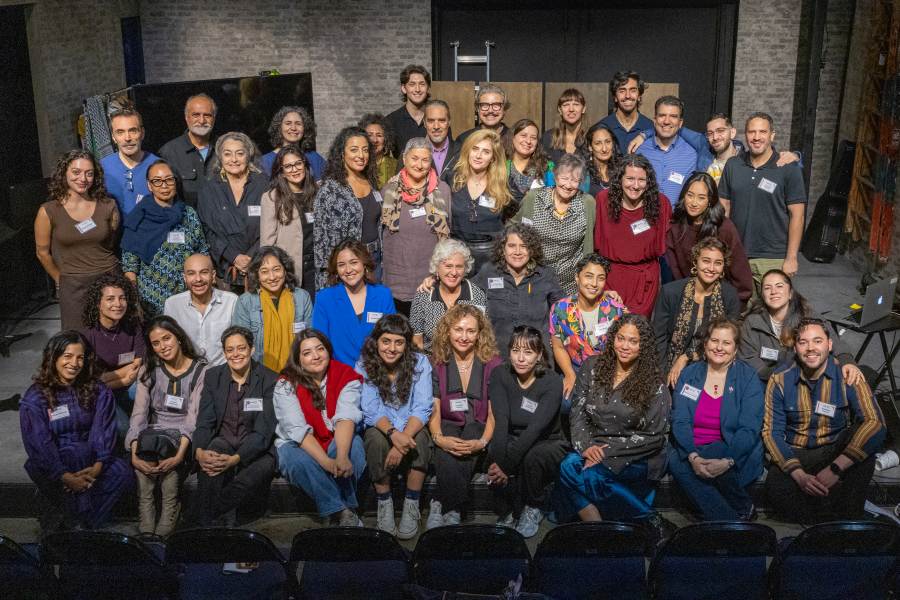
Welcome to San Francisco, and welcome to the 2026 MENATMA Fall Convening. Before we begin, I want to acknowledge the land on which we gather. We acknowledge that the land we occupy is the ancestral homeland of the Ramaytush Ohlone people, known colonially today as San Francisco. We recognize the ancestral stewards of this land and acknowledge that our presence here is a reminder of a dark history of colonization and dispossession. We also condemn our government’s complicity today in perpetuating these same cycles of oppression, land theft, and genocide in Palestine.
I want to extend a warm welcome to each of you for being part of this historic moment. It’s no small feat to travel across town or across the country, and walk into a room knowing that most of the day will be encountering something new. New faces, new conversations, a new experience. Will you know anyone? Where should you sit? Do you really belong here?
Any time I get on a plane, sleep in a hotel room, arrive in a room full of people and, dare I say, find myself onstage and at the mic, as much as I’m trying to play it cool, I am also very much aware that I am not home. I am finding my sea legs. But then again, I’ve always had a complicated relationship to home.
I was born and raised in New York, the first-born child of immigrants from Egypt, raised by a single mom. My mother grew up in a world that was very different from the one she was creating for us. For her, home was more than just community. It was how you showed up in the world and for each other. It was a safety net of friends and family. It was the wealth of having so many third spaces. It was a village of beloveds who hosted Friday night dinners and elders who passed on their legacies through stories to the next generation. Home was more than a place. It was a network of support.
But in the U.S., we were, in many ways, isolated. No extended family. No family friends. No systems of support for a single mom. While my mother built a home for us, in hindsight I think she was also mourning the home she had left behind.
So home became a private space. Outwardly, she worked hard to assimilate, to acclimate, and to succeed according to someone else’s definition of success—which she did. But privately, she was navigating challenges and struggles that few people ever saw. For my mother’s generation, there were so many reasons to keep those worlds separate. It was a way of protecting us. A way of surviving. A way of giving us access to opportunities she hoped we might have.
I wonder if our generation is being asked to do something different. To dismantle some of those binaries. To find the courage to live in the spaces between. To become comfortable with discomfort, of not fitting neatly into one category or another. To recognize that transition itself can be a place to stand on one’s own two feet.
I think about this a lot as an artist. For most of my early career as an actor, I believed my greatest talent was my ability to disappear. To become anyone. I could leave behind my own personality, my quirks, and find myself in the world of another character, telling another story, experiencing a life I had not actually lived. And I loved that. I still love that. There’s something extraordinary about the act of transformation. To embody another soul and call it art.
But for a long time, my own experience was not something I imagined belonged at the center of my work. And then something shifted. In my 20s, the artistic director of a Middle Eastern theatre company in San Francisco approached me to write a play based on a 5th-century Sufi fable. I had identified as an actor and a devisor, but not as a playwright.
I remember asking, why me? She said, I’m curious what you have to say. Me? But…but…but…I’m curious about you.
That first commission by Torange Yeghiazarian, who was the artistic director of Golden Thread Productions, taught me to look at the world differently, to investigate and ask questions, and to discover something without knowing what it was becoming.
Was I ready? Of course not. But that didn’t matter. It was the first time I had ever created theatre where culture wasn’t peripheral to the work but central. Writing Ecstasy | A Water Fable meant confronting how often I had used art to disappear into other people’s stories, and discovering what it meant to bring more of myself into my own.
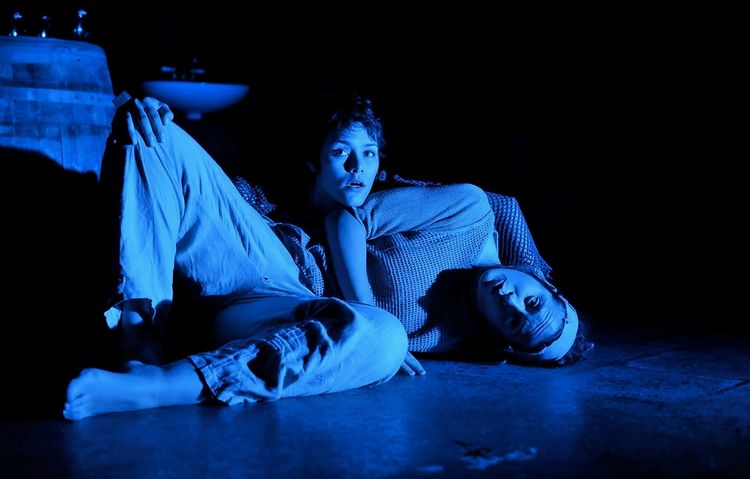
That single project changed the trajectory of my artistic life. I began to feel an urgency to write for the stage. In large part because we were missing from it. I went on to write comedies, solo shows, site-responsive participatory encounters (to keep things weird), and ensemble plays that drew from interviews I conducted, family histories, and the lived experiences of my own community to place characters and stories rarely seen onstage at the center.
I sometimes wonder what my life as an artist might have looked like if Torange had not extended that invitation 20 years ago. And it reminds me that sometimes what changes the course of an artist’s life isn’t talent or ambition or hard work. It’s another artist who opens a door.
In many ways, that’s why we’re here. Many of us have spent much of our artistic lives trying to find our way into rooms that weren’t built for us. Trying to get produced or cast or programmed. Trying to convince someone that our stories are worth telling, that our audiences exist, that our work is not too specific, too foreign, too political, too complicated.
We’ve watched our cultures fetishized, racialized, and sometimes terrorized onstage and onscreen. And when opportunities are scarce, we begin to compete for them. We can begin to believe that another artist’s success means one fewer opportunity for us. Scarcity is not simply a mindset. It is a material condition. There really have been too few opportunities, too little funding, too little infrastructure, too few pathways for our work. But what happens when we internalize those conditions? When we begin to reproduce the very hierarchies and exclusions we’ve been trying to dismantle? When we become so focused on finding a seat at the table that we forget to ask who built the table, who gets to sit there, and why we’re still waiting for an invitation?
The reality is, we don’t all arrive here with the same experiences. Among us are immigrants, first-generation, second-generation, third-generation Americans. People who grew up with access to resources and networks, and folks who grew up without them. Some of us have been made hyper-visible because of our identities, while others have worked hard to keep those identities invisible.
We have different relationships to language, religion, nationality, class, race, the countries our families came from, and the country we live in now. We are not a monolith. And I don’t think we need to become one. We can have alignment without agreement and still recognize that we need each other. Partnership, collaboration, and collective action are what will carry us through this very challenging moment in the American theatre.
Because organizing is what we’re doing here. Make no mistake about it. This is a movement. We are articulating our own needs. Creating our own opportunities. Supporting each other’s work. Modeling the partnerships we’ve always wanted to see. We no longer need to spend all our energy trying to gain access to the mainstage. We can build our own mainstage. And in many ways, we already are.
Imagine a world in which MENA theatremakers and organizations collectively fund and produce our own work. Where a production developed in one city tours to another. Where theatres exchange slots in their seasons and regional partnerships make possible rolling world premieres. Where our creative work is reviewed and studied, where we don’t have to wait for an institution to decide that our stories are worth producing.
Because we decide. We organize. We make it happen.
My mother built a home for us while mourning the one she’d left behind. She was navigating two worlds, often keeping them separate, trying to give us a sense of belonging in a place that didn’t always make room for us.
I think many of us have spent our lives navigating those same kinds of contradictions. Between cultures and languages. Between belonging and not belonging. Between the work we want to make and the work we’ve been allowed to make. But maybe we’re being asked to do something different now. Not to choose one world over another or erase our differences. But to find a way to live in those spaces together.
MENATMA was created by us, for us. I want you to consider that you are not a guest in someone else’s house. This is your house.
So for this weekend’s gathering, I invite you to consider: Who might you be if you didn’t have to prove that you belong? What might you make if you knew that the people around you wanted you to succeed? Because when you are home, you are not a stranger. Thank you.
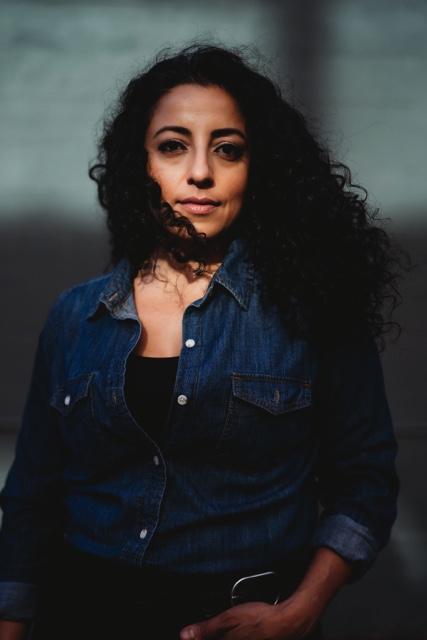
Denmo Ibrahim is an award-winning playwright, actor, and theatremaker whose work moves between intimate dramas and unexpected encounters. She serves as president of MENATMA and is currently developing The Future Will Be Absolutely Fantastic, a theatrical experiment in divination.
Torange Yeghiazarian is an award-winning playwright, director, and NEA Fellow, currently translating a collection of contemporary Iranian plays and adapting Nizami Ganjavi’s Khosrow & Shirin to the stage.
Founded in 2019 after decades of national advocacy and organizing, MENA Theater Makers Alliance amplifies the voices of Middle Eastern and North African theater makers and expands how stories from and about our communities are told on U.S. stages.