It was May 2, 2024. Sitting in my inbox was a link announcing that Jen Silverman’s The Roommate was headed to Broadway. I clicked immediately.
I was thrilled.
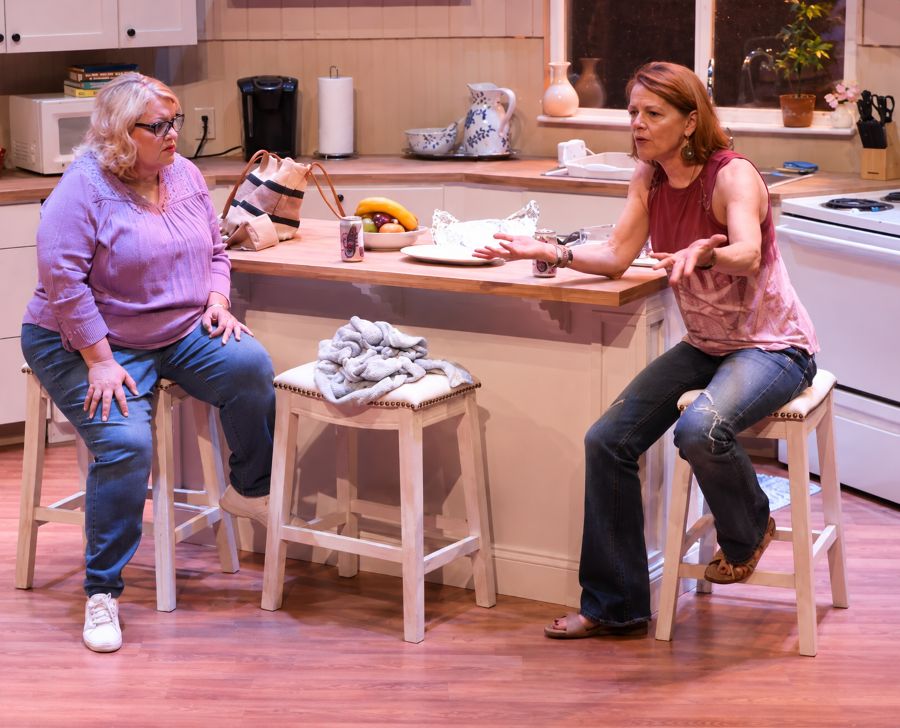
The Roommate isn’t the kind of play that typically makes the leap to Broadway. It is an intimate two-hander featuring two women over the age of 50. It is funny, tender, surprising, and deeply human. At its center are two American women navigating a stage of life when the “Invisible Woman Syndrome” is often in full swing—yet these characters refuse to disappear. They insist on being seen.
The play also holds an intensely personal place in my life. It was my pandemic shutdown production (at Lake Dillon Theatre Company in Silverthorne, Colorado). We closed the day after our first preview in March 2020. Eighteen months later, I had the extraordinary opportunity to return and direct the production again with the same cast and creative team. Because of that experience, The Roommate has always represented rebirth for me. Knowing that audiences on Broadway would now experience this remarkable story felt like a victory.
Then I kept reading.
The Broadway production would be directed by a man, and there would be only one woman on the design team.
I remember stopping for a moment. How could a play inspired by a real woman in middle age, centered on two women, and exploring distinctly female experiences, arrive on one of the biggest stages in American theatre with an artistic leadership team composed almost entirely of men?
How were we still here?
In 2018 and 2019 (and before), our industry was engaged in important conversations about gender parity on Broadway, in LORT theatres, and across the regional theatre landscape. Organizations, artists, and institutions were asking difficult questions about who was telling our stories and who was being hired to lead them.
Then the pandemic arrived.
Understandably, survival became everyone’s priority. Theatres fought simply to reopen their doors, retain staff, and bring audiences back. But as productions returned, I found myself wondering whether the conversation about gender equity had quietly disappeared.
Had anything actually changed? I wanted to know.
In August 2024, I began working with student researcher Brooke Suzman at Pennsylvania’s Lafayette College to examine gender representation in artistic leadership. In January 2026, another Lafayette College student, Lexi Handelman, joined the project as a researcher. Together we set out to collect data on the gender identities of playwrights, directors, scenic designers, costume designers, lighting designers, and sound designers working on productions produced during the 2024 and 2025 seasons. We also examined the gender identities of artistic directors leading LORT and regional theatres across the country.
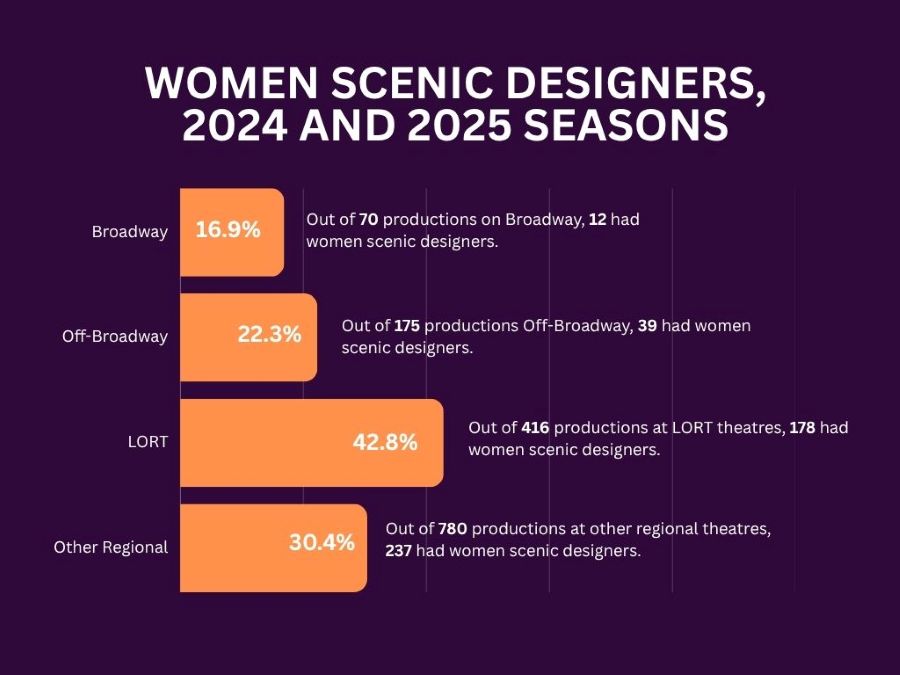
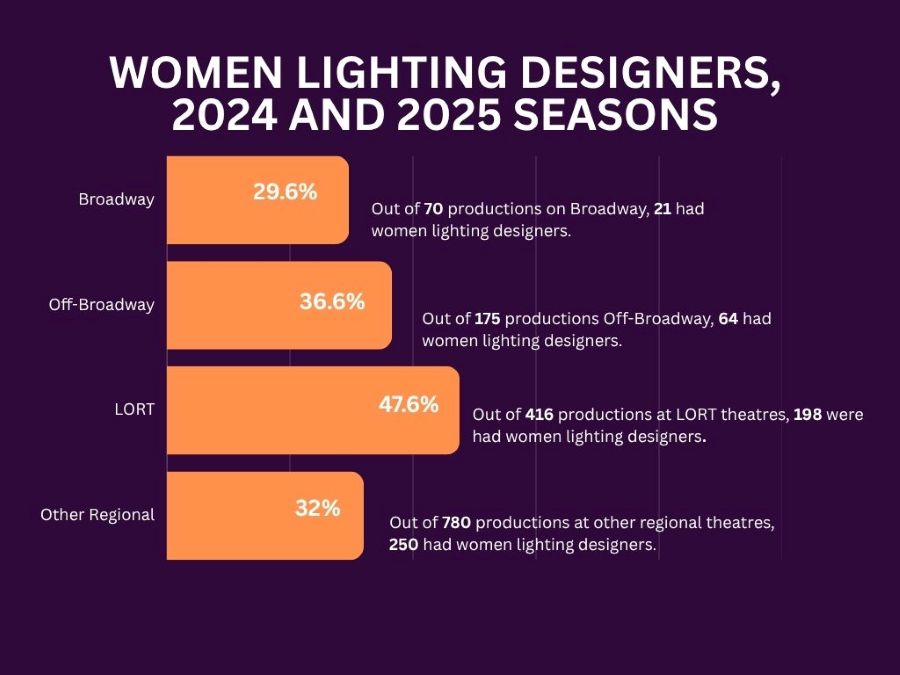
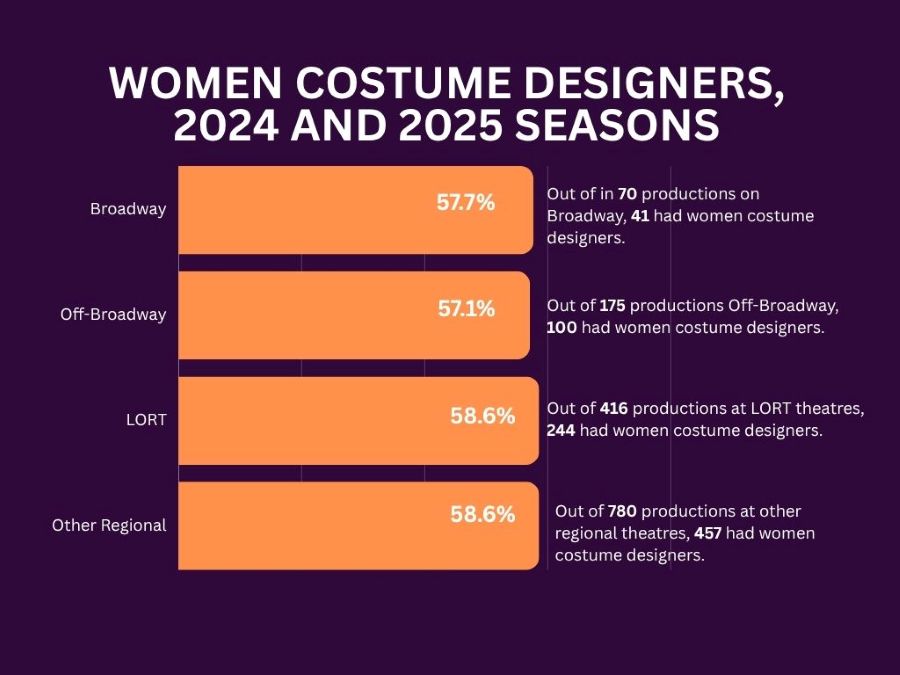
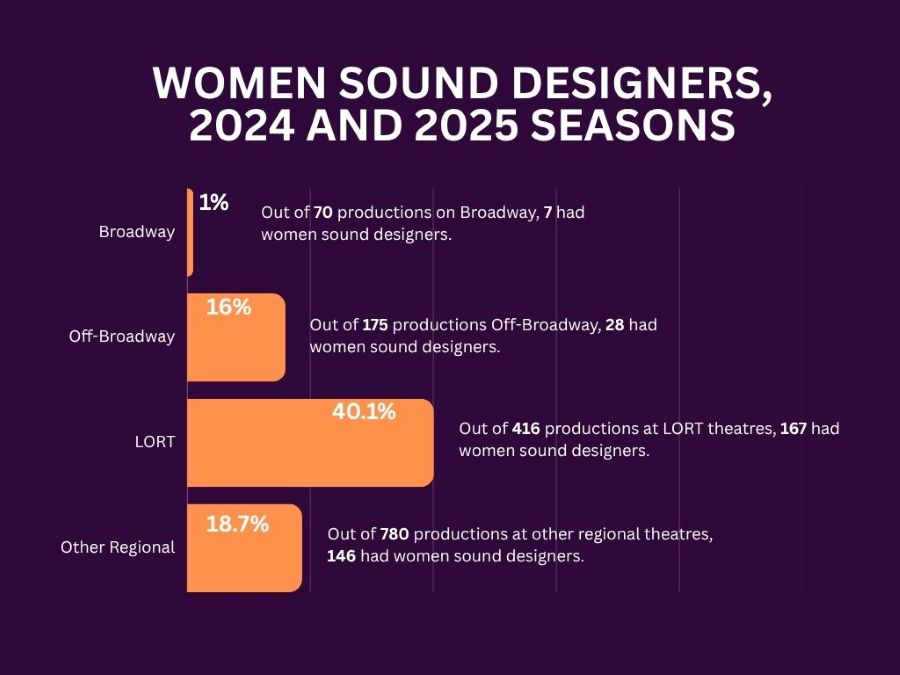
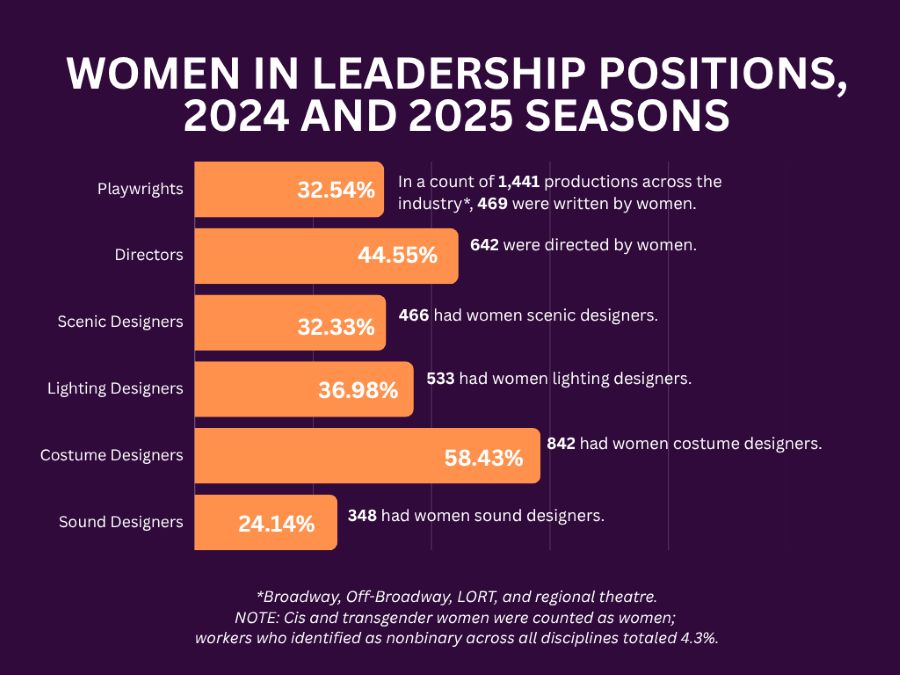
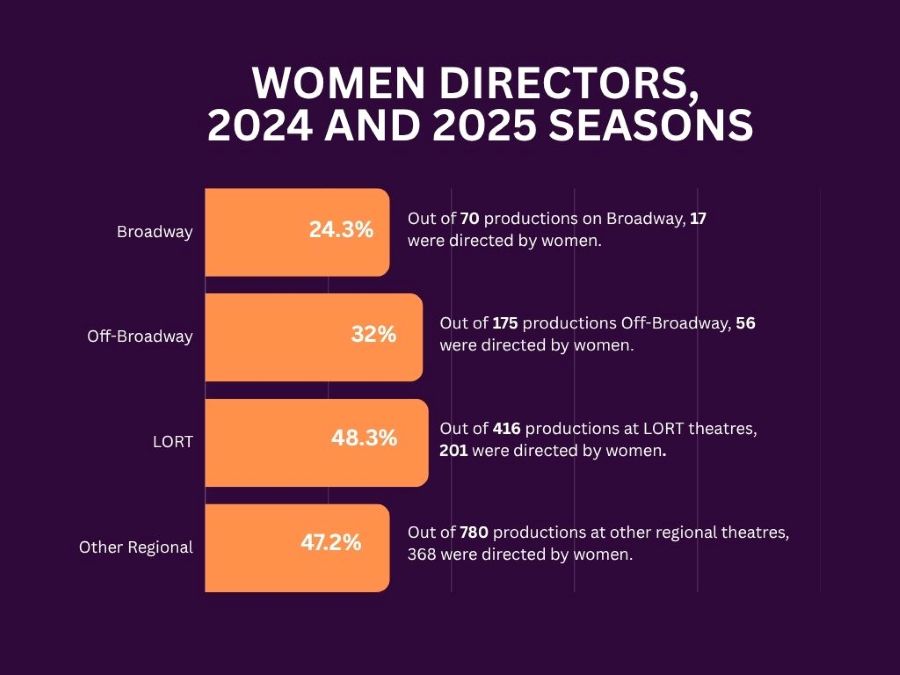
In total, we collected data from 1,441 productions. Our research included 70 Broadway productions, 175 Off-Broadway productions, 416 LORT productions representing 81 theatre companies, and 780 productions from 153 regional theatres across the United States. We do not claim to have documented every production produced in this country. American theatre is simply too vast for that. But we believe this sample provides a meaningful snapshot of current hiring practices and offers a reliable picture of where our industry stands on gender parity in artistic leadership.
The results were revealing.
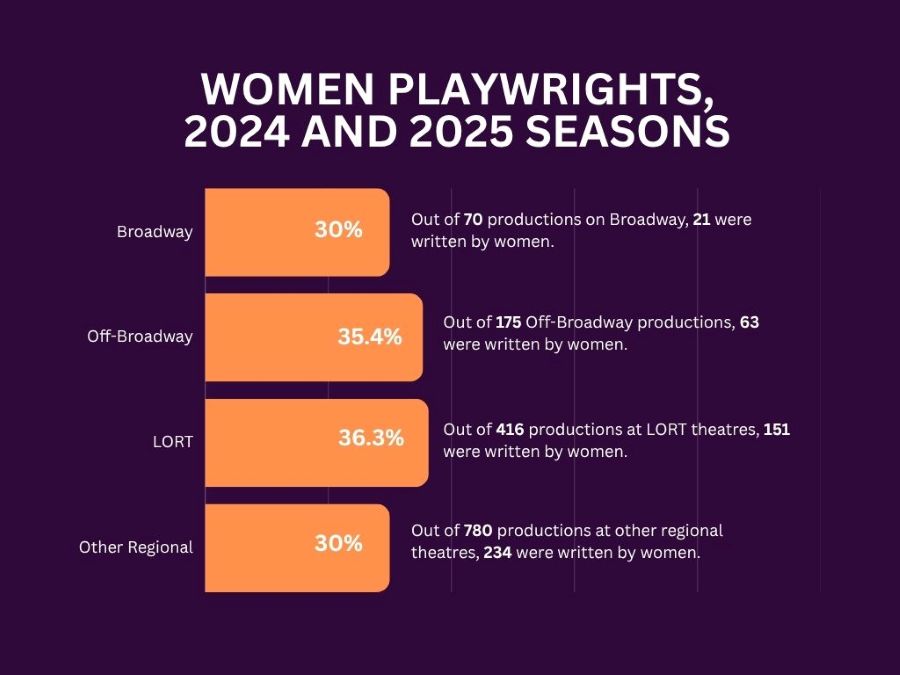 On Broadway, women held 28.33 percent of playwright, director, and design positions. Off-Broadway, women held 33.33 percent of those positions.
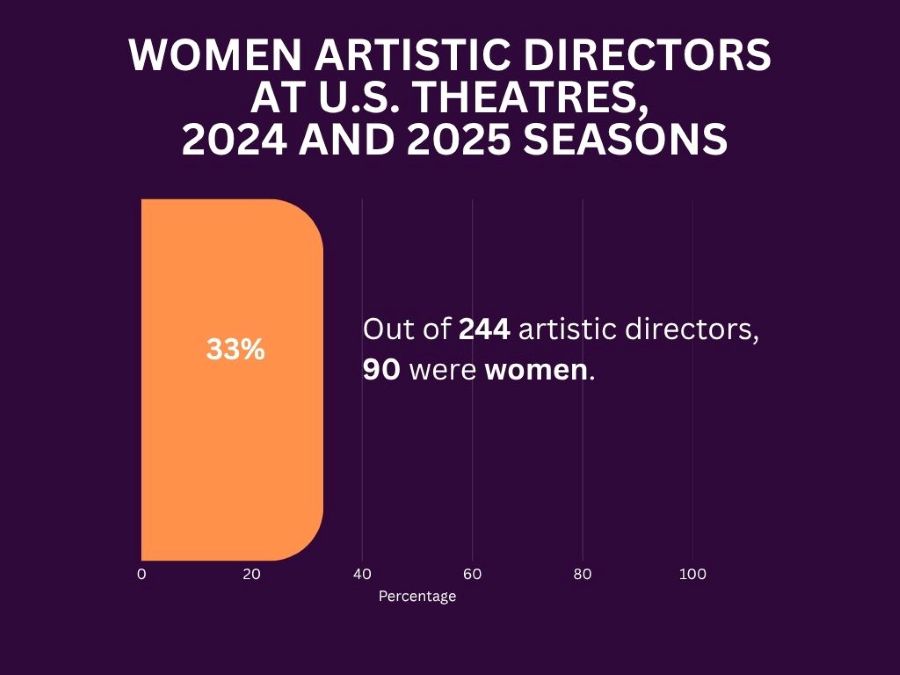
At LORT theatres, women held 45.18 percent of playwright, director, and design positions, while women served as artistic directors at 32.18 percent of those theatres.
Among regional theatres, women held 36.26 percent of playwright, director, and design positions, and women occupied 39.49 percent of artistic director positions.
Across every category we studied, we collected gender data on 8,890 artistic leadership positions. Nationwide, women held 38.13 percent of those positions.
The numbers tell a complicated story. In some ways, they demonstrate measurable progress. Research covering the period from 2010 to 2017 revealed significant gender disparities across American theatre. Studies of Broadway and Off-Broadway found that women held fewer than 30 percent of positions in several key artistic disciplines, particularly lighting and sound design. Research from the Wellesley Centers for Women also found that women had historically held no more than 27 percent of leadership positions at American nonprofit theatres. While these earlier studies examined different areas of the industry, they paint a clear picture of how limited opportunities were for women. Our findings suggest the industry has moved forward—but progress is not the same as equity.
The question is no longer simply whether more women are working in theatre leadership. The deeper question is: Who gets to tell our stories? Brooke Suzman, who spent two years conducting this research while studying psychology and theatre, reflected on the experience.
 “As a psychology and theatre student planning to pursue a career in the entertainment industry,” Suzman said, “this research has opened my eyes to the urgency of creating more equitable staffing opportunities in theatres across the country. I now have a better understanding of the profound impact it can have on audiences when women are not only represented onstage, but also behind the scenes as directors, playwrights, set designers, and more. This research has made me even more passionate about building a theatre industry where women have an equal voice in both the stories being told and the decisions that bring them to life.”
 Lexi Handelman, who joined the project during its final six months, connected the research to her own experience as an emerging theatre artist.
“Working on this research has revealed to me that the lack of female perspective in theatre storytelling is painting an unbalanced picture of the human experience, further reinforcing a male-dominated culture,” Handelman said. “I recently had the opportunity to assistant-direct under a female director on an adaptation of a play that I had previously seen directed by men. The insight into the female experience that she imbued into the production opened up a completely different interpretation of a classic story that I hadn’t considered before. It brought forth a side of humanity previously absent and promoted discussion and reflection I hadn’t previously engaged in after seeing past productions. My directorial experience, combined with working on this research and learning about the gender inequity in theatre, has further motivated me to involve myself in the industry and promote female perspectives in the stories we tell so that more theater is made for the audiences who experience it.”
Their words capture why these numbers matter. Representation is not simply about employment statistics. It is about perspective. It is about authorship. It is about who shapes the stories audiences experience and whose lived experiences inform the artistic choices that bring those stories to life.
One statistic from our research continues to stay with me: Among the 245 Broadway and Off-Broadway productions we surveyed, 74 centered a woman character. But of those 74 productions, only 29 were directed by women. That means the majority of stories about women were interpreted through a male directorial lens. Those numbers also show that the number of women-centered stories was just 30.2 percent of all Broadway and Off-Broadway productions—despite the fact that approximately 69 percent of the theatregoing audience in a typical season are women.