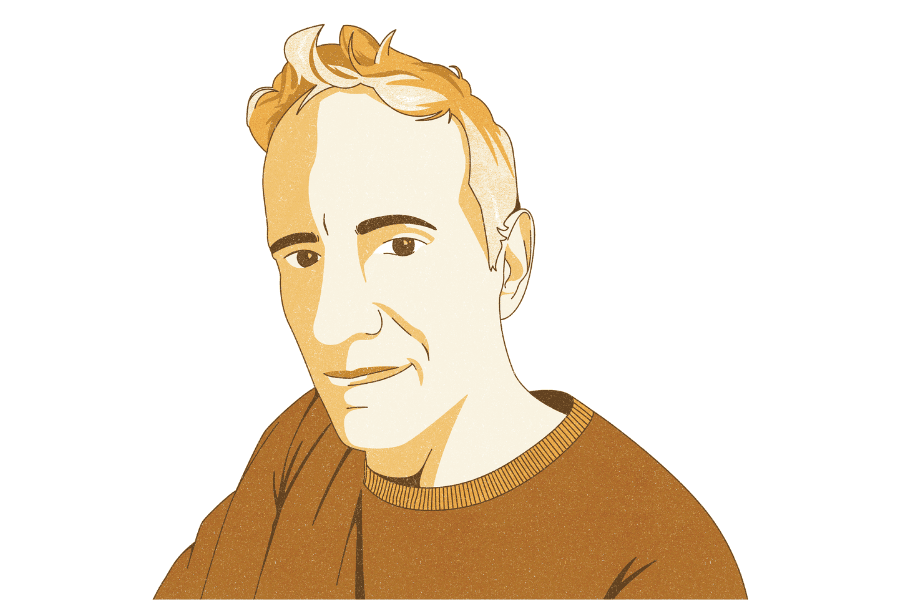
Los Angeles playwright Justin Tanner made his name in the 1990s with a series of hit comedies (Pot Mom, Zombie Attack!, Teen Girl). His plays since have included Procreation, Day Drinkers, Little Theatre, and his newest, the autobiographical My Son The Playwright, directed by Lisa James at Rogue Machine Theatre in L.A., Jan. 24-March 1.
What’s My Son The Playwright about?
The first act has a dad waiting for his son to show up for a meeting, trying not to drink, but as the day goes on, he continues to drink. The second act is the son trying to get to this meeting, but he’s not going to leave till he finds a bag of weed. Since they can’t be together, they end up talking shit about each other. There’s a little bit of redemption at the end, but it’s mostly just two guys who do not like each other going at it.
You’re playing both roles. What’s it like to play your dad?
I love playing him more than I love playing myself, because it’s hard to be reminded of myself back in 2005, when the play takes place. I was really in the throes of addiction, manic and insane and burning every bridge.
You’ve written a lot of strong, often domineering mother characters. Why a dad now?
During Covid I kept a daily diary on Facebook, and on Father’s Day, I wrote this thing about my dad. I hadn’t had a good thought about him in decades. My mother was such an overpowering force of nature, and he was this super-malleable, milquetoast guy; he didn’t stand a chance. This was an opportunity to redeem him, to kind of apologize. I didn’t go to his funeral. I didn’t cry when he died. I was like, “Fuck him.” I don’t feel that way now.
What’s the last piece of art that inspired you?
Michael Sargent just did a series of short plays, Devils in America, at the Odyssey. One was about this guy, Ed Buck, a gay Democratic donor who murdered a bunch of Black hustlers; there was one about Marlon Brando’s kids, and one about Ghislaine Maxwell. Despite the grim subject matter, Michael made them absolutely hilarious. Some people in the audience were quite aghast. I loved that.
What music are you listening to these days?
There’s a singer named Tessa Rose Jackson, who has a song called “The Bricks That Make the Building.” It really feels like: Here’s how we’re going to survive what we are going through right now.
What’s a recent moment that reminded you why you do theatre?
Rogue Machine just had a terrific season. Guillermo Cienfuegos, the artistic director there, is vibrating with passion and clarity. I saw Tim Venable’s Adolescent Salvation at their small theatre space; they created a room where you were actually in this girl’s teenage bedroom, with a beanbag chair right next to where my knee was. I’d never wanted to do this kind of immersive theatre before, but it’s so personal and visceral, being in a room with a bunch of audience members who you can see sitting right next to you and we all might as well be in the play—I immediately got into it. I can’t wait to be on that stage doing the same thing.
What is the “note” or piece of feedback you get most often?
That my plays are funny but sad, and they have a voyeuristic quality.
What is your first theatrical memory?
My mom was a costume designer for this place in Salinas called the Western Stage. I think the first thing I saw there was The Importance of Being Earnest; I saw every performance of it. I just loved the language and the costumes. I didn’t understand Bunburying until much later, and I wasn’t connected to my queerness at the time, but for some reason I knew that there was something about me on that stage.

Support American Theatre: a just and thriving theatre ecology begins with information for all. Please join us in this mission by joining TCG, which entitles you to copies of our quarterly print magazine and helps support a long legacy of quality nonprofit arts journalism.