
This doesn’t necessarily feel like an appropriate time to write a theatre column. It’s a cold, lonely time for hopeful art. My goodness—it’s a cold, lonely time for Care themself, who sits over a blank page, overwhelmed by the hollow violence of the world.
Why create? What is my role? Care fumbles with the pen. Why try?
We never know when we will reach a voice that needs us. If Care themself succumbed to helplessness and departed from this world, it would look worse than it does now. So why should we, helpless as we may feel, drop the pen? The compounding effects of Care will ripple into immeasurable waves. We cannot succumb. Yet I’ve been hearing many writers (myself included) ask impossible “why” questions lately, striving to understand where theatre or theatre criticism fits into an impossible quest for a better world.
A number of theatre critics have reflected on this reckoning this past summer, when The New York Times reassigned four arts critics, including theatre critic Jesse Green, to new posts and announced new plans for different kinds of coverage. Even though arts journalists are arts workers and comprise part of the theatre ecology, they feel even more siloed from an already struggling industry. I’ve been thinking about what each person’s duty to the theatre ecology is in this precarious time, as well their responsibility to the wider community. It is hard to take in the bigger picture when each day, as an artist or administrator, you can only concentrate on the details.
I’ve been reexamining “EF’s Visit to a Small Planet” to remember how to ask questions of an artwork, and even of an artistic ecology. In this seminal essay, Elinor Fuchs, who was about as close as we can get to the theatre’s therapist, encouraged us to view each play as a world unto itself, writing, “To see this entire world, do this literally: Mold the play into a medium-sized ball, set it before you in the middle distance, and squint your eyes. Make the ball small enough that you can see the entire planet, not so small that you lose detail, and not so large that detail overwhelms the whole.”
Fuchs’s essay has become a dramaturg’s manual, a central text in training programs. Since its publication, dramaturgy has only grown in scope and field-wide recognition. The dramaturg has become an indispensable part of the rehearsal room, a guide to the textures of a play, leading both emotional and empirical research, asking pointed questions, and reminding when to focus on the details or back up and see the bigger picture—to recognize why the play matters. A therapist for the play, if you will.
I see the dramaturg’s role in the rehearsal room as akin to the theatre journalist’s role in the wider theatre ecology, a large galaxy. My personal hope as a theatre journalist is to take that galaxy and mold it into a medium-sized playing field, set it before us—writer and reader—in the middle distance, squint, and see it anew.
Yes, theatre criticism is undeniably shrinking as a profession, and its value is being questioned amid a turbulent moment; I’ve seen folks take to social media or email to offer their diagnoses and prognoses. Yet it is within a space of respectful and brave discourse where the community can grow, investigate, question. Through the guiding light of arts journalism, questions emerge, the ephemeral becomes immortalized, and the realities of our ecology can materialize and (hopefully) mend.
A New Gathering Place
“Let us gather in a flourishing way,” begins Juan Felipe Herrera in his poem of the same title. Jocelyn Prince has been turning over the question of how best to gather in her mind for quite some time. The theatre consultant with a background in community organizing began the Theater Folx of Color (TFOC) group on Facebook in 2018. Here, theatre critics and workers of color in all specializations unite.

“I wanted to bridge a divide that I was perceiving between artists and arts administrators of color,” said Prince. “And the idea expanded as I started to work with some incredible Black women, including Claudia Alick, Nataki Garrett, Phaedra Michelle Scott, Kathy A. Perkins, Jennifer L. Nelson.” Prince’s goal was to make people feel heard and less alone in their work and challenges.
Today the TFOC private Facebook group (joined by invitation and open only to theatre workers of color) has more than 14,000 members, bringing theatre administrators, critics, designers, directors, students, actors, and everything in between together. But since February, Prince has been exploring alternatives to the social media platform to improve connectivity and gather on a more secure and ethical site, and eventually built out a new TFOC space on Circle.so.
“My intention is not to have the Facebook group on another platform,” Prince said. “The idea is to expand the group and make the group more useful for people.” Unlike Facebook, Circle.so doesn’t rely on algorithms, with content appearing sporadically to members. Instead, users can see all the resources available ad-free in a more streamlined layout, including built-in video conferencing meetings, workshops, affinity spaces, virtual coworking, resource lists and requests, a compilation of job boards, collections of writings and media by or centering folks of color, databases of different theatre professionals of color, mutual aid and collective care, and more.
Prince has been careful that the migration does not feel like a shift into yet another social media tool; the new site is designed to function more like an all-in-one self-improvement and connection platform. Her goals now are to expand collective impact, empower folks to be advocates for one another, and see what can arise from this unity and fellowship. Once Circle.so feels robust enough on its own, Prince will sunset the Facebook group.
Having lived and worked for many years in Chicago, Prince said the effort has been embraced and uplifted by artist-activist Alexis Green, director Tor Campbell, and marketing specialist PennyMaria Jackson, among others. She hopes that, as more creatives join the new platform, they will support the venture. What many don’t realize about the group, said Prince, is that it has been an entirely volunteer effort for her; there isn’t a paid team or nonprofit behind her.
“I think it’s important, of course, to pay people for their labor so we’re moving into more of a paid subscription structure,” said Prince. The new TFOC site offers lifetime “founding memberships” for $490 for those with the financial means, quarterly subscription options as low as $40, student memberships as low as $30 annually and $10 monthly, scholarships that lower costs to $12 per year, and even free subscription options for folks willing to volunteer to support the group.
Prince said of the many ways folks can get involved, “The success of the migration and sustainability of the group is not something I can ensure alone. I really encourage people to consider joining.” She also hopes white allies and predominantly white institutions, though they cannot join the group itself, will consider donating memberships and supporting the group.
Though many folks in our communities of color and immigrant communities are living in precarious conditions, I’m deeply encouraged by the generosity and initiative many are taking to remain in community. As always in Chicago, “There will still be more to see,” as Elinor Fuchs might put it.
Remembering, Biking, and Loving Hard
Here in Chicago, Kerry Reid’s writing has kept flames burning bright. Many artistic trailblazers are no longer with us in this plane, but their impact remains. Chicago theatre recently lost Lavina Jadhwani, and Reid, among many, remembers the culturally responsive director, writer, and friend who advocated fiercely on behalf of her collaborators and enjoyed language-driven plays. Both her in-person theatrical impact and digital presence writing about color-conscious practices will continue to ripple as immeasurable waves in the industry. Her communities will come together to celebrate her life on Sat., Oct. 4, 11 a.m.-2 p.m., at the Theatre School at DePaul University.
Back in early September, the Chicago Theater Bike Ride commemorated the lives of people who died this past year, including beloved theatre critic Kris Vire and Latine theatre giant Juan Ramirez. Nationwide, artists are also mourning Diana Oh, known as Zaza, who brought people together with experimental, interactive works like The Infinite Love Party. They died on June 17.
Immersing myself in the works of these theatre enchanters, I am reminded again and again of the importance of gathering. So how shall we do it this fall?
Coming Up in Chicago
I’ve only just gotten back to the city after some time away and am bursting at the seams to reunite with the creatives and advocates who make Chicago such a beautiful place to live. Here are just a few of the theatrical events I’m looking forward to catching.
-
- Chicago’s International Latino Theater Festival Destinos begins this week and runs through Nov. 2. Within the “La Voz” section of the Sun-Times, Gisela Orozco did some wonderful Spanish-language reporting on the themes, and importance of this year’s festival. Orozco and CLATA executive director Jorge Valdivia highlight La Jaula de Oro, a musical drag show by new company Zona Rosa; comedy sketch show No Trailer by Concrete Content, about the underrepresentation and stereotyping of Latine people in film; Nelson Diaz-Marcano’s La borinqueñas, presented with Visión Latino Theater Company; and the Argentine musical melodrama Nada del amor me produce envidia.
-
- The Chicago Filipino American Theatre Festival will run at the Rizal Community Center and Hoover-Leppen Theatre Oct. 11-26. It’s the second iteration of the festival after a successful inaugural event.
-
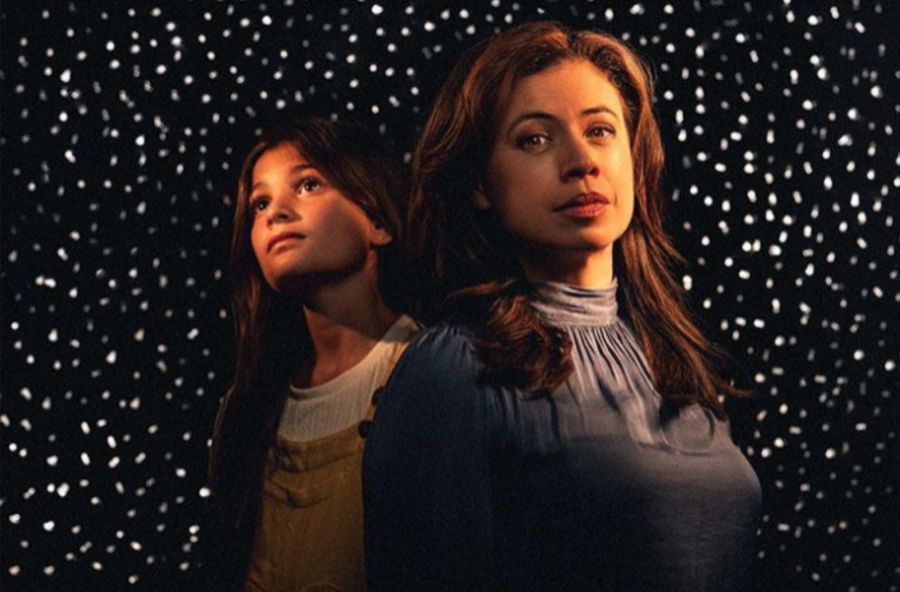
- In Sandra Delgado’s new play with TimeLine Theatre Company, Hundreds and Hundreds of Stars, “Motherhood, marijuana, and the multiverse collide,” as she puts it, in a Chicago story of family and immigration running Oct. 8-Nov. 9.
-
- This past weekend, Chicago Children’s Theatre opened Leo Lionni’s Frederick, the tale of a daydreaming mouse who’s planning something a little different for hibernation. This folk and blues musical will run through Nov. 16.
-
- Powerhouse Chicago actor Cindy Gold is starring in James Sherman’s The First Lady of Television over at Northlight Theatre through Oct. 12, a haunting new play set against the backdrop of the Hollywood blacklist.
-
- Bramble will conjure Ben F. Locke’s Rooted, a witchy, queer, comedic world premiere, Oct. 9-Nov. 2.
-
- I’m also emotionally preparing myself to be spooked at Chicago Shakespeare’s Paranormal Activity, written by Levi Holloway and based on the original films. Also at CST, the Q Brothers Collective has whipped up a brand-new “add-rap-tation” of Julius Caesar titled Rome Sweet Rome, which I’m sure will kill it in more ways than one through October 19.
-
- The Goodman pays moving homage to Chicago for its centennial season. Its family-centered Ashland Avenue by Lee Kirk will also run through Oct. 19 (and you may recognize a familiar face from The Office onstage). And Oct. 4-Nov. 9, Zayd Ayers Dohrn and Tom Morello’s new South Side musical Revolution(s) will pulse with rock ’n’ roll, hip-hop, and metal.
Which shows are on your fall bucket list? Have I missed any you’re excited about? There’s a new way you can get in touch with me and make recommendations or requests! Read on…
Filing Into Columns
You may have noticed this edition of AT Chicago looks a little different—and that’s because American Theatre is reimagining our columns and newsletters. Over the next few months we editors—Rob Weinert-Kendt, Jerald Raymond Pierce, and I—will pilot individual columns to better connect with the country and share what’s on our minds. While we brew our own hopes and dreams, please feel free to share yours via this form. Our theatre galaxy may seem composed of disparate planets floating apart, dodging meteors and each other. I’ve found the more any member of our community strives to learn more about others, the more they share their opinions and hopes, the stronger our bridges become, and the more theatre journalists we have. We are better for it.
Care must lift their head. Pick up the pen.
In your own community, among those who trust you, around afterschool rehearsals, at bars post-show, and beyond, you are the most important critic. We are just one piece of the puzzle, striving to understand, document, and uplift with you. I hope you’ll count us AT editors among your friendly dramaturgical guides and explore this galaxy with us.
Let us gather in a flourishing way, indeed.