“I love watching people play music,” the director Rachel Chavkin wrote me in an email this week. That makes two of us.
 We weren’t just chatting about our clubgoing tastes. I was in conversation with Chavkin about two shows in which musician-actors, indeed whole bands of instrumentalists, are central to her staging: the Tony-winning Hadestown, now approaching its seventh year on Broadway with a stellar new cast headlined by J. Harrison Ghee as Hermes, and My Joy Is Heavy, the latest musical-theatrical memoir by and starring the married duo The Bengsons, now in previews at New York Theatre Workshop. (I also recently spoke to Chavkin about her work on Sarah Gancher’s similarly band-forward new bluegrass take on Eugene Onegin, opening at Arkansas’s TheatreSquared in June, for our upcoming Spring print edition; look for it next month.) It’s been my observation that putting bands and musicians at the center of theatrical storytelling can give it a special immediacy and urgency, not least by reconnecting a form that can have a tendency to be stultified and overly formalized to its original music-making impulses.
Indeed, this subject has long been a hobbyhorse of mine. Band musicals—can I make bands-icals a thing?—is a subject to which I devoted an American Theatre cover story in 2014. At the time I had in mind examples ranging from Stew’s Passing Strange to The Lisps’ Futurity to Once, from Groovelily to Pig Pen Theatre Company to the unfolding oeuvre of Dave Malloy (not just Natasha, Pierre & the Great Comet of 1812, another Chavkin joint, but the transfixing Ghost Quartet, which Annie Tippe directed). I boldly called this trend “musical theatre’s next tune,” entirely failing to foresee the arrival of Hamilton the following year. Now, a decade later, there are precious few Hamilton imitators, but there are still plenty of musicals in which band members are integral elements of the staging, even sometimes the show’s lead performers. This is true not only of musicals based on songbooks or records (Buena Vista Social Club, A Beautiful Noise) but of such harder-to-classify musician-forward shows as Dead Outlaw, Stereophonic, and Mexodus (the subject of a deep dive Production Notebook by yours truly in our upcoming Spring issue).
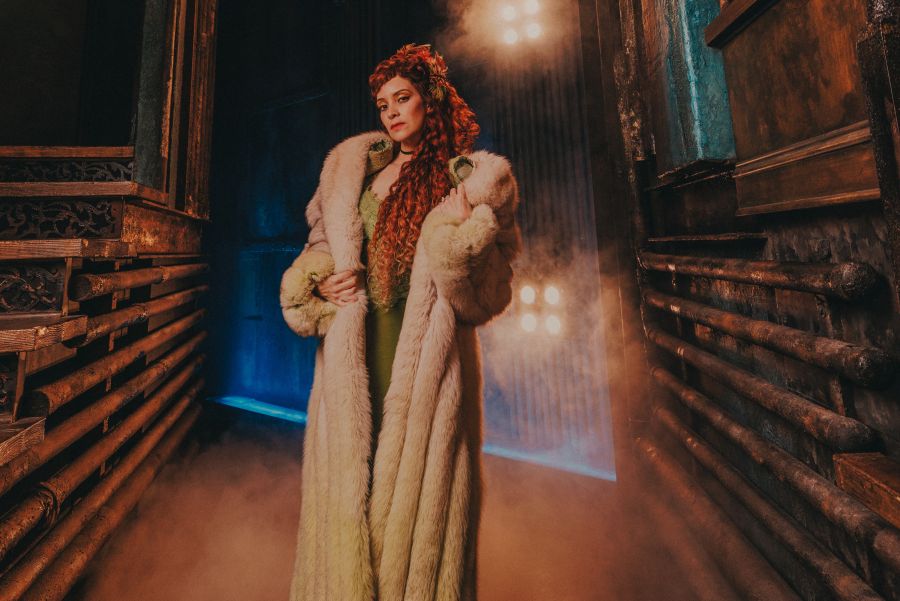
In the case of Hadestown, my interest was freshly piqued by the casting of Gaby Moreno, one of my favorite singer-songwriters, in the role of Persephone, in which part a series of writer-performers have taken turns. Most recently, the great roots troubadour Allison Russell took on the role, not longer after the iconic righteous babe herself, Ani DiFranco, stepped into it. Both had a prior claim on the part, in a sense: Russell coincidentally, thanks to her gorgeous 2021 song “Persephone,” and DiFranco more integrally, as she sang the role on Anaïs Mitchell’s original 2010 Hadestown concept album. Indeed, while Persephone was originated onstage in vintage Eartha Kitt style by Amber Gray, and has been played by any number of musical theatre powerhouses, its performative aspect would seem to make it a natural fit for folks who know how to work a mic and put across a song. Chavkin conceded this point, and also attributed this confluence to “an epic quality in the writing that has echoes of both the Greeks but also Brecht—a hint of self-awareness, and thus a delicious dual opportunity to deliver both a character and a performer.” This isn’t exclusive to the Persephone character; Orpheus, after all, totes around a guitar to accompany his purportedly self-penned Jeff Buckley-esque arias, in which he is joined by the always-onstage band. As Chavkin put it, “The show likes a performer as much as it likes an actor.”
Moreno’s casting definitely makes musical sense: Blues, jazz, soul, and old-time music have been among the many flavors she has offered in her dizzingly diverse career so far, which has won her a Grammy for best Latin pop album as well as a few Latin Grammys, and whose sound alternately evokes Edith Piaf, Chavela Vargas, and Mavis Staples. “The music that has inspired me,” she said, is “all the music from the first six decades of the 20th century, basically.” So Mitchell’s score, with its mix of folk and ragtime and blues, “is right up my alley.” (This Moreno original, a particular favorite, gives some idea of her old-time bona fides.)
The role is about more than singing, of course. There’s also David Neumann’s loose-limbed choreography and some busy turntables on Rachel Hauck’s set—a contrast to Moreno’s usual stage presentation, where she’s usually “hiding behind my guitar, not running around everywhere.” In addition to learning the steps of the role, she said the show’s associate director, Keenan Tyler Oliphant, who works with the show’s replacement casts, pointed out that when she’s performing her own songs, she’s essentially “looking inward,” while with Hadestown, she would “have to bring it out and look up at the audience and connect with not just the house seats, but the mezzanine level and everyone. That took some getting used to.”
Having seen her performance, I can testify that she’s risen to the occasion with infectious aplomb and grace, and she fits beautifully into the sensational, heartful new lead cast. Moreno musters the honey and the growl required for the bravura second-act opener “Our Lady of the Underground,” adding a deliciously rolled “r” to her pronunciation of “Perrrrrrrsephone,” and she projects unmistakable sunshine throughout, even when her character is stuck in winter or raging at Gary Dourdan’s Hades. Like Russell before her, she too may have a synchronistic claim on this role: Her native Guatemala’s nickname, after all, is “Land of the Eternal Spring.” Who else to play the goddess of spring?
There’s a devastating moment when winter, or at least a sprinkling of stage snow, descends on The Bengsons’ My Joy Is Heavy. It would be a spoiler to describe it further, but suffice it to say that I saw more parallels than I expected to find between the life-and-rebirth themes of Hadestown and My Joy. Both shows metabolize essentially unhappy outcomes into the kind of ritual celebration that music is uniquely qualified to do.
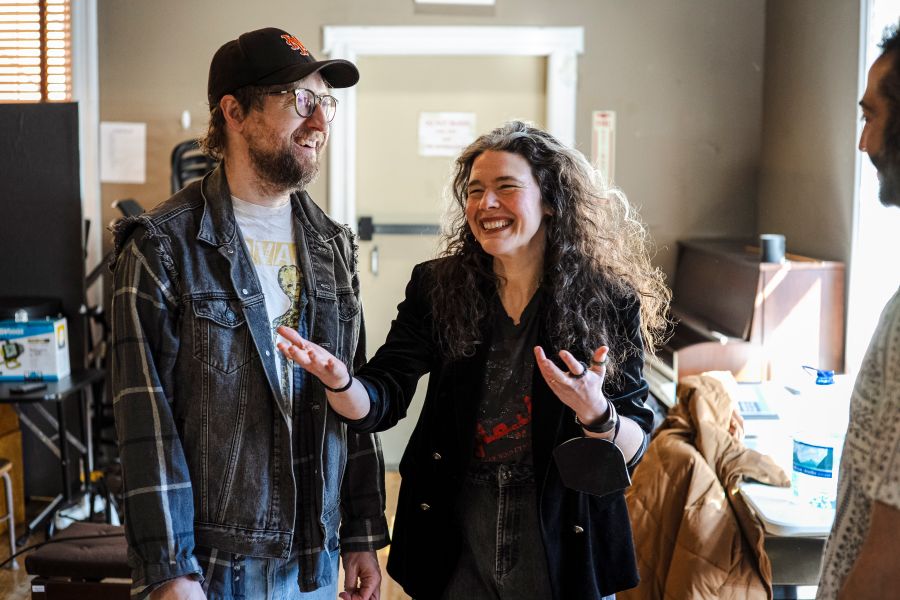
In the case of My Joy Is Heavy, that intention—to lift us up with a song in the midst of illness and trouble, to dance in the face of death—is explicitly named by Abigail Bengson, the wild-haired earth mother who leads the show’s final “Hallelujah.” Of course, as with nearly all Bengsons shows, the theatrical fourth wall is a porous thing, much as is the line between autobiography and drama, let alone between speech and song. In My Joy, Abigail and her real-life husband Shaun, who plays guitar and shares vocal duties with her, both tell and reenact the story of their Covid lockdown years, when they tried in vain to conceive a second child while raising a bubbly toddler.
That said, My Joy Is Heavy is the least concert-like of their shows (not counting 2018’s The Lucky Ones, a more-or-less traditional musical for which they wrote the songs and Sarah Gancher the book; both Bengsons were onstage leading the band while actors played their scenes downstage). In 2017’s Hundred Days (also co-written with Gancher), the show that put them on the theatrical map, they told the story of their whirlwind courtship and marriage, backed by a small band, but from behind the safety of microphones and a guitar. By contrast, in My Joy, while Shaun occasionally strums his guitar and there’s a band of six, half-tucked for most of the show behind Lee Jellinek’s multi-level set, the show recreates scenes, some of them quite painful, from The Bengsons’ real lives. This wasn’t just a daunting writing experience (the show was originally commissioned and performed as a virtual play for Arena Stage); it also became a performance challenge. For Shaun, it meant putting down the guitar, and for Abigail abandoning the mic stand, and, with the help of Chavkin and choreographer Steph Paul, figuring out how to stay, as Abigail put it, “honestly in my body as it is.”
“It’s a real departure or growth point for us—a leap,” said Abigail of the show’s staging. “When we had one of our first creative calls with Rachel, she was just like, ‘You and Sean could turn and speak to each other, and it could be a scene.’ We were both, like, what? Which is ridiculous, because there’s a whole canon of musical theatre that does this. But it really made our minds explode.”
Of course, this only makes the show’s overtly musical or concert-like moments—when Shaun picks up his guitar, or the two of them address the audience directly to explain the show’s accessibility ethos, or members of the band emerge to join them onstage, or Abigail simply segues from speech into song—all the more striking. It’s as if by renegotiating the terms of musical theatre convention—the century of song-and-dance tropes about how a musical should sound, look, and feel—The Bengsons have burrowed their way back to the form’s essence: People sing to each other in a musical because their feelings are too big, or perhaps too contradictory, to simply speak them. Give or take an accordion or trombone, it’s really not more complicated than that.
The way The Bengsons have seemed to rediscover some musical theatre home truths reminded me of something Sarah Gancher told me about Eugene Onegin. She said she was able to overcome a lifelong songwriting block when she started thinking of it as playwriting in another form. “When I had tried to write songs with lyrics, I really couldn’t do it, and I didn’t understand how anybody did it,” said Gancher, a lifelong musician in her own right, for whom Onegin represents her songwriting debut. “But the moment that I was writing for a character, and I knew what they wanted, suddenly I couldn’t stop. I was writing monologues and they were coming out as songs.”
That reminded me, of course, of the famous Stephen Sondheim quote valorizing specificity: “If you told me to write a love song tonight, I’d have a lot of trouble. But if you tell me to write a love song about a girl with a red dress who goes into a bar and is on her fifth martini and is falling off her chair, that’s a lot easier, and it makes me free to say anything I want.”
Sometimes artists must reinvent the wheel to get it rolling again.
Seen Around Town
In addition to the aforementioned shows, in the past month I’ve been busy taking in many new stage productions. But first, a note about two theatre-adjacent things I enjoyed in other media…
I belatedly caught up with Ryusuke Hamaguchi’s 2021 film Drive My Car, a haunting, meditative drama about a director working through grief by staging a multilingual production Uncle Vanya—not a commonly recommended prescription, it’s safe to say. The resulting film is quietly shattering. Though it has its own plot and cultural specificity, it is so suffused with Chekhov’s themes and concerns that it almost qualifies as an adaptation of Vanya…
I also caught, for the second year in a row at Brooklyn Steel, Michael Shannon and Jason Narducy’s R.E.M. tribute band. Last year, they performed the entirety of the band’s swampy, evocative album Fables of the Reconstruction; last week it was the headlong roots rock of Lifes Rich Pageant. In both cases, R.E.M. lead singer Michael Stipe joined the band for an encore or two, and both times, I was transfixed by what Shannon was doing onstage. It’s not an imitation of the band’s original look or sound per se but a deeply faithful interpretation—in short, a kind of theatre, in which the performer internalizes and embodies the original text with his whole self as if it’s brand new. I’m not kidding when I say it’s one of my favorite Mike Shannon performances (and I saw him in the Barrow Street Bug)…
I had the chance to take my whole family to see Maybe Happy Ending on Broadway, after having loved it when it opened. I can report that it holds up well on second viewing, even among skeptical teens, and firmly earns its place in the musical theatre “canon”: It remains funny and soulful, dorky and suave, sweet and sad yet hopeful, and it still moves like a dream. It makes me even more curious about this season’s The Lost Boys, the next Broadway effort from the team of director Michael Arden and designer Dane Laffrey…
Lauren Yee’s Mother Russia, at the Signature through March 22, may have been a tad overpraised, but I found it eminently watchable and witty, a bit like a cross between Kushner’s Slavs! and the film The Lives of Others (an inspiration Yee has acknowledged). It’s hard to believe, given how central to the show’s tone and point of view David Turner’s sardonic Mother Russia is, that Yee considered cutting that character, as Dusty Somers reported for us about the play’s premiere in Seattle last year…
I have a weird track record with Clare Barron’s plays: I adore them on the page and merely enjoy them onstage. Admittedly the bar is high: My first encounter with Dance Nation, in 2017, remains among my favorite reading experiences ever; probably no production could measure up to that, though Lee Sunday Evans’s 2018 staging at Playwrights Horizons was nothing short of excellent. I feel similarly about You Got Older, now at Cherry Lane Theatre through April 12 in a lovely staging by Anne Kauffman, starring Alia Shawkat, a stage natural in what is essentially her legit debut, and the dry-as-dust Peter Friedman. I have nothing bad to say about the show—I particularly admire the way it mirrors the play’s hourglass shape, from close-in to zoomed-out and back again—except that I still hold the playscript dearer…
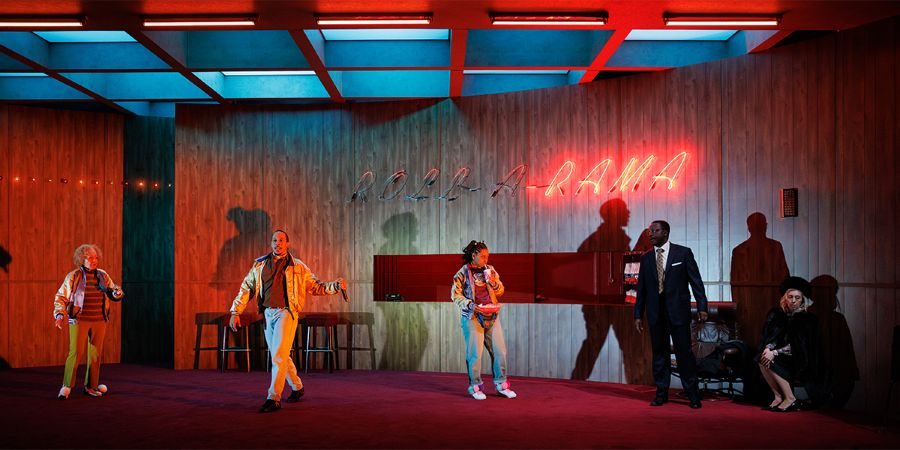
I had something of the reverse experience with Ro Reddick’s Cold War Choir Practice, now in an extraordinary production by director Knud Adams at MCC Theater through March 29. I had the chance to read it before interviewing Reddick a few weeks ago, when she won the Susan Smith Blackburn Prize, and while I was enchanted by the script, I couldn’t imagine how it would work onstage. For one thing, it’s set partly in a roller rink; for another, it’s got incantatory music by a children’s choir interspersed throughout. I shouldn’t have doubted. On a wood-paneled set by Afsoon Pajoufar with some odd shapes and spatial surprises, the skating is suggested artfully (movement direction by Baye & Asa), and Ellen Winter’s alternately creepy and soothing music comes courtesy of an oddball trio of singers: Suzzy Roche (no stranger to three-part harmony), Grace McLean, and Nina Ross, none of whom are children, all of whom are compelling in different ways. All this is ostensibly a mere backdrop for the main story, a sort-of-coming-of-age drama centering on a Black tween named Meek (Alana Raquel Bowers), but one of the show’s great strengths is the way its many registers and tones fuse into an unlikely but endearing ensemble work. Somehow none of its outsize characters—who also include a hysterical (in all senses) Crystal Finn and a delightfully crusty Lizan Mitchell—pull focus or throw the play out of balance. They’re all lovingly pinned up there together like figures in a 1980s-era diorama…
I also found time to take in Moulin Rouge! for the first time, since one of my kids is a fan of Bob the Drag Queen, who’s currently playing Harold Zidler. I happened to be there on the night that Megan Thee Stallion had just been announced as his successor in the role, which Bob riffed on during the curtain call (after a quick rendition of his signature tune, “Purse First”): “It’s all about the ‘the’—next up, Kermit the Frog!” As for the show itself, it did little more than reaffirm my strong distaste for jukebox musicals, even—or maybe especially—ones that are cleverly and lavishly crafted, as is Moulin Rouge! Does that make me crazy? Probably…
I didn’t connect with Alex Lin’s Chinese Republicans, at the Roundabout’s Laura Pels through April 5, despite its ambitions and its talented cast. I did very much appreciate this thoughtful piece by Chris Peterson about an unexpected acting choice in the show that really woke him up. I’m not sure I know exactly which moment in the play he’s talking about, but I know the kind of thing he’s talking about—the flash of revelation that it seems only the theatre can provide, which keeps us coming back for more…
Speaking of which, I caught Wallace Shawn’s What We Did Before Our Moth Days, at Greenwich House Theater through May 10. This has also been overpraised a bit, I think, as anything by Shawn tends to be. But he has well earned the deference, and there is no gainsaying the sneaky, supple provocations of his writing, the spare elegance of André Gregory’s direction, or the deft, textured acting of John Early, Hope Davis, Josh Hamilton, and especially Maria Dizzia. One of the special joys of a text this rich is the criticism it inspires, while we still have it: Helen Shaw’s characteristically clear-eyed embrace, Sara Holdren’s quote-heavy close reading, Emily Nussbaum’s perceptive index of the play’s negative virtues. As Shaw points out, a key activity of Moth Days’s characters is reading; I don’t know about you, but in my case, theatregoing is often incomplete without reference to a text, whether it’s a script before, a program during, or the reviews after.
What Else Is New
Here, as usual, is my roundup of world premieres all across the U.S. this month. (If you’re producing one in the coming months, let us know at rwkendt@tcg.org and at@tcg.org; if you’re a TCG member theatre, please remember to post all your programming here.)
Northeast
Is it the new Bat Boy? The description makes me wonder: Bigfoot!, a new musical comedy from Amber Ruffin, David A. Schmoll, and Kevin Sciretta, is billed as “a larger-than-life musical tale of corrupt politicians, small-town paranoia, and misunderstood youth.” Directed and choreographed by Danny Mefford, it’s at Manhattan Theatre Club, Mar. 1-April 5.
Jesús I. Valles’s Spread, at New York City’s INTAR Theater Mar. 2-22, follows the lunchtime antics of four ninth-grade boys at a Texas high school. It’s directed by Tatyana-Marie Carlo.
Maggie Kearnan’s Like Flies, a rage play is loosely inspired by the real-life story of the Angel Makers of Nagyrév, women in early 20th-century Hungary who, led by a midwife, purged their community of abusive men. Directed by Sally Wood, it runs March 4-22 at Maine’s Portland Stage Company.
In Dust of Egypt: The Story of Sojourner Truth, playwright Karin Abarbanel focuses on time Truth rescued her 5-year-old from slavery. Directed by Rhonda Passion Hansome, it runs March 5-29 at New York City’s Sheen Center for Thought and Culture.
Liberty Scrap is Christina Masciotti’s new play about an Uzbek woman working in our nation’s legal shadows. Directed and designed by T. Ryder Smith, it runs at Culture Lab LIC in Long Island City, in a co-production with the Chocolate Factory Theater, March 5-29.
This Is Real, inspired by the outsider stories and dramas of Jean Genet, is Target Margin Theater’s newest theatrical investigation. It runs at their Brooklyn space March 5-April 5, with direction by TMT artistic director David Herskovits.
Wallace Shawn’s What We Did Before Our Moth Days, a monologue-based drama about a rocky marriage, the husband’s lover, their adult son, is directed by his longtime collaborator André Gregory and runs March 5-May 10 at New York City’s Greenwich House Theater.
In the solo show Dear John, writer-performer Rachel Lin reconstructs the true story of how her long-lost father found her through social media and told her tales of growing up undocumented in New York City’s Chinatown. Directed by Tara Elliott, it runs at NYC’s HERE Arts Center March 6-19.
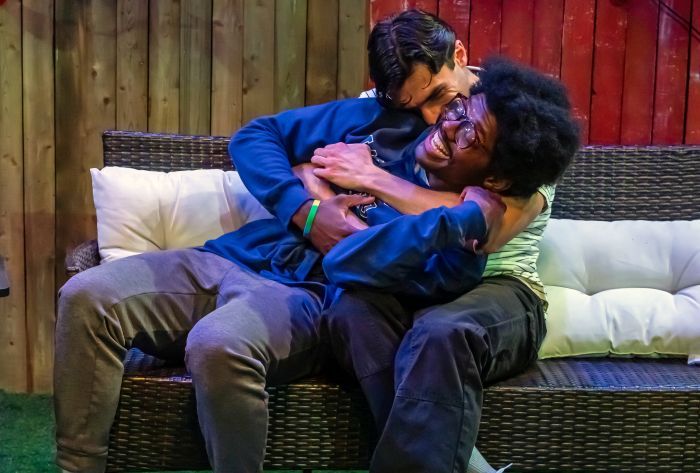
TOSOS, New York City’s oldest and longest-producing LGBTQIA+ theatre company, returns with Our House, March 6-21 at A.R.T./New York’s Jeffrey and Paula Gural Theatre. This new drama by Mark Finley, which reckons with sexuality, family, and race, is set in Iowa before Obergefell.
Spare Parts, at New York City’s Theatre Row March 8-April 10, isn’t just about the moral quandaries raised by the science of aging—it’s written by a scientist, David J. Glass, and directed by Michael Herwitz.
Jesa is Jeena Yi’s new comedy about four estranged Korean American sisters reuniting after their father’s death. A co-production of Ma-Yi Theater Company and New York City’s Public Theater, where it runs March 10-April 5, it’s directed by Mei Ann Teo.
Also at the Public, March 11-29, Anna Ziegler’s Antigone (This Play I Read in High School) resets Sophocles’s tragedy in fraught contemporary terms. Directed by Tyne Rafaeli.
Bughouse, a unique collaboration between playwright Beth Henley and director Martha Clarke, tells the story of “outsider” artist Henry Darger, who’s played by performance artist John Kelly. The show runs at New York City’s Vineyard Theatre Mar. 11-29.
Entangled: 12 Scenes in a Circle K Off the I-40 in New Mexico is a new devised work about free will and quantum mechanics from the troupe SOCIETY, working with playwrights Mona Mansour and Emily Zemba. Directed by Scott Illingworth, it runs at New York City’s HERE Arts Center March 11-28.
Former U.S. Ambassador Julissa Reynoso, working with playwright Michael J. Chepiga, tells stories of working against the odds to represent and fight for Caribbean and immigrant communities in Public Charge, running at New York City’s Public Theater under Doug Hughes’s direction, March 12-April 5.
Alter Space in Brooklyn is host for Charlie Rinehart-Jones’ Lifestyles, about friends spending a weekend in the very small town Whittier, Alaska. Rinehart-Jones also directs the show, which runs March 13-21.
Libby Carr’s Calf Scramble, at New York City’s 59E59 March 15-April 12, follows five teen girls in small-town East Texas who are raising cattle for their Future Farmers of America projects. Direction is by Caitlin Sullivan.
The Bengsons’ newest autobiographical musical memoir, My Joy Is Heavy, is directed by Rachel Chavkin and runs at New York Theatre Workshop March 17-April 5.
It’s not billed as a parody of On the Town, but Milo Cramer’s No Singing in the Navy does feature three sailors on leave and is described as an “attack on the ‘golden age’ of musicals,” so consider us intrigued. Directed by Aysan Celik, it runs March 18-April 19 at Playwrights Horizons.
For another take on the Greek myth, Barbara Barclay puts Antigone in Analysis. Billed as “a feminist fever dream of Greek storytelling caught in a philosophical nightmare,” this Peculiar Works Project production stars Bianca Leigh, is directed by Ralph Lewis, and runs March 20-April 5 at La MaMa in New York City.
The Balusters is David Lindsay-Abaire’s new comedy, about internecine fighting within a neighborhood homeowners’ association. Directed by Kenny Leon, it runs at Manhattan Theatre Club March 31-May 24.
Midwest
Marco Antonio Rodríguez previously adapted Junot Díaz’s The Brief Wondrous Life of Oscar Wao for NYC’s Spanish-language theatre Repertorio Espanol (where it’s still running). Now his English-language version is having its premiere at Chicago’s Goodman Theatre under Wendy Mateo’s direction, March 2-April 5.
Chicago’s Lookingglass Theatre Company presents White Rooster, March 5-April 12. Written and directed by Matthew C. Yee, it’s about a family tragedy that pulls a young woman into a darkly funny ghost story.
Sally Struthers’s new comedy Hungry Like the Wolf tells the story of the Willmar Eight, the women who led the first American bank strike, in 1977 in Minnesota, at St. Paul’s History Theatre, March 19-April 12. Direction is by Laura Leffler.
Cleveland Public Theater artistic director Raymond Bobgan takes the stage alongside co-author Anastasía Urozhaeva for Into the Heart of One Star, a new take on the Icarus myth interwoven with a piece of Russian history, which runs at CPT March 19-April 4.
Derek J. Snow’s The Ravenside Occurrence tracks the bond formed among four women who break out of a London asylum in 1876. With an original score by Jimmie A. Parker and direction by Caitlin McWehty, it runs at Cincinnati’s Know Theatre March 27-May 3.
In Kurt McGinnis Brown’s two-hander The Official Biography, a Her Story Theater production at Chicago’s Den Theatre March 28-April 19, a young Black journalist interviews an aging white novelist about his contentious past. Richard Shavzin directs.
Longtime director Carey Perloff turns her hand to playwriting with Vienna, Vienna, Vienna, about women from three generations gathering in Austria to reckon with their lives and family history. Directed by Robert Dorfman, it runs at St. Paul, Minnesota’s Six Points Theater March 28-April 12.
West
Apparently taking a page from Patrick Barlow’s staging of The 39 Steps, Matthew Salazar-Thompson’s new adaptation of the Dashiell Hammett noir classic The Maltese Falcon has five actors playing all the roles in the twisty tale. Directed by Todd Nielsen, it runs March 4-29 at Solana Beach, California’s North Coast Repertory Theatre. (The same production will also run next month at Laguna Playhouse.)
||: Girls :||: Chance :||: Music :|| is Eisa Davis’s new musical, which follows four gifted teen girls at a prestigious Berkeley music program and runs at San Francisco’s American Conservatory Theater under Pam MacKinnon’s direction March 12-April 19 (before running at its co-producing Off-Broadway company, Vineyard Theatre later in the spring).
R. Zamora Linmark has adapted Lois-Ann Yamanaka’s Blu’s Hanging, a coming-of-age novel about three Hawaiian siblings, for Honolulu’s Kumu Kahua Theatre, where it runs under Jason Kanda’s direction March 26-April 26.
South
Performed in both English and Spanish, Carlota is a new musical from Goat in the Road Productions about “a grandmother, a revolutionary, a healer, and a bad ass.” Conceived by Dr. Denise Frazier and featuring musical performer Yusa, it runs March 6-14 at Canoa in New Orleans.
Really Quite a Lot of Mechanisms, Alex Vernon and Sarah Olmsted Thomas’s new puppet show “set in the not too distant Now,” bows at Baltimore Theatre Project, March 12-29.
Doug Robinson’s Good Morning, Good Night uses multisensory storytelling and audience participation to help very young audiences discover the beauty of the change from day to night, and vice versa. Directed by Kathryn Chase Bryer, it runs March 21-April 19 at Bethesda, Maryland’s Imagination Stage.
Writer-performer Sasha Velour’s Travesty, a multi-century jaunt through queer history from witch burning to underground gay bars, runs at Washington, D.C.’s Woolly Mammoth Theatre Company March 24-April 12.
Either because I have a Dungeons & Dragons-playing child, or because a previous play on the subject used the same title, I could make a pretty good guess of what Jacob York’s Initiative would be about—i.e., the personal lives of a group of role-playing gamers as reflected, and not, by their game play over the years. Directed by Katie Erin Chambers, it runs at Atlanta’s Aurora Theatre March 26-April 19.