Early on in the pandemic, theatres around the country and world hastened to pivot, venturing uncertainly into new online virtual options to share art with patrons. Arizona Theatre Matters was among the companies that expanded its online presence. Now, as ATM points out on its website, “What began as a practical response became a global platform for performance, education, and artistic inquiry.” Indeed, despite the locale that the name suggests, finding the work of Arizona Theatre Matters doesn’t require a flight or hotel. Even local Arizonans don’t even need to gas up their cars. Finding their offerings can be as simple as opening YouTube.
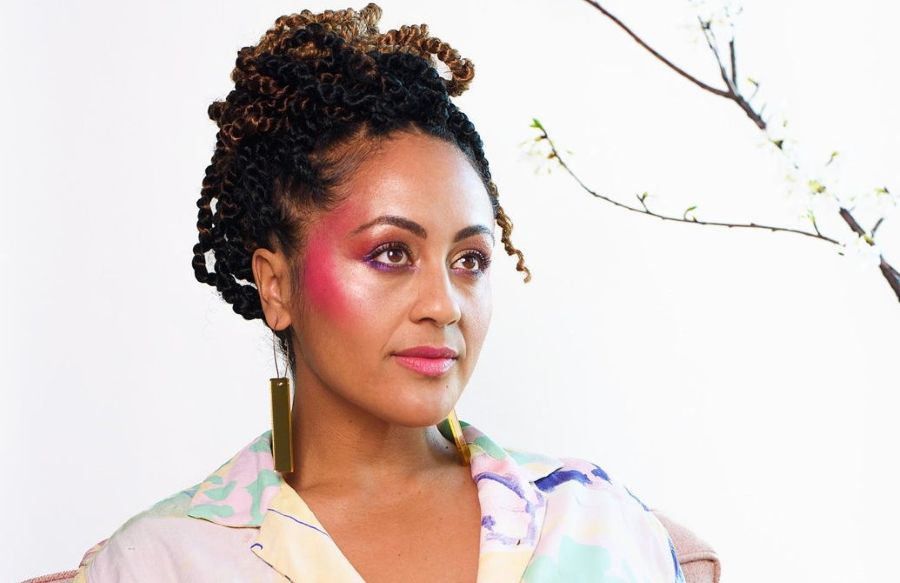
American Theatre recently emailed with founding artistic director Jeanmarie Simpson to find out more about ATM’s unique approach to sharing their work and how accessibility forms the bedrock for all they do.
AMERICAN THEATRE: Who founded Arizona Theatre Matters, when, and why?
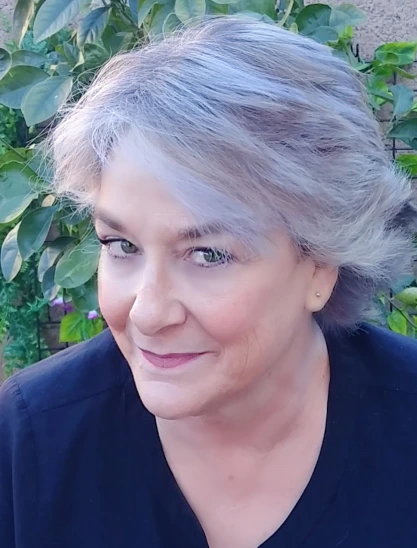
JEANMARIE SIMPSON: I founded ATM in 2012. I came to the term Universal Design embarrassingly late. I helmed the Nevada Shakespeare Company throughout its existence, and when we opened a show at the new Nevada Museum of Art, a “state of the art” building, I was gobsmacked by the pandering, virtue-signaling “accessibility.” Yes, there was Braille at the elevators, but why wasn’t it next to the English interpretation? And when they opened the world-touring Frida Kahlo exhibit, why the hell wasn’t it in Spanish? This was 2003, not 1957.
So I wanted to move forward as a universally accessible theatre. I soon discovered how difficult that was, and how expensive and unpopular with “mainstream” audiences. This was the 21st century, but I had a hard time getting my board to even wrap their heads around having mixed casts. When I cast an Asian actor as Demetrius, I thought I was going to be fired. Directors scoffed and turned down work because they thought the notion of universal access didn’t apply to theatre.
I left Nevada in 2007, and five years later I was back in my native state and founded Arizona Theatre Matters, then called Universal Access Productions. I was in Tucson, and continually amazed and horrified by the lack of accessibility—even just basics, like elevators and doorways wide enough for wheelchairs. “Handicapped” audiences were segregated, not to mention the egregious lack of accessibility for actors with disabilities.
I started the company with the plan to produce live theatre with and for people with disabilities, but I quickly learned that the theatre—even crazy-expensive institutional spaces—was simply not made for us.
Tell us a little more about yourself and your background.
I was born in Ray, Arizona, a mining town that no longer exists, and grew up partly in Kearny, which was built to house people displaced by the mine. So I think I understood early that whole communities can be erased, renamed, moved, or treated as inconvenient. That has a way of staying with a person.
My family moved to Toronto when I was 10, and that changed everything. I discovered theatre there—really discovered it—and also found myself in the middle of political upheaval, anti-war feeling, and a much larger world than the one I had known in rural Arizona. I started making original work when I was 12, and directing at 15.
I have worked as an actor, director, playwright, producer, and teacher. I co-founded and helmed the Nevada Shakespeare Company, toured original work nationally and internationally, and created plays rooted in history, peace work, feminism, and women whose lives still have something urgent to say. A Single Woman, about Jeannette Rankin, was performed thousands of times in the U.S. and 53 other countries, often to benefit peace and justice organizations.
My work has always moved between theatre and activism. I became a peace activist in the 1980s, and after Sept. 11, 2001, that commitment became even more central to the work.
What sets your theatre apart from others in your region?
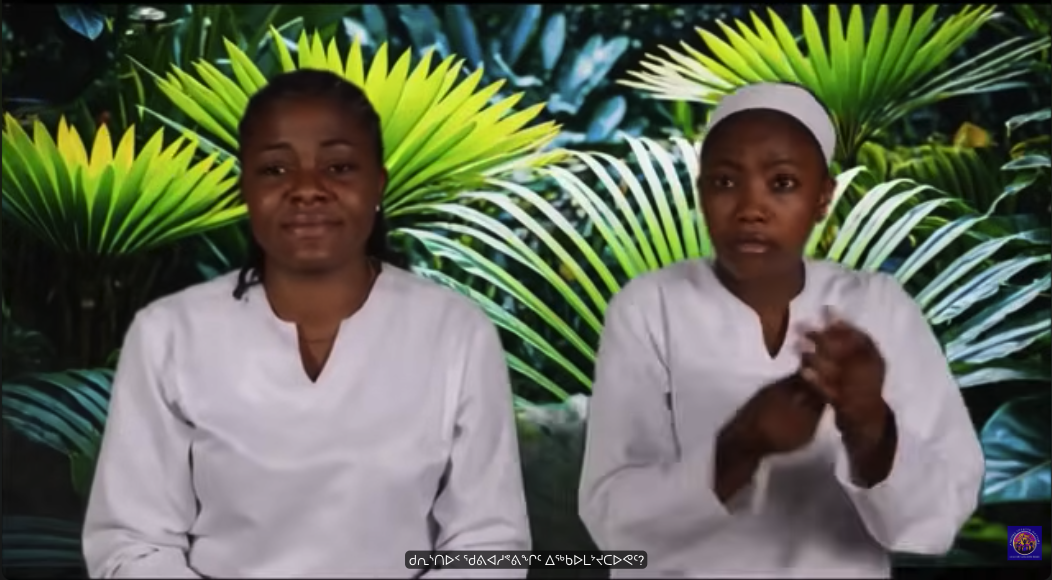
ATM builds access into the artistic work from the first idea. Blind voice actors, Deaf Artistic Sign Language performers, captioning, audio description, sensory-aware design, and digital distribution shape the work itself. They are part of the language of the production. Our theatre now reaches people in 194 countries, with captions in more than 300 languages. We have more than 120,000 subscribers and over 2.5 million views since the advent of the pandemic. I cannot imagine we would have had anywhere near a third of those numbers if we had stayed a live theatre. That matters. A theatre does not have to be confined to the people who can get into a particular building on a particular night. Arizona has many wonderful theatres. ATM occupies a particular place among them.
Tell us about your favorite theatre institution other than your own, and why you admire it.
I think it’s probably Deaf West. I admire the company because the work itself makes the argument. Deafness is not treated as an obstacle to be solved, or as a subject for someone else’s compassion. It is the matter from which the art is sculpted. The work is larger and more interesting because we hear the language and see it at the same time. The bilingualism is that of which the work is made.
That matters to me. Deaf West has shown, again and again, that when Deaf artists, sign language, visual language, silence, and movement are central to the making of the work, the work becomes more precise, more alive, and more true.


How do you pick the plays you program?
Because our work is presented online, on demand, and is not monetized, ATM’s work must be either public domain or original work created by or for the company.
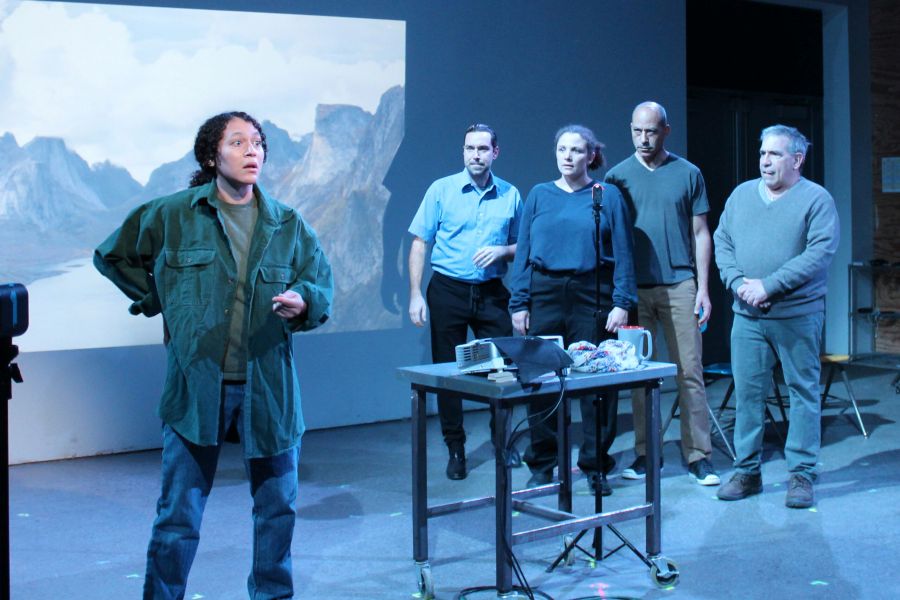
When we choose public domain work, we look for plays that make sense for our construct. Shakespeare works for us because the language carries the action, the imagery, the emotional weather, and the world of the play. Our Shakespeare work has gone in different directions. Lear distills the play into a solo that magnifies age, power, regret, grief, and the terrible clarity of language. Mackers goes somewhere else: into superstition, theatre labor, backstage ritual, comedy, and the feeling that the words themselves may be dangerous. That range interests me.
Blind voice actors can carry the language fully. Deaf Artistic Sign Language performers perform the play from within Deaf culture. Captions open the text across languages. The work becomes theatrical in a different way.
Our original work comes from the same impulse. We create works that have rich narration built in. Our Blind company members let us know if something is unclear, and we clarify it. So we choose work that becomes more itself in our form.
What’s your annual budget, and how many artists do you employ each season?
Our budget is edging up on $500,000. We have a company of 26 actors, a handful of directors, and half a dozen Deaf Artistic Sign Language performers. Depending on the project, we also work with writers, dramaturgs, and composers. We have a production manager, Kevin Tye, who puts it all together, and he has an assistant who has done much of our sound design this year. We hope she will continue with us after this season.
How is your theatre rising to meet the challenges of the moment, including but not limited to the continuing aftermath of Covid lockdowns, widespread demands for a fairer industry, and the current funding climate?
The pandemic forced us to become the company we were trying to become. Before Covid, I thought universal access meant finding better ways to bring people into theatre spaces. After Covid, it became very clear that the space itself was often the problem. Digital theatre allowed us to reach, all at the same time, Blind audiences, Deaf audiences, people with disabilities, elders, people who are medically vulnerable, people without transportation, people outside Arizona, and people who simply were not being served by the old model.
In terms of a fairer industry, we build the company around artists who are traditionally excluded in spite of the best intentions of most companies. Blind actors, Deaf Artistic Sign Language performers, actors with disabilities, elder artists—they are not symbolic presences in our work. They are the company.
The funding climate is difficult, of course. It always is. Our work is entirely free, so we have zero earned income. That is not an accident or a temporary condition. It is part of the promise. We do not want cost to be the thing that keeps someone from experiencing our work. So we are very clear about what we are asking people to support. We are making theatre in a form that reaches people who have been left out of the theatre for too long, and we are paying artists to do it.
What show are you working on now? Anything else in your season that you’re especially looking forward to?
Midnight at the Algorithm and Blues is in the can, and we went into rehearsals for Mackers on July 1. It launches on Halloween.
Mackers is one of those plays that came to me in the night and then wrote itself. It is Shakespeare, superstition, backstage panic, old theatrical terror, and the absolute lunacy of people who know the whole enterprise may be doomed and still show up for preview. It is about The Scottish Play, yes, but it is also about the people who actually keep theatre alive: the SMs, the folks in the booth, the costumers, dressers, props types, and everybody else who knows where the bodies are buried, sometimes literally.
And then there is Midnight at the Algorithm and Blues, which will launch around the winter solstice. It was funded in part by the National Endowment for the Arts for the 250th anniversary of the Declaration of Independence, and it takes place at Grant’s Tomb, which is haunted by Ulysses and Julia Grant. We commissioned the piece from playwright Gary Wright, who is a key member of ATM. Gary narrates the piece, and he stepped in to direct it when it became clear that his perspective was so unique and specific that no one else could do it justice. Gary is an old-fashioned, fully rounded theatre artist, and we are ridiculously lucky to have him. Midnight is funny, strange, haunted, contemporary, and not especially interested in behaving itself. Releasing it at the darkest time of the year gives it the weather it deserves.
Strangest or funniest thing you’ve ever heard—or included—in one of your shows?
In the early days of the pandemic, before we fully understood what kind of lunacy livestreaming theatre from each individual’s home could become, we did a livestream. At intermission, one of the elder actors apparently forgot he was still visible. He got up from his chair and was naked from the waist down.
We literally died. We are dead now. 💀
It was horrifying and hilarious and completely innocent. He had simply forgotten that the audience could still see him. And honestly, that may be the purest possible emblem of early-pandemic theatre: everybody trying desperately to keep the show going, while none of us fully understood the technology, the etiquette, or the fact that the camera was still on.
What are you doing when you’re not doing theatre?
I wish I had a more glamorous answer. I used to do a lot of crochet, knitting, quilting, gardening, and bread baking. My interest in those things has waned to almost nothing. I feel antsy when I try to do those things, and find myself jonesing for justice and imaginative literature.
I read, I write, I follow politics too closely for my own mental health, I talk to my friends, I worry about my children, I drink coffee, I swear at the news, and I try to remember that having a body requires maintenance. I also spend a lot of time thinking about history—not as nostalgia, but as evidence. I’m interested in the people who were right too early, the women who were punished for refusing to behave, the artists who kept working when nobody sensible would have blamed them for stopping.
So when I’m not doing theatre, I suppose I’m gathering fuel for theatre. Apparently, I no longer have hobbies. I have tributaries.
What does theatre—not just your theatre, but the American or world theatre—look like in, say, 20 years?
I think theatre will survive because theatre always survives. It is too stubborn and too ancient to die.
But I do think the old assumptions are already breaking. The idea that theatre only really counts if everyone gathers in one building at one particular hour is not going to hold. That will still happen, because there is nothing like breathing the same air with other people while something unrepeatable happens. But that can’t be the only definition anymore.
In 20 years, I hope theatre is less precious about its borders. I hope digital theatre, audio theatre, sign language performance, captioned work, community-based work, and international collaborations are not treated as lesser cousins of the “real” thing. I hope access is no longer treated as an accommodation, but as part of the art. I hope Deaf artists, Blind artists, elder artists, and artists with disabilities are not invited in as evidence of virtue, but recognized as essential to the future of the form.
And I hope the nonprofit theatre gets braver. Not louder, necessarily. Braver. Less interested in pleasing funders, boards, critics, algorithms, and whatever fashionable panic is passing through the room that week. Less with its eye on the damn market.
Theatre began with people gathering to ask impossible questions in public. In 20 years, if we’re lucky, that is still what it will be doing—in rooms, online, in libraries, in living rooms, in languages we do not yet understand, with people we have not yet learned how to welcome properly. If theatre has a future, it will belong to the people who insist on expanding the circle.