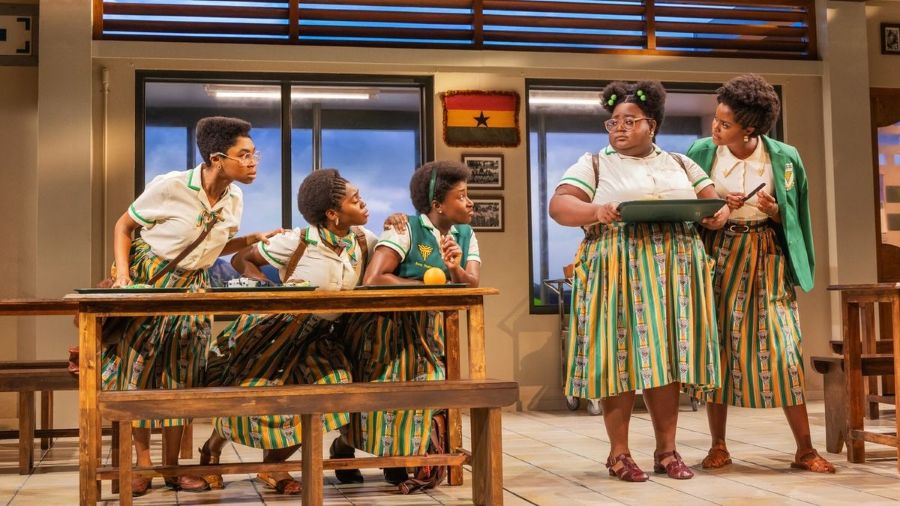
November is that time of year when year-end projects begin piling up and the holidays come into view, creating a feeling of being urged to hurry up and slow down all at once. This Sunday, I settled in for a livestream matinee of Manhattan Theatre Club’s School Girls; Or, the African Mean Girls Play—a delightful way to spend an afternoon when a six-month-old baby keeps you close to home.
I wasn’t the only one tuning in. More than 11,000 high school students at 200 schools around the world watched Jocelyn Bioh’s comedy. As part of MTC Watch Week (Nov. 2–13), students had access to a recording of the play, set in 1986 at Aburi Girls’ Senior High School in Ghana.
Take a look at this world map showing the schools that participated! One theatre teacher in Tennessee shared their students’ enthusiasm online: “I showed this to my advanced high school theatre classes, and it was HUGE hit. So much discussion was had about this play among my students.” At a school in Connecticut, students watched the play as part of an English class called “Conformity and Social Norms.” These students in the island country Palau recorded this greeting for the occasion.
Beyond bringing a professional production into classrooms worldwide, the initiative gave students a chance to explore the play’s themes of beauty standards, race, class, and the complex social hierarchies that shape girlhood across cultures. Registered schools received free access to a recording of the production to screen in their classrooms, along with educational resources and discussion prompts developed by MTC.
In this American Theatre article, Sara Morgulis, Executive Director of Theatre for Young Audiences/USA (TYA/USA), explores how companies are reaching young audiences through partnerships, co-productions, and nationwide collaborations that bring theatre beyond the walls of traditional performance spaces.
MTC Watch Week is a great example of what that reach can look like: one production, thousands of students, and conversations happening in classrooms around the world. It’s exciting to imagine where those conversations might lead—and what other opportunities could emerge when professional theatre finds its way into students’ classrooms.
Wishing you all a wonderful Thanksgiving!
✏️ Around the Web ✏️
- TYA/USA has announced the Circle Program, a peer-learning program offering growth opportunities and support to mid-career TYA/USA members.
- UNC-Chapel Hill and UNC School of the Arts have announced a partnership to enhance academic and artistic collaboration between the public research university and the professional arts training program.
- The Student Producer Program (SP²), a 16-week course for high school students about the art of theatre producing, kicks off this month.
- Love this clip of Lin-Manuel Miranda backstage at a student matinee of In the Heights. “Kids falling in love with live theatre in real time is the greatest sound in the world.”
- Playbill’s latest “How Did I Get Here” column features Max Monnig (The Great Gatsby), who shares the impact of his teachers.
- Students! Submissions for the 2027 Excellence in Theatre Education Award, sponsored by Carnegie Mellon University, are now open.
- There are some great comments about theatre degrees in this article: “A College-by-College Guide to Which Majors Pay Off — or Don’t.”
- I look forward to seeing the film The Debut, inspired by Jesse Eisenberg’s experience doing community theatre as a kid.
💫 On Social Media 💫
Theatre teachers: What’s one thing you’re hoping to try, change, or prioritize in your classroom this year?
AT Readers Respond:
O Michael Owston
To remember that I am also a learning artist. And to just talk about theatre more. Talk about the craft. The joy. The pain. Careers. All of it. Make sure we are still learning to love the craft.
Allison McCartney Ognibene
My biggest focus this year is to make shifts in the rehearsal process and give more time to work out differing perspectives and to create spaces that work…To listen, to learn, to create new boundaries that allow me to flourish as an artist and an educator.
Add your response here.
📰 From the Archives 📰
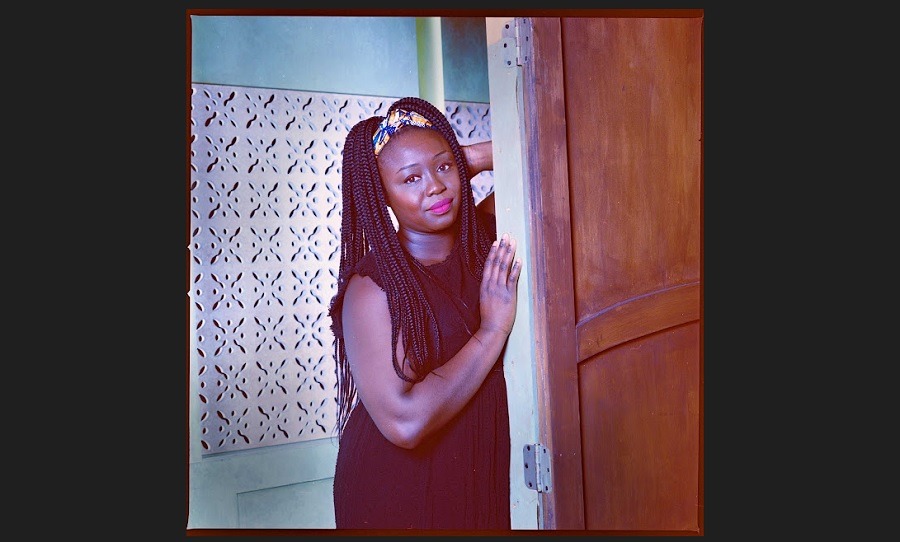
Jocelyn Bioh: ‘African Comedy’ Is Not a Contradiction in Terms
The writer of ‘School Girls’ and ‘Goddess’ writes stories American theatres haven’t seen before but that audiences immediately recognize.
Support American Theatre: a just and thriving theatre ecology begins with information for all. Please join us in this mission by joining TCG, which entitles you to copies of our quarterly print magazine and helps support a long legacy of quality nonprofit arts journalism.