I spent the weekend blueberry picking, swimming, and stargazing in Pennsylvania with family and friends. I’ve had a slow, quiet season, mostly at home in Brooklyn, caring for my 11-week-old son, who is a wonder and a joy. I haven’t been seeing theatre, aside from my first outing since the baby arrived: Shakespeare in the Park’s Romeo and Juliet on a balmy night in June. So learning about productions and in-progress works has been a welcome portal back to the theatre world.
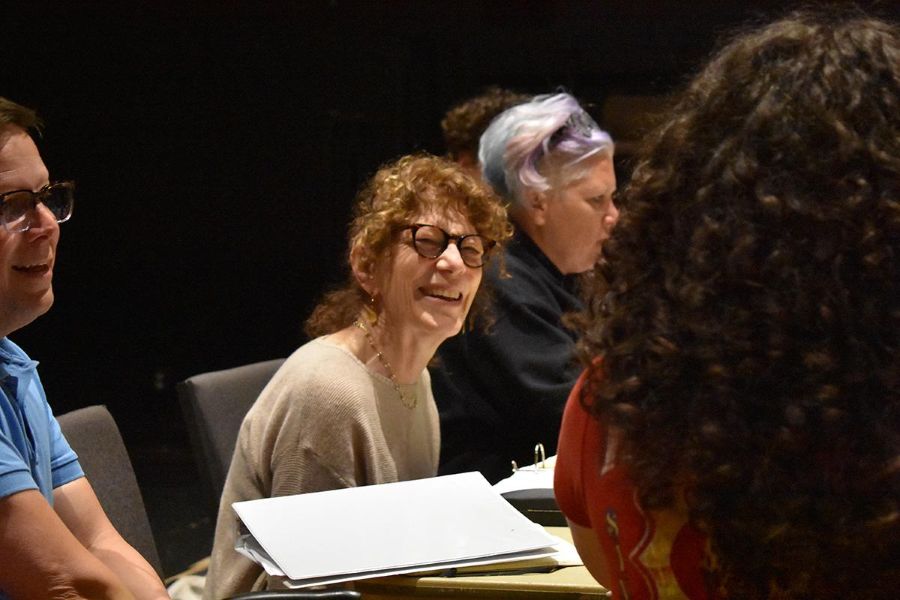
I recently had the pleasure of speaking with Rich Brown and Idris Goodwin, co-founders of Western Washington University’s Summer Test Kitchen, a new-work development program. Now in its fourth year, Summer Test Kitchen brings guest writers and students together on WWU’s campus to collaborate on projects at various stages of development and across genres, with a particular focus on theatre for young audiences.
The program provides two weeks of collaborative development, culminating in a free public reading of each work. Students serve as actors and stage managers, working alongside faculty directors, actors, and dramaturgs, as well as guest artists.
This summer, four projects—Goodwin’s Problematic Word Play, Doug Wright’s The Cutter Incident, Cindy Lou Johnson’s Fission, and Shanna Allman’s Eve’s Ale—were developed in partnership with Seattle Repertory Theatre, Seattle’s Union Arts Center, La Jolla Playhouse, and other arts organizations.
“Part of the mission of our department at Western Washington University is to train our students to be not only theatre interpreters but also theatre creators and self-generative artists,” says Brown. For students, the benefits are both educational and professional: they gain firsthand experience in new-work development, see how institutions partner on co-productions, and connect with industry leaders, all while getting paid to participate.
“One of the goals is to create a bridge for our students from academic theatre into professional theatre,” says Brown. That bridge is already producing tangible professional opportunities. Case in point: When an actor dropped out of the Alliance Theater’s production of Doctor De Soto in 2025, a student who worked on the show through the Summer Test Kitchen stepped into the role.
The university setting is ripe for new-work development, offering artist housing, rehearsal space, and invaluable resources, including subject-matter experts. When developing his young adult novel King of the Neuro Verse into a stage play as part of the 2025 program, Goodwin worked with WWU’s linguistics professor and director of the language and neural systems lab, McNeel Janzen.
Beyond the campus, the Summer Test Kitchen is filling a void in the American theatre ecosystem, where opportunities for new-work development have been dwindling. The deprioritization of new-work development is a loss for the field. “We sometimes overknead the dough, if you will, and we become beholden to processes, structures, and systems, and not beholden to the makers and the storytellers,” says Goodwin.
“[Summer Test Kitchen] is really about ensuring that students in the next generation are well equipped and imbued with some level of hope for themselves and for the field they’re going into,” says Goodwin.
Speaking of hope, be sure to check out Kelundra Smith’s dispatch from this year’s International Thespian Festival, where 5,000 high school and middle school theatre students from across the U.S. descended on Indiana University Bloomington’s campus.
Here’s to squeezing in more stargazing and playmaking these final weeks of summer!
✏️ Around the Web ✏️
- This report from the Contemporary American Theater Festival at Shepherdstown University showcases another new-play development incubator in a college town.
- Anna D. Shapiro will lead Juilliard’s Drama Division as its next Richard Rodgers dean and director.
- As a National Critics Institute alum myself, I loved Daniella Ignacio’s report from this summer’s NCI program.
- The Cherry Lane Playwrights Collective, a fellowship in collaboration between Cherry Lane Theatre and playwright Annie Baker, has announced the inaugural cohort.
- The 2026 recipient of the Stephen Schwartz Musical Theatre Teacher of the Year Award is Shawn Hann of Denver School of the Arts (DSA) in Colorado.
- Sibyl Kempson has been named the head of playwriting for the MFA Playwriting Program at Brown University.
- New York City high school students will have access to thousands of free and low-cost tickets to Broadway and Off-Broadway shows this fall through a partnership between the Mamdani administration and the Theatre Development Fund.
- Check out the latest “How Did I Get Here“ column from Playbill, featuring Broadway stage manager Arabella Powell.
- Read about why California schools are struggling to spend the money earmarked for arts education under Proposition 28.
- Love this story about the transformative impact of a summer dance program at the Boys & Girls Club of Pasadena.
- Students honor Elizabeth Smith, a founding faculty member of Juilliard’s Drama Division and influential voice coach.
💫 On Social Media 💫
Theatre teachers: How can university programs create stronger connections between student artists and the broader new-play ecosystem?
AT Readers Respond:
Amber Dernbach
Invite local high school theatre teachers to bring their students to new play development workshops and readings. Being part of the process expands students’ ideas of what’s possible for their own futures.
Ara G. Beal
To me, it’s vital that students learn the process to either workshop a new play or devise, instead of just working with “finished” published scripts.
Regina Garcia
Let them practice on your stages and [in your] rehearsal rooms.
Matt Barbot
I think it might be interesting to flip the framing here: universities are often decently funded (though less and less), with impressive facilities, and loads of other resources. Conversely, many of the major new-play incubators seem to be closing. How can universities contribute to the broader new-play ecosystem such that their graduates have something waiting for them on the other side of graduation?
Kelvin Djr
Ask them who their audience is and, in addition to the craft of creating art, understanding the communities intended for it.
Contemporary American Theater Festival’s 5-Ring Circus
One of my favorite features I’ve written is this report from my time at Shepherd University covering CATF in 2016.
More From American Theatre
Support American Theatre: a just and thriving theatre ecology begins with information for all. Please join us in this mission by joining TCG, which entitles you to copies of our quarterly print magazine and helps support a long legacy of quality nonprofit arts journalism.