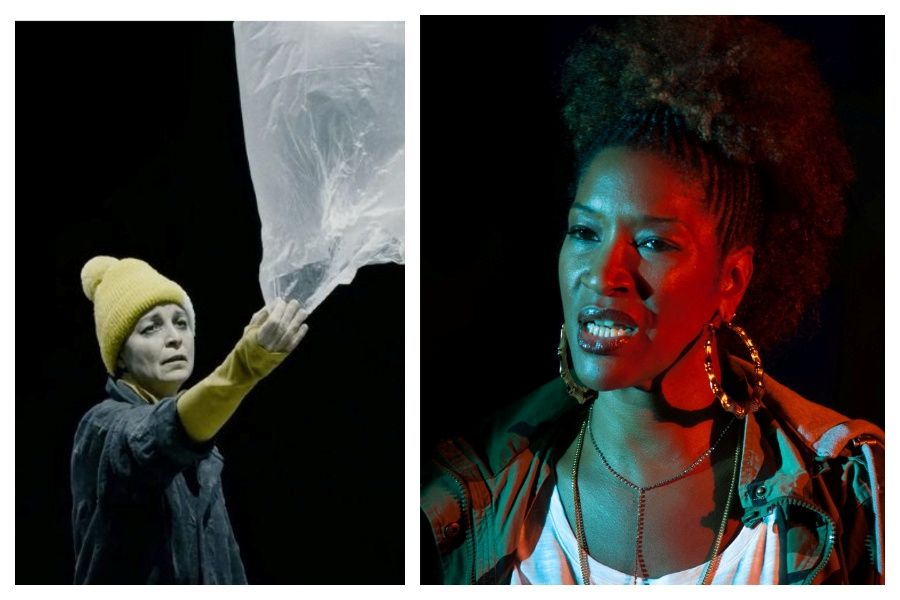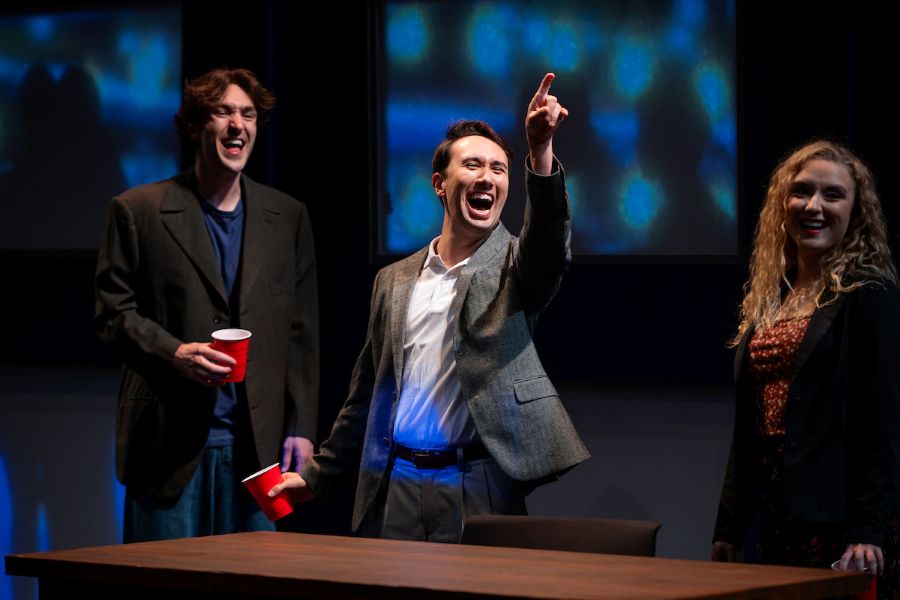
Cloning presents plenty of technological and moral hurdles, but if those could be cleared, I can easily name some candidates for duplication: audience members at the Contemporary American Theater Festival. At this annual summer gathering in the sleepy college town of Shepherdstown, West Virginia, five new plays are fully staged for an audience of thousands (14,000 tickets sold for this past summer’s 36th festival, I’m told). In July I joined them, making my second pilgrimage to CATF, which since the end of the Humana Festival of New American Plays at Actors Theatre of Louisville is the only U.S. festival of its kind (the “fully staged” bit is the main distinction between CATF and, say, Pacific Playwrights Festival or the Colorado New Play Summit, to name two prominent examples).
 Once again I was struck by the willingness—nay, the eagerness—of CATF audiences, comprising a mix of locals and D.C./Maryland/Virginia (DMV) commuters, to immerse themselves in the unknown, and to trust the festival’s curatorial taste, led by artistic director Peggy McKowen and managing director Amy Wratchford. Not only were the houses packed and enthusiastic throughout the weekend I attended; at an afternoon colloquy titled “New Plays in Troubling Times,” patrons were asked what keeps them coming back for more. One replied that it was her 26th year attending the festival, and that what she especially relished was “the sense of always being just ahead of things,” and the ability to be part of the developmental process, “watching these things grow.”
Another patron, who by sight I would put in the empty-nest-if-not-quite-retirement-age cohort that has long been a sweet spot for avid theatregoing, said that seeing new plays helped him “stay in touch with different generations.” That answer intrigued me, but his follow-up was a blurb you couldn’t script: New plays, he said, “are a way to force ourselves out of our comfort zone.” Another went further, chiming in to say that new plays offered them a way “to be outside myself.”
Of course, you can find adventurous theatre audiences all over the place if you know where to look: at developmental festivals like the New York Stage & Film Summer Season, as Cristina Pla-Guzman recently documented for us, and at new-play-focused theatres as various as New York City’s Playwrights Horizons, D.C.’s Woolly Mammoth, Houston’s Catastrophic Theatre, the Bay Area’s Shotgun Players, and Boston Court Pasadena, to name just a few. (You can find a lot of our extensive new-play-fest coverage here, if you’re interested.)
This is most decidedly not the narrative we typically hear about the fortunes of new work in the American theatre, or about audiences’ purported preferences for the comfort of revivals and familiar IP. There’s obviously plenty of truth in that latter picture, especially at theatres on the larger end of the scale, commercial and otherwise. But for what it’s worth, we’ve been beating the drum for years that in fact, if you just look at the number of productions, not necessarily at theatre capacity or box-office returns, the American theatre is positively rife with new work—that in fact plays written within the decade of their staging have handily comprised the majority of work on U.S. stages for many years now. As with the purported death of the subscription model—a canard richly complicated if not outright debunked by Corinna Schulenburg’s podcast series for TCG, The Bridge (produced with support from the Wallace Foundation and available in AT’s Offscript feed)—the supposed scarcity of new work is more vibe than fact, a case of relative declines feeling determinative or decisive.
Certainly the fact that CATF is still standing in a field where Humana is not, and that places like The Lark Play Development Center and Sundance Theatre Program are kaput while the Playwrights Center and New Dramatists keep on keeping on, presents a mixed picture. But whether the glass is half full or half empty is a matter of perspective; as it often does, scarcity lives side by side with plenty.
That plenitude can be measured in spirit as well as quantity. “Generous” is a word multiple writers used to describe CATF’s audience when I reached out to them about their experience at this year’s festival.
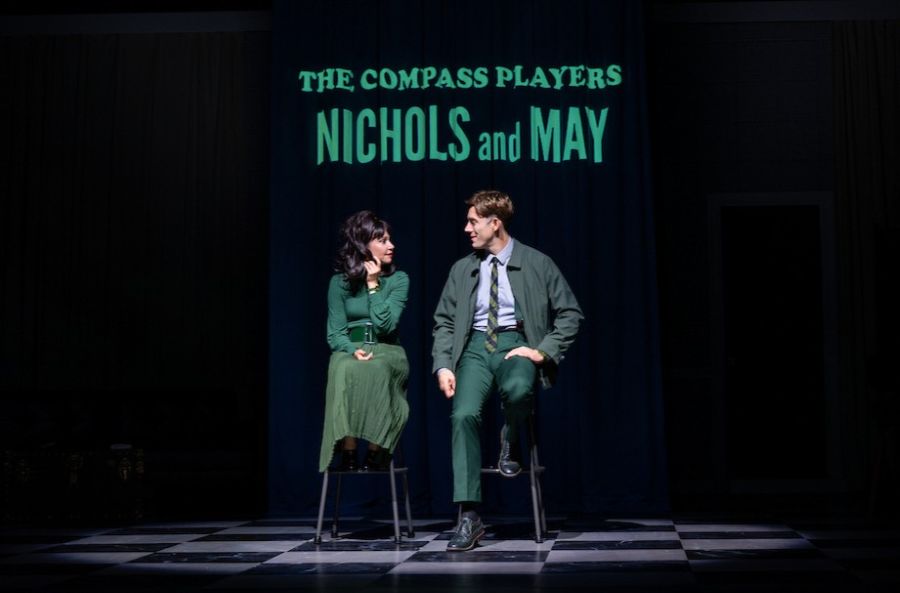
“I love getting to sit in different places in the house for each performance to absorb all the reactions: what’s working, what isn’t, what plays differently when it’s bouncing off the energy of a live audience,” said Beth Kander, whose bittersweetly entertaining Best Line Wins traces the real-life working and offstage relationship of Mike Nichols and Elaine May over their decades of path-breaking stage and film work. CATF audiences, she said, “filled the house and genuinely wanted each play to succeed; there is no theatre without audiences, and CATF audiences are generous and insightful.”
Yussef El Guindi, whose intriguing Refugee Rhapsody follows a toxic triangle among a rich white heiress and two young Arab Americans, said he also sees CATF audiences as “so generous, eager, and ready to engage,” adding that the engagement went beyond responses to his own play. “A festival is a happening—not just a series of plays, but an event—and those who attend it are what makes it happen, makes it pop.”
For his part, playwright Aurin Squire confessed that he used audiences for his slippery, pointed journalistic comedy My Favorite Sociopath, another play about a professional-personal triangle, to count the laughs, “like Neil Simon or a TV writer on Home Improvement.” He explained his math: “If the prologue gets five or more laughs, then the second scene should get 8-10 laughs, and the third scene should get 10-15 laughs. And then we’re golden for the rest of the first act.”
Christina Pumariega, who gave birth to her second child just before previews of her two-hander ¡VOS! and thus had to work largely via Zoom with director Kimberly Senior and the production team, noted a very specific experience in relation to audiences. “What shocked me was how men encountered the play,” said Pumariega, whose time-jumping drama follows two generations of Argentinian women through periods of repression and protest, with a prominent contemporary plotline about artificial insemination. She expected women to relate to the play’s concerns, but at CATF she said she also “witnessed men my father’s age and younger laughing, talking back, processing what goes down on an OB-GYN exam table.” The experience taught her, she said, that she “could earn a whole audience’s attention, beyond its optics.”
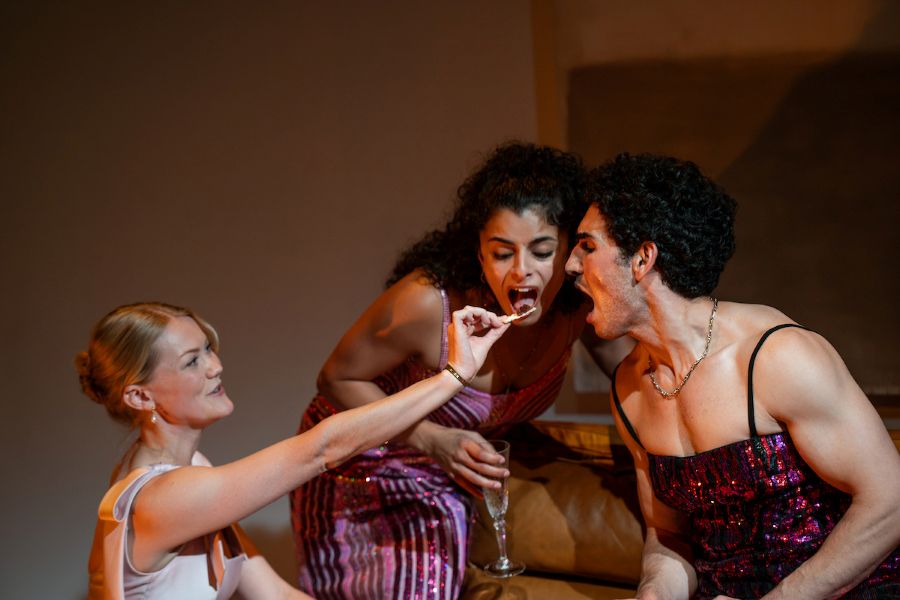
Of course, all new-play gatherings, even ones in which performances are done from music stands, have some kind of audience, even if many skew heavily to friends, family, and industry folks. But crucially, it is the process of fully staging a season’s worth of plays at CATF, with the involvement of designers and performers and crew, that raises the bar, both for writers and for patrons.
Squire in particular effused about this aspect of the work. Comparing his time at CATF to his previous experience staging half a dozen new plays in rep at Actors Studio—a period in which his writing “advanced 1,000 times faster in six production meetings than it would have in six readings”—Squire said that CATF “advanced My Favorite Sociopath by light years.” Putting it up in the midst of a five-show repertory festival was a key ingredient of the jet fuel. “There’s not a lot of time, so no messing around. Costumes, lighting, set, the carpenter shop—all clicking and humming. It puts you in the same mood.” He described his “flow” for four weeks at CATF as “nonstop writing, rehearsals, meeting, rewriting.”
My flow for my two days at CATF was a bit more chill, and I did find time to explore the charms of German Street in downtown Shepherdstown (and catch a bit of the World Cup at a local pub). Mostly I was happy to take my place among CATF’s uniquely eager audience, with a few qualifiers. As I’ve confessed to colleagues before, seeing a bunch of brand-new, fully staged plays one after another can feel a bit like a series of blind dates: Everyone involved is dressed to impress but the results are, inevitably, variously exciting, nerve-wracking, intriguing, and disappointing. It’s a feeling I always reckoned with when I visited Humana, where I came to realize that the expectations raised by fully realized productions—so undeniably crucial to the playwrights finding their plays on their feet rather than merely on the page—were simply too high for some plays, and that a certain forgiving spirit was required when not everything gelled. Ideas that look fully realized because actors are speaking off book and the lighting cues are tight may in fact be not so fully realized. Indeed, it is often precisely the gap between idea and realization that can teach a writer the most about how their play works in the three dimensions of the theatre (four, if you count time).
In addition to a taste for the adventurous, then, audiences at a festival like CATF must also possess the gracious clarity of those who know that if you want to see something genuinely new, you have to be really be willing to face the new, in all its uncertainty. As a professional theatregoer, this is both my burden and my joy. So it’s always pleasantly surprising to realize that it’s not just sickos like me who chase this kind of high; there are plenty of other new-play freaks like us, and each summer, Shepherdstown is the place we go.
Can a Dream Be Over?
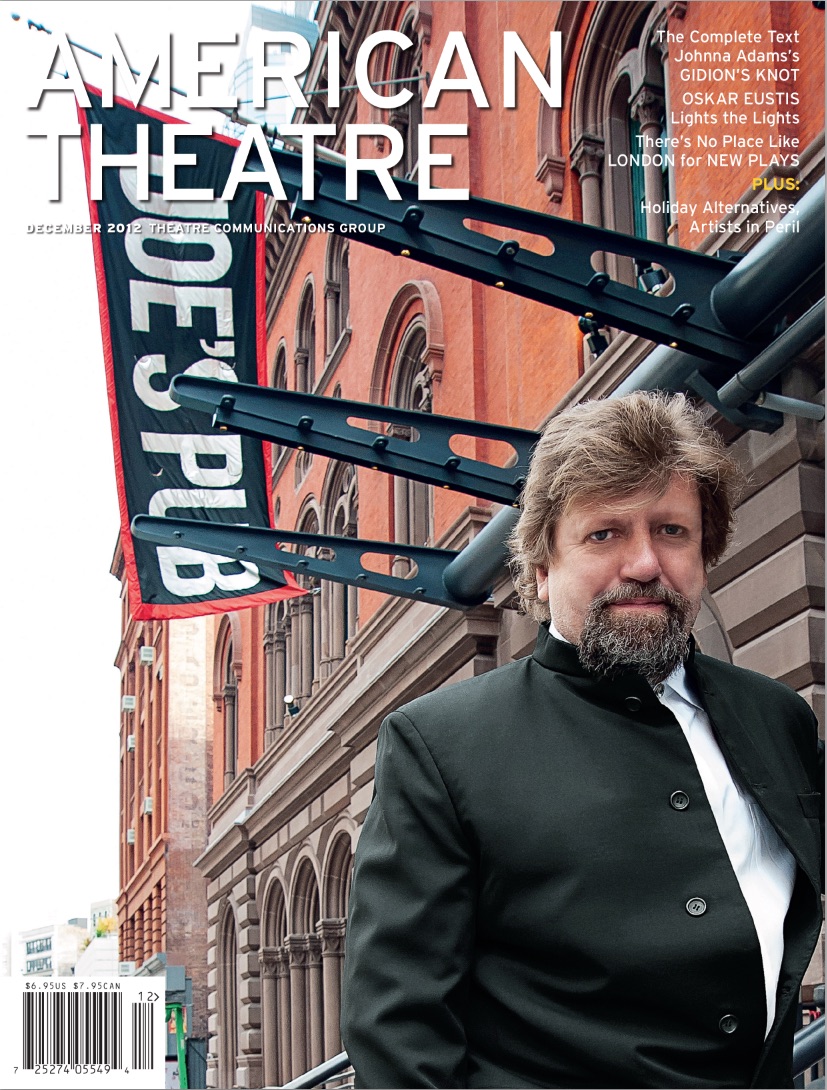
The big news last month wasn’t Oskar Eustis’s planned exit from the Public Theater on his 70th birthday in July 2028; he had mentioned that plan as early as this podcast in April 2024, which was picked up a few months later by the intrepid Philip Boroff at Broadway Journal. The bombshell news, in the New York Times interview about his exit, was his pronouncement that “the nonprofit theatre movement is over.” He went on to say, importantly: “That doesn’t mean any individual theatre is over. But every individual theatre is having to make its own case and come up with its own business model.”
This both named something abundantly true and elided Eustis’s own role in that movement and its supposed decline. A movement is by definition a notional thing, a self-selecting gathering of like-minded folks who join for a common cause, and for decades Eustis was both an inheritor of and an eloquent leader of the regional/resident theatre movement. His leadership took the form not only of running and working at various theatres across the U.S., but also of his one-time board chairmanship of Theatre Communications Group (the publisher of this magazine), and his co-founding of the Professional Nonprofit Theatre Coalition to lobby the U.S. government for support. And of course there is his famous and justly beloved speech about the integral relationship of theatre and democracy, the spirit if not the letter of which I absolutely endorse.
Initially I heard Eustis’s sweeping claim in much the same light as John Lennon declaring, in the 1970 song “God,” that “the dream is over.” On the one hand, that did name a real sense of defeat and exhaustion as the 1960s ended with Nixon ascendant and the Vietnam War raging; on the other hand, it was unquestionably self-involved and peremptory for Lennon to pronounce a culture-wide death simply because his world-famous band had dissolved. As one colleague pointed out, Eustis could have used this moment not to extinguish the torch but to pass it to the cohort of talented women who came up through the ranks of the Public and have gone on to hold positions of influence in the American theatre (mostly but not exclusively at Lincoln Center).
I confess I feel too close to this subject to write about it with objectivity; I too have a role in this drama, however small, and I don’t wish to elide it. After all, the name of this magazine, like the nonprofit movement, is also a notional thing: It assumes and declares in capital letters that there is something called “the American theatre,” though in reality there are only American theatres (as a wise man once wrote, “It’s the ripple, not the sea…that is happening”). As Eustis put it, with clear exasperation, in a follow-up interview with the Los Angeles Times, there is “absolutely zero consensus on whether theatre should exist as a nonprofit performing arts field or whether we should exist at all.” He might just as well have added that there seems to be zero consensus within that field about whether it is best represented by large New York theatres like the one he runs, or by regional repertory companies, scrappy self-producing storefronts, community-based ensembles, improv troupes, immersive experiences, etc.
You won’t be surprised to learn that I don’t think we have to choose among these options—that the American theatre is a big tent that includes the Public Theater, which I think of as nothing more nor less than a regional theatre for New York City’s five boroughs, as much as it includes the Neo-Futurists, the Contemporary American Theatre Festival, El Teatro Campesino, Meow Wolf, Miami New Drama, or the (happily resurrected!) Aurora Theatre Company, just to pick some names off the top of my head.
Do these widely disparate theatres comprise a movement? A fair question. But I’m not sure that a movement is the only way to think of what theatres in the U.S. have in common, or how they might organize and share ideas and practices. (Is HowlRound a movement?) I do know that in reading some of the sharper responses to the Eustis Declaration—those by Theatre Upstanders, Alex Meda, and David Bruin—and in revisiting the wide-ranging Theatre Futures package we put together last year to envision pathways forward for a field at a crossroads, I can glimpse, if not an incipient movement, then a surfeit of creativity and determination among the folks who make stage art and those who make it possible (two slightly different groups with intersecting interests). What is missing, arguably, is the connective tissue among these disparate impulses and efforts. Whether we call it a movement or not, that is obviously one role for TCG—and, in our own little corner, for American Theatre.
Seen Around Town
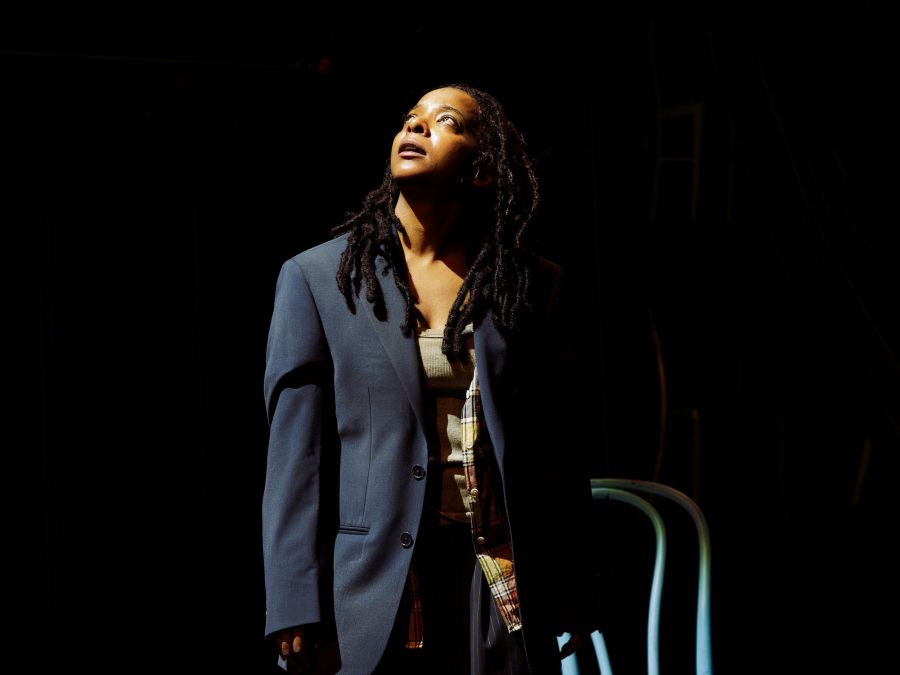
As I picked up my tickets recently at Lincoln Center Theater, a woman at the box-office window next to me asked for “two tickets to The Vagina Monologues.” Given the frank gynecological talk that both disarmingly and sometimes harrowingly courses through The Whoopi Monologues, the actual show we were both coming to see, this gaffe was almost apt. Overall I found the Whitney White-directed show an enjoyable reminder of the unique, widely influential, and easy-to-take-for-granted voice Whoopi Goldberg introduced into the culture decades ago. While I thoroughly relished the multifaceted performances of the five actors, embodying separately characters that Whoopi once tackled single-handedly, I couldn’t help but wish for a version in which the transfixing Kara Young, who opens the show as the homeless philosopher Fontaine, did the Whoopi thing and played them all…
I loved the Lisps’ music for the Foundry’s Good Person of Setzuan back in the day, and admired their musical Futurity at Soho Rep, so much so that a photo from the latter was the cover image for my 2014 feature on band musicals, which I pegged as musical theatre’s next big thing, entirely failing to anticipate Hamilton. I’ve since written about how, Hamilton aside, shows with bands and musicians as part of their staging is a trend that has in fact not gone away. The musicians onstage in The Potluck, a recent Soho Rep effort by former Lisps frontperson César Alvarez, were the best thing about this intensely autobiographical show, which otherwise was a bit of a hot mess. Watching it reminded me a bit of what I felt about the recent musical staging of Girl, Interrupted: I heartily long for a world in which musicals are allowed to sound and move differently from the standard sonic and staging tropes of “musical theatre” (much as I love those too), and each piece absolutely deserves to be judged on its own terms. I also believe in experimentation—not as an aesthetic end in itself, but in its literal scientific meaning, i.e., as a test or trial of something new. Built into that process, though, is the possibility of failure, and in this context failure is not the worst thing that can happen; to not try at all would be the worst thing. So, though The Potluck was a miss for me, I salute Alvarez and their team on taking a big swing…
I had not intended to review The Saviors, Bubba Weiler’s tender new play at the Atlantic, but after seeing it, I realized it was a natural fit for my side gig as a freelance critic for the Jesuit weekly America. I was never a Catholic altar boy, let alone a Catholic, but this one stuck with me (and in a way that Weiler’s last heavily lauded play did not). I was also gladdened as always to see the great Crystal Finn onstage, which is my excuse to plug the extraordinary essay she wrote for us about the irreducible spiritual immediacy of theatre.